Renting the Off-Site Cabin Near Gulches ORV Park
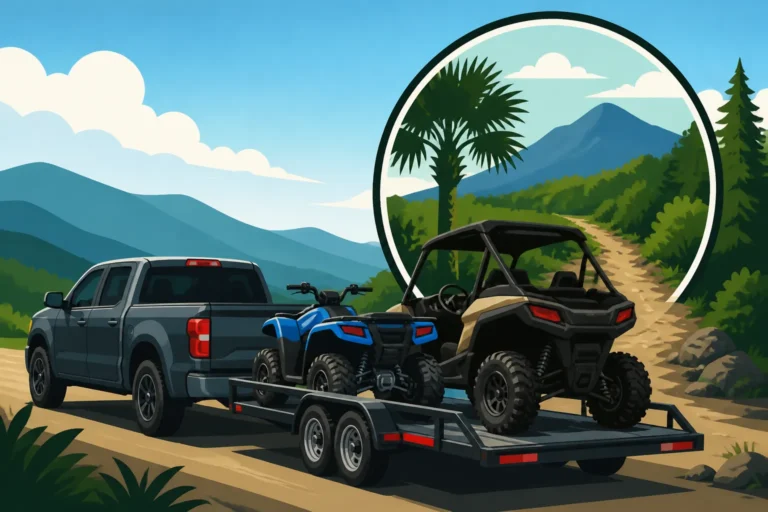
Finding a cabin near Gulches ORV Park can feel like solving two trips at once: you need somewhere comfortable to sleep, and you need a practical way to get your machine and trailer to the riding area. This guide explains how to compare off-site cabins, check the details that matter before booking, and plan a smoother riding weekend around Waterloo, South Carolina.
What to Know About an Off-Site Cabin Near Gulches
Off-site lodging is separate from the riding park
An off-site cabin is a place to stay outside the riding area, not a cabin you should assume sits on park property or connects directly to the trails. That distinction matters when you are planning around check-in, unloading, riding hours, meals, and the end of the day. Before booking, confirm the lodging address and ask the host whether the property is independent of Gulches ORV Park.
A listing that says “near Gulches” can still leave important questions unanswered. The actual drive may depend on the cabin’s location, the roads you need to take, and whether you are towing a wide or heavy trailer. Check the full address against the park’s entrance rather than judging distance from a listing’s headline or map pin. If the host does not share the address until after booking, ask for a general area and a realistic route description before you commit.
Also confirm that the cabin is available for the kind of trip you are planning. A quiet overnight stay with one small vehicle has different needs from a group arriving with multiple machines, a trailer, and muddy riding gear. Ask the host directly about parking, trailer access, outdoor storage, and any property rules related to vehicles. Do not assume a rural driveway is suitable for a long trailer just because it looks spacious in a photo.
Choose a location that fits your riding weekend
Waterloo is a useful place to start your search, but it is worth comparing nearby areas as well. Depending on the property and route, listings around Laurens, Clinton, or Cross Hill may appear in your search. Treat those place names as search areas, not a promise that a specific cabin is close or convenient. Check each property’s route to the park and consider whether you are comfortable driving it after a full day on the trails.
The right location is not always the one with the shortest-looking map distance. A cabin with easy trailer access and a straightforward drive may be more practical than a closer property with a steep entrance, narrow driveway, or limited parking. If your group plans to eat out or pick up supplies, check how far the property is from the places you expect to use. A peaceful rural setting can be a real perk, but it may also mean planning meals and fuel stops ahead.
If you are comparing a private cabin with camping or other lodging, keep the riding experience in view. The park’s terrain and vehicle rules are separate from the place you sleep, so check the park’s own information before making plans. For context on the riding area itself, see [Gulches ORV Park Is Built for Full-Size Rigs]. If your group is bringing larger machines, ask the park and the lodging host about fit and access separately rather than assuming that a cabin’s parking area can accommodate every rig.
Questions to Ask Before You Book
Confirm the driveway, parking, and trailer setup
For riders, “parking available” is too vague to be useful. Ask how many vehicles can fit, whether trailers can be left on the property, and whether the driveway has a tight turn, slope, soft ground, or low clearance. If you are hauling a side-by-side or several ATVs, explain the size of your tow vehicle and trailer. A host may be able to answer more clearly when you describe the setup rather than simply asking whether parking is available.
Ask where you can unload and whether the property has a level area for loading machines. Confirm that parking is allowed overnight and that your trailer will not block a shared drive or neighbor’s access. If the cabin is on a narrow rural road, check whether you can turn around without backing a long distance. These questions may feel overly detailed before a weekend away, but they are much easier to resolve at booking time than at dusk with a trailer behind you.
Here is a quick comparison of what to verify:
| Cabin detail | Why it matters | What to ask |
|---|---|---|
| Trailer parking | A standard car space may not fit a tow vehicle and trailer | Can my full setup park overnight on the property? |
| Driveway access | Steep, narrow, or soft entrances can be difficult with a loaded trailer | Is the entrance paved, gravel, sloped, or tight to turn around in? |
| Machine storage | Gear and vehicles may need different storage arrangements | Is there a secure place for machines, or must they remain on the trailer? |
| Check-in timing | Arrival may not line up with the start of a riding day | What are the check-in and check-out arrangements? |
| House rules | Noise, outdoor washing, and extra guests may be restricted | Are there rules about muddy gear, washing machines, or parking? |
| Connectivity | Rural coverage can be inconsistent | Is there reliable cellular service or Wi-Fi at the property? |
Do not count on being able to wash mud off a machine at the cabin. Some hosts prohibit outdoor washing because of drainage, septic systems, or cleanup concerns. Ask before you bring a pressure washer or plan to hose off gear. If the cabin does not have a suitable place to clean equipment, pack brush-offs, bags for muddy clothing, and a plan for keeping the interior tidy.
Check sleeping arrangements and basic amenities
Photos can make a cabin look roomy while leaving the sleeping setup unclear. Confirm the number of actual beds, the size of each bed, and whether a sofa bed or loft is included in the listed capacity. If your group includes children or people who do not sleep well on pullout beds, settle that question before reserving. Ask whether linens and towels are supplied, and whether the kitchen has the cookware and refrigerator space your group needs.
Look closely at the practical details that affect a post-ride evening: hot water, heating or cooling, laundry access, and a place to dry wet clothes. A long day riding in South Carolina heat or rain can leave everyone with damp gear, so clarify what the host permits. If you need a quiet evening, check whether the cabin shares walls with another rental or sits near a busy road. The listing may not answer these questions, and a short message to the host can prevent mismatched expectations.
Make sure the booking rules work for your group. Confirm the guest limit, parking limit, cancellation terms, and whether visitors who are not staying overnight may come by. Ask about pets if you plan to bring one, and never assume an animal is allowed based on outdoor photos. Keep the confirmation and host instructions easy to find on your phone, but save key details such as the address and check-in instructions before leaving home in case cell service is weak.
Planning the Drive and Ride
Build a realistic towing and arrival plan
A cabin booking and a riding reservation or park visit are two separate pieces of your itinerary. Confirm park access, operating details, and any required passes directly with the riding area, then plan your cabin arrival around those arrangements. Avoid treating a lodging map pin as proof of convenient access to the park. Use the property’s actual address to estimate the drive, and allow extra time for a trailer, unfamiliar roads, and stops.
Before heading out, check the entire route for the kind of vehicle you are towing. A route that works for a passenger car may be stressful with a long trailer, especially if it includes narrow roads or tight turns. Apps can help with navigation, but compare their suggestions with the directions from the property host and the park. You can use onX Offroad to review the broader area and orient yourself around off-road destinations, but do not rely on a map alone for road suitability or current access instructions.
If the group is arriving in separate vehicles, agree on a meeting point before the last stretch of the trip. Share the cabin address and park entrance details with everyone, and decide where the trailer will be staged. For advice on choosing a trailhead setup that works with a tow vehicle, see [South Carolina Trailheads With Trailer Parking]. If cell coverage is a concern, download or save the route before leaving a stronger-signal area; onX Offroad can be one part of that preparation, alongside a saved address and written directions.
Keep lodging rules separate from park rules
A cabin host’s permission to park a machine does not grant permission to ride it on nearby roads, fields, or private land. Likewise, a route on a mapping app does not mean it is open to ATV or UTV use. Keep machines on authorized property and designated riding areas, and ask the landowner or manager before using any private road or driveway beyond the access needed to reach the cabin.
Check the park’s rules for vehicle types, rider requirements, noise, safety gear, and any restrictions that apply to your machine. Those rules can differ from lodging policies, and neither set replaces the other. For a broader look at privately operated riding areas and their policies, see [South Carolina Private Park Camping Rules]. For general regional riding context, [South Carolina Trailheads With Trailer Parking] can help you think through staging needs without assuming that every trailhead offers the same setup.
It is also sensible to prepare for limited service. Rural areas can have dead zones, and a phone’s navigation may become less dependable when you need it most. Save your cabin address, the park entrance, and the route between them. onX Offroad may help you understand the surrounding area and save useful map information, but verify access and directions with the property host and park. Bring a charging cable or battery pack, and let someone in your group know the plan if you are traveling separately.
Make the Weekend More Comfortable
Pack for the cabin as well as the trail
Riders often pack carefully for machines and overlook the cabin basics. Bring separate bags for clean clothes and muddy gear, shoes that can stay outside, and a few towels or cloths for wiping down helmets and gloves. If the host permits machine cleaning, bring only the supplies allowed at the property. Otherwise, plan to contain mud and water rather than assuming you can rinse everything off at the cabin.
Consider packing food for the first evening and breakfast, especially if the rental is in a rural area. After unloading and riding, a grocery run can feel like one more chore. Check whether the kitchen has the equipment you need and whether the property provides basic supplies. If it does not, bring coffee, drinking water, snacks, and any items your group would be frustrated to discover are missing.
Ask about showers and laundry before you arrive. A cabin may have a shower but no laundry facilities, or it may have laundry with specific rules. Riders looking at other places to stay near riding areas can also compare practical amenities with [South Carolina Riding Areas With Showers] and [South Carolina Riding Areas With Cell Service]. Those topics are useful for building a checklist, but confirm every detail with the specific host or facility you choose.
Have a backup plan for weather and changes
A wet forecast can change both the riding day and the cabin logistics. Muddy machines may need to stay on the trailer, a route may take longer, and outdoor activities at the property may no longer be comfortable. Check cancellation and change terms before booking, and ask the park directly how it communicates closures or other operating changes. Do not assume that a cabin booking automatically changes when riding plans do.
Keep a simple alternate plan in mind: a later arrival, a shorter ride, or an additional night if the group can manage it. The point is not to over-plan every possibility. It is to avoid making a tired group improvise while towing through an unfamiliar area. If you use onX Offroad to orient yourself or save a map, remember that property access, park operations, and road conditions still need to be confirmed through the relevant host or park.
Before departure, run through a final checklist: cabin address saved, host contact details available, trailer parking confirmed, park rules checked, machines secured, and muddy gear packed separately. When those details are settled, the cabin can do what you booked it for: give your group a comfortable place to rest between rides, without turning arrival and cleanup into another obstacle.
Disclaimer
This article is for general informational purposes only and does not constitute professional advice. Laws, prices and regulations vary by location and change over time. Consult a qualified professional for guidance on your specific situation.