Primitive Tent Camping at a Rock Park
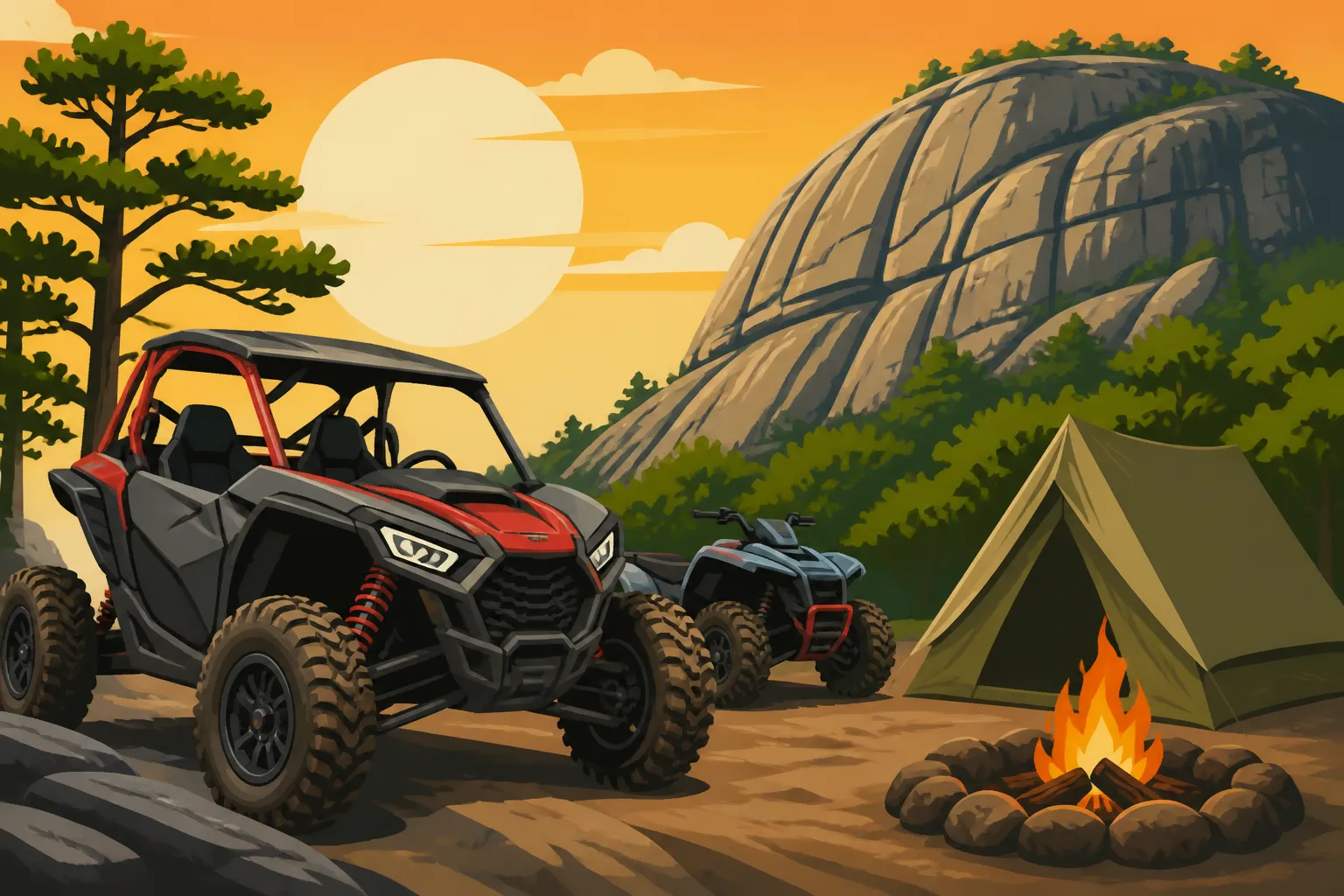
A weekend at a rocky off-road park can be a great excuse to sleep under the stars, but tent camping adds a second set of logistics to the ride: where you can pitch, how you’ll handle rain and dust, and what you need to keep dry and secure. This guide covers how to plan a primitive camping trip near a South Carolina rock park, including what to confirm before leaving home.
Plan the campsite before you load the trailer
Confirm what primitive camping means at the park
“Primitive camping” can mean very different things from one property to another. It might be a basic tent area without hookups, a field where campers bring everything they need, or a site with access to shared facilities. Don’t assume the phrase tells you whether there’s drinking water, a restroom, a fire ring, or space for a truck and trailer.
If you’re planning to ride at Gulches ORV Park near Waterloo, check directly with the park before you go. Ask whether tent camping is permitted on your intended dates, whether camping is included with riding access or handled separately, and whether you need to reserve a spot. Also confirm arrival and quiet-hour rules, fire restrictions, restroom access, and where campers may park. Park policies and available facilities can change.
This quick checklist can help you avoid discovering an important detail at the entrance:
| Question to confirm | Why it matters |
|---|---|
| Is tent camping allowed on your dates? | Some areas or dates may have different rules or availability. |
| Do you need a reservation? | A full weekend or organized event may affect space. |
| Is water available? | If not, bring enough for drinking, cooking, and basic cleanup. |
| Are fires allowed? | Restrictions may depend on weather and local conditions. |
| Where can the truck and trailer go? | A campsite may not have room for a long tow setup. |
| Are restrooms or showers available? | Plan accordingly if the site is truly primitive. |
| Can you camp beside your machine? | The park may designate separate camping and riding areas. |
For broader trip planning, [South Carolina OHV Camping With Trail Access] can help you compare the kind of camping setup you want with the riding access you need. For park-specific expectations, read [South Carolina Private Park Passes and Rules] and confirm the details with the property itself.
Choose a spot that works for both camping and riding
At a rock park, the nearest open patch of ground may not be the best place to pitch a tent. Think about drainage, shade, distance from vehicle traffic, and how you’ll move between your camp and the riding area. A low spot can collect water during a hard shower. A site directly beside a busy route may mean dust, headlights, and engine noise when you’re trying to wind down.
If the park assigns campsites, use the designated area rather than spreading out into a tempting open space. If campers choose their own location, ask staff where vehicles are permitted and where they prefer tents to go. Keep your tent well away from trails, turning areas, and recovery routes. That matters especially when a group arrives late or someone needs to maneuver a trailer in low light.
Before settling in, take a slow walk around the site. Look for sloping ground, exposed roots, rocks beneath the tent floor, and branches that could cause trouble in wind. A simple groundsheet can protect your tent from abrasion, but it won’t make a rocky or uneven pitch comfortable. If you’re arriving after a long haul from Columbia, Greenville, or Charleston, it’s worth spending a few extra minutes choosing carefully rather than waking up sore and damp.
Pack for a rocky park and a basic campsite
Separate riding gear from sleeping gear
The easiest way to make a primitive camping weekend feel manageable is to keep camp supplies clean and dry. Pack sleeping bags, a change of clothes, and anything you need for the morning in sealed bags or lidded storage bins. Dust from a riding area finds its way into surprising places, and wet riding gear can quickly make a small tent feel miserable.
Keep a separate container for dirty boots, gloves, and riding clothes. If you don’t have a wash station, a small brush and a bag for muddy or dusty items can help keep grit out of your sleeping area. Bring a headlamp for each person, plus spare batteries or a charging plan. A phone flashlight is handy in a pinch, but it’s awkward when you’re setting up a tent, finding a zipper, or walking to a restroom with both hands full.
A practical packing list includes:
- Tent, stakes, groundsheet, and a small repair kit
- Sleeping bags suited to the expected overnight conditions
- Sleeping pads that can cushion uneven ground
- Headlamps, extra batteries, and a lantern for the campsite
- Drinking water and a way to refill it if the park provides water
- Simple meals, snacks, and a way to store food securely
- Trash bags and a separate bag for dirty gear
- First-aid supplies and any personal medication
- A tarp or rainfly setup that can handle a passing shower
- Phone power bank and an offline map for the drive and surrounding roads
A route-planning tool such as onX Offroad can be useful for saving an offline map before you lose reliable service. Use it to help orient yourself on the way in or to keep track of the broader area, not as a substitute for the park’s own directions, trail rules, or staff guidance. Save the park’s address and entry instructions separately so you’re not relying on a map app to identify private roads or authorized riding routes.
Plan for weather, water, and food
South Carolina weather can make a simple camp setup feel very different from one weekend to the next. Heat and humidity can make a tent stuffy, while a sudden storm can turn an exposed campsite into a muddy chore. Check the forecast before loading, but pack a rain layer even when the sky looks promising. A tarp can provide a dry place to sit or sort gear, provided it is secured safely and does not block access or interfere with other campers.
Water deserves a little more attention than people expect. You’ll need it not only for drinking, but also for meals, brushing teeth, and washing hands. Riding adds heat and exertion, so don’t assume the amount you’d bring for an ordinary overnight stay will be enough. If the park confirms that potable water is available, ask where it is and whether you can reach it easily from the camping area. If not, bring your own supply and avoid counting on a nearby store being open when you arrive.
For food, keep the menu simple. Meals that need little preparation are easier when you’re arriving late, dealing with dusty equipment, or trying to avoid leaving food out overnight. Confirm fire rules before bringing firewood or planning to cook over an open flame. A compact stove may be a practical alternative, but check park rules first. Pack out food scraps and trash, and keep food stored so it won’t attract animals or create a mess around neighboring tents.
Coordinate camping with your riding plan
Know where your machine can go
Camping at an off-road park doesn’t automatically mean every trail or vehicle is allowed. A rock park may have routes designed for different types of machines, and access can depend on size, equipment, or the park’s own operating rules. If you’re bringing a side-by-side, confirm that the trails you want to ride are open to it; don’t assume a route suitable for a full-size rig will also suit a smaller quad, or vice versa.
For a sense of the local riding options, [Gulches ORV Park in South Carolina] and [Gulches' 80 Acres in South Carolina] provide useful starting points for understanding the setting. If your group is bringing a full-size vehicle, review [Gulches' Jeep Trail in South Carolina] and then verify current access directly with the park. The key is to match your machine and your riders’ experience to the routes you plan to use, rather than choosing a trail based on its name or a quick glance at a map.
It can help to use onX Offroad to save a general orientation map and mark the park entrance or your approach route before departure. Once you’re at the property, follow posted signs and staff instructions. Private park boundaries, one-way routes, and closures can be difficult to infer from a phone screen, especially when tree cover or weak service makes navigation less reliable.
Build in time for changing conditions
Rain can change a rocky route quickly. Wet surfaces may reduce traction, increase the chance of a slide, or make a difficult section unsuitable for a rider who was comfortable in dry conditions. Ask staff about current trail status when you arrive and again before setting out if the weather changes. [South Carolina Trail Conditions Before You Haul] and [South Carolina Trail Closures After Rain] are useful reminders to check access before committing to a long drive.
If someone in your group is new to rock riding, agree on a conservative plan before the first machine leaves camp. Decide who will lead, where the group will regroup, and what to do if a rider wants to skip an obstacle. Nobody should feel pressured to attempt a section just because the rest of the group is watching. A spotter can help in some situations, but only if they stand where the rider can see them and remain out of the machine’s path.
For mixed groups, take a few minutes to review [South Carolina Trails That Allow Side-by-Sides] and [South Carolina Trail Etiquette Locals Expect]. Those topics can help you think through vehicle fit and considerate riding, but the park’s own rules are what determine where you may ride on its property. Keep onX Offroad available for general orientation if useful, but treat posted signs, staff directions, and the park’s official trail information as the authority.
Make the overnight stay easier for everyone
Keep camp tidy and respect the site
Primitive camping is more pleasant when your group keeps its footprint small. Set up only in an approved area, keep vehicles and trailers out of travel lanes, and avoid running noisy equipment late at night. Pack out everything you bring in, including food packaging and small items that are easy to lose in grass or gravel. If a designated fire area is available and fires are permitted, follow the park’s instructions and leave the spot safe before you turn in.
A little organization also makes the morning smoother. Put keys, gloves, and helmets in one consistent place. Keep a clean set of riding clothes protected from dust. Before bed, check that machines are parked where the park allows and that valuable gear is secured. If you’re camping with children, agree on simple boundaries around trails and vehicles so no one wanders into an active riding area.
Good manners matter at a shared park. A generator, music, or late-night unloading may seem minor to the person doing it, but it can carry across a quiet campsite. Give nearby campers room, and ask before using a shared area in a way that could affect others. [Leaving a Carolina Trailhead Tidy] offers a broader leave-no-trace mindset that works just as well at a private riding property.
Prepare a backup plan before you leave home
Even a well-planned trip can change. The camping area may be full, a storm may affect trail access, or a piece of gear may fail. Know whether there’s another place to stay nearby, and keep the park’s contact details accessible. If the trip depends on a specific campsite or facility, confirm that arrangement before you start towing.
Before departure, walk through a final check: Is the camping permission confirmed? Is the machine suited to the park’s permitted routes? Do you have water, dry bedding, and lights? Are your trailer and tie-downs ready for the return trip? Have you saved the park’s address and checked the route? onX Offroad can help you keep a general offline reference, but it’s still wise to save written directions and the park’s own contact information.
A tent stay near a South Carolina rock park can be a memorable weekend when you treat camping and riding as two parts of the same plan. Confirm the campsite rules, pack for dust and weather, choose routes that suit your group, and leave enough flexibility to adjust when conditions change. That preparation makes it easier to focus on the ride—and actually enjoy the night outside afterward.
Disclaimer
This article is for general informational purposes only and does not constitute professional advice. Laws, prices and regulations vary by location and change over time. Consult a qualified professional for guidance on your specific situation.