Cabins Beside a Private Trail System
Finding a cabin beside a private ATV trail system can make a South Carolina riding weekend much easier, especially when you want to avoid towing back and forth each day. The catch is that “near the trails” does not always mean direct access, an included riding pass, or permission to ride after hours. This guide explains what to check before you book.
What “Cabins Beside a Private Trail System” Really Means
On-site cabins versus nearby places to stay
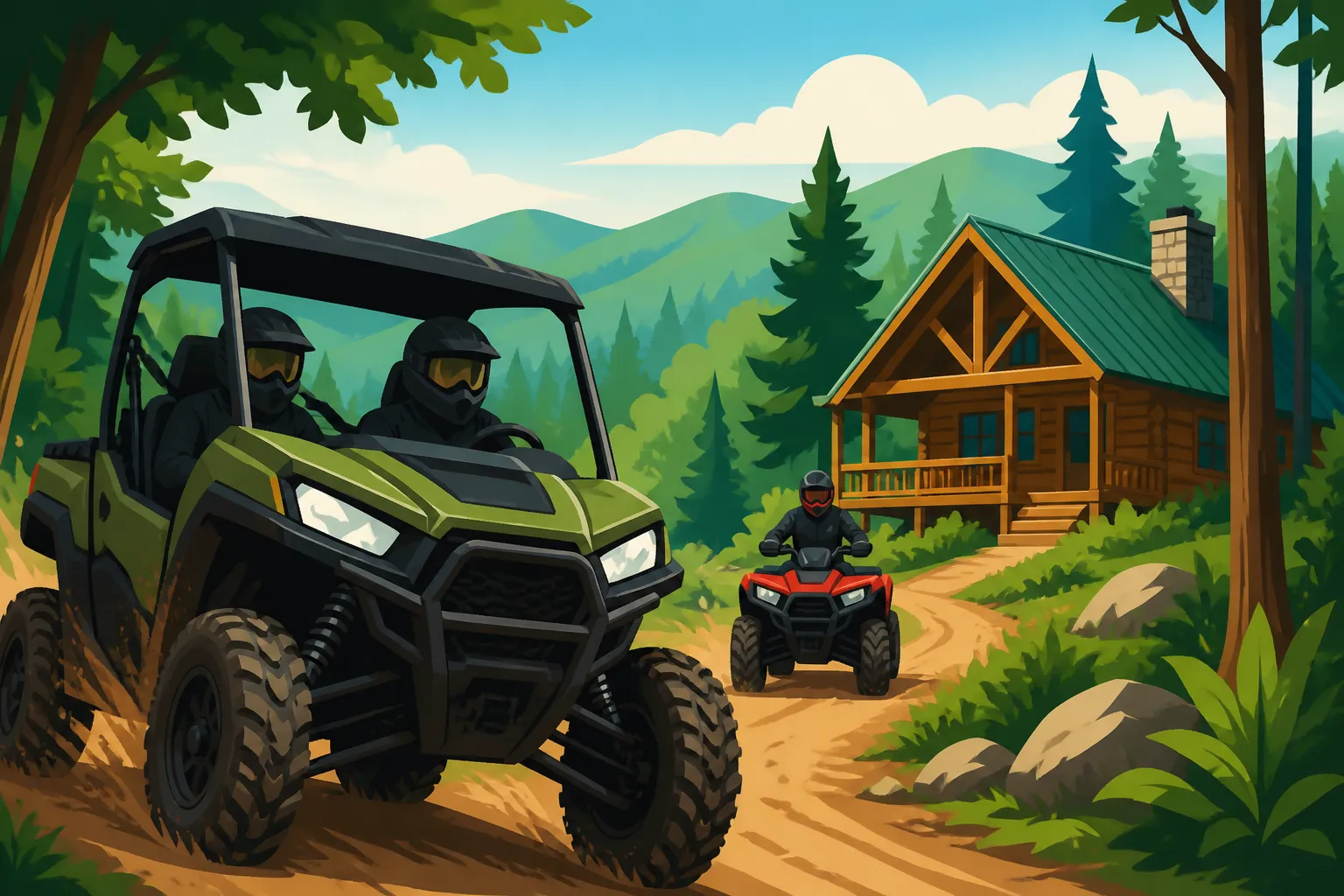
A cabin described as being beside a trail system might be on the riding property, just outside its entrance, or somewhere in the surrounding area. Those arrangements can feel similar in a listing, but they affect your weekend in very different ways. An on-site stay may make it easier to get from your lodging to the riding area, while a nearby rental may still require you to load your machines and drive to the park entrance.
Before booking, ask the property manager or park staff to explain exactly where the cabin sits in relation to the trail system. Is it inside the riding property? Is there a designated route from the cabin to the trails? Or will you need to trailer your machine to a staging area? Get the answer in writing if the distinction affects your plans.
Carolina Adventure World is one South Carolina example to investigate for lodging near a private trail network. Its property is associated with a substantial riding area, but lodging arrangements, availability, and access details can vary. Review [Cabins and Yurts at Carolina Adventure World] and confirm the specific cabin’s location and current rules with the park before making plans.
A cabin stay does not automatically include trail access
One of the easiest assumptions to make is that booking a cabin includes permission to ride. That may not be the case. Lodging and riding access can be handled separately, and you may need to reserve or purchase the appropriate park access for each rider or vehicle. Ask what your lodging reservation covers, what it does not cover, and whether trail access needs to be arranged separately.
Also ask whether the cabin reservation guarantees access to the trail system on the dates you plan to visit. A private park may have its own operating schedule, reservation process, or temporary closures. Even if you have a place to sleep nearby, that does not mean the trails will be open or that your machine will be permitted on every route.
For a clearer picture of park-specific rules, compare [Cabins and Yurts at Carolina Adventure World] with [South Carolina Private Park Passes and Rules]. The important point is not to assume that a cabin, a vehicle pass, and a rider pass are interchangeable. Ask the park to spell out the requirements for your group and your machines before you arrive.
How to Choose the Right Cabin for Your Riding Weekend
Match the lodging to your group and machines
Start with the basics: how many people are going, how many machines you are bringing, and what kind of space you need after a day on the trails. A group riding in a side-by-side may need more secure parking and room to turn around with a trailer than a couple arriving with one small ATV. If you are bringing children, older relatives, or friends who are not riding, check whether the cabin layout gives everyone a comfortable place to rest.
Ask about parking and unloading, not just sleeping capacity. A listing may show enough beds for your group but say little about trailer access, a safe place to leave machines, or how close the parking area is to the lodging. If a late arrival is likely, ask about check-in arrangements and whether you can unload without disturbing other guests.
Think through the practical end-of-day routine, too. Muddy boots, wet riding gear, helmets, and dusty clothes can take over a small cabin quickly. Ask whether there is an outdoor area where you can clean up, whether you may wash machines on the property, and where gear can dry. Never assume a property allows pressure washing or machine maintenance; those activities can be restricted to protect the grounds and nearby waterways.
Compare on-site lodging with a nearby rental
On-site lodging can reduce the hassle of driving between your bed and the riding area, but it may come with park-specific rules and limited flexibility. A nearby private rental may offer more space or a quieter setting, yet it might require a daily drive or a trailer trip to reach the trails. Neither option is automatically better; it depends on how your group wants to spend its time.
| Lodging setup | Potential advantage | What to confirm before booking |
|---|---|---|
| Cabin on park property | Convenient access to the riding area | Whether the cabin reservation includes or connects to trail access |
| Rental near the park | More choice in location and lodging style | Driving distance, trailer parking, and whether machines must be trailered |
| Off-site cabin arranged through a local provider | May suit a group seeking a separate place to stay | Who manages the booking, how access works, and what the cancellation terms are |
| Campground or other nearby lodging | May offer a different budget or group setup | Whether the site accommodates your trailer and riding gear |
For riders considering the Gulches area, separate the lodging question from the riding question. An off-site cabin may be convenient without being part of the park or directly connected to its trails. Read [Renting the Off-Site Cabin Near Gulches ORV Park] and confirm the current route, parking setup, and park-entry process with the relevant businesses.
When comparing options, calculate the whole trip rather than focusing only on the nightly stay. A slightly closer cabin might save time and towing effort, while a farther rental could work better for a group that wants a full kitchen or additional living space. Include the cost and logistics of park access, fuel, meals, and hauling in your decision, and check provider pages directly for current lodging and access details.
Questions to Ask Before You Reserve
Confirm access, operating hours, and machine rules
Ask whether machines may be ridden directly from the cabin to the trails. If the answer is yes, clarify the approved route and whether there are restrictions on riding through common areas, parking lots, or neighboring land. A property being close to a trail does not grant permission to cross private land, use a service road, or pass through a locked gate.
Then ask when riding is allowed and how closures are communicated. Weather, maintenance, events, or land-management decisions may affect access. A cabin reservation could remain valid even if part of the trail system is closed, so find out what happens in that situation and whether you will receive updates before or during your stay.
Check that the trails fit the machines you are bringing. Some trail systems have width or vehicle-type restrictions, and a full-size side-by-side may not fit on routes designed for narrower machines. Read [South Carolina Trails That Allow Side-by-Sides] and [South Carolina's 50-Inch Trail Width Limit] as part of your planning, then verify the park’s own rules. Do not rely on a general trail description to determine that your particular machine is permitted.
Ask about parking, cleanup, and quiet-hour rules
A trailer can be the most overlooked part of a cabin booking. Ask whether there is a dedicated place to park it, whether the access road is suitable for your towing setup, and whether you can leave the trailer at the property while riding. If you are traveling with a larger rig, check turning space and any restrictions on vehicle size before you arrive.
Find out what the property expects after a muddy day. Some places may prohibit washing machines on site or require guests to use a designated wash area. Ask where to store muddy equipment, how to dispose of trash, and whether there are restrictions on fuel cans or machine repairs. A quick phone call can prevent an awkward conversation when you are tired and standing beside a mud-covered quad.
Finally, ask about quiet hours and shared spaces. A cabin close to a trail system may also be close to other guests, campers, or residents. Respect posted rules, keep engines off when you are not riding, and avoid revving machines around lodging areas. For more on being a good neighbor at a riding destination, see [South Carolina Trail Etiquette Locals Expect] and [Riding Quietly Past Carolina Camps].
Plan the Trip Before You Load the Trailer
Map the route and save useful information
Plan both the road trip and the riding day. Confirm the cabin address, check-in instructions, park entrance, and trailer parking location before leaving home. If the property and trailhead are separate, save both destinations so you do not end up following a route that leads to a private driveway or an unsuitable road.
An app such as onX Offroad can help you review off-road mapping information and organize route notes before you head out. Use it as a planning aid, not as proof that a route is open or that you have permission to ride there. A line on a map does not override park rules, private-land boundaries, temporary closures, or posted signs. Check official park information and ask staff about any route you are unsure of.
Download or save what you need before entering areas where mobile service may be unreliable. Keep the lodging address, reservation details, park contact information, and directions available offline or on paper. This is especially useful if one person in the group is navigating while another is managing a trailer or coordinating arrival.
Build a flexible schedule for the riding weekend
Give yourself room for check-in, unloading, and a safety check before the first ride. A plan that assumes you can arrive, unpack, buy access, and hit the trails immediately can unravel if there is a line, a rule briefing, or a machine issue. Confirm what time you can access the cabin and when the riding area opens, then leave a little breathing room between those steps.
For a group, agree on a meeting point and a simple communication plan before anyone sets out on the trails. Establish what to do if someone gets separated, a machine needs attention, or weather changes the day’s plan. Carry water and basic supplies, and make sure someone knows where the group intends to ride. You can also review [South Carolina Trail Conditions Before You Haul] before departure so you are not making the drive without checking for relevant updates.
If the weather turns or a trail closes, having a cabin nearby can still make the weekend worthwhile, but only if your lodging plan is flexible. Ask about cancellation or change policies before booking, and do not assume that bad riding conditions automatically change a lodging reservation. For related planning details, [South Carolina Wet Weather Trail Closures] explains why conditions can affect access, while [South Carolina ATV Trails: Where to Ride] can help you think through other riding destinations.
Use a pre-booking checklist
Before you commit, make sure you can answer these questions:
- Is the cabin on the riding property, next to it, or merely in the surrounding area?
- Does the lodging reservation include any park access, or must access be arranged separately?
- Can you ride from the cabin to the trails, or do you need to trailer to a staging area?
- Are your ATV or UTV types and dimensions allowed on the trails you plan to use?
- Is there enough room for your truck, trailer, and machines?
- What are the check-in, riding, and quiet-hour rules?
- Are machine washing, repairs, and fuel storage allowed?
- How does the park notify guests about closures or changes?
- What are the cancellation or rescheduling terms for lodging and riding access?
- Have you saved the address, route, reservation details, and park contact information?
A cabin beside a private trail system can be a convenient base for riding in South Carolina, but the best choice is the one with clear answers about access, parking, and rules. Confirm those details directly with the lodging provider and park, then plan around the trail system’s actual policies rather than assumptions.
Disclaimer
This article is for general informational purposes only and does not constitute professional advice. Laws, prices and regulations vary by location and change over time. Consult a qualified professional for guidance on your specific situation.