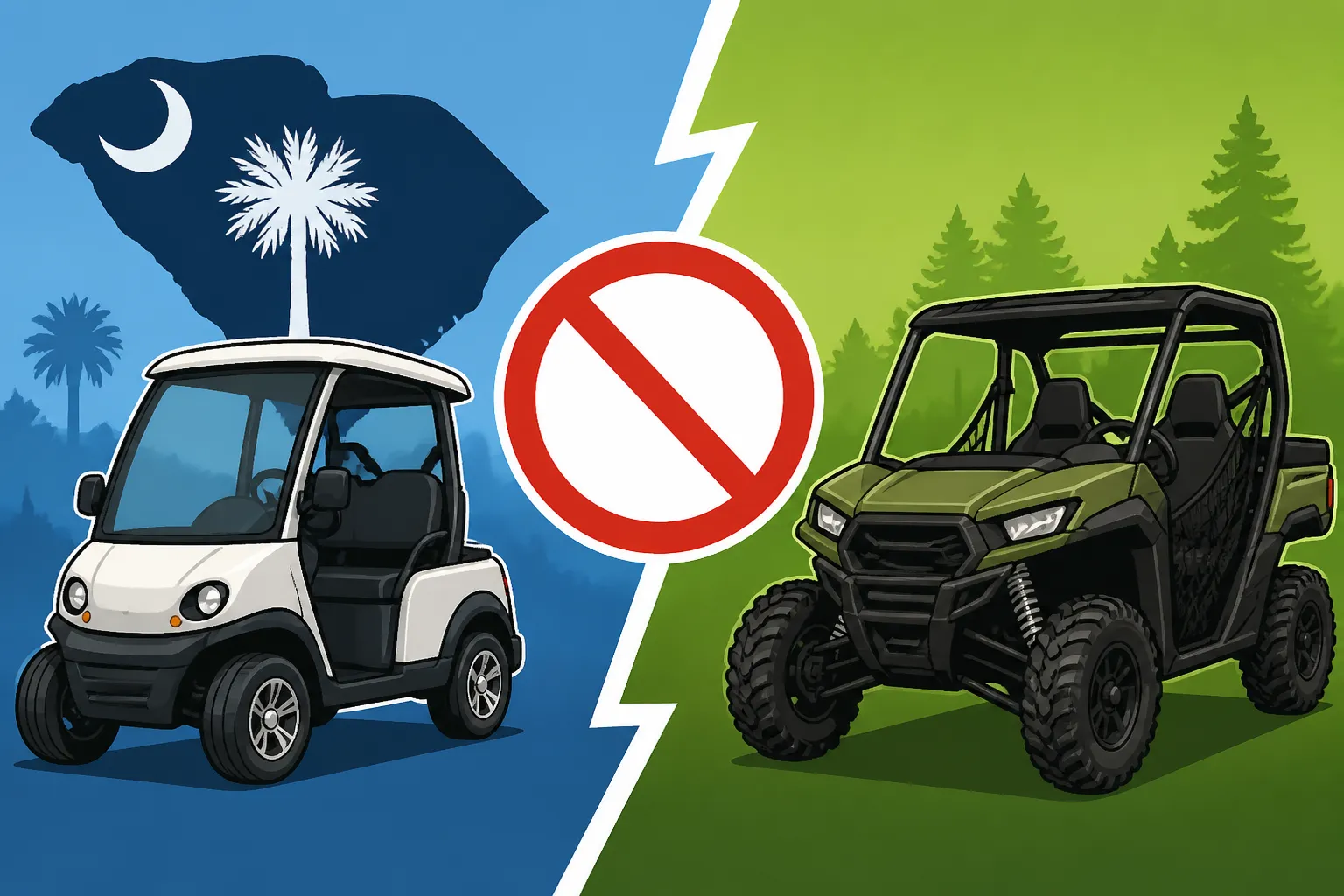
A Low-Speed Vehicle Is Not a South Carolina UTV
There’s often a lot of head-scratching and confusion when folks in South Carolina talk about vehicles that aren’t quite a car, not quite an ATV, but can still legally hit certain roads. One of the biggest mix-ups we see is between Low-Speed Vehicles (LSVs) and the newer category of street-legal UTVs. It’s easy to get them tangled, but understanding the real differences is crucial to staying on the right side of the law and ensuring your machine is properly equipped and registered for where you want to ride. This guide is all about clearing up that confusion, so you know exactly what you’re driving and what rules apply.
Understanding Low-Speed Vehicles (LSVs) in South Carolina
Let's start by tackling Low-Speed Vehicles, or LSVs. These aren't new to South Carolina roads, and they serve a very specific niche. Think of them as a step up from a golf cart in terms of road capability, but definitely not a full-fledged car. The whole idea behind LSVs is to provide a transportation option for short distances, typically within neighborhoods or communities where speeds are lower.
What Defines an LSV?
Legally speaking, an LSV in South Carolina has a pretty clear definition. It’s a four-wheeled vehicle whose top speed is greater than 20 miles per hour but not greater than 25 miles per hour. That 25 mph cap is really important – it's the defining characteristic that separates an LSV from a regular car. Beyond speed, an LSV must also meet certain safety equipment standards, making it more robust than your typical golf cart. We're talking about headlamps, tail lamps, stop lamps, turn signal lamps, reflex reflectors, exterior mirrors (on the driver's side and either a passenger-side mirror or an interior rearview mirror), a parking brake, a windshield, seat belts, and a vehicle identification number (VIN). These aren’t optional extras; they’re mandatory features for a vehicle to be classified and permitted as an LSV. It’s about ensuring that even at low speeds, the vehicle has basic safety components to operate alongside other traffic.
Where Can LSVs Be Driven?
This is where many riders get into trouble if they don't understand the rules. In South Carolina, LSVs are generally restricted to roads where the posted speed limit is 35 miles per hour or less. You absolutely cannot drive an LSV on roads with higher speed limits, like major thoroughfares or highways. They are primarily designed for secondary roads, neighborhood streets, and designated low-speed zones. Imagine cruising through a coastal town, heading to the community pool, or visiting a neighbor a few blocks away – that's the natural habitat for an LSV. It's not built for long-distance travel, and trying to push it onto faster roads isn't just illegal, it's incredibly dangerous for both the LSV driver and other motorists. These vehicles lack the acceleration and protective features needed for higher-speed traffic.
Registering and Titling an LSV
Getting your LSV legal for the road involves a trip to the DMV. Unlike off-road ATVs, an LSV absolutely needs to be titled and registered with the South Carolina Department of Motor Vehicles (SCDMV) if you want to operate it on public roads. You'll go through a process very similar to registering a car. This means you’ll need proof of ownership, such as a manufacturer's certificate of origin (MCO) for a new vehicle or a properly assigned title if you bought it used. You'll also need proof of liability insurance. The DMV will issue you a title, which proves legal ownership, and a license plate, which allows you to operate it on public roads. Remember, a valid driver's license is also required to operate an LSV on public roads. It's essentially treated as a small, specialized car for registration purposes, which includes fees for titling and registration. The cost of titling an LSV is typically straightforward, but the registration will involve regular renewal, just like any other plated vehicle. You'll find many of the same forms used for car registrations apply here. [South Carolina Title Applications at the DMV] covers this in more detail.
The Rise of Street-Legal UTVs in South Carolina
For years, UTV owners in South Carolina have felt stuck, often only able to enjoy their machines on private land or designated off-road parks. But that all changed with a new piece of legislation, bringing a whole new category of "street-legal UTVs" to the roads. This is a game-changer for many, opening up possibilities that simply didn't exist before.
What Makes a UTV Street-Legal?
South Carolina Act 164 created this new class of vehicles, specifically addressing UTVs. The key here is conversion and compliance. To be deemed street-legal, a UTV needs to meet a very specific list of equipment requirements that go beyond what a typical off-road UTV has. This includes working headlamps, tail lamps, stop lamps, turn signal lamps, reflex reflectors, a parking brake, a rearview mirror (or mirrors, to see 200 feet to the rear), a windshield, a horn, a muffler, a speedometer, and seat belts. Furthermore, there are specifications on width (not exceeding 80 inches), weight (not exceeding 4,000 pounds), and maximum speed (capable of at least 35 mph, but not exceeding 55 mph). Yes, you read that right – these are much more capable machines than LSVs! The law specifically requires these modifications to ensure they are safe enough to share the road with cars, especially on secondary roads. [South Carolina Street UTV Requirements Explained] gives a deeper dive into these specifics. Many owners get their UTVs converted by specialized shops or purchase them already compliant from dealers. Using a service like LawDepot might even help you draft a bill of sale or an affidavit of ownership if you're modifying a UTV you already own and need proof of equipment upgrades for the DMV.
Where Street-Legal UTVs Can Be Driven
This is where street-legal UTVs truly differentiate themselves from LSVs and golf carts. While LSVs are generally confined to 35 mph roads or less, street-legal UTVs can be operated on any public road with a posted speed limit of 55 miles per hour or less. This opens up a significant amount of the state's road network, making them much more versatile for commuting, running errands, or simply exploring. They are still prohibited from interstates and controlled-access highways, which is sensible given their design and top speeds. But imagine being able to drive your UTV from your home to a local store, a friend's house a few towns over, or even to a nearby trailhead without having to trailer it. This expanded access is a huge benefit for owners. [South Carolina Street UTV Rules From November 2026] outlines the regulations in detail, including important dates for when this legislation came into full effect.
Registering and Titling a Street-Legal UTV
Just like LSVs, street-legal UTVs absolutely require titling and registration with the SCDMV. This process mirrors that of other motor vehicles. You’ll need to provide the MCO for a new UTV or a properly assigned title for a used one, along with proof that the UTV meets all the required street-legal equipment standards. The SCDMV will also require proof of liability insurance, just like a car. Once all the paperwork is in order and the fees are paid, you'll receive a South Carolina title for your UTV and a distinctive license plate. Unlike some other vehicle types, these plates need to be renewed biennially, meaning every two years. There's a specific fee for this [South Carolina's Biennial Street UTV Fee] and it's important to keep track of your renewal dates to avoid any issues. The new law has provisions for these specific plates and registration steps, making it a clear, albeit new, path for UTV owners.
Key Differences: LSV vs. Street-Legal UTV
While both Low-Speed Vehicles and street-legal UTVs offer a way to get around on certain public roads in South Carolina, they are distinct categories with different capabilities, legal requirements, and intended uses. Understanding these differences is crucial for anyone considering purchasing or operating one of these machines.
Performance and Capability Distinctions
The most glaring difference between an LSV and a street-legal UTV lies in their performance and capabilities. An LSV is purpose-built for low-speed urban or community environments, topping out at 25 mph. It's essentially an upgraded golf cart, designed for short, leisurely trips. Its chassis, suspension, and engine are not designed for anything beyond that limited speed and light-duty use. Trying to take an LSV off-road would likely result in damage and a very uncomfortable ride.
A street-legal UTV, on the other hand, is still fundamentally an off-road machine at heart, but with modifications to make it road-worthy. These vehicles typically boast more powerful engines, robust suspensions, and 4×4 or AWD capabilities that allow them to tackle rugged terrain, haul gear, or navigate challenging trails. While street-legal, their primary design intent often remains focused on utility and adventure, making them far more versatile. They can travel at speeds up to 55 mph on public roads and then, with permission, transition directly onto a challenging off-road trail. This dual nature is what truly sets them apart.
Legal Road Access Compared
The legal road access is perhaps the most critical distinction for operators. This is where you avoid fines and keep your insurance valid.
- Low-Speed Vehicles (LSVs): Primarily restricted to roads with a posted speed limit of 35 mph or less. They are designed for local, low-speed travel and are explicitly prohibited from faster roads. Think neighborhood streets and short commutes.
- Street-Legal UTVs: Enjoy much broader access, permitted on roads with a posted speed limit of 55 mph or less. This expands their usability dramatically, allowing travel on many secondary state roads, county roads, and city streets. They are still barred from interstates and controlled-access highways.
Here's a quick comparison to highlight this:
| Feature | Low-Speed Vehicle (LSV) | Street-Legal UTV |
|---|---|---|
| Top Legal Speed | 25 mph | Up to 55 mph (on permitted roads) |
| Maximum Road Speed | 35 mph posted limit | 55 mph posted limit |
| Primary Use | Neighborhood transport, short errands | Utility, recreation, off-road, expanded road travel |
| Off-Road Capability | Very limited, not designed for off-road | High, designed for rugged terrain |
| Title Required | Yes | Yes |
| Registration Required | Yes | Yes, biennial |
| License Plate Issued | Yes, standard passenger vehicle plate | Yes, specific UTV license plate |
| Driver's License | Yes, standard driver's license | Yes, standard driver's license |
| Insurance Required | Yes, liability | Yes, liability |
Equipment and Safety Requirements
While both types of vehicles need basic safety gear, the specifics differ due to their speed and intended use. An LSV, operating at a maximum of 25 mph, needs headlamps, tail lamps, stop lamps, turn signals, mirrors, a parking brake, a windshield, and seat belts. These are foundational elements for low-speed road integration.
A street-legal UTV, capable of higher speeds, has a more stringent list of equipment requirements, often mirroring those of a motorcycle or even a small car for its road operation. Beyond the basics, this includes specific requirements for a horn, a muffler (to meet noise standards), a speedometer (crucial for adhering to speed limits), and seat belts for all occupants. The higher speed capabilities mean that features like adequate braking and lighting systems become even more critical for safety. It's not just about having the equipment, but ensuring it meets the performance standards for a vehicle capable of 55 mph. [South Carolina Street UTV Machine Specs] delves into these requirements in finer detail.
Why This Distinction Matters for South Carolina Riders
Navigating the world of off-road and street-legal vehicles can feel like walking a tightrope, especially with new laws and classifications. Understanding whether your machine is an LSV or a street-legal UTV isn't just a technicality; it has real, tangible consequences for your wallet, your legal standing, and your safety.
Avoiding Fines and Legal Trouble
Perhaps the most immediate and impactful reason to know the difference is to avoid hefty fines and legal complications. Operating a vehicle that doesn't meet the classification for the road you're on can lead to tickets for various infractions. For example, if you're caught driving an LSV on a 45 mph road, you could be cited for operating an unregistered vehicle (if not correctly registered as an LSV), or for operating a vehicle illegally on that roadway. Similarly, if your UTV isn't fully street-legal but you're trying to pass it off as one, you could face penalties for missing equipment, lack of proper registration, or even driving an uninsured vehicle.
Law enforcement officers in South Carolina are becoming increasingly aware of these distinct categories. They will check for the appropriate license plate, verify registration, and ensure the vehicle meets the equipment requirements for its classification. A simple traffic stop could escalate quickly if your vehicle doesn't match its intended legal use. Imagine the frustration of getting pulled over, only to realize you completely misunderstood what your machine was allowed to do. That's a headache no one wants. [South Carolina Equipment Checks by Officers] details some of the things they look for.
Insurance and Liability Considerations
Your vehicle's classification also has a significant impact on your insurance coverage and liability. Insurance companies rate policies based on risk, and a vehicle's legal classification plays a huge role in that assessment.
If you own an LSV, you'll need a standard auto liability policy, just like a car. This covers you for damage you might cause to others or their property if you're at fault in an accident. If you've been misclassifying your LSV as a golf cart, for example, your "golf cart insurance" might not cover you for an accident on a public road, leaving you personally liable for damages.
For street-legal UTVs, liability insurance is explicitly required for registration in South Carolina. While many off-road UTV riders might opt for specialized off-road insurance, once it's on public roads, it needs to meet state minimums for liability coverage. If you're involved in an accident and your UTV isn't properly insured as a street-legal vehicle, or if your policy is based on an incorrect classification, your claim could be denied. This could leave you financially exposed to thousands, even tens of thousands, of dollars in medical bills and property damage. Always verify with your insurance provider that your policy specifically covers your vehicle for its legal classification and intended use on public roads. [South Carolina Insurance Proof at Registration] is a good read if you're concerned about this.
Making the Right Purchase Decision
Finally, understanding these distinctions is paramount when you're in the market for a new machine. Are you looking for a quiet ride around your retirement community, or do you need a workhorse that can traverse your farm and then head to town for supplies?
- If your primary need is short-distance, low-speed transport on neighborhood roads, an LSV is likely the most economical and appropriate choice. It's designed for that specific purpose, and you won't be paying for capabilities you don't need.
- If you require a vehicle with true off-road capabilities that can also legally access a wider range of public roads for utility, recreation, or even light commuting, a street-legal UTV is what you're after. Be prepared for the additional cost of the UTV itself, plus any modifications or dealer fees to make it compliant.
Asking the right questions at the dealership or from a private seller about a vehicle's classification and road-legality is crucial. Don't assume. Always check the VIN and review the manufacturer's documentation or the previous title to confirm the vehicle's true nature. You might even use a service like LawDepot to help draw up a comprehensive bill of sale that clearly outlines the vehicle's classification and any agreed-upon street-legal modifications, ensuring both buyer and seller are on the same page. Choosing the wrong machine for your needs or misunderstanding its legal status can lead to buyer's remorse, unexpected expenses, and a lot of unnecessary hassle.
Disclaimer
This article is for general informational purposes only and does not constitute professional advice. Laws, prices and regulations vary by location and change over time. Consult a qualified professional for guidance on your specific situation.