Does an Off-Road Quad Need Insurance in South Carolina?
It's a common misconception, especially for folks new to the trail scene here in the Palmetto State, that every vehicle needs insurance. When you're talking about off-road quads in South Carolina, the question of insurance can get a little muddy, leading to a lot of head-scratching moments at the dealership or around the campfire. This guide is going to clear up the confusion, explain the legal landscape, and help you understand why, even when it's not mandated by law, having coverage for your ATV is usually a really smart move.
The Straight Scoop: Legal Requirements for Off-Road ATV Insurance in South Carolina
Let's cut right to the chase because this is usually the first thing on everyone's mind. When it comes to riding your off-road ATV on private land, designated trails, or other areas where street registration isn't required, South Carolina law does not mandate that you carry insurance. That's right, unlike your car, truck, or even a street-legal UTV (which we'll get to in a bit), there's no state statute demanding liability coverage for your typical trail quad. This can be a huge relief for some, and for others, it raises an eyebrow.
This lack of a legal requirement stems from how off-road machines are classified in the state. They're generally considered recreational vehicles, and their operation is largely regulated by specific laws like [Chandler's Law and South Carolina ATV Rules] which focus more on safety, age restrictions, and where you can ride. The state's Department of Motor Vehicles (DMV) doesn't even handle registration for off-road ATVs, let alone enforce insurance for them. You won't be asked for proof of insurance when buying an off-road quad, or if you're pulled over on a logging road (unless you're operating illegally, of course).
However, just because it's not legally required doesn't mean you're off the hook entirely for financial responsibility. If you're involved in an accident, whether it's with another rider, a pedestrian, or property, and you're found at fault, you are still personally liable for any damages or injuries that result. This is a critical distinction that many riders overlook. No insurance means you're solely responsible for covering repair bills, medical expenses, and potential legal fees out of your own pocket. It's a roll of the dice that many folks aren't comfortable taking once they fully understand the implications.
Distinguishing Off-Road ATVs from Other Vehicles
It's really important to understand what we mean by "off-road ATV" in South Carolina. We're talking about those machines primarily designed for unpaved terrain – the ones you take to [Carolina Adventure World in South Carolina] or one of our national forest trails like Enoree. These are typically machines like a Honda Foreman, a Yamaha Raptor, or a Polaris Sportsman, not designed or permitted for public road use (with some very specific and limited exceptions for certain farm or utility purposes).
This distinction is key because other vehicles, even those that look similar, have different rules. For example, a street-legal golf cart, while often used recreationally, requires a permit to operate on certain public roads and comes with its own set of rules, including [South Carolina Golf Cart Permit Fees]. And if you've got a dirt bike, while often ridden off-road, if you ever plan to title it for any reason, that process involves other considerations. [Titling a Dirt Bike in South Carolina] is a process, but still doesn't inherently trigger an insurance mandate unless it's for street use.
The moment you start talking about operating any vehicle on public roads in South Carolina, even for a short distance, the insurance requirements often change dramatically. This is why the specific phrasing "off-road quad" is so important. Your classic trail machine, kept strictly off the pavement, is exempt from state-mandated insurance. But that exemption comes with a significant personal financial risk if things go sideways.
Beyond the Law: Why Most SC Riders Still Insure Their Off-Road Quads
Even though the law might not make you carry insurance for your off-road quad, most seasoned riders in South Carolina will tell you it's a non-negotiable part of responsible ownership. Think of it like this: you don't have to wear a helmet when riding a bicycle as an adult, but most sensible cyclists do because they understand the risks involved. The same logic often applies to ATV insurance. The potential financial fallout from an accident can be devastating, far outweighing the cost of a policy.
One of the biggest reasons to get coverage is asset protection. These machines aren't cheap! Whether you've got a shiny new side-by-side or a well-loved quad, it represents a significant investment. Comprehensive and collision coverage can protect that investment if your machine is stolen, vandalized, or damaged in an accident, even if you're the one who rolls it on a tricky trail. Imagine spending thousands of dollars on a machine only to have it totaled by a mistake, or worse, stolen from your shed. Without insurance, that money is just gone.
Then there's the incredibly important aspect of liability. Even if you're a super careful rider, accidents happen. You could accidentally collide with another rider at a park, damage a fence on private land, or worse, injure someone. If you're found responsible, you could be on the hook for property damage, medical bills, lost wages, and even legal defense costs. These costs can quickly escalate into tens or even hundreds of thousands of dollars. Liability insurance provides a safety net, protecting your personal finances from such claims. It's truly about protecting your peace of mind and your family's financial future.
Protecting Your Investment: Comprehensive and Collision Coverage
Let's dive a little deeper into the types of coverage that protect your machine itself. When you choose to insure your off-road ATV, you'll typically be looking at options similar to what you'd find for a car, adapted for off-road use.
Comprehensive Coverage: This is your protection against things that happen other than a collision. Think of incidents like theft (a very real concern for desirable ATVs), vandalism, fire, natural disasters (like a tree falling on your shed during a South Carolina thunderstorm), or even hitting an animal on the trail. It covers damage to your ATV even when you're not riding it, or when something unexpected and unavoidable occurs. If your quad goes missing from your hunting camp, [South Carolina Theft Coverage in a Shed] would be crucial.
Collision Coverage: This is what steps in if your ATV is damaged in an accident involving another vehicle or object, or even if you roll it on your own. If you misjudge a turn and hit a tree, or if you collide with another quad at a riding park, collision coverage helps pay for the repairs or replacement of your machine, minus your deductible. This kind of coverage is especially valuable given the rugged environments these machines operate in, where bumps, scrapes, and more serious impacts are always a possibility.
Many lenders actually require comprehensive and collision coverage if you finance your ATV, even if it's strictly for off-road use. They want to protect their investment, and a policy ensures that if something happens to the machine, it can be repaired or replaced. So, while the state might not demand it, your bank might. This can often be an overlooked detail when [Getting a Quad Loan From a Credit Union] or a dealership.
Liability: The Unseen Shield
Liability insurance is probably the most critical coverage you can get, even if it's not legally required for off-road quads. It's not about protecting your machine; it's about protecting you from financial ruin if you cause an accident.
Property Damage Liability: This covers the cost of damage to someone else's property that you cause while operating your ATV. Imagine you accidentally veer off a trail and damage a private landowner's fence, or you hit another rider's parked truck at a staging area. Your property damage liability would help cover the repair costs for that other property.
Bodily Injury Liability: This is the big one. If you accidentally injure another person while riding your ATV, this coverage helps pay for their medical expenses, lost wages, and pain and suffering. This could be another rider you collide with, a passenger on your own machine, or even a bystander. Lawsuits stemming from such injuries can be incredibly expensive, and without bodily injury liability, you could be facing a judgment that impacts your finances for years to come. This is especially relevant if you often ride with friends or family, or at public riding areas where other people are present.
It's wise to consider higher liability limits than the minimums often seen for street vehicles, even if they aren't prescribed by law for off-road use. The more coverage you have, the more protected your assets are. When discussing this with an agent, be sure to explain you're looking for coverage for an off-road machine, as policies can vary greatly.
Types of Coverage for Your South Carolina ATV
When you're looking to insure your off-road ATV in South Carolina, you'll find that insurers offer a range of options beyond just comprehensive and collision. Understanding these can help you build a policy that truly fits your riding habits and budget. It's not a one-size-fits-all situation, and what works for a casual weekend rider might not be enough for someone who's out on the trails every chance they get.
Many policies are highly customizable, allowing you to pick and choose what's most important to you. Some riders, for instance, might prioritize robust liability coverage because they often ride in groups, while others might be more concerned about theft if they store their machine in a less secure location. It’s all about balancing risk, cost, and peace of mind.
Remember that any claims process will require proof of ownership. While not directly insurance, having a solid [South Carolina Proof of Ownership Without a Title] or a clear bill of sale is crucial. Sometimes, resources like LawDepot can help you generate legally sound documents for buying or selling, which can be invaluable when establishing ownership for an insurance claim or proving a machine belongs to you after an incident. Always keep these documents safe.
Uninsured/Underinsured Motorist Coverage (Optional but Recommended)
While legally required for street vehicles in South Carolina (and you generally can't reject it for those), Uninsured/Underinsured Motorist (UM/UIM) coverage is often an optional add-on for off-road ATVs. However, it's a strongly recommended one.
Uninsured Motorist Coverage: This protects you if you're involved in an accident with another off-road vehicle whose owner doesn't have insurance, and they are at fault. Since insurance isn't legally required for off-road ATVs, there's a higher chance you could encounter someone riding without any coverage. If they cause an accident that injures you or damages your ATV, your UM coverage would step in to cover your medical bills and property damage, up to your policy limits.
Underinsured Motorist Coverage: Similar to UM, this applies when the at-fault rider has insurance, but their policy limits aren't high enough to cover all your damages. UIM would then pay the difference, up to your policy limits. Given the high costs of medical care and ATV repairs, it's easy for an at-fault party's basic policy to be quickly exhausted, leaving you with significant out-of-pocket expenses. This coverage acts as an extra layer of protection for you and your machine.
It's a smart addition because you can't control whether other riders carry insurance, and relying on someone else's personal assets after an accident can be a long, drawn-out, and often unsuccessful process. For a few extra dollars, UM/UIM can save you a world of headaches.
Additional Riders and Endorsements
Beyond the core coverages, many insurers offer specific add-ons or "riders" that can enhance your policy for unique situations or custom equipment.
Accessory Coverage: If you've poured money into customizing your quad with winches, upgraded tires, light bars, or a tricked-out sound system, standard collision or comprehensive might not cover the full value of these aftermarket additions. Accessory coverage specifically protects these modifications, ensuring you're reimbursed for their true value if they're damaged or stolen. This is particularly relevant for machines used for [South Carolina Rock Rigs] or [South Carolina Mud Machines] where specialized equipment is common.
Medical Payments (MedPay) or Personal Injury Protection (PIP): These coverages help pay for medical expenses for you and your passengers, regardless of who was at fault in an accident. This can be incredibly useful for covering immediate medical bills, ambulance rides, or even deductibles on your health insurance. It offers a quick payout for necessary medical care, without waiting for fault to be determined.
Towing and Roadside Assistance: While your off-road quad might not break down on a paved road, it can certainly get stuck or break down deep in the woods. This coverage can help with the cost of getting your machine towed back to a service center or staging area. Given the remote nature of some of South Carolina's best riding spots, this can be an invaluable addition.
Talk to your insurance agent about these options. They can help you tailor a policy that not only meets your budget but also provides the specific protections you need for your off-road adventures across South Carolina.
Navigating Insurance for Street-Legal UTVs in South Carolina
Here's where the insurance conversation takes a definite turn: if you own a street-legal UTV in South Carolina, the rules are entirely different. Unlike off-road quads, street-legal UTVs are required to carry liability insurance to be registered and operated on public roads. This is a relatively new development for the state, spurred by [South Carolina Street-Legal UTV Registration Arrives] and [South Carolina Act 164 and Street UTVs].
This change reflects a recognition that UTVs, when modified and approved for street use, operate in the same environment as cars and trucks, and therefore, must adhere to similar safety and financial responsibility standards. If you're looking to get a license plate and legally cruise your side-by-side on secondary roads, proving you have insurance will be a mandatory step in the registration process. [South Carolina Insurance Proof at Registration] is a non-negotiable part of getting your plate.
The minimum liability coverage amounts for street-legal UTVs are typically the same as those for automobiles in South Carolina. These are usually expressed as three numbers, such as 25/50/25, which represents bodily injury liability per person, bodily injury liability per accident, and property damage liability per accident, respectively. These minimums are designed to ensure that if you cause an accident, there's at least some financial backing to cover the damages and injuries of others.
Required Coverage for Street-Legal UTVs
When you go to register your street-legal UTV with the South Carolina DMV, they're not just going to ask if you have insurance; they're going to verify it.
Bodily Injury Liability: This covers injuries to other people that you cause in an accident. If you hit another car or pedestrian while driving your street-legal UTV, this part of your policy would pay for their medical bills, lost wages, and other related expenses, up to your policy limits. South Carolina mandates a minimum amount per person and per accident.
Property Damage Liability: This covers damage to another person's property that you cause in an accident. If you dent a car, knock over a mailbox, or damage a fence, this coverage helps pay for the repairs or replacement of that property. Like bodily injury, there's a state-mandated minimum amount for this coverage.
Uninsured Motorist (UM) and Underinsured Motorist (UIM) Coverage: South Carolina also requires UM coverage for street-legal vehicles, which means your insurance company cannot allow you to reject it entirely. This is crucial because it protects you if you're hit by a driver who doesn't have insurance. UIM coverage, while sometimes technically optional, is highly recommended as it kicks in when the at-fault driver's insurance isn't enough to cover your damages.
It's vital that you understand these requirements before you try to get a plate for your UTV. Trying to register without proof of insurance will simply result in a denied application and a wasted trip to the DMV.
What Kind of Policy to Look For
Since street-legal UTVs fall under the same umbrella as other motor vehicles for registration purposes, you'll generally be looking for an "auto" or "UTV" specific policy that meets state minimums.
When shopping for insurance for your street-legal UTV, make sure the policy explicitly states it covers your vehicle for street legal operation. Some standard off-road ATV policies might not extend coverage to public roads, even if your machine is technically capable. You'll want to work with an agent who understands the nuances of [South Carolina Street UTV Requirements Explained] to ensure you get the right kind of coverage.
You'll also have the option to add comprehensive and collision coverage, just like with an off-road ATV. While not legally required for street registration, these protect your investment in the machine itself from theft, damage, or accident. Given the investment most people make in a street-legal UTV, adding these physical damage coverages is almost always a good idea.
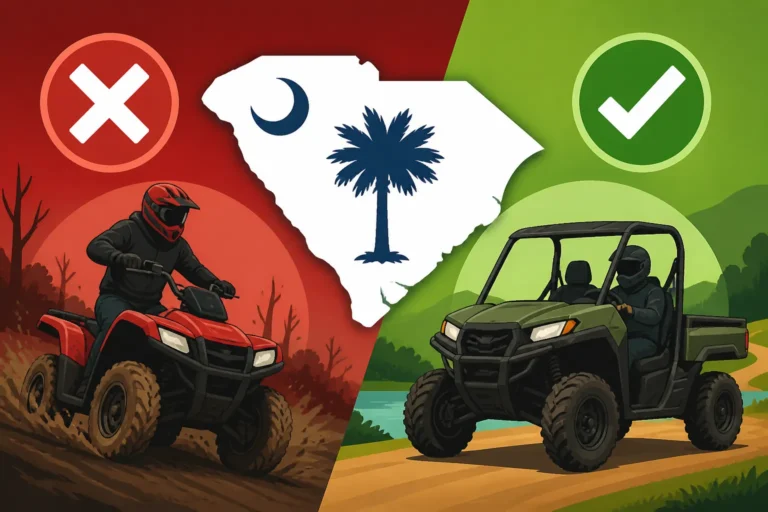
| Coverage Type | Off-Road ATV (SC Law) | Street-Legal UTV (SC Law) |
|---|---|---|
| Bodily Injury Liability | Not Required | Required |
| Property Damage Liability | Not Required | Required |
| Uninsured/Underinsured Motorist | Optional/Recommended | Required for UM |
| Comprehensive | Optional/Recommended | Optional/Recommended |
| Collision | Optional/Recommended | Optional/Recommended |
| Accessory Coverage | Optional | Optional |
| Medical Payments | Optional | Optional |
| Towing/Roadside Assistance | Optional | Optional |
The Risks of Riding Uninsured in South Carolina
We've covered the legalities and the benefits of insurance, but let's talk about the cold, hard reality: what happens if you don't have insurance for your off-road quad and something goes wrong? The financial risks are significant, and they can easily turn a fun day on the trails into a long-term financial nightmare. It’s not just about what the law says; it’s about what you’re willing to risk.
Many riders, especially those who only ride on private land, might think they're completely safe. However, accidents can happen anywhere. You could collide with another rider on a friend's property, or accidentally damage a barn. Even if you're riding alone, you could suffer a serious injury and face substantial medical bills. Your regular health insurance might cover some of it, but what about lost wages or the cost to repair your own damaged machine?
This is where the rubber meets the road (or rather, where the knobby tire meets the trail). Without insurance, every single expense related to an accident, whether it's your own injuries, damage to your ATV, or damages and injuries to others, falls squarely on your shoulders. It's a personal gamble, and the stakes can be incredibly high.
Personal Financial Liability
If you're found at fault for an accident while riding your uninsured off-road quad, you are personally responsible for all damages and injuries. This isn't just a theoretical threat; it's a very real scenario that plays out in civil courts every day.
Property Damage Costs: If you destroy someone's expensive hunting blind, damage a neighbor's property line, or cause extensive damage to another rider's quad, you will be expected to pay for those repairs or replacement. Without property damage liability insurance, that money comes directly from your bank account.
Medical Bills and Lost Wages: If another person is injured in an accident you caused, you could be liable for their medical treatment, rehabilitation, and any income they lose because they can't work. These costs can quickly run into the tens or hundreds of thousands of dollars. A severe injury can easily lead to a multi-million dollar lawsuit.
Legal Fees: Even if you're not found entirely at fault, defending yourself in a lawsuit is expensive. Attorney fees, court costs, and potential settlements or judgments can quickly drain your savings. Your liability insurance would typically cover these legal defense costs, even if the claim is ultimately dismissed. Without it, you're on your own. For documents related to legal claims, having templates for releases or agreements from a service like LawDepot can be useful in other contexts, but for actual legal defense, you'd need a lawyer.
It’s easy to dismiss these possibilities when you're just focused on the fun of riding, but the reality is that the potential financial hit is far greater than the cost of an insurance policy.
Impact on Your Savings and Assets
The financial repercussions of an uninsured accident can extend far beyond immediate bills. If you're hit with a substantial judgment or settlement, and you don't have the cash on hand, your personal assets could be at risk.
Liens and Wage Garnishment: A court judgment against you could lead to liens being placed on your home or other property, or even a portion of your wages being garnished until the debt is paid off. This can severely impact your financial stability for years.
Loss of Future Earnings: In extreme cases, particularly involving serious injuries to others, a judgment could be so significant that it impacts your ability to save for retirement, purchase a home, or secure loans in the future. It truly jeopardizes your long-term financial health.
Peace of Mind: Beyond the tangible financial costs, there's the emotional toll. Knowing you're protected, even when the law doesn't explicitly require it, offers significant peace of mind. It allows you to enjoy your rides without constantly worrying about the "what ifs."
Ultimately, while [South Carolina Has No Off-Road ATV Registration] and therefore no mandatory insurance for these machines, the prudent choice for most riders is to secure a comprehensive policy. It's a small expense for protection against potentially catastrophic financial losses, ensuring your off-road adventures remain a source of joy, not financial stress.
Disclaimer
This article is for general informational purposes only and does not constitute professional advice. Laws, prices and regulations vary by location and change over time. Consult a qualified professional for guidance on your specific situation.