Snorkels for a Carolina Creek
A Carolina creek can look shallow from the bank and still hide a soft bottom, a sudden drop, or water deep enough to damage an ATV or UTV. A snorkel can help protect key air intakes during carefully judged crossings, but it does not make a machine waterproof. This guide explains what snorkels do, what they cannot protect, and how to prepare for creek riding safely.
What an ATV or UTV snorkel actually does
The parts a snorkel can protect
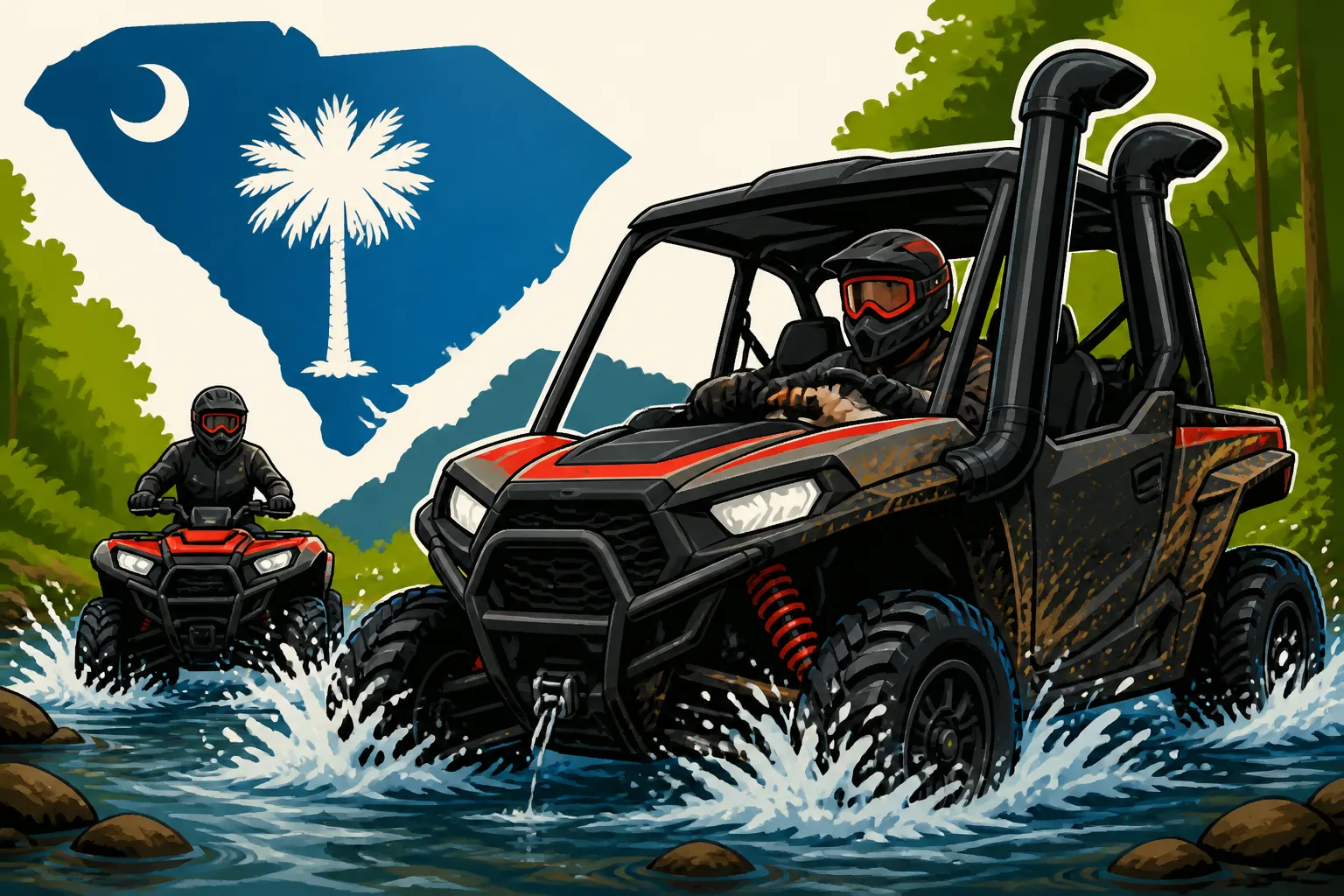
On many machines, the engine air intake and the continuously variable transmission, or CVT, draw air through openings positioned relatively low on the vehicle. A snorkel relocates one or more intake openings higher up, often near the handlebars or cab area. That can reduce the chance of water entering those systems during a crossing, provided the installation is properly designed and sealed.
The engine intake and CVT intake are separate systems, so raising one does not automatically protect the other. Some snorkel kits extend both; others may address only certain openings or require additional components. Before buying anything, check the kit description against your exact make, model, and year. A setup made for a similar-looking machine may not fit correctly or protect the same openings.
A snorkel also does not raise the machine’s frame, wiring, wheel bearings, differentials, or other components. Water can still enter through vents, connectors, seals, or damaged parts. Even a carefully installed kit cannot prevent damage if the machine is submerged, tipped, or exposed to water above its design limits.
A snorkel is not a license to enter deeper water
The most important distinction is between reducing one specific risk and making a vehicle waterproof. A snorkel may help limit water reaching an intake, but it does not make a deep crossing safe. Water can conceal holes, slippery rocks, branches, washed-out banks, and mud that grabs a tire. Fast-moving water can push a machine sideways, while a firm-looking edge may give way under its weight.
A creek crossing can also go wrong without the engine ever taking in water. A machine may lose traction, stall, or become stuck. If the water reaches electrical components or enters the exhaust, restarting may cause additional damage. If water gets into the engine, attempting to crank it can worsen the problem.
Think of a snorkel as one part of a broader setup, not a substitute for judgment. Choose crossings that are within the machine’s capability, inspect the route from a safe position, and turn around if you cannot confidently assess the bottom, current, depth, or exit. A trail ride is not worth risking a rollover or a costly engine failure.
Choosing and installing a snorkel for Carolina riding
Match the kit to the machine and riding conditions
Start with the machine’s owner information and a snorkel kit made for its exact model. Confirm which systems the kit extends, where the new openings sit, and whether it includes the fittings and seals needed for your machine. Ask a qualified shop or experienced technician to clarify anything the product information leaves unclear. A neatly routed setup matters: loose hoses, sharp bends, weak clamps, or openings placed where they can still be submerged may defeat the point of the modification.
Consider how you actually ride. A trail quad used for occasional damp paths may not need the same modifications as a side-by-side regularly used around wet ground. For either vehicle, the more important first step may be maintenance: intact intake seals, sound CVT covers, secure electrical connections, and correctly routed factory vents. A snorkel cannot compensate for neglected maintenance or a damaged seal.
Before installation, check whether the change could affect your warranty, insurance, or access to a particular riding area. Rules can vary between public trails and private parks, and a modification that is acceptable at one location may be restricted at another. For route planning, South Carolina Trails With Water Crossings can help you think about where water features occur, but always confirm current trail access and conditions with the land manager before hauling out.
Install carefully and test before the next ride
If you do the work yourself, follow the kit’s instructions for your exact machine and take time to identify every intake, vent, and drain line before changing anything. Do not assume that a hose is an intake simply because it points downward. Misrouting a vent can create new problems, and sealing an opening that needs to breathe can interfere with normal operation.
After installation, inspect the hose routing and connections closely. Look for pinched sections, loose clamps, unsealed joints, and openings that face toward spray or debris. If the kit requires cutting body panels or modifying factory parts, make sure the work is clean and that exposed edges or wiring are protected. If you are unsure what a line does, stop and ask a technician rather than guessing.
Test the machine on dry ground first. Check for unusual noises, warning lights, belt or transmission behavior, and any change in engine performance. Then inspect the installation again after the first ride. Keep in mind that the water-resistant result depends on the whole system: the snorkel tubes, their joints, the original airbox, and any other openings all need to be in good condition.
| Area to check | What to confirm | Why it matters |
|---|---|---|
| Engine intake | The kit fits your exact machine and joints are sealed | Water reaching the engine intake can cause serious damage |
| CVT intake and outlet | Both are accounted for if the machine uses separate openings | A snorkeled engine intake alone may leave the belt system exposed |
| Vents and wiring | Lines remain routed correctly and connectors are protected | Water can enter through openings unrelated to the snorkel |
| Trail rules | The riding area permits your machine and modifications | Public land and private parks can have different requirements |
| Machine condition | Seals, covers, and hoses are intact before riding | A snorkel cannot correct existing damage |
Crossing Carolina creeks with less risk
Scout the crossing before riding into it
Stop well before the water and look for a safe place to assess the crossing without standing in a dangerous current. Check how fast the water is moving, whether the entry and exit are stable, and whether the bottom is visible. If the water is cloudy, rising, or flowing strongly, do not guess. A crossing that was manageable on a previous visit may change after heavy rain.
Use a walking stick or another suitable tool to check the bottom only where it is safe to do so. Look for a firm, gradual route rather than a steep bank or a path that forces a sharp turn midstream. Do not enter water to inspect it if the current, footing, or depth makes that unsafe. If you cannot establish a safe line, turn around and choose another route.
South Carolina weather can change trail conditions quickly. The safest choice may be to postpone a ride after substantial rain, especially when a creek is higher or more turbid than usual. Review South Carolina Trail Closures After Rain and South Carolina Trail Conditions Before You Haul when planning. A route app such as onX Offroad can be useful for reviewing mapped trails and organizing a route, but a map cannot tell you the real-time depth, current, or firmness of a creek bed. Confirm access and conditions with the land manager or riding area before leaving.
Use a deliberate crossing technique
If a crossing is open, permitted, and clearly within your ability, approach slowly and smoothly. Keep a steady pace appropriate to the terrain; sudden acceleration can throw water toward openings, while stopping in the middle can leave you stuck. Avoid sharp turns, abrupt braking, and unnecessary wheelspin. On a UTV, make sure occupants are seated and secured as required by the vehicle’s safety equipment and the riding area’s rules.
Do not follow another rider blindly. Their machine, tires, ground clearance, and chosen line may differ from yours. Leave enough space for the rider ahead to clear the crossing, and communicate with your group before anyone enters the water. If you are unsure, having a spotter observe from a safe location can help—but never ask someone to stand in the creek or in the path of a moving machine.
If the machine stalls, do not keep trying to restart it. Continuing to crank an engine that may have taken in water can cause much more damage. Avoid opening hot components or attempting roadside repairs that could put you at risk. Move people to a safe location, follow the machine maker’s guidance, and arrange recovery or qualified service. A route planned with onX Offroad may help your group understand where you are, but it does not replace a recovery plan, reliable communication, or a decision to turn back.
After the ride and before the next crossing
Inspect, clean, and maintain the snorkel system
After a wet ride, check the snorkel tubes, clamps, seals, airbox, and CVT area for looseness, cracks, water, or mud. Follow the manufacturer’s instructions for inspecting and servicing the machine; do not assume that a dry-looking snorkel opening means every protected system stayed dry. If you suspect water entered the engine, CVT, or electrical system, do not restart the machine until it has been checked appropriately.
Clean off mud and clay without directing high-pressure water at seals, bearings, electrical connectors, or intake openings. Carolina clay can dry into a hard layer that hides damage or interferes with moving parts. Pay attention to the underside, radiator area, and places where debris can collect. For a more complete post-ride routine, see Washing Clay Off a Carolina Machine.
Inspect the kit again after cleaning, because a hose can shift or a clamp can loosen during a rough ride. Look for abrasion where a tube rubs against bodywork, and make sure the openings remain clear of mud, leaves, and other debris. If you find water in a location where it should not be, treat that as a warning and have the cause checked before riding again.
Keep access, equipment, and route choices in view
A snorkel is a machine modification, not permission to ride anywhere water is present. Use only trails and crossings where your vehicle is allowed, and respect closures, private-property boundaries, and posted restrictions. South Carolina riding areas differ in vehicle access and trail design; for instance, a route that accommodates an ATV may not necessarily suit a wider side-by-side. Check South Carolina Trails That Allow Side-by-Sides and South Carolina’s Four National Forest Trails while planning, then confirm current rules directly with the site.
Also review equipment requirements that apply to your machine and riding area. A snorkel does not replace required safety equipment or make a noncompliant machine compliant. South Carolina Equipment Requirements for ATVs and South Carolina Spark Arrester Requirements are useful starting points when checking what to prepare, though the rules and requirements for a specific site should always guide your final decision.
For practical planning, onX Offroad can help organize mapped routes and identify nearby trail connections, while a paper backup, charged phone, and clear turnaround plan help when cell coverage is unreliable. Before heading out, let someone know where you plan to ride and when you expect to return. Bring basic recovery and first-aid supplies, and do not count on a snorkel to get you through a crossing that looks questionable. The most dependable creek-riding setup is a well-maintained machine, a route you are allowed to use, and the willingness to turn around when conditions are not right.
Disclaimer
This article is for general informational purposes only and does not constitute professional advice. Laws, prices and regulations vary by location and change over time. Consult a qualified professional for guidance on your specific situation.