When South Carolina Police Impound a Quad
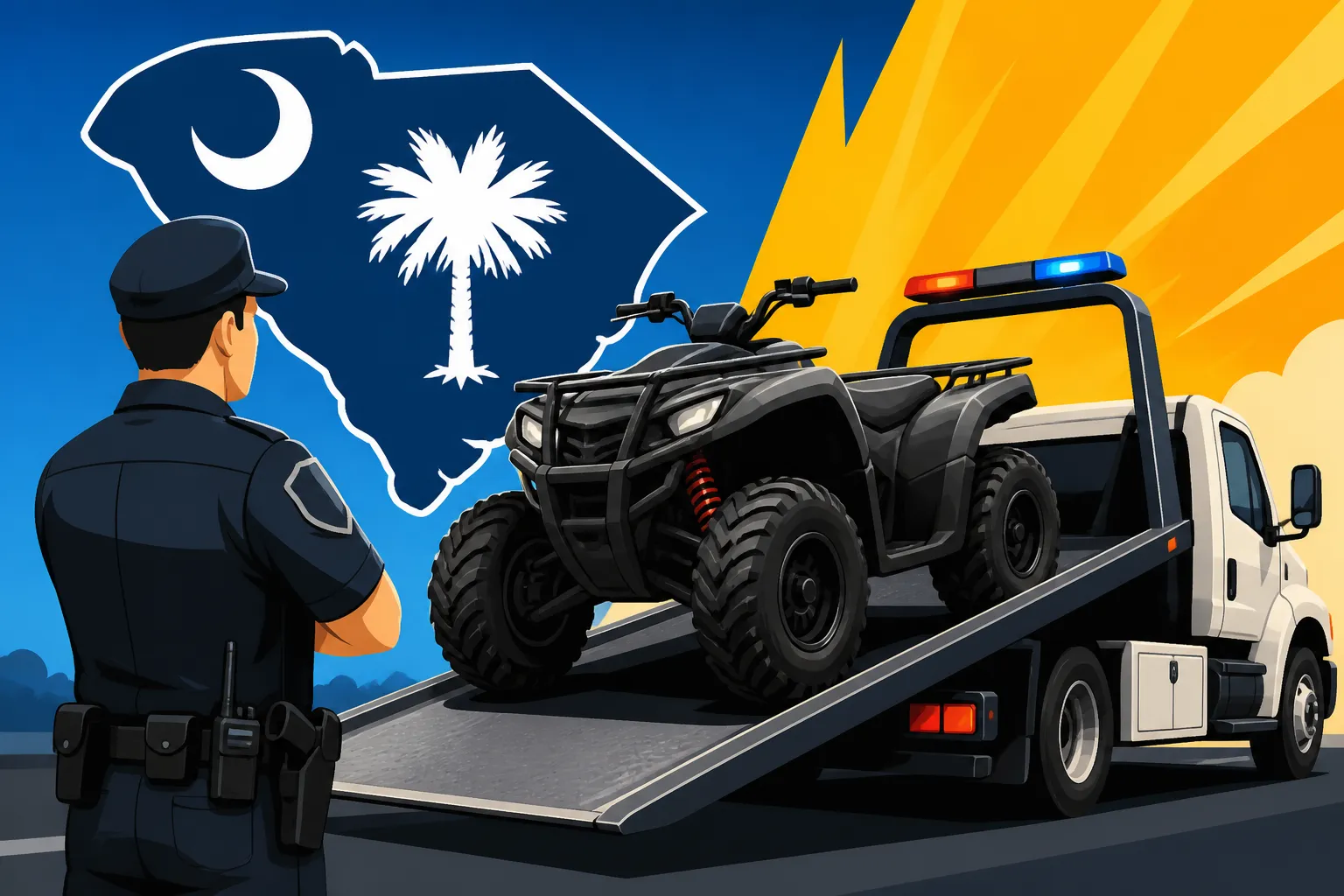
A quad being towed away after a stop, crash, or trail ride can turn a stressful day into a confusing one: you may not know who ordered the tow, where the machine went, or what you need to get it back. This guide explains common impound situations in South Carolina, what to do next, and how to reduce the risk of another costly surprise.
When a Quad May Be Towed or Impounded
A tow and an impound are related but not always the same thing. A vehicle may be moved because it is blocking a road or creating an immediate hazard, while an impound generally means it is being held until certain requirements are met. The officer or agency involved, the reason for the tow, and local procedures all affect what happens next.
Road use, traffic stops, and safety concerns
An ATV being used on a public road can draw police attention if the rider is violating road-use restrictions or if the machine does not meet the requirements that apply to that vehicle and road. South Carolina has distinct rules for off-road ATVs, golf carts, low-speed vehicles, and eligible street-use UTVs. A quad does not become road-legal simply because it has headlights, mirrors, or a license plate from another jurisdiction. For background on the basic distinction, see Can You Ride an ATV on the Road in South Carolina?.
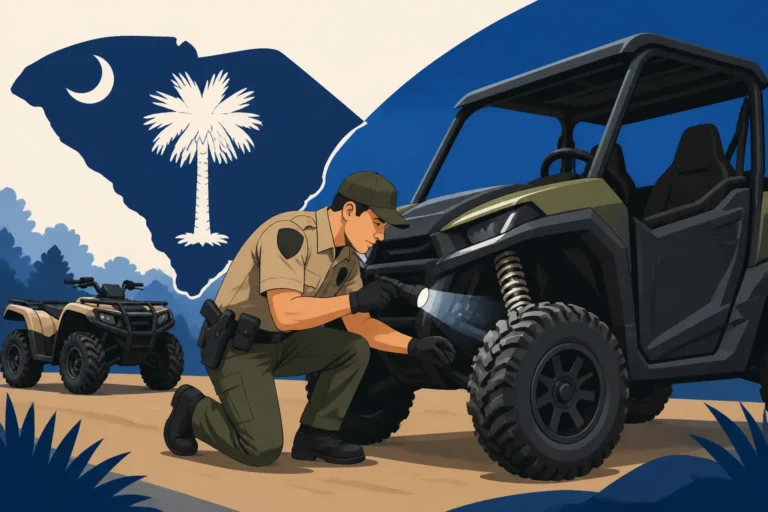
A roadside stop does not automatically mean the quad will be impounded. An officer may issue a warning or citation, or may direct the rider to move the machine another way. A tow becomes more likely when the operator cannot legally continue, no qualified person is available to take custody of the machine, or leaving it in place would create a safety problem. Local ordinances and the facts of the stop can matter, so do not assume one outcome applies statewide.
Equipment issues can also make a situation harder to resolve on the roadside. If you have modified lighting or other components, keep the product documentation and installation details accessible. For example, documentation for an aftermarket component from SuperATV may help identify what was installed, but the brand or presence of a part does not establish that a quad meets legal road requirements. Check the applicable rules before riding on public roads rather than relying on appearance alone.
Crashes, suspected crimes, and ownership disputes
After a crash, an ATV may be moved because it is damaged, blocking traffic, or unsafe to operate. Police may also retain a machine as evidence while they investigate a collision or another incident. In those circumstances, the tow is not necessarily a judgment that the owner has committed an offense. Ask the officer whether the machine is being held for evidence, to clear a hazard, or under another process. If anyone is injured, prioritize medical care and follow the instructions of responding personnel. See South Carolina Accident Reporting for an ATV Crash for related crash-reporting questions.
A quad may also be held if officers have reason to believe it was stolen, has an altered or questionable identification number, or is connected to an alleged offense. If you bought the machine privately and the seller did not provide clear paperwork, resolving ownership may take more than showing a receipt. Gather messages, payment records, prior registration documents, photographs of the serial number, and any signed transfer paperwork. The topic South Carolina Proof of Ownership on the Trail covers why it helps to be able to show how you acquired a machine.
If the quad belongs to someone else, is financed, or is involved in an estate or business arrangement, the person who rides it may not be the only person with an interest in its release. A lender or co-owner may have rights that affect the process. For help understanding recorded liens and ownership interests, review South Carolina Title and Lien Records.
| Situation | Why a tow or hold may happen | What to ask first |
|---|---|---|
| Roadside stop | The quad cannot safely or legally continue from the location | Who ordered the tow, and where will it be taken? |
| Crash | The machine is damaged, obstructing traffic, or needed for an investigation | Is it being held as evidence or simply moved from the scene? |
| Suspected theft | Police need to verify ownership or investigate the machine’s identity | What documents will help establish ownership? |
| Abandoned or obstructing machine | It creates a road, access, or public-safety concern | Which agency or property owner authorized removal? |
| Private-property dispute | A landowner or property manager may have arranged removal | Was this a police tow or a private-property tow? |
What to Do Immediately After the Tow
The first few calls can save time, but it is easy to lose details when you are upset or stranded. Before leaving the area, write down what happened and get the names or contact information available to you. If you are not safe to do that at the scene, make notes as soon as you can.
Confirm who ordered the tow and where the quad went
Ask the officer or agency for the reason the machine was removed, the name of the towing company, the destination lot, and any incident, citation, or case number. If an officer was not involved, contact the property owner or manager and ask which towing company was used. Do not assume a machine was taken to the nearest impound yard; a tow may go to a contracted facility elsewhere.
If you cannot get an answer at the scene, contact the local law-enforcement agency that handled the incident and provide the approximate location, time, machine description, and your name. A clear description helps, especially if several ATVs were involved in a group ride or event. Note the make, model, color, visible accessories, and identifying number if you have it.
Ask whether the quad is available for release or is subject to a police hold. Those are different situations. A towing company may be able to explain its retrieval process, but it generally cannot override a law-enforcement hold. If the agency says the machine is being retained as evidence, ask who is handling the case and what the next step is. Keep a record of each call, including the date, the person you spoke with, and any instructions.
Gather documents and clarify the release conditions
Before going to the lot, ask exactly what documents the registered owner or claimant must bring. Commonly requested items may include photo identification and evidence of ownership, but requirements can vary. If another person will collect the quad, ask whether written authorization is needed and whether the owner must be present. A bill of sale, title if one exists, payment record, or prior ownership document may help explain the claim. The overview South Carolina Title Questions the DMV Hears can help you think through title-related paperwork issues.
Make sure you understand every stated charge and condition before paying or signing. Request an itemized explanation of towing, storage, administrative, or other charges, and ask whether storage continues to accrue while you seek release. Do not rely on a verbal estimate if the machine is being held for several days. If there is a dispute about who owns it, ask whether the facility will accept additional documentation and whether the agency must approve release.
If officers suspect impaired operation, ask how the case affects release and whether you should speak with a lawyer before making detailed statements about the incident. Do not argue at the tow yard or try to remove the ATV yourself. If the circumstances involve possible impaired driving, see South Carolina DUI Law and Off-Road Machines for a broader explanation of why the setting and facts matter.
Getting the Quad Back and Challenging a Problem
Release procedures depend on why the quad was taken. A straightforward tow from a hazardous location may be resolved differently from a police evidence hold, a theft investigation, or a private-property tow. Find out which process applies before spending time on the wrong paperwork.
Follow the release process in the right order
Start with the agency or party that authorized the tow. If police placed a hold on the machine, ask whether the hold has been lifted and whether the officer or investigator must send written authorization to the towing facility. If a property owner arranged the tow, ask that party about its role and the process for disputing the removal. The towing company can explain its own collection requirements, but it may not decide whether an official hold is over.
Once you have confirmation that release is possible, arrange a legal way to move the ATV. A machine that cannot be operated on public roads should not be driven away from the lot just because it has been released. Bring a trailer or arrange another suitable transport method, and check that the trailer and tie-downs are appropriate for the machine. If the quad is damaged, do not assume it is safe to load or operate; inspect it carefully or arrange professional help.
Before leaving, take clear photographs of the quad from several angles, including any damage or missing parts. Compare the machine with the condition it was in before the tow, if you have earlier photographs. Ask for a receipt and keep copies of release forms, payment records, and correspondence. If the machine has a lien or more than one owner, notify the relevant parties and ask whether any additional paperwork is required. SuperATV product records or manuals may help you identify an aftermarket accessory during an inventory discussion, but they do not replace proof of ownership or an official release authorization.
Keep a record if you want to dispute the tow
If you believe the tow was improper, preserve the facts before memories fade. Write a timeline that includes where the quad was, who was operating it, what the officer or property representative said, and whether warning signs or road restrictions were visible. Save photographs, messages, witness names, receipts, citation paperwork, and any tow inventory or condition report. Avoid editing original images if they may be relevant to a dispute.
Ask the agency or towing company how to submit a complaint or request a review, and ask about any deadline or required form. A polite written request is often more useful than repeated informal calls because it creates a clear record of what you are asking and when. If the ATV was held as evidence, ask the investigator what property-release process applies rather than treating it as a routine towing complaint.
For a ticket or criminal allegation, read the paperwork carefully and note the response date or court instructions. A tow-yard dispute and a citation challenge are separate matters; resolving one does not automatically resolve the other. If the machine is valuable, ownership is contested, or you believe your rights were violated, consider getting advice from a South Carolina attorney familiar with traffic, property, or criminal matters.
How to Lower the Chance of Another Impound
A little preparation cannot prevent every tow, especially after a collision or suspected crime. It can, however, make it easier to show who owns the machine, explain what equipment it has, and avoid preventable problems on a road or trail.
Carry useful paperwork and know the route rules
Keep a copy of ownership documents, a bill of sale, and emergency contact details somewhere they will not be ruined by mud or rain. A phone photograph can be useful as a backup, but ask the relevant authority whether a digital copy will be accepted in a particular situation. Record the machine’s serial number and keep photographs of it with your purchase records. For practical roadside questions, read What a South Carolina Deputy Can Ask to See.
Before setting out, check whether the route is a public road, a permitted trail, private land, or a road controlled by a landowner. Do not assume that a dirt surface means a road is open to ATVs. Confirm permission where needed and check trail access rules before hauling to a riding area. South Carolina Trail Conditions Before You Haul is a useful reminder to verify access before making the trip.
A machine that is not eligible for street use should be transported to riding areas rather than ridden along public roads as a shortcut. If you are considering a plated UTV or another road-use category, confirm which vehicle type the rules cover, what equipment is required, and where it may operate. The guide South Carolina Street UTV Requirements Explained addresses a separate category from an ordinary off-road quad.
Inspect modifications without assuming they make a quad road legal
Aftermarket parts can improve a machine’s usefulness, but a component does not change the vehicle’s legal classification by itself. Keep receipts and installation records for parts, and avoid removing required identification labels or altering a serial number. If you have added lights, mirrors, a winch, or protective gear from a supplier such as SuperATV, retain the product information so you can identify the equipment accurately when asked. Treat that information as documentation, not as proof that the vehicle is approved for a public road.
Before each ride, check that the quad is in safe operating condition and that any equipment required for the type of riding you plan to do is present and working. On public roads, the applicable standards can differ from off-road trail expectations. A setup that is sensible for a private riding area may not satisfy road-use requirements, and an officer may still determine that the vehicle cannot continue from a particular stop.
Finally, plan how you will recover the machine if a ride ends unexpectedly. Carry a charged phone, have a transport contact available, and know how to reach the landowner, riding area, or trail manager. If a quad is disabled on private land, get permission before arranging removal across someone else’s property. A few minutes of preparation can prevent a stranded machine from becoming a towing dispute.
Disclaimer
This article is for general informational purposes only and does not constitute professional advice. Laws, prices and regulations vary by location and change over time. Consult a qualified professional for guidance on your specific situation.