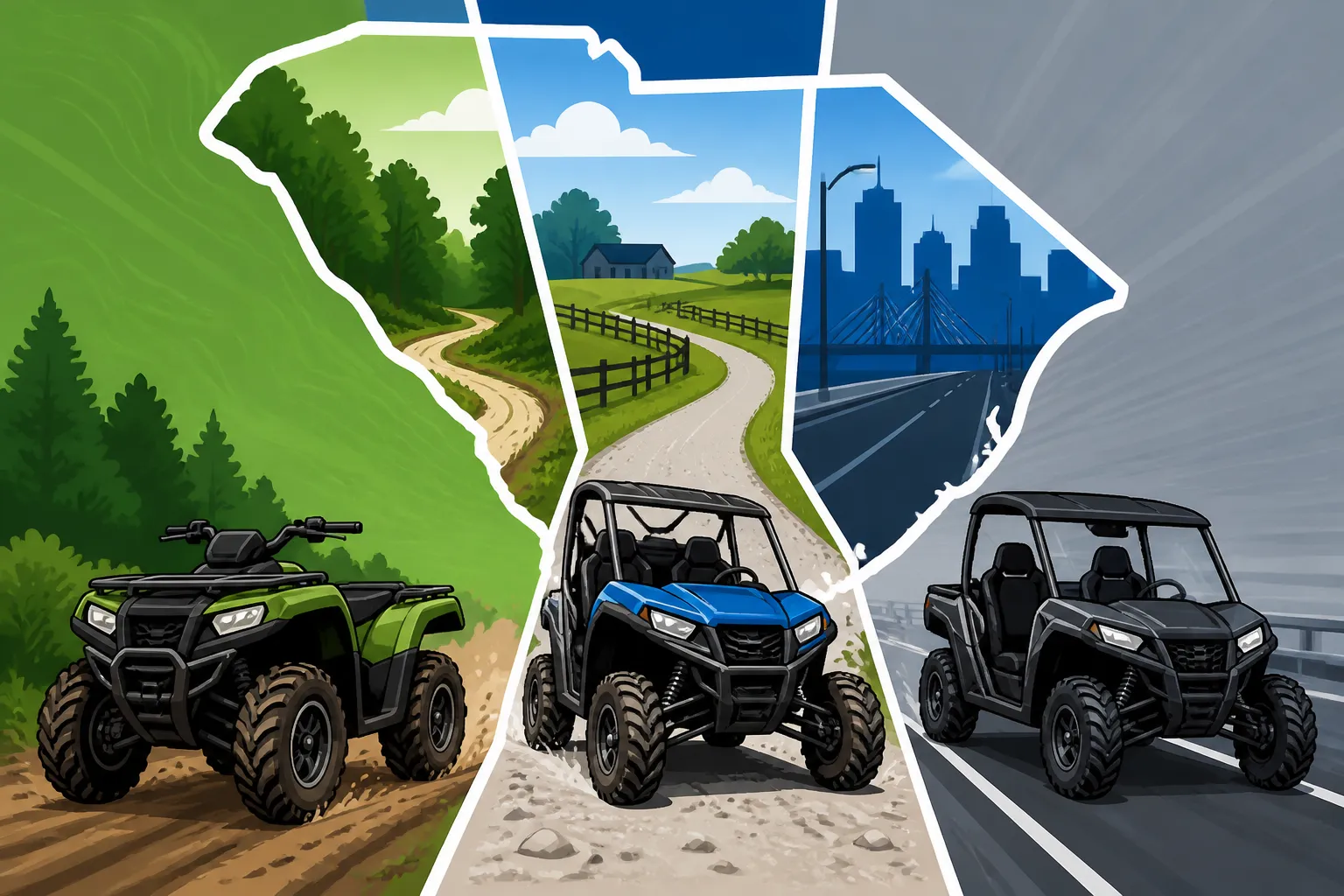
Three Road Regimes in One State
Many riders in South Carolina feel completely lost when it comes to knowing where they can and cannot legally ride their ATVs, UTVs, or even golf carts on public roads. The laws can seem like a confusing maze, especially with different types of machines having different rules, leading to frustrating encounters or even unexpected fines. This guide will break down the three distinct road regimes in South Carolina for off-road vehicles, helping you understand the specific regulations for each and empowering you to ride confidently and legally across the Palmetto State.
The Three Main Categories of Off-Road Vehicles in South Carolina
It's easy to lump all these fun machines into one "off-road" basket, but when it comes to hitting the pavement in South Carolina, the state sees them very differently. This distinction is crucial, and misunderstanding it can quickly turn a scenic cruise into a costly headache. Let's really dig into how the Palmetto State categorizes these vehicles, because knowing this foundation is key to understanding everything else.
Traditional Off-Road ATVs and Dirt Bikes Not Street Legal
First up, we have your classic ATVs (All-Terrain Vehicles), often called quads, and dirt bikes. These are the machines built for ripping through trails, climbing hills, and tackling mud. Their design is inherently for off-pavement adventure. They typically feature knobby tires, high ground clearance, and open-air designs without many of the safety features required for highway travel.
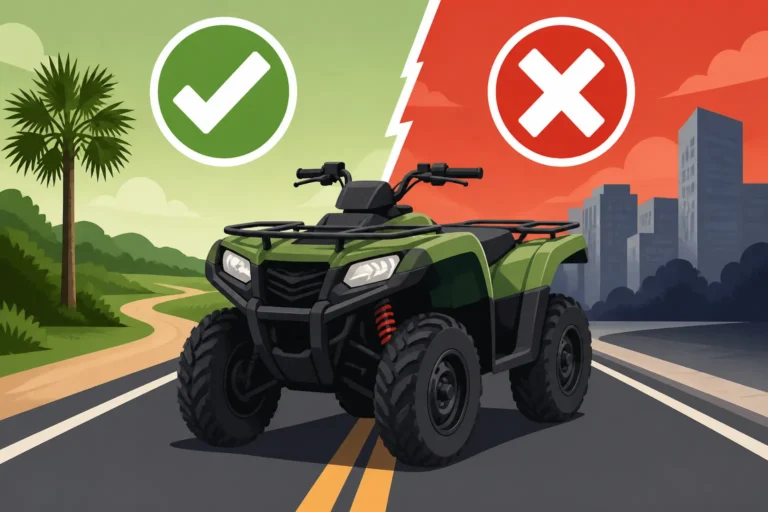
In South Carolina, these machines are generally considered off-road vehicles and are not designed or legally permitted for use on public roads. The law is pretty clear on this: if it's an ATV or a dirt bike, it belongs on private land or designated off-road trails. This can be a bummer for folks who just want to cross a road to get to another section of their property or run a quick errand, but the state's intent is to keep vehicles not built for road safety off the general roadways.
While you don't need a state title for every ATV in South Carolina, and [South Carolina Does Not Register Off-Road ATVs], it doesn't change their status regarding road use. The state is more concerned with where you're operating them, not necessarily whether you have a piece of paper for ownership, although titling can be beneficial for other reasons like theft recovery or financing. For instance, lenders that will not finance an untitled quad are common, making [Why Optional Titling Still Helps] a point worth considering.
Golf Carts Limited Road Use
Next, we shift gears to golf carts. These are probably the most common sight on neighborhood streets and coastal towns, and for good reason—South Carolina has specific provisions for their limited road use. They're designed for low-speed travel, typically around a golf course or within planned communities, but their utility has expanded significantly in recent years.
The rules for golf carts are distinct and quite specific. You can't just hop in a golf cart and expect to drive anywhere. There are speed limits, time restrictions, and radius limitations that riders absolutely must adhere to. This is where many people get tripped up; they see other golf carts on the road and assume a blanket legality, which isn't the case.
To operate a golf cart on permitted public roads, you absolutely need a valid [South Carolina Golf Cart Permits Compared]. This permit, usually evidenced by a decal, signifies that your cart meets the basic requirements and that you, as the operator, understand the limitations. Without it, even a short trip down the block could land you in trouble. Many people ask [What $5 Buys When You Get a Golf Cart Permit], and the answer is peace of mind and legal access to specific roadways.
Street-Legal UTVs The New Frontier
Finally, we arrive at what has been a game-changer for many riders in South Carolina: the advent of street-legal UTVs, or Utility Terrain Vehicles. For years, UTV owners longed for the ability to legally connect trails or cruise through town without worrying about citations. Now, thanks to recent legislative changes, that dream is a reality, but it comes with its own set of rules and requirements.
These are side-by-sides that have been modified or manufactured to meet specific safety and equipment standards, allowing them to be registered and licensed for road use, much like a car. This is a significant departure from traditional ATVs and golf carts, offering a whole new level of versatility for owners. Whether you're heading to the hunting club or just running to the local hardware store, a street-legal UTV provides a convenient and fun alternative.
The process to make a UTV street-legal involves ensuring it has things like headlights, taillights, turn signals, mirrors, a horn, and often a windshield with wipers, among other things. Companies like SuperATV specialize in aftermarket parts and kits that can help transform a standard UTV into one that meets these stringent requirements. Once equipped, [South Carolina Street-Legal UTV Registration Arrives] opened up a new avenue for riders, allowing them to navigate secondary roads with a legitimate license plate.
Understanding the Rules for Each Category
Now that we've laid out the three main types of off-road machines and how South Carolina views them, let's dive deeper into the nitty-gritty of the rules governing their use on public thoroughfares. This is where the rubber meets the road—literally—and understanding these distinctions is paramount to avoiding citations and enjoying your ride responsibly.
Why Your Trail Quad Stays Off the Pavement Mostly
For those who love the thrill of an ATV or dirt bike, the rules regarding road use can be a bit of a buzzkill. In South Carolina, ATVs and dirt bikes are generally prohibited from operating on public streets and highways. This isn't just a suggestion; it's law, specifically outlined in [South Carolina Code Section 50-26-50]. The state’s primary concern here is safety. ATVs are designed for uneven terrain, not for interacting with cars and trucks at higher speeds. Their handling characteristics, lack of traditional safety features like crumple zones, and limited visibility make them a hazard in a traffic environment.
There are, however, very narrow exceptions. For instance, you might be able to cross a highway or street if you're doing so at a right angle and after coming to a complete stop, provided it’s to get to another piece of private property or designated trail access. But even these crossings must be done with extreme caution and with due regard for traffic. You certainly can't cruise down the shoulder or drive for any significant distance on a paved road. Using a dirt road or private property is your safest bet. If you own a farm, you might also find some [South Carolina Farm and Ranch Exemptions] that allow for limited road use for agricultural purposes.
It’s worth noting that while [South Carolina Does Not Register Off-Road ATVs], and therefore doesn't issue a "street-legal" plate for them, a title is still a good idea for proving ownership and protecting your investment. But that title does not grant you permission to ride on public roads. Trying to modify an ATV to meet street-legal standards for cars is generally not feasible or recognized by the state for road use in the same way a UTV might be.
Navigating South Carolina with a Golf Cart
Golf carts offer a bit more flexibility than ATVs when it comes to road use, but they are still heavily restricted. The core principle is that they are intended for local, low-speed travel. To operate a golf cart on public roads in South Carolina, you must have a valid golf cart permit issued by the DMV. This involves submitting an application, paying a small fee, and ensuring your cart meets basic safety requirements. You'll then receive a decal that must be prominently displayed. Remember, this isn't a one-and-done deal; you'll need to remember [South Carolina Golf Cart Permit Renewal] every few years.
Once permitted, golf carts are generally allowed on secondary roads or streets where the posted speed limit is 35 mph or less. However, a significant restriction is the [South Carolina Golf Cart Radius and Speed Rules]. You're typically limited to operating within a four-mile radius of your home or the place where the cart is stored, and only during daylight hours. There are also specific rules about crossing major roadways and operating after dark. Some municipalities may have their own additional ordinances, which can sometimes extend the allowed radius slightly, but it's crucial to check with local authorities. This "four miles from home" rule can feel confining, but it’s there to keep these lower-speed vehicles out of high-traffic situations.
When considering a golf cart, understand that it's designed for specific, localized use. While it's great for short trips to the community pool or a quick run to the corner store, it's not a substitute for a car or even a street-legal UTV for longer distances or higher-speed roads. Riders should always carry their permit and driver's license, and ensure their golf cart is equipped with basic safety features like brakes, lights, and a horn. [South Carolina Golf Cart Road Rules] are there for your safety and the safety of others.
Embracing the Freedom of a Plated Street UTV
The introduction of street-legal UTVs represents the most significant change for off-road enthusiasts wanting to hit the pavement. With [South Carolina Act 164 and Street UTVs], which became effective at the end of 2026, UTVs can now be legally registered and driven on many public roads. This means you can now get a license plate for your side-by-side, giving you a legitimate path to integrate it into your daily driving or recreational activities. This is a huge win for riders who've long wanted to connect trails or simply drive their machine around town.
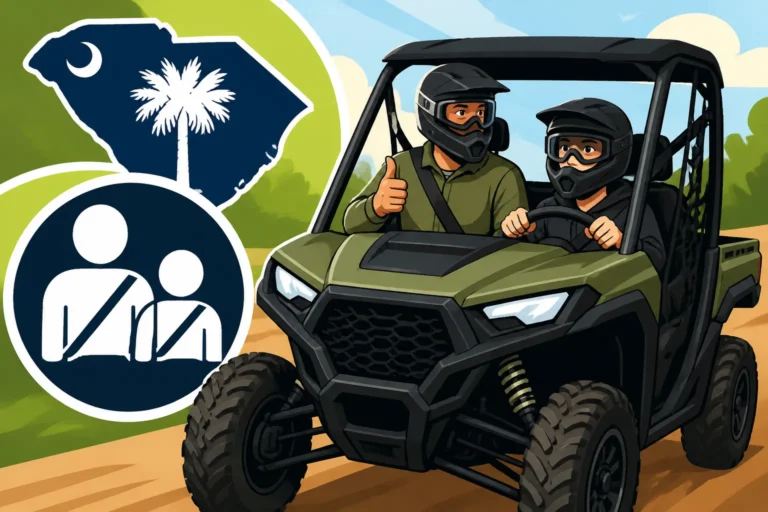
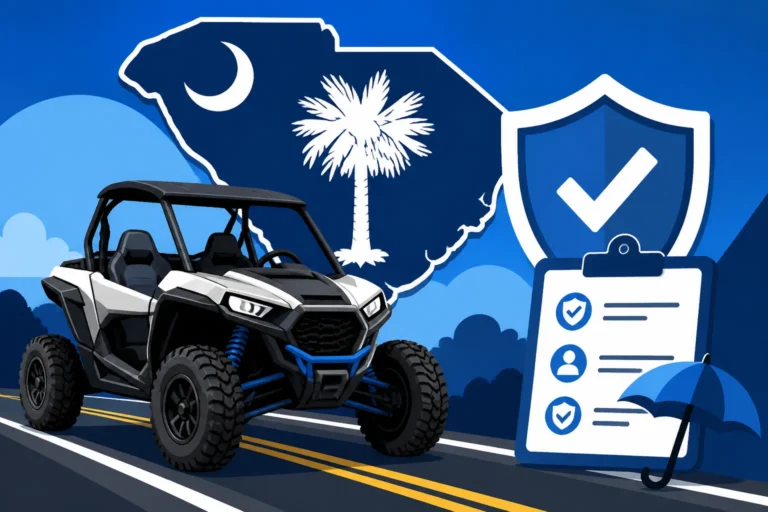
However, "street-legal" doesn't mean "drive anywhere." There are specific requirements your UTV must meet to qualify for registration. These include having a valid driver's license, liability insurance, and the UTV itself must be equipped with standard automotive safety features like headlights, taillights, brake lights, turn signals, a horn, mirrors, seatbelts, and a windshield. The UTV also has to meet certain size and weight restrictions, typically being under 80 inches wide and under 4,000 pounds. Many aftermarket parts, perhaps from SuperATV, can help ensure your machine complies.
Once registered, a street-legal UTV generally allows you to operate on roads with a posted speed limit of 55 mph or less. Interstates and controlled-access highways are still off-limits. You'll need to pay attention to [South Carolina Street UTV Age of 17] and [South Carolina Street UTV Helmet Rules Under 21] as these differ from adult car drivers. This opens up a vast network of secondary roads, dirt roads, and even some main arteries in smaller towns. The freedom of being able to drive directly to a trailhead, a friend's house, or the gas station without having to trailer your machine is truly liberating for many enthusiasts.
Practical Steps and Common Misconceptions
Understanding the specific categories and their rules is a fantastic start, but practical application is where the rubber truly meets the road. Navigating these rules in real life, especially when things aren't always black and white, requires a bit more insight. Let's talk about what this all means for you on the trail, in your neighborhood, and potentially, at the DMV counter.
What to Expect When You Encounter Law Enforcement
Nobody wants a run-in with law enforcement, especially when you're just trying to enjoy your machine. But it's a reality, and knowing what to expect can make a big difference. If you're riding an ATV or dirt bike on a public road where it's not allowed, expect a citation. Officers are generally well-versed in [South Carolina Code Title 50 Chapter 26], which covers off-road vehicles. Ignorance of the law is rarely an acceptable defense, and you could face significant [South Carolina Fines of $50 to $200] and potential court costs. It’s always best to stick to designated areas like the Enoree OHV Trail in South Carolina or private land.
For golf cart operators, the most common issues arise from exceeding the four-mile radius, driving after dark, or operating without a valid permit. Officers will usually ask to see your driver's license and golf cart permit. If you're outside the permitted radius, driving at night, or if your permit has expired, you'll likely receive a ticket. The rules are in place for safety, especially given the lower visibility and speed of golf carts compared to other vehicles. Always ensure your [South Carolina Golf Cart Decals Every Five Years] are current!
For street-legal UTVs, an encounter with law enforcement should be no different than being pulled over in a car, assuming you are following all traffic laws. You'll need your driver's license, proof of insurance (which is mandatory for street UTVs), and your UTV's registration. Officers will check that your machine has the required equipment (lights, turn signals, etc.) and that you are adhering to speed limits and other road rules. If you've diligently followed the steps for [South Carolina Street UTV Registration Steps] and have all your documentation, these encounters should be straightforward.
Planning Your Rides and Staying Legal
Planning is paramount, whether you're taking your quad to a designated trail or cruising your street-legal UTV into town. For off-road ATVs, always verify the legality of your riding spot. Private property with explicit permission is ideal, or sanctioned trail systems like Carolina Adventure World in South Carolina. Never assume a dirt road or a power line cut is open to ATVs unless you have confirmed it with the landowner or local authorities. [South Carolina WMAs Ban ATVs], so don't even think about it there.
When it comes to golf carts, map out your route to ensure you stay within the allowed radius of your home or storage location. Pay attention to posted speed limits on secondary roads. If you need to travel further, or if darkness is approaching, plan to trailer your golf cart. A little planning can save you a lot of grief. Many neighborhoods have golf cart-friendly areas, so connecting with local groups can give you good insights into popular and legal routes.
For street-legal UTVs, the world opens up considerably, but planning is still key. While you can drive on roads up to 55 mph, consider the traffic volume and your comfort level. Some roads, even if technically legal, might not be the safest for a UTV, especially during peak hours. Use apps or maps to scout out routes, especially if you're trying to connect to a trail system or a distant riding area. Checking for local ordinances can also be helpful, as some smaller towns might have specific rules for street-legal UTVs, even if the state law permits their general use. Equipping your UTV with quality components from a place like SuperATV can also enhance safety and reliability for road use.
Upgrading Your Machine for Road Legality Where Applicable
If you're dreaming of taking your UTV on the pavement, you'll need to understand the upgrade path. This isn't about slapping on a couple of lights and calling it a day. South Carolina has specific requirements that street-legal UTVs must meet. This often includes installing or ensuring you have:
- Headlights (high and low beam)
- Taillights and brake lights
- Turn signals (front and rear)
- A horn
- Rearview mirrors (often one center, or two side mirrors)
- A windshield with wipers
- Seatbelts for all occupants
- Proper tires (not just aggressive mud tires if they aren't DOT compliant for road use)
- A speedometer and odometer
Many UTV manufacturers offer street-legal versions from the factory, or you can purchase conversion kits. Companies like SuperATV offer a range of products, from windshields to signal kits, that can help you get your UTV up to snuff. It's crucial that these components are installed correctly and function reliably. Don't cut corners here, as your safety and legal standing depend on it.
After the physical upgrades, you'll need to tackle the paperwork. This involves getting your UTV inspected if required (sometimes a dealership or certified mechanic can verify compliance), gathering your [South Carolina Paperwork for a Street UTV], and heading to the DMV for registration and titling. You'll also need to secure the necessary liability insurance, which is a non-negotiable for any street-legal vehicle. This comprehensive approach ensures that your UTV not only looks the part but actually is road-ready and legally compliant in the Palmetto State.
| Vehicle Type | Primary Use Case | Road Legality in SC | Key Requirements for Road Use | Common Restrictions |
|---|---|---|---|---|
| Traditional ATV / Dirt Bike | Off-road trails, private land | Generally NOT street-legal | N/A (Limited right-angle crossing exceptions only for immediate access to private property) | No public roads, no shoulders, limited or no street crossings |
| Golf Cart | Neighborhoods, golf courses | Limited street-legal | SC Golf Cart Permit, Valid Driver's License, basic safety features (lights, brakes, horn) | Roads 35 mph or less, within 4-mile radius of home, daylight hours only, specific crossing rules |
| Street-Legal UTV | Trails, secondary roads, light utility | Fully street-legal (with conditions) | SC Vehicle Title & Registration, Valid Driver's License, Liability Insurance, specific safety equipment (headlights, taillights, brake lights, turn signals, horn, mirrors, seatbelts, windshield, wipers) | No interstates/controlled-access highways, roads 55 mph or less |
Disclaimer
This article is for general informational purposes only and does not constitute professional advice. Laws, prices and regulations vary by location and change over time. Consult a qualified professional for guidance on your specific situation.