An Adult Must Ride Along Until Seventeen
Navigating the rules for young ATV and UTV riders in South Carolina can feel like trying to solve a puzzle with missing pieces, especially when it comes to who needs to ride with whom. Parents and guardians often worry about how to ensure their children can enjoy the trails safely and legally. This guide will clarify the specific requirements for adult accompaniment, along with other crucial safety regulations, to help you understand exactly when an adult must be present for a minor to ride an off-road machine in the Palmetto State.
South Carolina's "Adult Accompaniment" Rule Explained
When it comes to minors riding ATVs in South Carolina, the state's laws are primarily geared towards ensuring safety through supervision and proper training. The phrase "an adult must ride along until seventeen" captures a significant aspect of these regulations, though the specifics of the law offer a bit more nuance that every parent needs to understand. It’s not simply about an age cut-off; it involves a combination of age, training, and supervision depending on the rider's circumstances.
The Core of Chandler's Law for Young Riders
South Carolina's ATV laws, often referred to as Chandler's Law, are quite explicit about who can ride and under what conditions. For the youngest riders, those under six years old, operating an ATV is strictly prohibited—no exceptions, no matter how small the machine or how close the supervision. This is a hard line designed to protect very young children from the inherent risks of these powerful machines.
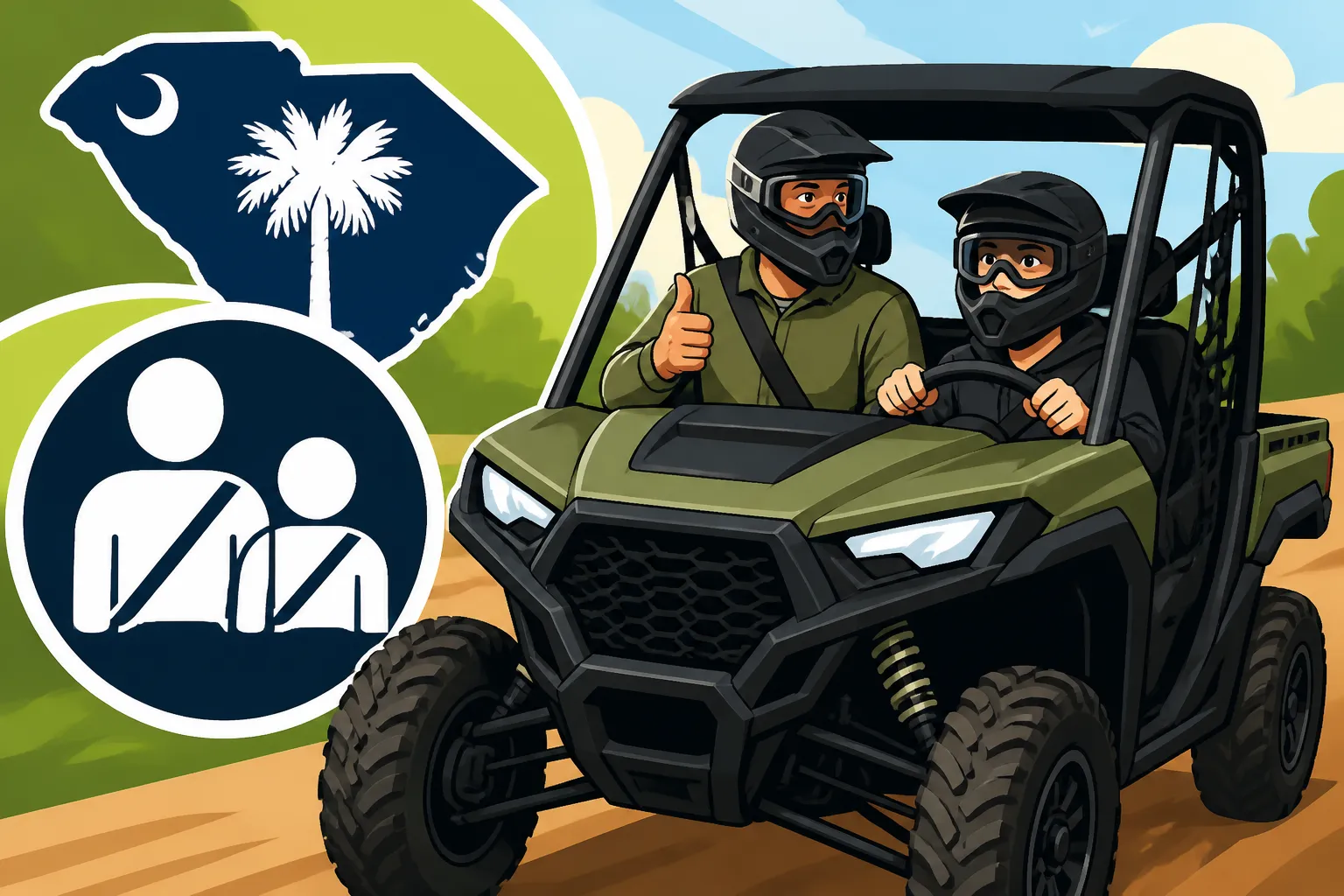
For children between the ages of six and fifteen, the rules become more layered. These riders are generally required to complete an approved ATV safety training course and must be supervised by an adult who is at least eighteen years old. This means that if your ten-year-old is tearing up a trail, you, or another adult over 18, must be actively watching them. This supervision isn't just about being in the general vicinity; it implies being close enough to intervene, offer guidance, and ensure safety at all times. The title "An Adult Must Ride Along Until Seventeen" resonates here, as riders in this age bracket (6-15) absolutely need that adult presence.
However, the "until seventeen" part needs a slight clarification when it comes to sixteen-year-olds. A sixteen-year-old can, in fact, operate an ATV without direct adult supervision, provided they possess a valid South Carolina driver's license or instruction permit. If they don't have that license or permit, then yes, they would still fall under the supervision requirement, effectively needing an adult until they're legally able to drive a car. So, while many perceive the rule as extending until the 17th birthday, it's more accurately tied to whether the 16-year-old has acquired their driving credentials. This is a critical distinction that can save you from a misunderstanding of the law.
Defining the Supervising Adult's Role
The role of the supervising adult is more than just being a warm body present on the trail. The law intends for this adult to be a responsible, capable individual who can ensure the safety of the minor rider. This means the supervising adult must be at least 18 years old, and ideally, they should have experience operating an ATV themselves. They need to understand the terrain, the machine's capabilities, and proper riding techniques.
Active supervision implies maintaining visual contact with the young rider and being close enough to provide immediate assistance or correction. Imagine your child attempting a challenging turn or encountering unexpected terrain; the supervising adult should be right there, ready to step in. This isn't the time for the adult to be distracted by their phone or another activity. Their focus needs to be on the minor rider's safety and adherence to rules. It’s about more than just legal compliance; it’s about mentoring safe riding habits and being prepared for any situation that might arise. An experienced adult can teach proper braking, navigating obstacles, and how to assess trail conditions, making the riding experience safer and more educational for the younger participant.
Where the Rule Applies: Public vs. Private Land
The application of South Carolina's ATV laws often raises questions about the distinction between riding on private property and public lands or designated trails. While private land typically offers more leeway in many legal contexts, when it comes to the core safety requirements for young ATV riders, the state's stance is quite clear. The fundamental rules regarding age restrictions, safety certificates, and adult supervision generally apply regardless of whether you're on your own sprawling property or a public trail in the Sumter National Forest.
On designated public trails, such as [Enoree OHV Trail in South Carolina] or [Parsons Mountain OHV Trail in South Carolina], adherence to all state laws is strictly enforced by forest rangers and local law enforcement. For instance, if your 12-year-old is riding on a forest trail, they must have their ATV safety certificate, and an adult over 18 must be actively supervising them. These trails are managed environments where safety is paramount, and non-compliance can lead to citations and fines.
Even on private property, while enforcement might be less frequent, the underlying principles of Chandler's Law still stand. The intent of the law is to protect minors from serious injury. Therefore, if a child under 6 is found operating an ATV, or a rider between 6 and 15 is unsupervised or lacks a safety certificate, the legal framework could still come into play, especially in the event of an accident. While there might be a minor exception regarding the safety certificate on land owned by a parent or guardian if direct adult supervision is provided, the adult supervision aspect for ages 6-15 remains a critical component. Private riding parks, like [Carolina Adventure World in South Carolina], often have their own specific rules that mirror or even exceed state requirements, ensuring a safe environment for all riders, including minors. They will often require proof of age and may have their own internal checks for compliance with state safety laws.
Essential Safety Requirements Beyond Supervision
While adult accompaniment is a cornerstone of South Carolina's ATV safety for minors, it's far from the only rule parents need to know. The state has a comprehensive approach to protecting young riders, encompassing training, equipment, and passenger restrictions. Understanding these additional requirements is crucial for ensuring a safe and legal riding experience.
The Mandatory South Carolina ATV Safety Certificate
For any rider aged six to fifteen who wishes to operate an ATV, obtaining a South Carolina ATV Safety Certificate is not just a good idea; it's a legal requirement. This isn't just a quick online quiz; it involves a structured educational process designed to instill responsible riding habits and essential safety knowledge. The certification process typically includes two main components: an online theoretical course followed by a hands-on riding course.
The online course covers fundamental topics such as machine controls, pre-ride inspections, risk awareness, and proper riding techniques for various terrains. Once the online portion is completed, riders then participate in a practical, hands-on session, usually led by certified instructors. During this session, they get to apply what they've learned in a controlled environment, practicing starting, stopping, turning, climbing hills, and navigating obstacles safely. This dual approach ensures that young riders not only understand the theory but can also execute safe riding maneuvers in real-world scenarios. It’s important to note that this certificate is distinct from a regular driver’s license; it’s specific to ATV operation. [The Safety Certificate Riders 15 and Under Need] is a foundational step, providing critical knowledge and skills that complement adult supervision. Without this certificate, riders in the 6-15 age group are not legally permitted to operate an ATV, even with an adult present. This is part of the [South Carolina Safety Certificate Requirements] that aim to reduce accidents among younger, less experienced riders.
Helmets and Eye Protection: Non-Negotiable Gear
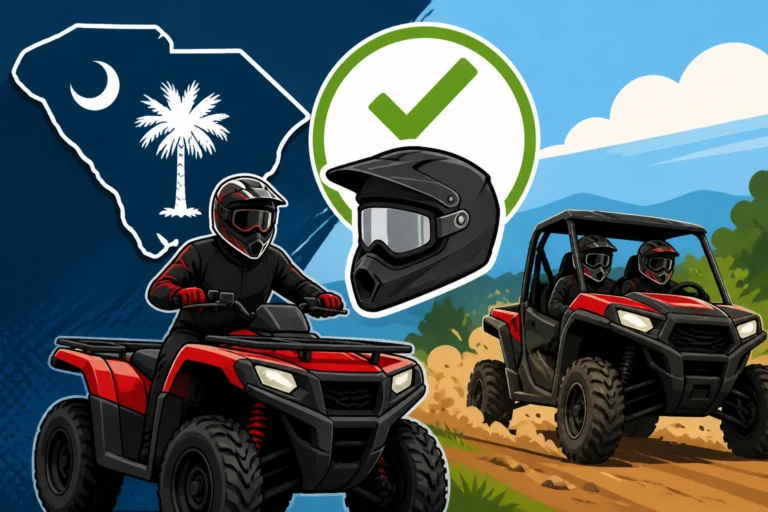
When it comes to safety gear, South Carolina's laws are clear and uncompromising for young ATV riders. Anyone under the age of sixteen operating an ATV must wear a helmet that meets federal safety standards. This isn't merely a suggestion; it's a legal mandate designed to protect against severe head injuries, which are tragically common in ATV accidents. [Helmets Under 16 Must Meet the Federal Standard] ensures that only tested and approved protective headgear is used, providing the best possible defense in a crash. When selecting a helmet, it’s not enough for it to just look cool; it must fit properly, be in good condition, and carry the appropriate DOT certification. A helmet that is too loose or too tight won't offer adequate protection.
In addition to a helmet, eye protection is also a critical component of safety gear for young riders. Whether it's a helmet with an integrated face shield or separate goggles, [Eye Protection Beside a Helmet] shields the eyes from dust, debris, insects, and branches, all of which can severely impair vision and lead to an accident. Without clear vision, even the most experienced rider can lose control. Beyond these legal requirements, parents should also consider additional protective gear such as gloves, long pants, a long-sleeved shirt, and over-the-ankle boots to minimize abrasions, cuts, and impact injuries. Prioritizing quality gear is an investment in your child's safety, offering peace of mind every time they ride.
Restrictions on Carrying Passengers
ATVs, by their very design, are generally single-rider vehicles. Most models are not built to safely accommodate a passenger, and attempting to carry one, especially a minor, can drastically alter the machine's balance and handling. This significantly increases the risk of rollover accidents and injury. South Carolina law reflects this inherent danger, particularly concerning young riders.
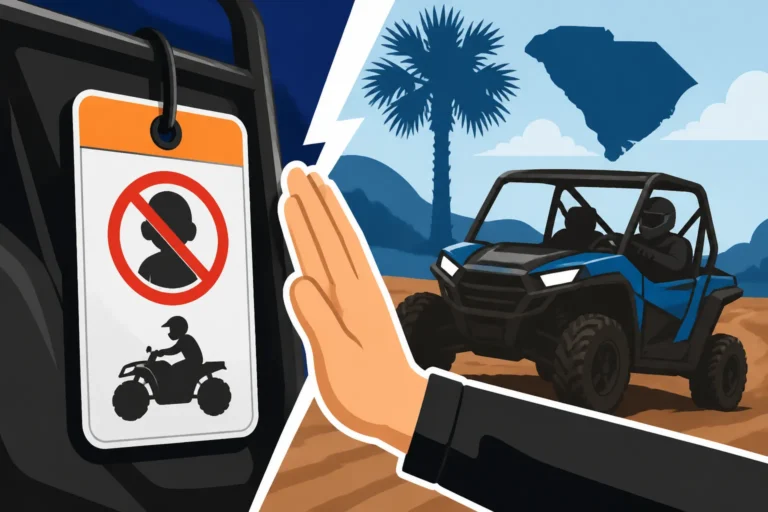
For an unlicensed minor operating an ATV, carrying a passenger is typically prohibited. [No Passenger for an Unlicensed Minor] is a rule rooted in the understanding that young, less experienced operators need their full attention and control to manage the machine effectively. Adding a passenger, even a small one, introduces an unstable element that can make it incredibly difficult for a minor to maintain control, especially on uneven terrain or during turns. The extra weight and shifting balance can easily lead to a loss of control, endangering both the operator and the passenger.
While some larger, multi-passenger UTVs are designed to safely carry more than one person, these machines often have different classification and specific regulations regarding passenger age and seating. It’s crucial to understand the manufacturer’s recommendations for any specific vehicle and to always err on the side of caution. Even if a vehicle could technically carry a passenger, if the operator is a minor and untrained, it's best to keep it a solo ride. Prioritizing single-rider use for ATVs, especially with young operators, dramatically reduces the risk of accidents and helps ensure a safer experience on the trails.
Navigating Common Scenarios and Avoiding Penalties
Understanding South Carolina's ATV laws is one thing; applying them in real-world riding scenarios is another. Parents and guardians face practical challenges, from choosing where to ride to ensuring their child's machine is properly equipped. Being proactive and informed can make all the difference, helping you avoid potential legal troubles and, more importantly, prevent injuries.
Riding on Private Land vs. Public Trails
The location where your child rides an ATV can influence the specific rules and enforcement you encounter, but it doesn't entirely negate the state's core safety mandates. Many families ride exclusively on their own property, assuming that private land means total freedom from state regulations. While private land does offer some flexibility, especially concerning certain permits or fees, the fundamental safety provisions of Chandler's Law—such as age restrictions, mandatory helmets for those under 16, and adult supervision for riders 6-15—still largely apply. The law is designed to protect minors from harm, regardless of who owns the land. An accident on private property where these rules were ignored could still lead to liability issues for the supervising adult.
On public lands, like the extensive trail networks in national forests, the rules are enforced much more strictly. Places like the [Wambaw Cycle Trail] or other public riding areas demand full compliance with all state laws. Forest Service rangers and local law enforcement actively patrol these areas, and violations can result in citations, fines, or even the impoundment of the machine. These trails often have specific requirements for riders, such as [South Carolina National Forest OHV Passes] and adherence to designated trail systems. Even private riding parks, which provide structured and often safer environments, will typically enforce state laws within their boundaries and might even have additional rules to ensure safety for all patrons. Before heading out, it’s always wise to check the specific regulations of any public or private riding area.
Consequences of Non-Compliance
Ignoring South Carolina's ATV laws for minors carries significant risks, both legal and personal. The penalties for violating Chandler's Law can range from monetary fines to more serious consequences, particularly in the event of an accident. If a law enforcement officer encounters a minor rider in violation—for example, a 14-year-old operating an ATV without adult supervision or without a safety certificate—the supervising adult or the owner of the ATV could face [South Carolina Fines of $50 to $200] for each offense. These fines can quickly add up, turning a fun outing into an expensive headache.
Beyond the financial penalties, there's the much graver risk of injury. ATV accidents, especially those involving unsupervised or improperly equipped minors, can result in severe, life-altering injuries or even fatalities. The legal consequences can also extend to civil liability. If a minor is injured while riding in violation of the law, the supervising adult could be held responsible for medical expenses, pain and suffering, and other damages. This financial burden, coupled with the emotional toll of a child's injury, underscores the importance of strict adherence to all safety regulations. In some cases, repeated or severe violations could even lead to the ATV being impounded, causing further hassle and expense. It's not just about avoiding a ticket; it's about protecting precious lives and preventing devastating outcomes.
Practical Tips for Parents and Guardians
Equipping your child for safe ATV riding goes beyond just buying the machine. It involves a holistic approach to preparation, education, and ongoing vigilance. One of the most important steps is to lead by example. Children are incredibly observant, and if they see you cutting corners on safety, they're likely to do the same. Always wear your own helmet, protective gear, and demonstrate responsible riding habits. Talk to your child about the rules, why they exist, and the importance of respecting the machine and the environment.
When selecting an ATV for a minor, ensure it’s appropriate for their age and size. A machine that is too large or powerful for a child can be incredibly dangerous and difficult to control. Many manufacturers, and aftermarket suppliers like SuperATV, offer youth-specific models and parts designed with smaller engines, lighter frames, and adjustable features to better fit younger riders. Investing in quality safety gear, including a properly fitting, DOT-certified helmet, eye protection, gloves, sturdy boots, and long-sleeved clothing, is non-negotiable. Regularly inspect this gear for wear and tear, replacing anything that's compromised. SuperATV is also a great resource for durable accessories that can enhance safety, like skid plates or brush guards, which protect both the rider and the machine from unexpected impacts on the trail.
Before hitting the trails, practice riding in a controlled, open environment, away from traffic and obstacles. Focus on basic maneuvers: starting, stopping, turning, and understanding how the throttle and brakes respond. Gradual progression builds confidence and skill. Always carry proof of your child’s ATV safety certificate if they are between 6 and 15, and ensure the supervising adult has their identification handy. Performing regular maintenance checks on the ATV is also critical; ensure brakes are working, tires are properly inflated, and all controls are functioning correctly. By taking these proactive steps, you're not just complying with the law; you're fostering a lifetime of safe and responsible riding habits.
Here's a quick summary of South Carolina's ATV rules for young riders:
| Age Group | ATV Operation Allowed? | Safety Certificate Required? | Adult Supervision Required? (Age 18+) | Helmet Required? (Under 16) | Passenger Allowed? (Unlicensed Minor) |
|---|---|---|---|---|---|
| Under 6 | No | N/A | N/A | Yes (if applicable) | No |
| 6-15 | Yes | Yes | Yes | Yes | No |
| 16 (with valid SC driver's license/permit) | Yes | No | No | No | Yes (if vehicle designed for it) |
| 16 (without valid SC driver's license/permit) | Yes | Yes | Yes | No | No |
| 17 and Up | Yes | No | No | No | Yes (if vehicle designed for it) |
Remember, this table summarizes key points, but always refer to the full South Carolina Code for complete legal details. For example, [South Carolina Code Title 50 Chapter 26] is where many of these regulations, known as Chandler's Law, are outlined. These laws are in place to keep everyone safe, especially our youngest riders.
Disclaimer
This article is for general informational purposes only and does not constitute professional advice. Laws, prices and regulations vary by location and change over time. Consult a qualified professional for guidance on your specific situation.