South Carolina Trail Volunteer Days
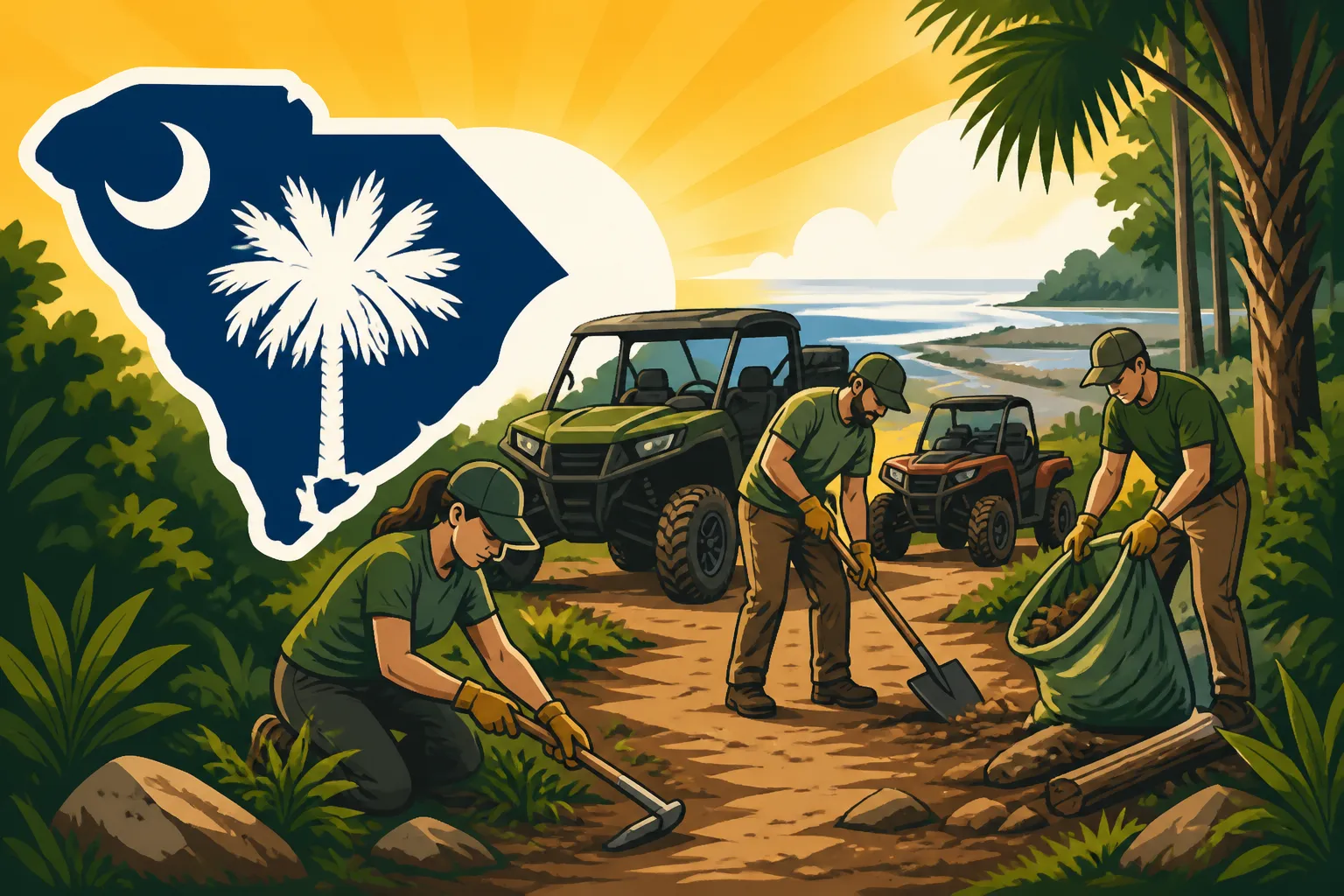
Volunteering on a South Carolina ATV trail can mean clearing storm debris, improving drainage, picking up litter, or helping riders understand where to go. The tricky part is knowing which land manager to contact, what work is actually authorized, and what to bring. This guide explains how to find a volunteer day, prepare safely, and help without damaging the trail.
How to find South Carolina ATV trail volunteer days
Start with the land manager
South Carolina riding areas do not all have the same owner or rules. Several OHV trails are in national forests, while other riding areas are privately operated. A volunteer day arranged for one site does not automatically give you permission to work at another. Before bringing tools or clearing anything, identify who manages the exact trail and ask about approved projects.
For national forest trails, start with the Forest Service district responsible for the riding area. South Carolina’s forest trail network includes places such as Enoree, Parsons Mountain, Cedar Springs, and Wambaw. These trails are not interchangeable: access rules, vehicle limits, maintenance priorities, and seasonal conditions can differ. If you are unsure which site is suitable for your machine, check [South Carolina's Four National Forest Trails](South Carolina's Four National Forest Trails) and then confirm details with the managing office before heading out.
Private parks have their own staff, schedules, and volunteer arrangements. A park may welcome help during a cleanup or organized event but still prohibit independent trail work. Ask whether volunteers need to sign up, complete a waiver, bring specific equipment, or work only under a staff lead. For riding areas outside the Forest Service system, [South Carolina Private Park Passes and Rules](South Carolina Private Park Passes and Rules) can help clarify that a public-land pass and private-park access are separate matters.
Look for organized work, not just a free day
Volunteer opportunities are often tied to a particular need: clearing branches after a storm, tidying a staging area, repairing a drainage feature, or helping prepare a site for a busy season. A general “trail work day” listing may not tell you whether the project involves hand tools, heavy equipment, or simply cleanup. Ask what the day’s tasks involve before you commit, especially if you have mobility, health, or experience considerations.
A good starting point is to contact the land manager directly and ask whether there is a volunteer coordinator, a partner club, or an approved trail-maintenance group. Riding clubs can be helpful because members may know which local projects are active, but the land manager still has the final say about work on public land. A club’s enthusiasm is not a substitute for permission to alter a trail.
If you are looking for a suitable public trail event, remember that trail access can change with weather, maintenance, or other management needs. A trail may be closed even when volunteers are welcome at a separate work site. Check [Why Forest Trails Close on Short Notice](Why Forest Trails Close on Short Notice) before traveling, and verify the status with the managing office rather than relying only on an old event post or a map app.
Ask these questions before signing up
A few practical questions can prevent a frustrating trip. Ask where the group will meet, whether parking is available for a truck and trailer, how long the work session is expected to last, and whether the event is still happening if rain is forecast. Confirm whether volunteers should bring gloves, eye protection, water, hand tools, or a lunch—and whether tools will be supplied.
Also ask what kind of work is planned and who will supervise it. A beginner-friendly litter pickup is very different from drainage repair or chainsaw work. Don’t assume that a machine is needed just because you are volunteering at an ATV facility. In many cases, the safest and most useful contribution is working on foot in a designated area under a lead volunteer’s direction.
| Before you go | What to confirm |
|---|---|
| Location | Exact trail, entrance, and meeting point |
| Authorization | The land manager or event lead has approved the work |
| Tasks | Cleanup, brushing, drainage, signage, or another defined job |
| Equipment | What to bring and what the organizer supplies |
| Access | Whether you need a pass, waiver, or separate vehicle permission |
| Conditions | Weather plan, trail status, and any cancellation notice |
What volunteers may do and how to prepare
Common tasks on an OHV volunteer day
Some volunteer work is simple but makes a noticeable difference. Picking up litter at a staging area, sorting discarded materials, or helping keep a trailhead tidy can improve the experience for everyone without requiring specialist skills. Volunteers may also help with approved signage or visitor information, such as directing people toward the right check-in point or reminding riders to stay on marked routes.
Trail maintenance itself needs more care. Work may involve removing small debris, improving drainage, or addressing erosion, but even a small change can redirect water or widen a trail. A well-meant shortcut—such as cutting a new path around a muddy section—can create more damage and encourage riders to leave the established route. Only do the work assigned by the project lead, and ask before moving rocks, cutting vegetation, digging, or changing a trail feature.
Some tasks require training or specialized authorization. Chainsaws, heavy equipment, bridges, and significant drainage structures are not appropriate for an untrained volunteer to handle independently. If a task looks more technical than the briefing suggested, pause and ask the crew lead. The right response is not to improvise; it is to keep people safe and let the qualified person decide what happens next.
Pack for South Carolina conditions
South Carolina weather can make a short volunteer shift feel demanding. Heat, humidity, sudden rain, mud, insects, and uneven ground all affect what you should bring. Wear sturdy footwear with good traction, work gloves suited to the assigned task, and eye protection when the organizer recommends it. Bring drinking water and sun protection, and consider insect repellent during warm-weather months. For a fuller packing checklist, see [Packing for Carolina Humidity](Packing for Carolina Humidity).
Dress for the work rather than for riding. Long sleeves and long pants can help protect against brush, insects, and scratches, but clothing should still allow you to move comfortably. If the event involves walking over roots or wet ground, shoes with a secure fit are more practical than casual sandals. Bring any personal medication you may need, and tell the lead if you have a condition that could affect strenuous work in hot weather.
A phone can help you communicate and find the meeting point, but do not treat a digital map as permission to enter a closed area or as a replacement for the organizer’s directions. An app such as onX Offroad may be useful for understanding your general location and planning how to reach a riding area, but use the land manager’s instructions for closures, access, and approved work boundaries. If you expect weak reception, save relevant information before leaving town and carry a paper map when appropriate. [Carrying a Paper Map in a Carolina Forest](Carrying a Paper Map in a Carolina Forest) covers why a backup can matter.
Keep riding and volunteer access separate
A volunteer event does not necessarily include permission to ride the trails afterward. Some work days may be limited to a staging area or a particular section, and trails may remain closed while crews are working. Ask whether riding is allowed, which routes are open, and whether you need a separate pass or registration before unloading your machine.
Forest recreation passes and private-park admission are handled differently. Before making a day of it, review [South Carolina National Forest OHV Passes](South Carolina National Forest OHV Passes) for public-land pass information, and check the individual park’s requirements if the event is at a private facility. Do not assume a volunteer sign-in, club membership, or workday invitation covers every person or vehicle in your group.
If you are bringing an ATV or UTV, secure it properly for the drive and follow the posted rules at the trailhead. Keep the staging area clear, unload only where directed, and avoid riding through work zones. Trail etiquette matters just as much on a volunteer day as it does during a normal ride; [South Carolina Trail Etiquette Locals Expect](South Carolina Trail Etiquette Locals Expect) offers useful reminders about sharing trails and treating other users respectfully.
How to be a useful and responsible volunteer
Follow the briefing and stay within the work area
At the start of a work day, listen for the project lead’s instructions about the task, boundaries, hazards, and emergency plan. Make sure you know where the group will work, where to meet if separated, and how to report an injury or unsafe condition. If instructions are unclear, ask before starting. Guessing can put you or another volunteer in danger, and it can undo work the land manager is trying to protect.
Stay with the assigned crew unless the lead gives you a different instruction. Do not wander off to inspect a nearby trail, move a barricade, or take a machine around a closure. A closed section may be undergoing repair, protecting sensitive ground, or closed for another management reason. Respect temporary signs and barriers even if the route looks passable.
The same caution applies to photographs and map notes. It is fine to document a hazard for the project lead, but avoid posting directions that could send riders into a closed or unauthorized area. If you use onX Offroad or another mapping tool to orient yourself, treat it as a navigation aid—not as the authority on where work or riding is permitted.
Protect the trail while you work
The goal is to maintain a trail, not make it wider, smoother, or easier than its approved design. Keep vegetation, soil, and drainage features untouched unless the lead has assigned work there. If you notice water pooling, a washout, a fallen tree, or a confusing sign, report the location rather than attempting an unapproved repair.
When moving through the site, use the designated access route and avoid driving or walking through fragile areas. If the work site is muddy, do not create a detour around the wet spot. Repeated bypasses can widen the trail and damage surrounding ground. For more on how conditions affect access, see [South Carolina Trail Closures After Rain](South Carolina Trail Closures After Rain).
Leave the site cleaner than you found it, but follow the organizer’s instructions for disposing of collected debris. Some materials may need to be separated or removed from the forest; others may need special handling. Don’t burn, bury, or leave piles of debris unless the land manager explicitly directs you to do so.
Make volunteering part of responsible riding
Trail work is most effective when riders support the same rules during their regular visits. Stay on marked routes, respect closures, pack out what you bring in, and avoid riding in ways that create unnecessary erosion or conflict with other visitors. If you are new to an area, check the trailhead information and learn which vehicles are allowed before unloading. [South Carolina's 50-Inch Trail Width Limit](South Carolina's 50-Inch Trail Width Limit) is one example of a restriction that can determine whether a machine can use a particular route.
You can also help by sharing accurate information. If another rider asks about a volunteer day, direct them to the event organizer or managing office instead of guessing about the date, access, or work details. After participating, ask whether the group needs help again, whether there is a mailing list, or whether there are future projects suited to your availability. One organized morning can be useful; a dependable group of returning volunteers can make ongoing maintenance easier.
If you are planning to volunteer with children or a mixed-experience group, confirm age rules and supervision expectations in advance. Choose work that matches everyone’s abilities, keep the group together, and make sure each person has suitable footwear and water. For riding-area outings with younger family members, [South Carolina Trails for Kids](South Carolina Trails for Kids) can help you think about trail suitability separately from the volunteer work itself.
Disclaimer
This article is for general informational purposes only and does not constitute professional advice. Laws, prices and regulations vary by location and change over time. Consult a qualified professional for guidance on your specific situation.