South Carolina Titles Are Optional
If you're a proud ATV owner in the Palmetto State, you might have heard some conflicting information about titles. Do you really need one? Is it a suggestion, or is it mandatory? It's a question that often causes a lot of head-scratching and confusion at the local riding spots and around deer camp. The truth is, for most off-road ATVs in South Carolina, titling is actually optional, which can feel like a breath of fresh air but also leaves many wondering if they're making the right choice by skipping it. This comprehensive guide is here to clear up that confusion, diving deep into what optional titling means for you, why it exists, and when having that little piece of paper in your hand might just save you a world of trouble.
What "Optional Titling" Truly Means for South Carolina ATV Owners
The phrase "optional titling" can sound a bit like a choose-your-own-adventure book, and in a way, it is. For many ATV owners in South Carolina, the decision to get a title rests entirely with them. This isn't a situation you find with your daily driver, where a title is unequivocally required for ownership and registration. Instead, it's a unique aspect of our state's approach to off-road vehicles that provides both flexibility and, for some, a fair amount of uncertainty.
Defining the Term and Its Implications
When the state says "optional," it means that you are not legally compelled to apply for a title through the Department of Motor Vehicles (DMV) for your off-road ATV. This is a significant distinction from vehicles like cars, trucks, or even street-legal UTVs, which have clear title and registration mandates. For your quad, this means you can buy it, own it, ride it, and even sell it within South Carolina without ever officially titling it with the state. Many riders find this freedom appealing, as it simplifies the initial purchase and avoids some bureaucratic steps. It’s also often a point of pride for long-time residents who appreciate the hands-off approach to their recreational machines.
However, "optional" doesn't mean "irrelevant." While the state doesn't force you to get a title, it does provide the mechanism to do so if you choose. This voluntary system aims to balance the desire for minimal regulation with the practical needs of owners who want official proof of ownership. Think of it like deciding whether to get a fancy binder for your important documents; you don't have to, but it certainly helps keep everything organized and secure. The core implication here is that the burden of proving ownership, if a dispute arises or if you need to perform certain transactions, largely falls on you if you don't have a title.
The Contrast with Other Vehicles
To truly understand what optional titling means for ATVs, it helps to compare it to other vehicles you might own. Take your car, for instance. From the moment you buy it, a title is generated, transferred, and recorded with the DMV. This title is your undeniable proof of ownership, essential for everything from getting insurance to selling it, even just driving it legally. The same will soon apply to street-legal UTVs in South Carolina, which will require both a title and registration. [South Carolina Street-Legal UTV Registration Arrives] will outline the specific steps for those machines.
Golf carts, on the other hand, often don't have titles in the same way, but they do require permits for street use within a certain radius. [South Carolina Golf Cart Permits Compared] explains these nuances. The ATV sits in a kind of middle ground: more significant than a golf cart in terms of power and investment, but without the strict titling requirements of a traditional motor vehicle. This lack of a mandatory paper trail can be a double-edged sword. While it keeps things simple for casual owners, it can create headaches when dealing with institutions that expect formal documentation, like banks or certain insurance providers. It's a unique characteristic that sets South Carolina apart from many other states that mandate ATV titling.
Initial Thoughts for a New Owner
For someone just getting into the ATV world in South Carolina, the idea of optional titling can be a bit disorienting. You might buy a used machine from a private seller, and they hand you a bill of sale, perhaps a receipt, and tell you that's all you need. And for simply riding it on private land or permitted trails, they might be right. However, it's worth pausing to consider your long-term plans for the machine. Do you foresee selling it in a few years? Do you plan on financing it? What if it gets stolen? These are the questions that often lead owners to rethink the "optional" part of the equation and lean towards securing that official title.
Many dealers, when selling new ATVs, will still provide you with a Manufacturer's Certificate of Origin (MCO). This document is the first step toward getting a title, even if you ultimately choose not to. [South Carolina Requires an MCO for a New Machine] explains why this certificate is so important. Holding onto this MCO, or getting a title derived from it, provides a level of official recognition that simple bills of sale sometimes lack. While the state doesn't demand it, a little forward-thinking can save a lot of retrospective stress, especially if your machine represents a significant financial investment.
Why South Carolina Opted for Optional ATV Titles
Understanding why South Carolina has this optional titling system helps to put it into perspective. It wasn't a random decision; rather, it's rooted in a combination of historical precedent, legislative priorities, and a cultural appreciation for less government oversight in certain recreational activities.
Historical Context and the 2011 Shift
For many years, off-road vehicles like ATVs simply operated outside the traditional state titling and registration framework. They were often viewed more like farm equipment or recreational toys than motor vehicles in the eyes of the law, particularly when used exclusively on private property. This informal approach worked for a long time, particularly in a state with a strong rural heritage where quads are often used for farming, hunting, or just enjoying vast tracts of land. People bought and sold them with a handshake and a simple receipt, and that was usually sufficient.
However, as ATVs became more popular and their use cases expanded, so did the need for clarity, especially concerning safety and law enforcement. The pivotal moment came with the passage of Chandler's Law in 2011. This comprehensive piece of legislation primarily focused on ATV safety, including age restrictions, helmet requirements, and other operational rules designed to protect riders. While it brought significant changes to how ATVs could be operated, it deliberately maintained the optional titling status for off-road ATVs. This decision was a careful balance: the state wanted to regulate safety without burdening private owners with mandatory titling for machines often used solely on their own land. This legal framework is outlined in [South Carolina Code Section 50-26-50].
The Legislative Intent Behind the Law
The legislative intent behind keeping ATV titling optional was multi-faceted. First and foremost, there was a desire to avoid creating unnecessary bureaucracy for owners of recreational vehicles that are primarily used off public roads. Many legislators understood that for farmers, hunters, or casual trail riders, adding another mandatory government step could be seen as an overreach. The prevailing philosophy was to regulate where necessary (safety) but to allow flexibility where possible (ownership documentation).
Secondly, the state recognized that many ATVs are used in contexts where traditional titling doesn't align well, such as on private farms or timberland, where the machine is essentially a tool. Requiring a title for every workhorse quad could be seen as burdensome. Furthermore, since South Carolina chose to exempt ATVs from property tax back in 2011, there wasn't a direct financial incentive for the state to track every machine through mandatory titling. [South Carolina Exempts ATVs From Property Tax] explains how this tax exemption works and why it remains in place. This combination of factors led to a system where the state offers the service, but doesn't compel its use, placing the responsibility on the individual owner to decide if a title is right for their situation.
Ongoing Discussions and Future Outlook
While optional titling has been the status quo for over a decade, discussions about its future sometimes arise. As the popularity of ATVs and UTVs continues to grow, and as more people bring these machines into different contexts – including the newly adopted street-legal UTV category – there's always a possibility that the rules could evolve. The state continually reviews its motor vehicle laws to adapt to new technologies and changing usage patterns. For example, the upcoming registration requirements for street-legal UTVs show a move towards more formal documentation for vehicles that operate on public roads.
However, for purely off-road ATVs, the current optional titling system appears to be fairly stable. Any future changes would likely need to navigate the same political and practical considerations that led to the current system. For now, ATV owners in South Carolina can continue to weigh the pros and cons of obtaining a title without the immediate pressure of a looming mandate. It’s always a good idea to stay informed, but for the foreseeable future, your choice to title or not title your off-road quad remains yours.
The Overlooked Benefits of Getting an Optional ATV Title
While the state doesn't require you to get a title for your off-road ATV, choosing to obtain one offers a surprising number of advantages that many owners don't consider until they run into a problem. It's often the proactive step that prevents a headache down the road.
Solidifying Proof of Ownership and Asset Protection
Imagine this scenario: you've saved up for years, finally bought that dream quad, and you take it out to [Carolina Adventure World in South Carolina] every chance you get. Then, one day, it goes missing from your shed. Without a state-issued title, proving that machine is yours can become incredibly difficult. A bill of sale might be flimsy or hard to track down, especially years later. A title, however, is an official government document that unequivocally states you are the legal owner. This makes it much easier for law enforcement to track, recover, and return your machine if it's stolen. [South Carolina Proof of Ownership Without a Title] dives deeper into the challenges of proving ownership in the absence of a title.
Beyond theft, a title provides clarity in other situations, too. If your machine is involved in an accident, or if there's any dispute about its ownership, that title is your ultimate proof. It's like having the deed to your house – you wouldn't leave home without it, even if the government didn't mandate it. Protecting your investment goes beyond maintenance and storage; it includes having the proper documentation to back up your claim of ownership. This can also be crucial if you ever need to file an insurance claim, as many insurers prefer or even require a title number for comprehensive coverage.
Streamlining Sales and Transfers
Let's say you decide to upgrade your ATV, or you're moving out of state and need to sell your current machine. When you're dealing with a private sale, especially to a buyer who is savvy or from a state where titles are mandatory, having a South Carolina title makes the transaction much smoother. A buyer is naturally going to be more confident purchasing a machine with a clean title in hand, as it verifies legitimate ownership and helps ensure the machine isn't stolen or encumbered by a lien. [Why a Buyer Wants a Title in Hand] outlines the various reasons a buyer would seek a titled machine.
If you don't have a title, you'll likely need to rely on a detailed bill of sale and perhaps past registration documents, which can raise questions for a buyer, potentially lowering the resale value or making the sale take longer. For sellers, providing a clear, state-issued title eliminates doubt and builds trust, making your machine more attractive to a wider range of potential buyers. This is particularly true if you're selling to someone outside of South Carolina, as most other states do require titles for ATVs, and a South Carolina title will ease their process of getting one in their home state. A simple legal document from a service like LawDepot could help draft a robust bill of sale, but it's still not a substitute for an official state title when transferring ownership.
Facilitating Financing and Insurance
For many buyers, especially those looking at newer, more expensive ATVs or UTVs, financing is a common route. The vast majority of lenders, whether it's a bank, credit union, or manufacturer's financing arm, will require a title as collateral. Without a title, securing a loan for an ATV becomes incredibly difficult, if not impossible. Lenders need that legal document to protect their investment, ensuring they can place a lien on the machine and repossess it if loan payments aren't made. [Lenders That Will Not Finance an Untitled Quad] explains this common hurdle.
Similarly, while basic liability insurance might be obtainable for an untitled machine, comprehensive coverage—which protects against theft, damage, and other perils—often requires a title number. Insurers, like lenders, want clear proof of ownership before they underwrite a policy for a valuable asset. If your ATV represents a significant investment, having a title ensures you can fully protect it with the right insurance coverage, giving you peace of mind on and off the trails. [Insurers That Ask for a Title First] clarifies why this documentation is so important to insurance providers. Don't risk being underinsured or unable to finance your quad simply because you skipped the "optional" titling step.
Critical Scenarios Where a Title is Indispensable
While titling an ATV in South Carolina is technically optional, there are specific situations where that piece of paper moves from a nice-to-have to an absolute necessity. Ignoring these scenarios could lead to significant headaches, financial losses, or even legal entanglements.
Selling to a Buyer Who Demands a Title
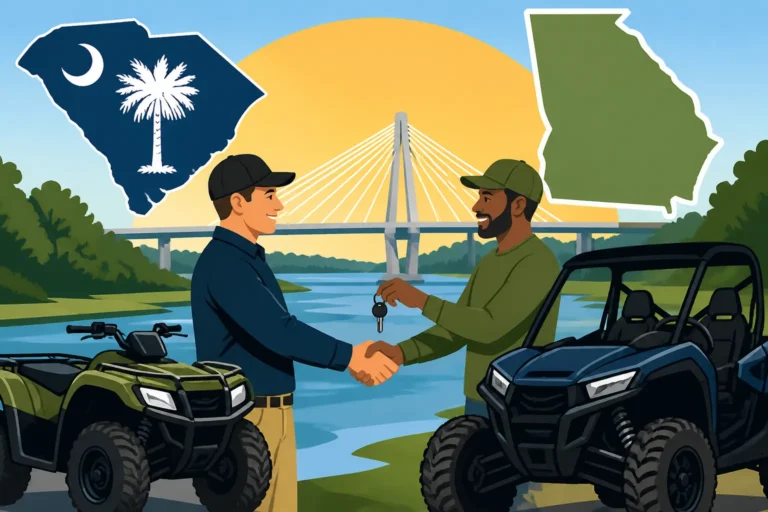
Perhaps the most common scenario where an optional title becomes essential is during a sale, especially to an out-of-state buyer or one who is particularly cautious. Many states beyond South Carolina have mandatory titling laws for ATVs. If you're selling your quad to someone in North Carolina, Georgia, or Florida, for example, they will almost certainly need a title from you to register and title the machine in their home state. Without it, your buyer might face significant hurdles and extra costs, making your machine a less attractive purchase. This can limit your market, delay sales, or force you to accept a lower price.
Even within South Carolina, a savvy buyer knows the value of a title for their own peace of mind and future resale. They want to ensure the machine isn't stolen, has a clear ownership history, and can be easily transferred into their name. If you only have a bill of sale, even a well-drafted one, a buyer might be hesitant or demand more verification. They could ask for additional steps, like meeting at a DMV office, or even walk away from the deal altogether. To avoid this, having a [South Carolina Title After a Private Sale] ready can make the process smooth and quick for everyone involved.
Navigating Theft, Loss, or Recovery
Let's revisit the nightmare scenario of a stolen ATV. Without a title recorded with the state, proving ownership to law enforcement or your insurance company can be an uphill battle. A title provides an official record with your name and the vehicle's unique identification number (VIN) linked directly in the state's system. This record makes it significantly easier for police to enter the machine into national theft databases and for them to return it to you if it's recovered. Without that official documentation, the process becomes much more complicated, often relying on potentially incomplete or lost private paperwork.
Furthermore, if your ATV is involved in an incident where it's damaged or declared a total loss, your insurance company will almost certainly require a title to process your claim. They need that official document to verify ownership and ensure they are paying the rightful owner. Without it, you might find your claim denied or significantly delayed. Having a title essentially provides an ironclad layer of protection for your valuable asset against unforeseen circumstances, acting as your definitive legal proof when you need it most.
Handling Inherited Machines and Estate Matters
The death of a loved one is always a difficult time, and navigating their estate can add to the stress. If you inherit an ATV that was owned by a family member, and that machine was never titled, you could face significant challenges proving your legal right to it. Without a title, transferring ownership through an estate can involve more complex legal processes, potentially requiring affidavits, court orders, or additional documentation to satisfy the executor or other beneficiaries. [South Carolina Title After the Owner Dies] covers the specific steps and challenges involved in these situations.
A title, by contrast, provides clear documentation of ownership, making the transfer process much more straightforward for the estate. The legal system generally relies on official government records to determine asset ownership, and a title fits that bill perfectly. While a will might stipulate who inherits the ATV, having a title already in the deceased's name makes the executor's job much easier and reduces the potential for disputes among heirs. It ensures a smooth transition of a valuable asset during an already sensitive time.
Your Step-by-Step Guide to Titling an ATV in South Carolina
Deciding to get a title for your ATV in South Carolina is a smart move for many owners. The process itself is fairly straightforward, especially if you come prepared. Here’s a detailed look at what you’ll need and what to expect when you head to the DMV.
Required Documents and Preparations
Before you even step foot in a South Carolina DMV office, gathering the right paperwork is crucial. Showing up unprepared is a surefire way to extend your visit or require multiple trips. The main form you'll need is the South Carolina Application for Certificate of Title and Registration, often referred to as Form 400. This is a multi-purpose form used for various vehicle transactions, so you'll need to tick the correct boxes for "Title Only" or "Title and Registration" if you happen to be titling a street-legal UTV. [South Carolina Form 400 Explained] provides a comprehensive breakdown of how to fill out this essential document.
Beyond the form, you'll need proof of ownership. For a brand-new ATV, this will be the Manufacturer's Certificate of Origin (MCO). If you bought a used ATV from a private seller, you’ll need a bill of sale signed by both you and the seller, clearly stating the make, model, year, and VIN of the machine, along with the purchase price. A robust bill of sale, perhaps generated using a template from a service like LawDepot, can serve as strong evidence. You'll also need a valid South Carolina driver's license or ID, and proof of your South Carolina address if it's not on your ID. If there's a lienholder (like a bank that financed your purchase), you'll need their information as well. Remember, completeness is key here – missing a signature or a piece of information can halt the entire process.
The DMV Application Process
Once you have all your documents in order, you can visit any full-service South Carolina DMV office. It's always a good idea to check their specific hours and if they offer appointment scheduling before you go. When you get to the counter, you'll present your completed Form 400, your proof of ownership (MCO or bill of sale), and your ID. The DMV clerk will review everything, ensuring all fields are correctly filled out and that the VIN on your documents matches the machine. They might ask for clarification on certain details, so be prepared to answer questions about the purchase.
During this process, you will also pay the applicable titling fee. [What a South Carolina ATV Title Costs] details the typical fees involved. Currently, the titling fee for an ATV is quite modest, especially compared to the value it adds in terms of proof of ownership. If you're in a hurry, South Carolina also offers an expedited titling service for an additional fee, allowing you to walk out with your title much faster. [South Carolina Expedite Fee of $20] explains this option for those who need their title in hand quickly. Once processed, the DMV will issue you a receipt, and your official title certificate will usually be mailed to you within a certain timeframe. [South Carolina Title Processing Time] provides an estimate of how long you can expect to wait.
Understanding Costs and Processing Times
The costs associated with titling an ATV in South Carolina are generally low, especially considering the security and benefits it provides. The primary cost is the title application fee itself. There generally isn't a sales tax on a private ATV sale in South Carolina; however, there is an Infrastructure Maintenance Fee (IMF) on new vehicles and vehicles brought into the state that are titled for the first time. For ATVs and other recreational vehicles, this fee is capped. When purchasing from a dealer, you might also encounter dealer documentary fees, which are separate from the state titling fees. [South Carolina ATV Sales Tax Rate] and related articles can give you a clearer picture of these potential charges.
As for processing times, if you opt for the standard service, your title will typically be mailed to you within a few weeks. The exact timeframe can vary depending on the volume of applications the DMV is handling at any given time. However, if you choose the expedited service, you can often receive your title on the same day, walking out with it in hand. This can be a great option if you need the title immediately for a sale, financing, or other urgent matter. It's always best to verify current fees and processing estimates directly with the DMV, as these figures can change.
Addressing Common Titling Challenges Head-On
Even when titling is optional, the process isn't always perfectly smooth. There are a few common hurdles that South Carolina ATV owners encounter. Knowing how to prepare for and overcome these challenges can save you a lot of frustration.
When Your Paperwork is Missing or Incomplete
One of the biggest obstacles many used ATV buyers face is dealing with missing or incomplete paperwork from a previous owner. Perhaps you bought a quad at a great price, but the seller only provided a handwritten note, or the original bill of sale from years ago is long gone. Or maybe the previous owner never titled it and doesn't have the original MCO. In these situations, getting a title can seem daunting. The DMV needs a clear chain of ownership. If you don't have a solid bill of sale, you might need to obtain a sworn affidavit from the seller attesting to the sale and their ownership. [South Carolina Title Without a Bill of Sale] describes how to handle these specific situations.
Sometimes, establishing the chain of ownership might require going back to previous owners or seeking legal advice if the trail is truly cold. In rare cases, if you genuinely can't establish ownership through traditional means, you might need to explore options like a bonded title, though this is less common for ATVs. The key here is persistence and thoroughness. Even if the paperwork isn't perfect, gather everything you do have—old registration cards, insurance documents, or even a statement from the dealer if you know where it was originally purchased. Any piece of documentation can help the DMV clerk piece together the ownership history. A legal professional could help draft an affidavit if needed, or services like LawDepot might offer templates for such documents.
Dealing with Lost or Mutilated VINs
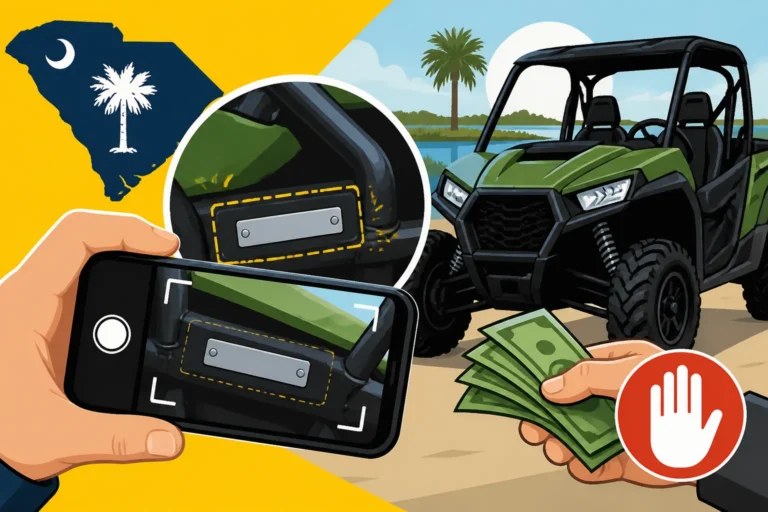
The Vehicle Identification Number (VIN) is the unique fingerprint of your ATV. It's essential for titling, as it identifies the specific machine. Unfortunately, over time, VINs can become obscured, corroded, or even damaged due to wear and tear, accidents, or improper maintenance. If the VIN on your ATV is unreadable or missing, the DMV will not be able to process your title application. This isn't just a South Carolina rule; it's standard practice everywhere because the VIN is crucial for tracking the vehicle and preventing fraud.
If you encounter this issue, your first step should be to thoroughly clean the area where the VIN is located, which is usually on the frame near the front suspension or steering column. If it's still unreadable, you might need to have law enforcement or a certified mechanic inspect the machine to verify the VIN. In some cases, the DMV might require a specialized inspection to confirm the vehicle's identity before they will issue a new VIN plate or allow titling. It’s a bit of extra work, but without a verifiable VIN, your ATV simply cannot be legally titled.
Special Considerations for Out-of-State Purchases
Buying an ATV from a seller in another state can introduce its own set of challenges, especially if that state has different titling requirements than South Carolina. For instance, if you buy a quad from a state that does require titles for ATVs, you should ensure the seller provides you with their properly endorsed title. This is your primary proof of ownership. However, if you purchase an ATV from a state that also has optional titling, or where ATVs aren't titled at all (which is becoming rarer), you'll need to rely heavily on a comprehensive bill of sale and possibly the MCO if it's a newer machine.
When bringing an out-of-state ATV into South Carolina for titling, you'll follow the same basic steps as outlined above, submitting Form 400 and your proof of ownership. The key difference might be the level of scrutiny the DMV clerk applies to your out-of-state documents. They want to ensure the vehicle wasn't stolen and that the ownership transfer is legitimate. Having a well-documented transaction, possibly with a notarized bill of sale, will significantly smooth this process. Remember, the goal is to provide a clear and undeniable chain of ownership from the original manufacturer to you, the current owner.
The Realities of Owning an Untitled ATV in the Palmetto State
While the choice to title your off-road ATV in South Carolina is yours, it's important to understand the practical implications of not having that official document. For many, the decision to skip titling might seem like avoiding bureaucracy, but it can lead to unforeseen complications and limitations down the road.
Implications for Resale Value and Buyer Confidence
One of the most immediate impacts of not titling your ATV is on its resale value and your ability to attract buyers. In today's market, buyers are increasingly cautious, and an untitled ATV, even in a state where it's optional, can raise red flags. Buyers worry about the legitimacy of ownership, potential hidden liens, or whether the machine could be stolen. Without a state-issued title, proving clear ownership relies solely on a bill of sale, which can be easily lost, forged, or disputed.
This lack of official documentation often translates to a lower asking price and a smaller pool of potential buyers. You might find yourself having to explain why the machine isn't titled, which can make a buyer nervous. Many will prefer to purchase an ATV with a clean title in hand, even if they plan to keep it untitled themselves. This preference is particularly strong among buyers from states where titles are mandatory, as they know they'll face an uphill battle to title it in their home state without one from you. For many, the peace of mind a title provides far outweighs the minimal effort to obtain it.
Limited Access to Financial Services
If you ever plan to use your ATV as collateral for a loan or seek financing for its purchase, the absence of a title will severely limit your options. Banks, credit unions, and other lending institutions typically require a state-issued title so they can legally record a lien against the vehicle. This lien protects their investment; if you default on the loan, they have the legal right to repossess the ATV. Without a title, they have no formal way to secure their interest in the machine, making them very reluctant to lend money.
This isn't just about initial purchase financing. If you ever need to borrow against your ATV's value for another purpose, an untitled machine won't qualify. This financial limitation means you're unable to leverage your ATV as an asset in the same way you could a titled vehicle. It restricts your financial flexibility and can make it harder to manage larger purchases or unexpected expenses if you were hoping to use your ATV's value as a resource.
Challenges in Proving Ownership
Beyond sales and financing, the most fundamental challenge of owning an untitled ATV is the difficulty in proving ownership in various situations. We've already touched on theft, but consider other scenarios:
- Disputes: If there's a disagreement over ownership, perhaps after a divorce or a falling out with a co-owner, a title is definitive. Without it, you're left to rely on less formal documents, which can lead to lengthy and costly legal battles.
- Insurance Claims: While some insurers might offer basic coverage without a title, making a comprehensive claim for damage or loss often requires proof of ownership that only a title can unequivocally provide.
- Customs/Border Crossings: If you ever plan to transport your ATV across international borders (e.g., into Canada or Mexico), customs officials will demand clear proof of ownership, and a state title is the most universally accepted document.
- Mechanic's Liens: If you take your ATV to a shop for repairs and somehow end up in a dispute over payment, the mechanic might try to place a lien on the machine. A title clearly showing your ownership can help protect your rights.
In essence, while South Carolina's optional titling offers freedom, it also places a greater burden on the owner to maintain alternative, less official forms of proof. While a thorough bill of sale and receipts can help, they rarely carry the same legal weight or provide the same level of confidence as a state-issued title. For true peace of mind and full protection of your investment, the benefits of securing that optional title are often well worth the minor effort.
Key Questions and Practical Advice for South Carolina ATV Titles
Even with optional titling, there are nuances and specific situations that often lead to questions. Understanding how the process applies to different types of machines or unique circumstances can help you make informed decisions.
Titling Specific Machine Types
While the core rules for optional titling apply primarily to off-road ATVs, it's worth noting how other similar machines fit into the picture.
- Youth Quads: For smaller, youth-sized ATVs, the titling process is the same as for adult quads. While they might be a lower financial investment, obtaining a title for a youth quad still provides proof of ownership and facilitates future resale. Many parents choose to title them, especially if they anticipate their child outgrowing it and selling it later. [Titling a Youth Quad in South Carolina] delves into this.
- Side-by-Sides (UTVs): For a long time, side-by-sides also fell under the optional titling umbrella for off-road use. However, with the recent legislation introducing street-legal UTV registration, things have changed for machines intended for road use. A street-legal UTV will require both a title and registration. If your side-by-side is strictly an off-road machine, the optional titling rule still applies. It's crucial to distinguish between recreational off-road UTVs and those being converted for street legality. [Titling a Side-by-Side in South Carolina] provides more specific information.
- Dirt Bikes: Much like ATVs, dirt bikes primarily intended for off-road use in South Carolina also fall under the optional titling system. If your dirt bike is a competition-only machine, it's likely it will remain untitled. However, if it's a significant investment or you plan on converting it to street legal (a more complex process than UTVs), getting a title can still be a beneficial step. [Titling a Dirt Bike in South Carolina] can help you navigate these choices.
These distinctions highlight that while the overarching rule of optional titling for off-road machines is consistent, the practical implications can vary based on the specific type of machine and its intended use.
Understanding the Lien Process
If you finance your ATV purchase, the lender (bank, credit union, or manufacturer) will want to protect their investment. This is done by placing a lien on the title. When you apply for a title for a financed ATV, the lender's name will be listed as the lienholder on the official title document. This means they have a legal interest in the machine until the loan is fully repaid. [South Carolina Title and Lien Records] further explains how these liens are recorded.
Once your loan is paid off, the lender will send you a lien release document. It is your responsibility to then take this lien release to the DMV to have the lien removed from your title. The DMV will issue you a clean title, free of any lienholder notation. Failing to get the lien removed can cause problems down the road when you go to sell the ATV, as potential buyers or their lenders will see the outstanding lien. It's a simple step, but one that's often overlooked by owners once they've made that final payment.
Why Optional Titling Still Helps
Even with all the challenges and considerations, the fact that South Carolina offers optional titling is a benefit in itself. It provides flexibility that many other states don't. For owners of older, lower-value machines used exclusively on private property, who have no intention of selling or financing, skipping the title might genuinely be the most straightforward approach. It avoids a layer of bureaucracy that, for some, would be unnecessary.
However, for anyone whose ATV represents a significant investment, who plans to sell it in the future, finance it, or even just wants the ultimate proof of ownership for peace of mind, the optional titling system allows you to secure that document. It gives you the choice to add that layer of protection and formality without it being mandated for every single quad on every farm. It's a system that respects individual choice while still offering the legal framework for those who need or desire it. In the end, the "optional" part means you get to weigh the benefits against your personal circumstances and make the best decision for your machine and your peace of mind.
| Scenario | Is an SC ATV Title Required? | Why or Why Not | Potential Risks Without a Title |
|---|---|---|---|
| Off-road use on private land | No (Optional) | State does not mandate titling for off-road vehicles. | Difficult proof of ownership, lower resale value. |
| Selling to an SC buyer | No (Optional) | Can use a bill of sale, but title is preferred by many. | Buyer hesitancy, lower price, potential ownership disputes. |
| Selling to an out-of-state buyer | No (Optional, but highly recommended) | Most other states require titles for registration. | Buyer cannot title in their state, significantly hinders sale. |
| Financing an ATV purchase | No (Optional, but lender will require) | Lenders need a title to record a lien for collateral. | Cannot get a loan, limits financial flexibility. |
| Insuring with comprehensive coverage | No (Optional, but insurer may require) | Insurers often need a VIN from a title for full coverage. | Limited insurance options, claim denial for theft/damage. |
| ATV Theft/Recovery | No (Optional, but highly recommended) | Law enforcement uses title records for tracking. | Hard to prove ownership to police, harder to recover. |
| Inherited ATV | No (Optional, but highly recommended) | Title simplifies estate transfer and proves legal heir. | Complex legal process, disputes among heirs. |
| Street-Legal UTV registration | Yes | New law mandates title and registration for road use. | Cannot legally operate on public roads. |
Disclaimer
This article is for general informational purposes only and does not constitute professional advice. Laws, prices and regulations vary by location and change over time. Consult a qualified professional for guidance on your specific situation.