Selling to a Buyer Across the Savannah River
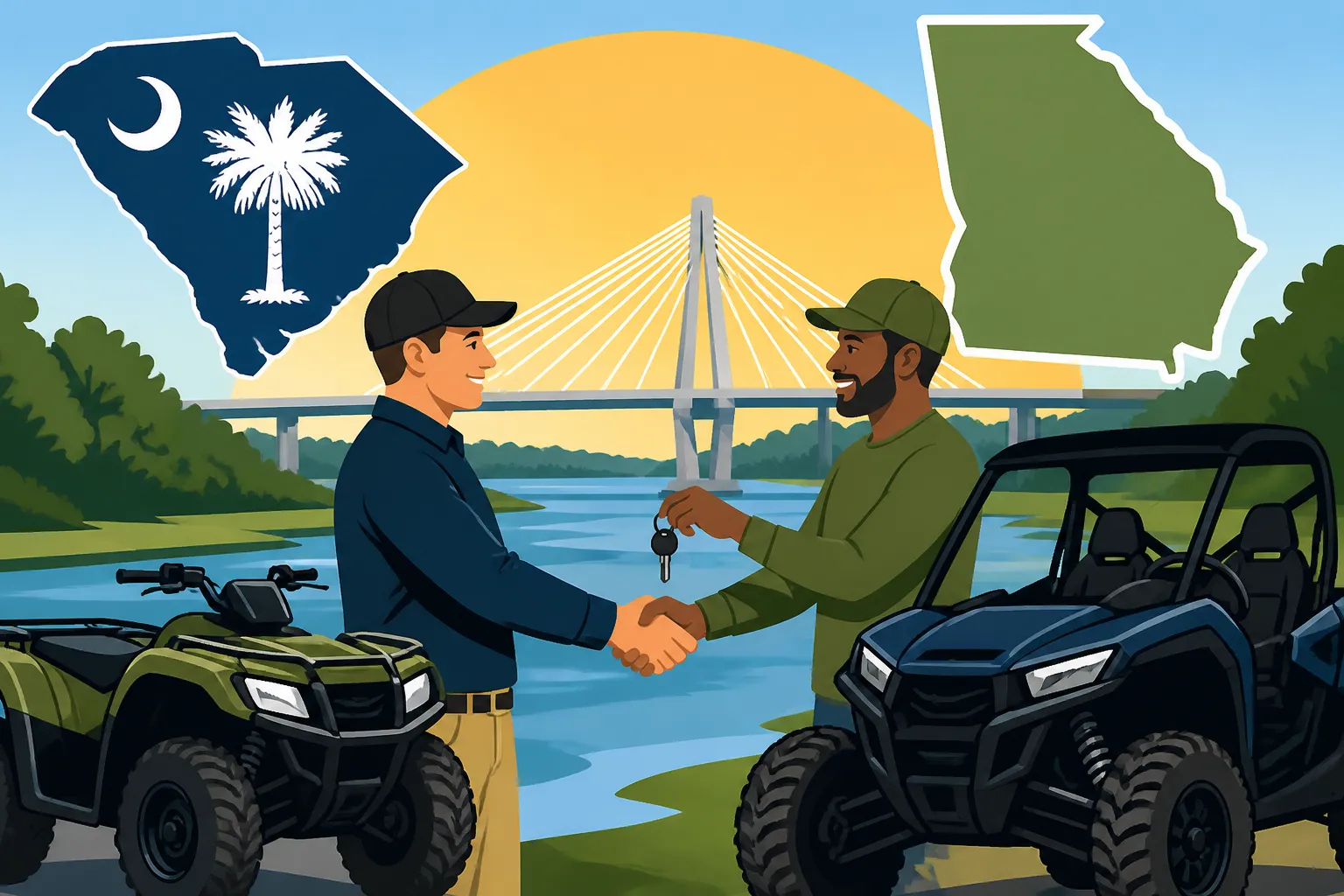
Selling an ATV or UTV can be exciting, but when your buyer is coming from across the Savannah River in Georgia, the transaction adds a layer of complexity that can quickly become a headache if you're not prepared. This guide will walk South Carolina sellers through the essential steps and paperwork needed to ensure a smooth, secure sale to an out-of-state buyer, helping you navigate the unique challenges of a cross-border transaction.
The Importance of Proper Paperwork for a South Carolina Seller
Even though South Carolina has some unique rules regarding off-road vehicles, making sure your ducks are in a row with paperwork is paramount when selling, especially to a buyer from another state like Georgia. What might seem optional here at home often becomes absolutely critical for them to title and register their new machine in their home state.
Your South Carolina Title, Or Lack Thereof
Here in South Carolina, we have a pretty relaxed approach to off-road ATV titles. For many years, titles for off-road ATVs were entirely optional. You could absolutely own and enjoy your quad without one. However, just because you can doesn't always mean you should, especially when selling. When you're dealing with an out-of-state buyer, particularly one from Georgia, their state's rules are often much stricter. Georgia typically requires a title for ATVs and UTVs. This means that while your [South Carolina Titles Are Optional], having one makes the process significantly smoother for your buyer. If you have a side-by-side, you might have already gone through the process of [Titling a Side-by-Side in South Carolina], which is a huge advantage.
If you don't have a title, and your machine isn't old enough to be exempt, you might want to consider applying for one yourself before the sale. While you can certainly pursue [Selling a Machine Without a Title in South Carolina], it almost always means you'll get less money, and you'll narrow your pool of potential buyers significantly. A buyer from Georgia who needs a title to legally operate their new machine in their state will likely be hesitant to buy an untitled machine from you, or they'll expect a steep discount to compensate for the hoops they'll have to jump through.
Crafting a Comprehensive Bill of Sale
Regardless of whether you have a title, a solid bill of sale is your best friend in any private sale, and it's absolutely non-negotiable when selling to an out-of-state buyer. This document serves as the official record of the transaction, proving that ownership has transferred from you to the buyer. It protects both parties but is especially vital for the seller to demonstrate they no longer own the machine and are not liable for its future use.
Your bill of sale should include:
- The full names and addresses of both the buyer and the seller.
- The date of the sale.
- A detailed description of the ATV or UTV, including make, model, year, color, and most importantly, the Vehicle Identification Number (VIN). Double-check this number against the machine itself to ensure accuracy.
- The purchase price agreed upon.
- A clear statement that the vehicle is being sold "as-is, where-is," with no warranties expressed or implied. This is a critical legal protection for you, the seller.
- Signatures of both the buyer and the seller.
You can find numerous templates online, but using a service like LawDepot can provide you with a legally sound and customizable bill of sale that covers all these bases. Their templates are designed to hold up in court and can give you peace of mind that you haven't missed any crucial details. Remember, the buyer will likely need this bill of sale to prove ownership when they go to their local DMV in Georgia to get a title and register the machine. [South Carolina Title Without a Bill of Sale] talks about the buyer's struggle, but you, as the seller, are key to preventing that.
Dealer Paperwork vs. Private Sale Paperwork
If you originally bought your ATV or UTV new from a dealer in South Carolina, you likely received a Manufacturer's Certificate of Origin (MCO), sometimes called an MSO. This document is like a birth certificate for the machine and is crucial for obtaining a first-time title. If you never titled your machine and still have the MCO, that's incredibly valuable for an out-of-state buyer. They can use that MCO to apply for a title in their state, similar to how you would [Titling a New Quad With Its Origin Certificate] in South Carolina. For a private sale of a used machine, however, the MCO usually isn't necessary if a title already exists and is being transferred. The key is establishing a clear chain of ownership, and a properly assigned title from the previous owner (you!) is the most straightforward way to do that.
What a Georgia Buyer Needs from a South Carolina Seller
Understanding what the buyer will face when they return to Georgia is key to a smooth transaction. Your preparedness directly impacts their ability to get their new machine legally set up in their home state. They're going through the process of [Buying From a Private Seller in South Carolina], and you want to make it as easy as possible.
How Your SC Title Impacts Their GA Registration
As mentioned, Georgia’s titling requirements for ATVs and UTVs are typically more stringent than South Carolina's. For your Georgia buyer, a valid South Carolina title in your name, properly signed over to them, will be the golden ticket. It demonstrates clear ownership and provides the essential documentation they need to apply for a Georgia title. Without it, they might face significant delays or even be unable to title their machine in Georgia, which could lead to legal issues for them down the road. This is why investing in getting a title for your machine, even if optional for you, can dramatically increase its value and appeal to an out-of-state buyer. If you're wondering [What a South Carolina ATV Title Costs], it's a small investment for a much smoother sale.
Beyond the Title: Proof of Purchase for Georgia
Even with a title, the Georgia buyer will still need robust proof of purchase. The detailed bill of sale you create, ideally using a reliable template from a service like LawDepot, will serve this purpose. This document will verify the transaction, the price paid, and confirm the change of ownership. It's often required by Georgia's Department of Driver Services (DDS) for titling and registration. Ensure that the VIN on the bill of sale exactly matches the VIN on the machine and, if applicable, on the South Carolina title. Any discrepancies could cause major headaches for your buyer.
The Georgia DMV Perspective on Out-of-State Purchases
Imagine your buyer walking into a Georgia DDS office. They’ll be looking for a clear, unbroken chain of ownership documentation. This usually means a title signed by the seller (you) to the buyer, and a bill of sale detailing the transaction. If you provide them with anything less, they could be sent away to gather more paperwork, or worse, struggle to prove they are the rightful owner. They might face questions about [South Carolina Proof of Ownership Without a Title] if you haven't given them all the necessary documents. Making their life easier at their DMV helps make your sale easier too.
Safeguarding Your Sale: Tips for Cross-State Transactions
Selling to someone from out of state requires extra vigilance to protect yourself from scams, payment issues, and potential liability. You're not just selling a machine; you're ending a legal relationship with it.
Secure Payment Methods
When accepting payment, especially for a large purchase like an ATV or UTV, cash is often seen as king. However, carrying or handling large sums of cash can be risky. If you accept cash, arrange to meet at your bank so you can deposit it immediately and verify its authenticity. Alternatively, a cashier's check or money order drawn on a major bank can be a safe option, but always verify its legitimacy with the issuing bank before handing over the keys or title. Do not trust a check until the funds have cleared your account entirely. Bank transfers are also an option, but again, ensure the funds are fully in your account and not merely pending before completing the transaction. Avoid personal checks from unknown buyers entirely.
Meeting Safely and Legally
Choose a public, well-lit location for the transaction, especially if you don't know the buyer. A busy parking lot, a police station parking area (some departments offer this service), or even your bank lobby can provide a safer environment. For the signing of the bill of sale and title, consider having a notary public present. While not always legally required, a notary's seal adds an extra layer of authenticity to your documents, which can be particularly useful for an out-of-state buyer presenting them in their home state. LawDepot's documents are often designed to be easily notarized, further streamlining this process.
A Formal Sales Agreement Beyond the Bill of Sale
For higher-value machines, or if there are any specific terms to the sale (e.g., specific accessories included, agreements about delivery), you might consider a more formal sales agreement in addition to the bill of sale. This document can outline every detail of the transaction, ensuring there are no misunderstandings. A service like LawDepot can assist in creating a comprehensive sales agreement tailored to your specific needs, providing even greater legal protection than a simple bill of sale might offer on its own. It's about clearly defining the terms of the transfer of ownership.
Avoiding Common Traps When Selling Across State Lines
It's easy to get caught up in the excitement of a sale, but a few common missteps can turn a successful transaction into a long-term problem. Being aware of these pitfalls, especially with an out-of-state buyer, can save you a lot of grief.
Verifying Buyer Identity
Always ask to see the buyer's driver's license or other government-issued ID. Make sure the name on their ID matches the name you put on the bill of sale and, if applicable, on the assigned title. Take a photo of their ID (with their permission) for your records. This helps prevent fraudulent transactions and provides crucial information if any issues arise after the sale. You want to make sure you're selling to the person you think you are.
Clarifying "As-Is" Sales and Limiting Liability
We touched on this earlier, but it bears repeating: explicitly state "as-is, where-is" on your bill of sale. This clause means the buyer is purchasing the ATV or UTV in its current condition, with all its faults, and you are not making any guarantees about its future performance or condition. Without this clause, you could be held liable for mechanical failures or other issues that arise shortly after the sale. LawDepot's bill of sale templates typically include this vital language, providing you with important legal protection. This protects you from future complaints or demands for repairs once the machine crosses the Savannah River.
Avoiding Title Loan Pitfalls and Ensuring a Clear Title
Before you even list your ATV or UTV for sale, make sure the title is completely clear of any liens. If you financed the machine, your lender likely holds the title or has a lien noted on it. You cannot legally transfer ownership until that lien is satisfied and released. Contact your lender to understand their process for releasing the lien upon sale. It’s also a good idea to check [South Carolina Title and Lien Records] yourself to confirm there are no unexpected encumbrances on your machine. Selling a machine with an outstanding lien, especially to an out-of-state buyer, can lead to serious legal complications for both parties.
Here’s a handy checklist to keep your cross-state sale on track:
| Step | Description |
|---|---|
| Before the Sale | |
| Secure an SC Title | If optional for your ATV, consider getting one. It simplifies the process for a Georgia buyer. If you have an MCO and no title, keep that MCO safe! |
| Check for Liens | Ensure your title is clear. Pay off any loans, and get a lien release from your lender. |
| Prepare a Bill of Sale | Use a detailed template (e.g., from LawDepot) including VIN, "as-is" clause, buyer/seller info, and price. |
| During the Sale | |
| Verify Buyer ID | Ask for a government-issued ID and confirm the name matches the paperwork. |
| Meet Safely | Choose a public location or your bank. Consider a notary for the bill of sale. |
| Secure Payment | Accept cash (at bank), verified cashier's check, or confirmed bank transfer. Avoid personal checks. |
| Sign Over Title & Bill of Sale | Ensure all necessary signatures are obtained on the title (if applicable) and bill of sale. Provide the original signed bill of sale and title (if any) to the buyer. |
| After the Sale | |
| Keep Copies | Retain copies of the signed title (if applicable), bill of sale, and buyer's ID for your records. |
| Notify Relevant Parties | Inform your insurance company that you've sold the machine to cancel coverage. While SC doesn't require registration for off-road ATVs, if you had a street-legal UTV, you might want to consider notifying the DMV that you no longer own it. |
Selling an ATV or UTV to a buyer across the Savannah River doesn't have to be daunting. By diligently preparing your paperwork, understanding the buyer's likely needs in Georgia, and taking sensible precautions during the transaction, you can ensure a smooth, legitimate, and stress-free sale. Don't underestimate the power of clear documentation like a well-crafted bill of sale – it's your best defense and your buyer's clearest path to enjoying their new ride.
Disclaimer
This article is for general informational purposes only and does not constitute professional advice. Laws, prices and regulations vary by location and change over time. Consult a qualified professional for guidance on your specific situation.