South Carolina Title for a Hunting Lease Machine
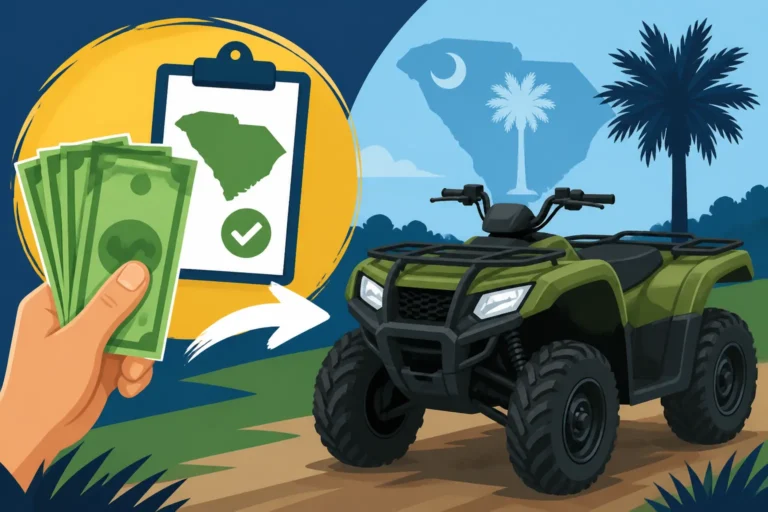
It's incredibly common for folks who primarily use their ATVs or UTVs on a hunting lease here in South Carolina to think, "Why bother with a title? It's just for the woods, not the road!" But let me tell you, that line of thinking can lead to a heap of headaches down the trail. This guide is here to walk you through why a title for your hunting lease machine is a smart move, even if it feels like overkill, and exactly how to get one, protecting your investment and peace of mind.
Why Titling Your Hunting Lease Machine Matters (Even if Optional)
When you're out there enjoying the peace and quiet of your hunting lease, the last thing on your mind is probably paperwork. You're focused on the wildlife, the camaraderie, and the thrill of the hunt. But overlooking the official ownership of your ATV or UTV, even if it rarely sees pavement, can set you up for some real frustrations later on. In South Carolina, off-road machines don't have to be titled, but there are some compelling reasons why you really should consider it for your hunting rig.
Protecting Your Investment and Ownership Proof
Think about that hard-earned money you shelled out for your trusty quad or side-by-side. It’s a significant investment, likely thousands of dollars, and just like your truck or your boat, you want to protect that asset. A title is the ultimate proof of ownership. Let's say, heaven forbid, your machine gets stolen right off the hunting lease or from your shed back home. Without a title, proving it's yours to law enforcement or an insurance company becomes incredibly difficult, sometimes nearly impossible. Imagine the scenario: you report it stolen, and the police ask for the title number. If you only have a faded bill of sale from a decade ago, or worse, just a handshake deal, your chances of recovery diminish significantly. It creates a clear paper trail that traces ownership from the manufacturer or previous owner directly to you. This also comes into play if there's ever a dispute over who actually owns the machine. If you're sharing the lease with others, or if it's a family machine, having one name clearly on the title avoids future misunderstandings. Having that piece of paper just makes life easier and offers you a critical layer of protection for your valuable equipment. It simply gives you peace of mind that your investment is formally recognized.
Facilitating Future Sales or Transfers
Even if you plan to run your hunting machine into the ground, eventually, you might want to upgrade, sell it to a buddy on the lease, or pass it down to a family member. When that day comes, having a title in hand makes the process smoother than a freshly groomed trail. Buyers, even those just looking for a lease machine, are becoming increasingly savvy and want clear proof of ownership. They want to avoid any potential headaches, and a clear title provides that assurance. [Why a Buyer Wants a Title in Hand] is a question many folks ask, and the answer almost always comes back to security and ease of transfer. Trying to sell a machine without a title often means you'll get significantly less for it, or you'll struggle to find a buyer at all, because they'll wonder what "missing" history the machine might have. It's a red flag for many, signaling potential issues that they don't want to inherit. Even if you're just transferring it within the family, a title simplifies the legal transfer, ensuring the new owner has no issues down the road with their own insurance or future resale.
Insurance and Financing Considerations
While liability insurance isn't mandatory for off-road ATVs and UTVs used exclusively on private land in South Carolina, many riders choose to get comprehensive or collision coverage to protect against theft, fire, or accidental damage. Here’s the catch: many insurance providers will require a title before they'll issue a policy for your machine. Without that official documentation, they can't verify ownership, and they'll be hesitant to take on the risk. You might find yourself in a situation where you can't get the coverage you want or need. Similarly, if you ever decide to finance a new or used ATV or UTV, especially if you're getting a loan from a bank or credit union, they almost universally require a title. [Lenders That Will Not Finance an Untitled Quad] are very common because a title allows them to record a lien on the machine, securing their investment. If you can't provide a title, you might be stuck paying cash, which isn't always feasible for everyone. So, while you might not think about these things when you're just focused on getting to your deer stand, a title opens doors for better protection and financing options that are well worth considering.
The Practical Steps to Title a Hunting Lease Machine in South Carolina
Alright, so you're convinced that getting a title for your hunting lease machine is a good idea. Now what? The process in South Carolina isn't overly complicated, but it does require attention to detail and knowing which forms to fill out and what documents to bring. Don't worry, it's not like trying to decipher a topo map without a legend; we'll break it down step-by-step.
Gathering Your Essential Documents
This is where the rubber meets the road, or should I say, where the paperwork hits the counter. You'll need a few key items when you head to the South Carolina Department of Motor Vehicles (SCDMV) office. First and foremost, you'll need the proper application form, which is Form 400, "Application for Certificate of Title and Registration." You can find this on the SCDMV website or pick one up at your local office. Beyond the form, what you need depends on whether your machine is brand new or used.
- For a Brand-New Machine: You'll need the Manufacturer's Certificate of Origin (MCO), sometimes called a Manufacturer's Statement of Origin (MSO). This is the "birth certificate" for your machine, provided by the dealer. You'll also need the bill of sale from the dealership, clearly showing the purchase price and your name as the buyer.
- For a Used Machine: This is more common for hunting rigs. If the previous owner had a South Carolina title, you'll need that original title, properly signed over to you. Make sure the seller completed the assignment of title section fully and accurately. If the previous owner never titled it (which is common for older off-road machines in SC), you'll need a solid bill of sale from them. A thorough bill of sale should include the date of sale, the purchase price, the full names and addresses of both buyer and seller, and crucially, the year, make, model, and Vehicle Identification Number (VIN) or serial number of the machine. You can find templates for a robust bill of sale online, perhaps through services like LawDepot, to ensure you're covering all your bases. You'll also need a valid South Carolina driver's license or ID, and proof of your South Carolina address if it's not on your ID.
Navigating the DMV Process
Once you've got all your documents in hand, it's time for a trip to the SCDMV. It can feel a bit daunting, but if you're prepared, it usually goes smoothly. When you fill out Form 400, you'll see a box where you can tick "Title Only." This is key for most hunting lease machines since they won't be street-registered. The fee for a title in South Carolina is quite modest. You'll pay the fee at the counter, which you can usually do with cash, check, or card, depending on the individual office. The clerk will review all your documents to ensure everything is correct and complete. They'll verify your identity and the machine's information. It's always a good idea to have your VIN clearly legible on the machine itself, as they might want to double-check it against your paperwork. [South Carolina Title Applications at the DMV] usually go pretty smoothly if you have everything in order. You might also want to read up on [One DMV Form Handles Title, Registration or Both] to understand the options better. After everything is processed, you'll typically receive a temporary receipt, and your official title will be mailed to you within a few weeks. If you're in a rush, there's even an [South Carolina Expedite Fee of $20] that can get you your title much faster.
Special Considerations for Hunting Lease Situations
Sometimes, getting a title for a machine used primarily for hunting isn't as straightforward as buying a new one from a dealer. What if you bought it from a friend years ago, and there was never any official paperwork? Or what if it's an older machine where the previous owner simply never bothered with a title? In South Carolina, the DMV understands that many off-road machines, especially older ones, might not have a formal title history. If you're in this situation, a comprehensive bill of sale becomes even more critical. If you don't have one, try to get one from the person you bought it from, even if it's been years. Ensure it's detailed and signed. If you can't track down the previous owner, or if there's truly no paper trail, the DMV may require you to apply for a bonded title. This means you'll need to purchase a surety bond for a certain value of the machine, which protects the state and any potential previous owners if it turns out the machine was stolen or had other undisclosed issues. This is usually a last resort, but it's an option for [When a South Carolina Title Needs a Bond]. Finding the serial number on an older Palmetto quad can sometimes be a challenge, as they can be in obscure places or have worn off. Do your best to locate and photograph it before heading to the DMV.
Common Pitfalls and Best Practices for Hunting Lease ATVs/UTVs
Riders who use their ATVs and UTVs exclusively on hunting leases often operate under a different set of assumptions than those who might occasionally ride on public trails or attempt to make their machine street-legal. While there are some valid exemptions and different rules for private land use, it's easy to get confused about what's truly exempt and what's simply a matter of perception. Understanding these nuances and adopting best practices can save you from potential legal headaches and ownership disputes, especially when your rig is part of a shared resource like a hunting lease.
The Misconception of "Private Land Only" Exemption
One of the biggest misconceptions I hear from hunting lease riders is the idea that because their machine only ever touches private land, none of the state's rules apply. It's true that [South Carolina Private Property Exemptions] exist for certain riding regulations, especially those related to age and helmet laws, and of course, you generally won't need a street registration or license plate for a machine that never leaves private property. However, the concept of a title is about ownership, not about where you operate the machine. A title verifies who legally owns that piece of equipment, regardless of its primary use or location. So, while you might not need to worry about street-legal equipment or annual registrations, having that title is still your strongest defense against theft, disputes, or proving the machine is indeed yours. Even if your machine is technically considered [South Carolina Machines Used Only on a Farm], the ownership aspect via a title remains crucial for your protection. Don't let the "private land" comfort zone lull you into a false sense of security regarding your asset's documentation.
Documenting Ownership for Shared or Leased Machines
Hunting leases often involve groups of friends or family members, and sometimes, a utility ATV or UTV might be a shared asset for the lease. This can get tricky if clear ownership isn't established. If multiple people contributed to buying the machine, it's wise to ensure all owners are listed on the title. [South Carolina Title With Two Owners] is absolutely possible and recommended in these situations. This prevents future disputes if one person leaves the lease, wants to sell their share, or if there's a disagreement about who gets the machine should the group dissolve. Beyond the title, consider drawing up a simple co-ownership agreement, perhaps using a template from a service like LawDepot, that outlines who is responsible for maintenance, storage, and how any future sale or transfer of the machine will be handled. This might seem like overkill for a hunting rig, but I've seen enough friendships fray over shared property to know that clear documentation at the outset is worth its weight in gold. It's about protecting relationships as much as protecting the machine itself.
Addressing Lost or Missing Paperwork
It happens to the best of us: you buy a machine, stick the paperwork in a "safe place," and then when you need it years later, it's nowhere to be found. Or, perhaps the person you bought your hunting machine from never had a title to begin with, and their bill of sale was a quick scribble on a napkin. While a complete paper trail is ideal, South Carolina does have provisions for lost or missing documentation. If you've lost your title, you can apply for a duplicate title through the SCDMV. If you have no previous title and no adequate bill of sale for a used machine, that's when you might explore the bonded title option we discussed earlier. This involves proving to the state that you've made a good-faith effort to establish ownership and then securing a surety bond as a safeguard. It's a bit more involved and carries an extra cost, but it's often the only way to get a clear title when you're starting from scratch with very little documentation. Always prioritize getting a clear, detailed bill of sale for any private purchase, even if the seller claims "no title is needed." [South Carolina Title Without a Bill of Sale] is possible, but it definitely adds steps to the process.
Beyond the Title: Other Paperwork for Your Hunting Lease Machine
While securing a title is paramount for formal ownership, it's not the only piece of paper you should keep track of for your hunting lease ATV or UTV. A well-organized rider maintains a small "portfolio" of documents that support their machine's history, condition, and use. This goes beyond just proving ownership; it speaks to the overall care and value of your machine, which can be critical in various situations, from routine checks to unexpected incidents.
Bills of Sale and Other Purchase Records
Even once you have a title, that original bill of sale from when you acquired the machine is still a valuable document. For a new machine, it confirms the purchase price, which can be important for insurance purposes or if you ever need to prove the initial value for taxes (though off-road ATVs are exempt from property tax in SC). For a used machine, it backs up the assignment of title and clarifies the transaction details. If you ever need to apply for a duplicate title or if there's an ownership challenge, that bill of sale can be a critical secondary piece of evidence. Using a standardized form, perhaps one you can customize from LawDepot, ensures all necessary details are captured. It's also smart to keep records of any major parts purchases or aftermarket accessories you've added. While not strictly "title paperwork," these documents collectively build a comprehensive history of your machine, enhancing its perceived value and simplifying any future transactions.
Maintaining Records for Maintenance and Modifications
Think of your ATV or UTV's maintenance records like a health chart. Every oil change, tire rotation, belt replacement, or repair tells a story about how well the machine has been cared for. While not legally required, keeping a log of these activities, along with receipts for parts and service, is a best practice that offers several benefits. Firstly, it helps you stay on top of scheduled maintenance, ensuring your machine remains reliable during hunting season when you need it most. No one wants a breakdown miles deep into the lease. Secondly, if you ever decide to sell your machine, a well-documented service history can significantly increase its resale value. Buyers appreciate knowing that a machine has been regularly serviced and maintained. It shows responsibility and attention to detail. This also applies to any significant modifications you make, like adding a winch, a lift kit, or specialized tires. Keeping receipts and notes on these upgrades proves their value and can be a selling point.
What to Carry When Riding on Your Lease
Even though you're on private property, it's still a good idea to have some basic documentation with you or easily accessible near your machine. While South Carolina law enforcement generally won't demand a title or registration for an off-road ATV on private land, they might still have questions if they encounter you for other reasons, especially if there's a complaint or an incident. Having a copy of your bill of sale or a picture of your title on your phone can quickly address questions about ownership. Additionally, if you're riding on a leased property, it's smart to carry proof of your lease agreement or written permission from the landowner. This establishes your legal right to be there. [What a South Carolina Deputy Can Ask to See] might extend to asking about your presence on the land, and being able to quickly provide proof of permission alongside ownership can make any interaction much smoother. You don't want a simple outing on your hunting lease to turn into a prolonged discussion about paperwork. A small, laminated card with key machine info and contact numbers, kept in a waterproof bag, is a simple, effective solution.
Disclaimer
This article is for general informational purposes only and does not constitute professional advice. Laws, prices and regulations vary by location and change over time. Consult a qualified professional for guidance on your specific situation.