South Carolina Rear Plates for Street UTVs
The excitement around finally being able to drive your UTV on paved roads in South Carolina is palpable, but navigating the new regulations can feel like trying to find your way through a dense swamp without a map. Getting that rear license plate isn't just a formality; it's your ticket to expanding your adventure from the trails to approved public roads. This comprehensive guide will walk you through everything you need to know about securing and maintaining your South Carolina rear plate for your street-legal UTV, cutting through the confusion so you can hit the road with confidence.
The Dawn of Street-Legal UTVs in South Carolina
For years, UTV owners in South Carolina have longed for the freedom to transition seamlessly from trail to pavement, but the law simply wasn't set up for it. Your trusty side-by-side was strictly an off-road machine, meaning you had to load it onto a trailer every time you wanted to move it from your property to the trailhead or even just to your buddy's house down the road. It was a constant frustration for riders who saw their counterparts in other states enjoying more flexibility. Well, that long wait is finally over, and it's brought with it the necessity of a proper rear plate.
Understanding Act 164 and Its Impact
The landscape for UTV owners in South Carolina changed dramatically with the passage of Act 164. This legislative action was a huge win for the off-road community, finally carving out a legal pathway for certain UTVs to be driven on public roads. Before this, UTVs were lumped in with ATVs as purely off-road vehicles, with very limited exceptions for farm use or crossing roads at certain points. Act 164 specifically addresses the unique characteristics of UTVs, differentiating them from ATVs and golf carts, and creating a new class of "street-legal utility vehicles." This means that after a lot of advocacy and patience, your side-by-side can now earn its stripes, quite literally, with a legitimate license plate.
This wasn't just a small tweak to an existing law; it was a fundamental shift that recognized the growing popularity and versatility of UTVs. The act laid out the framework for what makes a UTV eligible for road use, including specific equipment requirements that ensure they are safe for sharing the road with other vehicles. It’s a move that brings South Carolina in line with several other states that have already embraced street-legal UTVs, and it opens up a whole new world of riding opportunities for residents and visitors alike. If you've been wondering about the exact details, you can dive deeper into [South Carolina Act 164 and Street UTVs].
Why a Rear Plate is a Game Changer
For many UTV owners, the rear plate is more than just a piece of metal with numbers and letters; it's a symbol of newfound freedom and legitimacy. Without it, your UTV remains confined to private property, designated off-road trails, or the back of a trailer. With it, you gain the ability to run errands, visit local establishments, or simply cruise down scenic secondary roads that were once off-limits. This dramatically enhances the utility and enjoyment of your machine. No longer do you have to worry about the legality of a quick hop down the street for gas or to grab a bite to eat.
Think about the convenience: Imagine finishing a day of riding at a trail system and being able to drive your UTV directly to a nearby restaurant without having to load it up. Or perhaps using it for short commutes within your community, bypassing traffic in your full-size vehicle. This plate signifies that your UTV has met the necessary safety and administrative requirements to be a recognized vehicle on South Carolina's roads. It's the official marker that says, "Yes, this machine belongs here," offering peace of mind to riders and clarity to law enforcement. It truly marks the [South Carolina Street-Legal UTV Registration Arrives] era.
Navigating the Registration Process for a Rear Plate
Getting your shiny new rear plate affixed to your street-legal UTV might seem like a daunting bureaucratic task, but with the right information and preparation, it's totally manageable. Just like any vehicle registration, it requires careful attention to detail and ensuring you have all your ducks in a row. Many people dread dealing with the DMV, envisioning long lines and confusing forms, but knowing what to expect can smooth out the entire experience. Let's break down what you'll need to do to successfully register your street-legal UTV.
Essential Documents for Your Application
The key to a smooth registration process is having all your paperwork in order before you even step foot in a DMV office. You're essentially proving ownership, legal compliance, and your machine's eligibility for road use. Without these critical documents, you'll likely face delays and multiple trips, which nobody wants. Think of it like gathering all the ingredients before you start cooking; missing one crucial item can derail the whole meal.
Here’s a general rundown of what you’ll typically need:
- Manufacturer's Certificate of Origin (MCO) or Previous Title: If your UTV is brand new, you'll need the MCO. If you bought it used, you'll need the properly assigned title from the previous owner. This is your core proof of ownership.
- Bill of Sale: Even if you have a title, a bill of sale can be crucial, especially in private sales, to document the purchase price and date. Tools like those found on LawDepot can help you create a legally sound bill of sale.
- Proof of South Carolina Residency: A valid South Carolina driver's license or identification card, or other documents proving your address in the state.
- Proof of Insurance: This is non-negotiable for any street-legal vehicle. You'll need to show that your UTV is covered by liability insurance that meets South Carolina's minimum requirements. This is a critical step, as detailed in [South Carolina Insurance Proof at Registration].
- Completed Application Form: The DMV will have a specific form for titling and registering your UTV. Make sure you fill it out completely and accurately.
- Payment for Fees: Be prepared for the various fees, which we'll cover in more detail shortly.
Table: Essential Documents Checklist for Street UTV Registration
| Document Type | New UTV Purchase | Used UTV Purchase | Notes |
|---|---|---|---|
| Proof of Ownership | Manufacturer's Certificate of Origin (MCO) | Previous Owner's Signed Title | Ensure all assignment sections are correctly filled out. |
| Bill of Sale | Recommended | Required | Document purchase price and date; great for private sales. Tools from LawDepot can assist. |
| Proof of SC Residency | SC Driver's License/ID | SC Driver's License/ID | Utility bill or other official mail if ID not updated. |
| Proof of Liability Insurance | Required | Required | Must meet South Carolina minimums. |
| Completed Application Form | Required | Required | Obtain from the DMV or download in advance. |
| Payment for Fees | Required | Required | Cash, check, or card (check DMV for accepted methods). |
| Odometer Disclosure Statement | Required | Required | For used vehicles, often on the title itself or a separate form. |
Where to Apply and What to Expect
Once your documents are gathered, your next stop will be a South Carolina Department of Motor Vehicles (DMV) office. While the thought of a DMV visit might induce a groan, going prepared can make it much less painful. You'll need to present your documents, often to a clerk who specializes in vehicle titling and registration. They will review everything, ensure it meets the requirements, and process your application. Don't be shy about asking questions if something isn't clear; it's better to clarify on the spot than to face a rejection later.
Historically, the registration process for street UTVs was non-existent. However, with the new laws, a dedicated process is in place. You should anticipate that registrations for street UTVs became available starting in November 2026. This means that if you're reading this before then, you're getting a head start on understanding the requirements. While you might not walk out with a physical plate on your first visit, you will receive temporary documentation until your official plate and registration card are mailed to you. Remember, patience is a virtue, especially when dealing with new statewide programs.
Fees Associated with Your Street UTV Plate
Budgeting for your street-legal UTV isn't just about the purchase price; it also includes the various fees to get it legally on the road. These aren't hidden costs, but they are important to factor into your overall ownership expenses. Knowing these upfront will help you avoid any surprises at the DMV counter.
Here are the primary fees you'll likely encounter:
- Title Fee: Just like cars, your UTV needs a title, which comes with a specific fee. The South Carolina title fee is generally modest, often around $15. This is a one-time fee unless you transfer ownership again.
- Registration Fee: This is the fee for the actual street-legal plate and the privilege of driving on public roads. South Carolina's street UTV registration fee is biennial, meaning you'll pay it every two years. This fee is relatively low, typically around $10 every two years for your plate. For more details, see [South Carolina's Biennial Street UTV Fee].
- Infrastructure Maintenance Fee (IMF): This fee replaced the sales tax on vehicles in South Carolina. For new vehicles, it's calculated based on the purchase price, but there's often a maximum cap, making it more predictable for higher-priced machines. You'll pay this at the time of titling.
- License Plate Fee: This may be bundled with the registration fee, but sometimes there's a small separate charge for the physical plate itself.
It's always a good idea to check the SCDMV website or call your local office for the most up-to-date figures, as fees can sometimes be adjusted. Remember, these fees are what allow the state to manage and maintain the system that enables your street-legal UTV adventures.
Displaying and Maintaining Your South Carolina Street UTV Plate
Once you’ve successfully navigated the paperwork and paid the fees, that moment when your official South Carolina rear plate arrives in the mail is truly satisfying. It's the tangible proof that your UTV is ready for public roads. But simply having the plate isn't enough; you need to ensure it's displayed correctly and kept current according to state law. Just like any other registered vehicle, there are rules to follow to avoid unnecessary stops or fines.
Proper Plate Placement and Visibility Rules
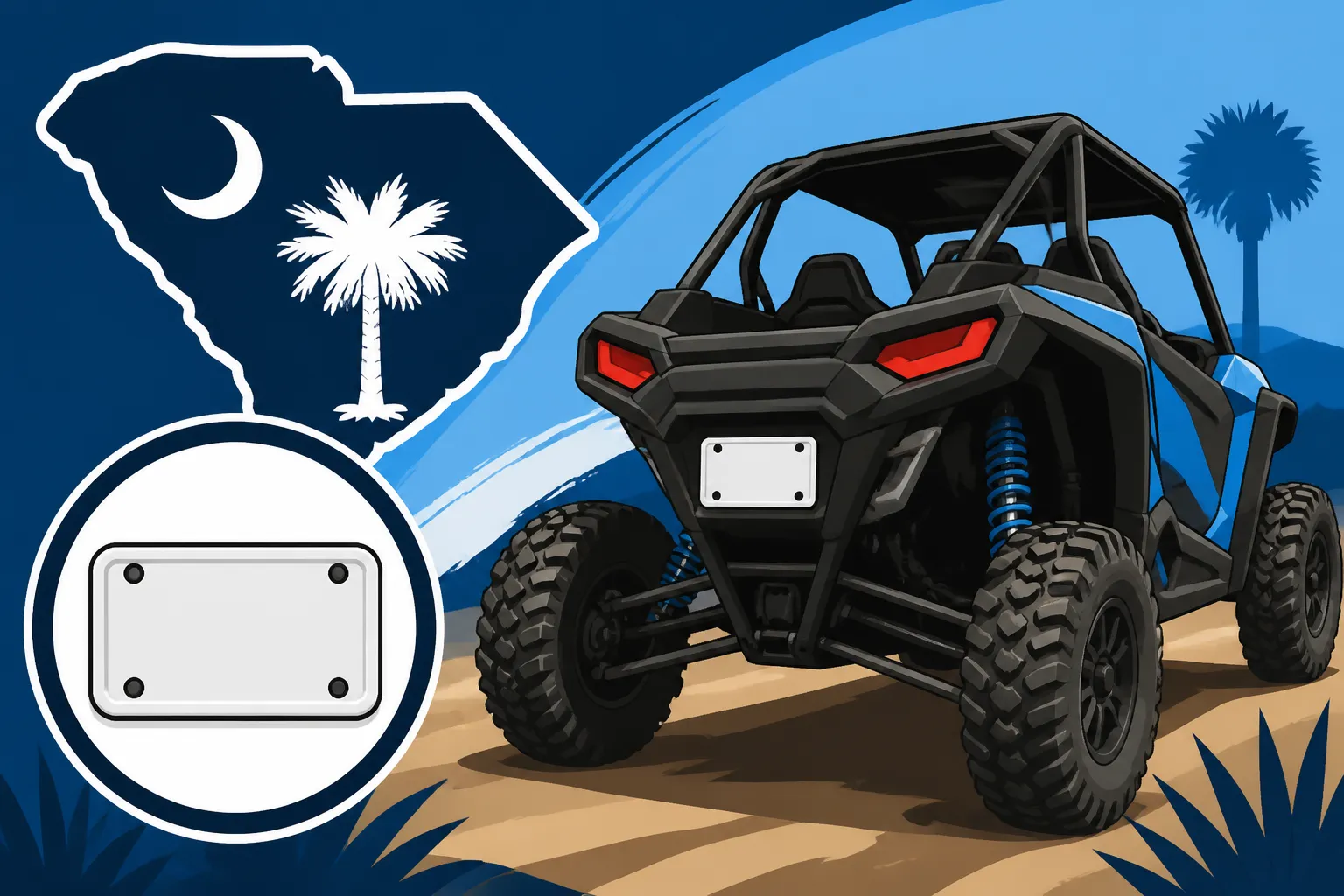
Mounting your rear plate isn't just about sticking it anywhere. South Carolina law specifies how and where your plate must be displayed to ensure it's clearly visible to law enforcement and other drivers. Generally, the plate must be securely fastened in a horizontal position, clearly legible, and free from any obstruction. This means no mud, dirt, or aftermarket accessories should obscure the plate number or the state name.
Here's what to keep in mind:
- Rear Mounting: The plate must be affixed to the rear of your UTV. This is consistent with most vehicle types and ensures it can be easily read by following traffic.
- Clear Visibility: Ensure your plate is not blocked by hitches, cargo racks, flags, or anything else. It needs to be visible from a distance.
- Lighting: If you plan to operate your street UTV after dark, your rear plate must be illuminated by a white light, making it legible from at least 50 feet away. This is crucial for safety and compliance during nighttime operation.
Many UTVs don't come from the factory with a dedicated license plate bracket and light, so you might need to invest in an aftermarket solution to meet these requirements. Make sure any bracket you choose is sturdy enough to withstand the vibrations and potential bumps of UTV use. For more specifics on what equipment your UTV needs, you can refer to [South Carolina Street UTV Requirements Explained].
Keeping Your Registration Current: Renewals and Updates
Just like your car, your street-legal UTV's registration isn't a one-and-done deal. South Carolina requires biennial renewal, which means you'll need to re-register and pay the fee every two years to keep your plate valid. The DMV will typically send you a renewal notice in the mail well in advance of your expiration date, but it's ultimately your responsibility to ensure your registration doesn't lapse.
Renewing is usually a much simpler process than the initial registration:
- Online Renewal: Many renewals can be handled online, which is often the quickest and most convenient option.
- Mail-In Renewal: You can typically mail back your renewal notice with payment.
- In-Person Renewal: Of course, you can always visit a DMV office if you prefer.
If you move, remember to update your address with the DMV promptly. An outdated address means you might miss renewal notices, potentially leading to an expired registration and unexpected issues down the road. If you're a new resident to the Palmetto State, there's specific guidance for [South Carolina Title for a New Resident].
What Happens If Your Plate is Lost, Stolen, or Damaged
Life happens, and sometimes a rear plate can get lost on a bumpy trail, stolen from your driveway, or damaged in an accident. If this occurs, it's important to address it promptly. Driving with a missing or unreadable plate is a violation of state law and can lead to a traffic stop.
Here's the typical process:
- Report a Stolen Plate: If your plate is stolen, the first step should be to report it to your local law enforcement agency. This creates an official record and can help prevent misuse of your plate number.
- Apply for a Replacement: You'll need to visit the DMV to apply for a replacement plate. You'll likely fill out a specific form (often an Affidavit for a Replacement Plate) and pay a small fee. Bring your UTV's registration card and proof of identity.
- Temporary Documentation: The DMV may issue you temporary documentation that allows you to operate your UTV legally until your new plate arrives.
Don't procrastinate on replacing a missing or damaged plate. It's a simple step that keeps you compliant and avoids potential hassles with law enforcement.
Road Rules and Responsibilities for Plated Street UTVs
Having a rear plate for your UTV opens up new possibilities, but it also comes with a set of responsibilities. Driving a street-legal UTV on public roads means you're now subject to many of the same traffic laws and regulations as any other motor vehicle. It's not like riding on a private trail anymore; there are rules designed for safety and order that you absolutely must adhere to. Understanding these rules is paramount for both your safety and avoiding citations.
Understanding Permitted Roads and Speed Limits
This is where many street UTV owners can get confused. While your UTV is now "street-legal," it's not a free pass to drive on every road. South Carolina law specifically limits where these vehicles can operate. Generally, street-legal UTVs are permitted on secondary roads, which are typically those with speed limits of 55 mph or less. Interstate highways, with their high speeds and heavy traffic, remain off-limits.
A key aspect of the new law is the "10-mile radius rule" from your registered address, though this rule has specific nuances and exceptions, particularly with the new Act. Some local ordinances might also influence where you can and cannot ride, so always be aware of local postings. Always pay attention to posted speed limits, as your UTV must obey them just like a car. Exceeding the speed limit in a vehicle not designed for high-speed travel can be incredibly dangerous and will certainly attract the attention of law enforcement. Learn more about [South Carolina Street UTV Road Speed Limits] and the various restrictions.
Insurance Requirements for Your Street-Legal UTV
Just like cars and motorcycles, your street-legal UTV must carry liability insurance to operate on South Carolina roads. This isn't optional; it's a mandatory requirement under state law. The purpose of liability insurance is to protect other drivers and their property if you are at fault in an accident. It covers bodily injury and property damage to others, not your own vehicle or injuries.
South Carolina has minimum coverage requirements that your policy must meet. When you go to register your UTV, you'll need to show proof that you have this coverage. If you're caught driving without it, you could face significant fines, suspension of your driving privileges, and even impoundment of your vehicle. It's simply not worth the risk. Many insurance providers offer specific policies for street-legal UTVs, so make sure you shop around to find coverage that fits your needs and budget. The requirement to carry proof of insurance is clearly stated in [South Carolina Insurance Proof at Registration].
Carrying Your Paperwork and What Officers May Ask
When you're out cruising on your plated street UTV, you should always have certain documents with you. If a law enforcement officer pulls you over, they will likely ask for these. Being prepared and having them readily accessible can make a routine stop quick and smooth.
Here’s what you should always carry:
- Your Driver's License: You must possess a valid South Carolina driver's license to operate a street-legal UTV. There are age requirements, with drivers needing to be at least 17 years old. For details, consult [South Carolina Street UTV Age of 17] and [South Carolina Street UTV License Requirements].
- Your UTV's Registration Card: This card is the official proof that your UTV is registered with the state and that your plate is current.
- Proof of Insurance: Your insurance card or other official documentation showing current liability coverage.
- Bill of Sale (optional but helpful): While not always required to be carried, a bill of sale can be useful for proving ownership, especially if you’re a new owner. You can use resources like LawDepot to keep a digital or physical copy of your bill of sale handy.
Officers may also ask about your route, the purpose of your travel, and your UTV's equipment. Being polite, cooperative, and having your paperwork in order will go a long way in ensuring a positive interaction.
Beyond the Plate: Considerations for South Carolina Street UTV Owners
Getting your rear plate is a massive step, but it's just one piece of the puzzle when it comes to truly enjoying your street-legal UTV in South Carolina. There are other crucial aspects you need to understand and adhere to, from the physical requirements of your machine to who can actually drive it. Thinking beyond just the plate will ensure you're a responsible and compliant street UTV owner, allowing you to fully embrace the expanded riding opportunities without unnecessary headaches.
Equipment Standards Your UTV Must Meet
For a UTV to qualify for a street-legal plate in South Carolina, it must meet specific equipment standards that ensure its safety and suitability for public roads. This isn't just about looking good; it's about being able to safely brake, signal, and be seen by other motorists. Many UTVs, fresh off the dealer lot or after years of off-road-only use, might not have all these features.
Common equipment requirements include:
- Headlights and Taillights: These must function properly and be used during specific hours, typically from a half-hour after sunset to a half-hour before sunrise, and at any other time visibility is limited.
- Brake Lights: Essential for signaling your stops to traffic behind you.
- Turn Signals: Crucial for indicating your intentions when changing lanes or turning.
- Brakes: A fully functional braking system on all wheels.
- Rearview Mirrors: At least one, but often two, properly adjusted rearview mirrors.
- Windshield: A windshield is typically required, often with specific material or clarity standards.
- Wipers: If your UTV has a windshield, it must also have a functional windshield wiper system.
- Horn: A working horn is necessary to alert others.
- Seatbelts: Occupants must be secured by seatbelts.
- Muffler: An exhaust system that limits noise to acceptable levels.
- Speedometer: A working speedometer to monitor your speed on public roads.
- Maximum Width and Weight: There are often limits on the physical dimensions and weight of the UTV to qualify as street-legal. For example, many states limit UTVs to around 80 inches wide and 4,000 pounds. These specific [South Carolina Street UTV Machine Specs] are important to verify.
If your UTV doesn't have these features, you'll need to install them. Many aftermarket kits are available to help you upgrade your off-road machine to meet street-legal standards.
Age and License Requirements for Drivers
It's not enough for the UTV itself to be street-legal; the driver must also meet specific qualifications. In South Carolina, to drive a street-legal UTV on public roads, you must:
- Be at least 17 years old: This age requirement ensures that drivers have a certain level of maturity and experience.
- Possess a valid South Carolina driver's license: A beginner's permit or a restricted license typically won't suffice. You need a full, unrestricted license.
These rules are in place to ensure that only qualified individuals are operating these vehicles on shared roadways, enhancing safety for everyone. It's a different standard than for off-road riding, where younger riders are often allowed with supervision. Make sure anyone who plans to drive your plated UTV understands and meets these requirements. For a deep dive into who can legally operate one, check out [South Carolina Street UTV Age of 17] and [South Carolina Street UTV License Requirements].
Avoiding Common Pitfalls and Misunderstandings
Even with the best intentions, it's easy to fall into common traps or misunderstandings when operating a newly plated street-legal UTV. Many of these stem from treating the UTV like it's still solely an off-road machine, or not fully grasping the nuances of the new laws. Avoiding these pitfalls will save you from potential fines, accidents, or even legal trouble.
- Ignoring Local Ordinances: While state law permits street UTVs on secondary roads, some cities or counties may have specific ordinances that further restrict their use within their jurisdiction. Always check local rules.
- Neglecting Maintenance: Road use puts different stresses on a UTV than off-road use. Regular maintenance, especially brakes, tires, and lights, is even more critical for road safety.
- Assuming All Roads Are Open: Remember the speed limit restrictions and the general prohibition on interstate highways. Don't assume you can take your UTV everywhere your car can go.
- Carrying Unsafe Passengers: Ensure all passengers are properly seated and belted, and adhere to any age restrictions for passengers.
- Underestimating Traffic: Even on secondary roads, you're sharing the pavement with cars, trucks, and motorcycles. Be extra vigilant, use your turn signals, and be prepared for higher speeds and less forgiving surfaces.
- Improper Documentation: Always have your license, registration, and proof of insurance on hand. You can find forms and templates on sites like LawDepot to help organize your important vehicle documents.
- Ignoring Equipment Requirements: Don't skip out on turn signals, horns, or proper lighting just because you only plan short trips. Every piece of required equipment is there for a reason.
By being diligent and informed, you can fully enjoy the freedom that your South Carolina rear plate for your street UTV provides, making your adventures safer and more compliant.
Disclaimer
This article is for general informational purposes only and does not constitute professional advice. Laws, prices and regulations vary by location and change over time. Consult a qualified professional for guidance on your specific situation.