South Carolina Rules for Riding in Greenville
It’s a beautiful thought, isn't it? Imagining cruising through the charming streets of Greenville, maybe taking a scenic route through the surrounding county, all from the seat of your trusty ATV or UTV. But before you even think about firing up that engine and heading out, there's a big, often confusing, web of rules you need to understand. This guide is here to untangle those complexities, giving you a clear picture of where, and if, you can ride your off-road machine in and around Greenville, South Carolina.
The Fundamental Rules: ATVs, UTVs, and Roads in South Carolina
Let's get straight to the heart of the matter. South Carolina has distinct classifications for various recreational vehicles, and understanding these differences is crucial before you even consider taking to the pavement, especially in a bustling area like Greenville. It's not a "one size fits all" situation, and mistaking one type of machine for another can lead to fines, headaches, and even impoundment.
Why Off-Road ATVs Are Generally Banned from Public Roads
Your typical ATV, the kind designed for tearing up trails, mud, or sand dunes, is built for exactly that: off-road use. They lack many of the safety features and design elements that make a vehicle suitable for sharing the road with cars and trucks. Think about it – no turn signals, no brake lights that meet highway standards, often no mirrors, and certainly no crumple zones. For these reasons, South Carolina's law, particularly [Chandler's Law and South Carolina ATV Rules], is quite clear: off-road ATVs are, for the most part, prohibited from operating on public roads and highways.
This can be incredibly frustrating for riders who just want to get from their house to a nearby trail, or even to a friend's house a few blocks away. You bought this machine to ride, and suddenly you feel like you're constantly looking over your shoulder. The law aims to prevent accidents, as ATVs are inherently unstable at road speeds and in traffic. There are narrow exemptions, such as for agricultural or utility purposes, but these are highly specific and don't grant general road access. You won't find a license plate for an off-road ATV in South Carolina because the state [South Carolina Does Not Register Off-Road ATVs] for public road use. This means any modifications you make to an off-road ATV, no matter how extensive, generally won't make it legal for city streets.
Understanding South Carolina's New Street-Legal UTV Framework
Now, here's where things get a bit more nuanced, and where UTVs (Utility Task Vehicles, often called side-by-sides) carve out a different path. South Carolina recently introduced legislation allowing certain UTVs to become street-legal. This was a significant change, bringing the Palmetto State in line with many other places that recognize the utility and recreational appeal of these machines for limited road use. However, it's not as simple as just slapping a sticker on your UTV and heading out. There's a comprehensive list of requirements.
To be considered street-legal, a UTV must meet specific criteria outlined in [South Carolina Street-Legal UTV Registration Arrives]. These include things like having headlights, taillights, brake lights, turn signals, a horn, a rearview mirror, seatbelts for all occupants, a parking brake, and a windshield. It's essentially transforming an off-road vehicle into something that resembles a small car in terms of safety equipment. Once these modifications are made and inspected, you can title and register your UTV with the South Carolina Department of Motor Vehicles (DMV). This process involves specific forms and fees, and ultimately, your UTV will be issued a standard license plate, allowing it to legally travel on certain public roads. You'll also need [South Carolina Insurance Proof at Registration] for liability coverage, just like any other vehicle on the road.
Keep in mind that even with a license plate, there are still restrictions. The law generally limits street-legal UTVs to roads with speed limits of 55 mph or less. They are typically prohibited from interstates and controlled-access highways. Furthermore, the driver must be at least 17 years old and possess a valid driver's license. No learner's permits or provisional licenses are accepted for operating a street-legal UTV on public roads. It's a privilege, not a given, and comes with responsibilities similar to driving a car.
The Distinction of Golf Carts and Low-Speed Vehicles (LSVs)
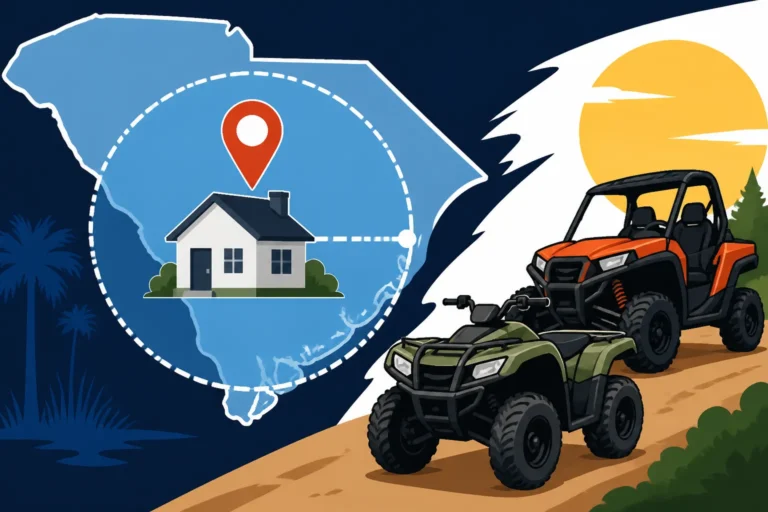
To further clarify, it's important to differentiate ATVs and UTVs from golf carts and Low-Speed Vehicles (LSVs), as these categories have their own set of rules and are often confused. Golf carts, while common in many South Carolina communities, are very limited in their road use. They typically require a [South Carolina Golf Cart Permits Compared] and are restricted to operating within a certain radius (often 4 miles) of your home or business, and usually only during daylight hours. [South Carolina Golf Cart Road Rules] are strict and primarily designed for local, low-speed travel within residential areas or on specific, designated paths. They are not intended for general road use.
Low-Speed Vehicles (LSVs) are a separate class entirely. These are vehicles, often electric, that have a top speed between 20 and 25 mph. They are manufactured to meet specific federal safety standards for road-going vehicles but are speed-limited. They require a title, registration, and a license plate, much like a car, and are subject to all the same traffic laws. You'll find specific [South Carolina Low-Speed Vehicle Plates] for these. While they share some similarities with street-legal UTVs in their road-worthiness, their primary distinction is their top speed. Neither golf carts nor LSVs are to be confused with a powerful UTV designed for both trail and limited street use. Each has its place, and those places are quite different when it comes to Greenville's roads.
Navigating ATV and UTV Rules Within Greenville
Understanding the statewide rules is just the first step. When you bring your machine into a specific city or county, you often encounter an additional layer of local ordinances. This is especially true for larger municipalities like Greenville, which has its own considerations for public safety and traffic flow.
Greenville City Ordinances: A Local Layer of Restriction
Here's a crucial point for anyone considering riding an ATV or UTV within Greenville city limits: local ordinances almost always supersede the leniency of state laws when it comes to specific restrictions. While state law allows for street-legal UTVs on certain roads, a city can choose to further restrict or even prohibit their use on city streets. It's a common practice for municipalities to enact their own traffic regulations for safety and noise concerns.
For traditional off-road ATVs, it's safe to assume they are outright banned from any public road or right-of-way within the City of Greenville. There's simply no legal pathway for them to be on city streets. Even if you argue that you're just trying to get across a small stretch of road, you'll likely face a citation. The city's primary concern is the safety of all road users and pedestrians, and off-road ATVs do not fit that mold. The frustration of owning a machine you can't even get out of your driveway legally is real, but it's the reality in urban areas.
For street-legal UTVs, the situation might be slightly more flexible, but it's absolutely critical to verify with the Greenville City Police Department or the city's municipal government directly. Many cities restrict these vehicles to roads with lower speed limits (e.g., 35 mph or less) or even prohibit them on major thoroughfares. You might find yourself able to legally drive a street-legal UTV on a quiet residential street, but not on a busy arterial road like Augusta Street or Woodruff Road. The varying rules can be a real headache, making it difficult to plan a route without constant vigilance. Don't rely on assumptions; a quick call or visit to the city's planning or police department website can save you a lot of trouble. This is an area where specific local knowledge is gold, and what's okay in a small town might be completely out of bounds in Greenville.
Where to Actually Ride Your ATV or UTV Near Greenville
Given the tight restrictions on public roads, especially for ATVs, the obvious question arises: where can you ride in or near Greenville? The answer, for true off-road enthusiasts, lies almost entirely off the beaten path – on private property or at designated off-highway vehicle (OHV) parks.
While Greenville itself doesn't boast extensive ATV or UTV trail systems within its immediate urban sprawl, the surrounding Upstate region and other parts of South Carolina offer fantastic options. You'll likely need to trailer your machine to get to these places. Parks like [Carolina Adventure World in South Carolina], though a bit of a drive, offer hundreds of miles of diverse trails for ATVs and UTVs. Similarly, the national forests, such as the Sumter National Forest, contain designated OHV trails like [Enoree OHV Trail in South Carolina] or [Parsons Mountain OHV Trail in South Carolina]. These areas are specifically designed and managed for off-road recreation, providing a safe and legal environment for you to enjoy your machine as it's intended. However, even on these designated trails, there are often specific rules regarding vehicle width, sound limits, and required permits.
Always research these locations thoroughly before you load up your trailer. Check their websites, social media, or call their offices for current conditions, open hours, and any specific requirements or closures. Remember that national forest trails often require a day or season pass. These are the places where your off-road ATV or UTV can truly shine, far away from the complexities of city ordinances and traffic.
Private Property Riding: Always Your Best Bet
For many South Carolina ATV and UTV owners, private property is the go-to solution for riding legally and without the headache of public road regulations. If you own land in Greenville County (or anywhere else for that matter), or if you have explicit, written permission from a landowner, you can generally ride your off-road ATV or UTV without concern for state or local road laws.
This provides the ultimate freedom to enjoy your machine, whether it's for recreation, utility work around the property, or access for hunting or farming activities. However, even on private land, there are still important considerations. You should always respect property boundaries, operate your machine safely, and be mindful of noise, especially if you have close neighbors. If you're riding with friends or guests, ensure everyone understands and adheres to any rules the landowner has set. It's also a good idea to still practice responsible riding habits, including wearing appropriate safety gear, even if it's not mandated by law on private land. This is where most off-road machines in South Carolina truly thrive, allowing owners to enjoy their passion without constant worry about legal infractions.
Essential Paperwork, Modifications, and Best Practices
So, you've decided to either get a street-legal UTV or you're just trying to be a responsible owner of an off-road ATV. What paperwork do you need, what modifications might be necessary, and what are some general best practices to keep yourself out of trouble?
Titling, Registration, and Plate for Street-Legal UTVs
If you're one of the savvy riders opting for a street-legal UTV to navigate certain public roads, you absolutely need to get your ducks in a row with the DMV. The process is fairly straightforward, but it requires attention to detail. First, your UTV needs a proper title. If it's a new machine, you'll use the Manufacturer's Certificate of Origin (MCO). If it's used, you'll need the previous owner's signed-over title. For side-by-sides, the state provides a clear process for [Titling a Side-by-Side in South Carolina].
Once you have proof of ownership, you can proceed with the registration process. This is done at your local DMV office using [South Carolina Title Applications at the DMV] form. On this form, you'll indicate that you want both a title and registration. You’ll need to provide proof of insurance (which, as mentioned, is mandatory for street-legal UTVs), your driver's license, and payment for the title and registration fees. After successful processing, you'll be issued a South Carolina license plate that you must affix to the rear of your UTV. This plate is your official permission to use your UTV on qualifying public roads. Remember that this registration is typically renewed biennially, so keep track of your expiration date.
Equipping Your UTV for South Carolina Roads
Making your UTV street-legal isn't just about paperwork; it's about physical modifications to meet safety standards. Many UTVs come from the factory ready for the trail, but not for the road. You'll need to ensure your machine has:
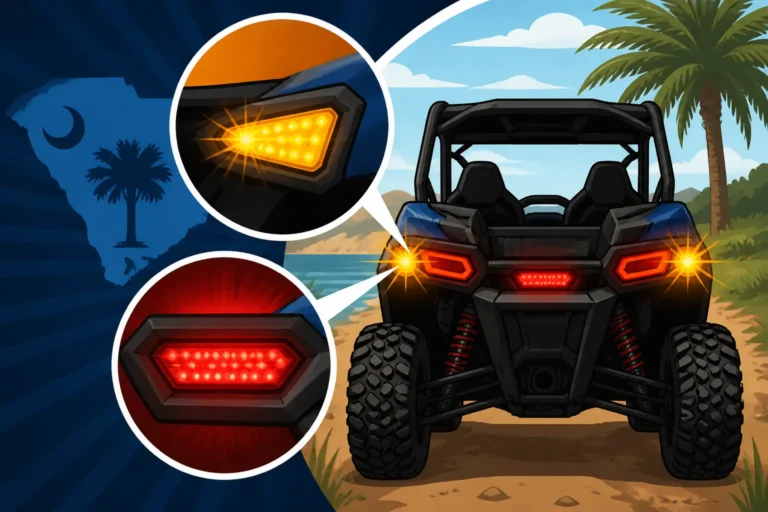
- Headlights and Taillights: Functional and clearly visible.
- Brake Lights: To signal when you're slowing down or stopping.
- Turn Signals: Front and rear, amber or red, to indicate your intentions.
- A Horn: For signaling other drivers and pedestrians.
- Mirrors: At least one rearview mirror, typically a driver's side mirror, and often a center rearview mirror for better visibility.
- Windshield: Often required for protection from debris. Many UTVs offer half windshields, but a full, DOT-approved windshield might be necessary for street legality.
- Seatbelts: For all occupants, in good working order.
- Speedometer: To monitor your speed, as you'll be subject to posted speed limits.
Many aftermarket companies specialize in these kinds of conversions, offering kits and individual parts that are designed to bring your UTV into compliance. Brands like SuperATV, for instance, offer a wide range of accessories, from full windshields and wiper kits to complete turn signal kits and mirrors, specifically designed to help UTV owners meet street-legal requirements in various states. Investing in quality parts that are durable and reliable is key, especially if your UTV will be seeing double duty on trails and pavement. Before purchasing or installing, always double-check the latest South Carolina [South Carolina Street UTV Requirements Explained] to ensure full compliance.
Why Local Knowledge and Safety Matter Most
Ultimately, when it comes to riding ATVs and UTVs, especially in and around a populated area like Greenville, local knowledge and a strong commitment to safety are your greatest assets. Laws and ordinances can change, and interpretations by local law enforcement might vary.
Always carry all your required documentation: your driver's license, UTV registration, and proof of insurance. Having these readily accessible will make any interaction with law enforcement smooth and quick. It's similar to [What to Bring to a South Carolina DMV Counter] when you're doing paperwork; always be prepared. Beyond the legalities, practicing defensive driving is crucial. Street-legal UTVs, while fun, are not cars. They handle differently, can be less visible to other drivers, and offer less protection in a collision. Be extra vigilant, use hand signals in conjunction with your turn signals, and give yourself plenty of space.
Consider joining a local ATV or UTV club in the Greenville area or across South Carolina. These groups are fantastic resources for up-to-date information on trail conditions, local events, and any changes to regulations. They can also connect you with experienced riders who have navigated the very questions you're asking. Staying informed, riding responsibly, and always prioritizing safety will ensure you continue to enjoy your ATV or UTV experience in South Carolina.
Disclaimer
This article is for general informational purposes only and does not constitute professional advice. Laws, prices and regulations vary by location and change over time. Consult a qualified professional for guidance on your specific situation.