South Carolina Has Nothing to Reciprocate
It can be incredibly frustrating when you're trying to figure out the rules for your ATV or UTV, especially if you're coming from another state or just moved to South Carolina. Many states have a clear "reciprocity" understanding for things like vehicle registrations, but when it comes to off-road machines in the Palmetto State, things work a little differently. This guide will help you understand why South Carolina "has nothing to reciprocate" in the traditional sense, and what that means for you as a rider, whether you're visiting or settling down.
Understanding South Carolina's Unique Stance on ATV/UTV Paperwork
When you hear that a state "has nothing to reciprocate," it often means their system is so different from others that there isn't a direct equivalent to recognize. This is especially true for off-road ATVs and UTVs in South Carolina. For a long time, the state has taken a hands-off approach to the formal registration of these machines, which can be a huge source of confusion for folks used to more rigid systems elsewhere.
Why 'Reciprocity' Isn't the Right Word Here
In many states, if you register your ATV for off-road use, that registration might be recognized, or "reciprocated," if you travel to a neighboring state that has a similar system. Think of it like a driver's license—your Georgia license is valid in South Carolina, and vice-versa. That's reciprocity in action.
However, South Carolina operates under a different philosophy for most off-road machines. They simply don't have a statewide registration system for privately owned ATVs and non-street-legal UTVs that are used exclusively off public roads. Because there's no state-mandated off-road registration to issue in the first place, there's nothing for other states to recognize, and conversely, nothing for South Carolina to recognize from other states. It's not that South Carolina refuses to reciprocate; it's that the category of "off-road registration" largely doesn't exist here. This distinction is crucial and often catches people off guard when they move here or visit.
What South Carolina Doesn't Require for Off-Road ATVs
Let's be crystal clear about this: [South Carolina Does Not Register Off-Road ATVs]. This means you won't be heading to the Department of Motor Vehicles (DMV) to get a registration card or a special plate for your quad or trail-only side-by-side. This is a significant departure from many other states that require some form of registration for off-road use, often to fund trail systems or manage rider data.
For a long time, this meant that proof of ownership, like a bill of sale or a Manufacturer's Certificate of Origin (MCO), was the primary document you'd carry. There was no state-level database to cross-reference an off-road registration number against. This hands-off approach has its pros and cons, but it definitely simplifies things for casual trail riders who might be used to more bureaucratic hurdles elsewhere.
Navigating South Carolina Rules as an Out-of-State Rider
If you're planning a trip to the Palmetto State with your quad or side-by-side, or if you're making a permanent move, you'll need to understand how South Carolina's unique approach impacts you. It's not as complicated as it might seem once you grasp the core principle: focus on ownership and adherence to local riding rules, rather than interstate paperwork recognition.
Bringing Your Off-Road ATV or Dirt Bike to South Carolina
For visitors, the lack of an off-road registration requirement actually makes things a bit simpler in one respect: you don't need to worry about transferring an out-of-state off-road registration or obtaining a temporary South Carolina one. If your ATV or dirt bike is used strictly off-road—on private land, designated trail systems, or within permitted riding parks—your main concern is proving ownership and following the state's ATV safety laws.
What you should have with you, even if you're just visiting, is solid proof of ownership. This could be your original Manufacturer's Certificate of Origin (MCO), a bill of sale, or a title from your home state. While a South Carolina deputy likely won't ask to see an off-road registration sticker, they can certainly ask you to prove you legally own the machine. This is important to deter theft and ensure you have legitimate possession. For example, if you're a [South Carolina Rules for a Visiting Georgia Rider], you wouldn't typically need a South Carolina-specific permit to ride your off-road machine on a private trail here, as long as you can prove ownership and adhere to local rules. The same applies for those visiting from North Carolina; your focus is on safe riding practices and legitimate ownership.
Relocating to South Carolina with an ATV or UTV
If you've recently moved to South Carolina with an ATV or UTV, the situation largely mirrors that of visitors for off-road machines. For ATVs and non-street-legal UTVs, you still don't need to register them. However, when it comes to titling, South Carolina offers an option.
[South Carolina Titles Are Optional] for off-road ATVs. This means you can apply for a South Carolina title for your off-road machine, even if you're not legally required to. Many new residents choose to do this because it provides a clear, state-recognized document of ownership, which can be incredibly useful for insurance purposes, future resale, or if you ever need to prove ownership after a theft. The process for a [South Carolina Title for a New Resident] typically involves bringing your out-of-state title (if you have one), your MCO, or a solid bill of sale to the DMV, along with your South Carolina ID and proof of residency. While not mandatory for off-road use, having that title can give you peace of mind and simplify many future transactions.
South Carolina's Specific Requirements for Street-Legal UTVs
While off-road ATVs and UTVs largely bypass state registration in South Carolina, there's a significant and relatively new exception: street-legal UTVs. These machines are designed and equipped to be driven on public roads, and as such, they fall under a different set of rules that involve both titling and registration. This is where South Carolina starts to look more like other states in terms of vehicle regulation.
The New Era of Street-Legal UTV Registration
For many years, it was a real head-scratcher trying to figure out how to legally drive a UTV on public roads in South Carolina. That all changed with the passage of [South Carolina Act 164 and Street UTVs], which opened the door for side-by-sides to become truly street-legal. This act established a clear framework for titling, registering, and insuring UTVs that meet specific equipment requirements. This means that if you own a UTV and want to drive it on secondary roads, you absolutely will need to go through the DMV process.
This shift brought South Carolina more in line with states that already had provisions for street-legal UTVs. It acknowledged the growing popularity of these machines for both recreation and utility, providing a legal pathway for their use beyond private property. The new law requires that these UTVs meet certain safety and equipment standards, such as having headlights, taillights, turn signals, mirrors, a horn, and a windshield, among other things. Once these criteria are met, and the proper paperwork is filed, your UTV can finally receive a proper license plate, signifying its street-legal status. [South Carolina Street-Legal UTV Registration Arrives] was a game-changer for many owners.
What Street-Legal UTVs Need (Beyond Out-of-State Paperwork)
If you're making your UTV street-legal in South Carolina, or you're bringing an already street-legal UTV from another state and establishing residency, you'll need to prepare for a multi-step process. First and foremost, a South Carolina title is mandatory for these machines. You can't register a street-legal UTV without one.
Here’s a breakdown of what you'll generally need:
- Title: If your UTV already has an out-of-state title, you'll transfer it to a South Carolina title. If it's new, you'll use the Manufacturer's Certificate of Origin (MCO). [Titling a Side-by-Side in South Carolina] is a critical first step.
- Registration: This is the process of getting your actual license plate. This involves filling out the necessary DMV forms and paying the applicable fees. The [South Carolina Street UTV Registration Cost] is typically a biennial fee, meaning you pay it every two years.
- Proof of Insurance: Just like any other road-going vehicle, your street-legal UTV must be insured to meet South Carolina's minimum liability requirements. You'll need to show proof of this at the DMV.
- Biennial Fee: The registration for street-legal UTVs is not an annual affair but requires renewal every two years.
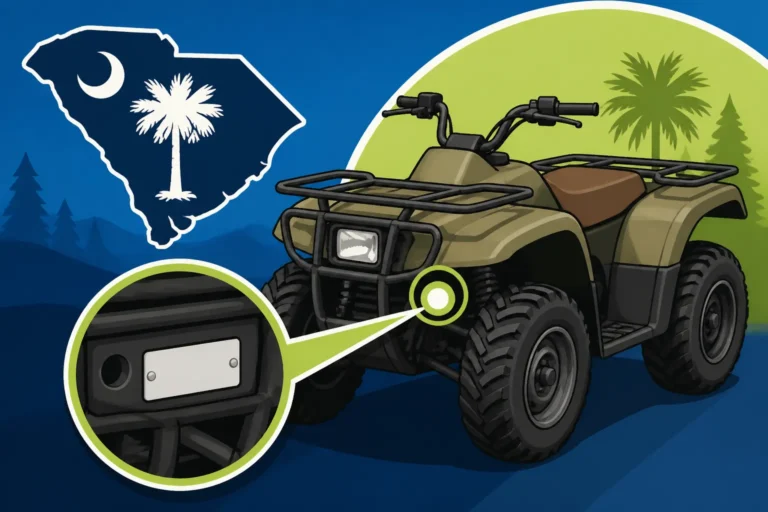
- License Plate: Once registered, your UTV will be issued a South Carolina license plate that must be displayed on the rear of the machine.
The [South Carolina Street UTV Registration Steps] will guide you through this process, but be prepared with all your documentation, including proof of ownership, proof of insurance, and your South Carolina driver's license. Unlike off-road ATVs, street-legal UTVs are treated much like other vehicles on the road, necessitating a clear paper trail from the DMV.
South Carolina's Titling System: Optional vs. Mandatory
Understanding South Carolina's titling rules is key to being a responsible ATV or UTV owner in the state. The distinction between optional and mandatory titling largely depends on whether your machine will ever touch a public road. This is often where the most confusion arises, especially for those new to the state.
Why Titling an Off-Road ATV is Optional (But Often Recommended)
For an ATV or UTV that is only used for off-road recreation—on private land, designated trails, or within parks like Carolina Adventure World—[South Carolina Titles Are Optional]. This means the state won't compel you to get a title for your quad or dirt bike. For many riders, this sounds like a great way to save a little cash and avoid some bureaucracy. And it can be, for a simple trail machine that you plan to keep forever.
However, choosing not to title your off-road machine can lead to headaches down the road. A state-issued title is the clearest, most universally accepted proof of legal ownership. Without it, you might rely solely on a bill of sale or the original MCO, which can be easily lost or misplaced. Consider these benefits of getting a title, even if optional:
- Proof of Ownership: In cases of theft or dispute, a title provides indisputable evidence that the machine belongs to you. This is crucial if law enforcement recovers your machine.
- Resale Value: When you decide to sell your ATV, a clean South Carolina title makes the transaction much smoother and often fetches a higher price. Many buyers are wary of purchasing an untitled machine, fearing potential ownership issues.
- Financing: Most lenders, if you're financing an ATV purchase, will require a title to secure their lien. Without a title, securing a loan can be difficult, if not impossible. [Lenders That Will Not Finance an Untitled Quad] are common.
- Insurance: While not always mandatory for off-road ATVs, some insurance companies prefer or require a title before they will fully insure your machine against theft or damage. [Insurers That Ask for a Title First] are definitely out there.
The process for [How to Title an ATV in South Carolina] involves submitting a South Carolina Title Application (Form 400), your proof of ownership (MCO, bill of sale, or previous title), and paying a modest fee. If you’ve purchased the machine in a private sale and only have a bill of sale, a standardized document from a service like LawDepot can help ensure all necessary information is present and legally sound, easing your titling process. It’s a small investment for significant peace of mind.
When Titling Becomes a Must-Do in South Carolina
While off-road ATV titles are optional, the situation changes dramatically for any machine intended for public road use. For street-legal UTVs and low-speed vehicles (LSVs), a South Carolina title is absolutely mandatory. There's no getting around this requirement.
This is because these vehicles operate under the same legal framework as cars and trucks when they're on public roads. The title serves as the official record of ownership and is essential for all state-level processes, including registration, property tax assessment (though street UTVs currently enjoy an exemption from county property tax under the new law), and ensuring proper transfer of ownership.
If you purchase a new street-legal side-by-side from a dealer, they will typically handle the initial titling and registration paperwork for you, submitting it to the DMV. If you buy a used one in a private sale, it's crucial that the previous owner provides you with a properly assigned title. Without it, you won't be able to get a new title or register the machine in your name, rendering it useless for street use. [South Carolina Titles After a Private Sale] requires a clean paper trail. When dealing with these types of machines, always assume a title is required and make sure it’s part of the transaction.
Essential Paperwork for ATV/UTV Ownership in South Carolina
Even if South Carolina doesn't demand registration for your off-road quad, having the right paperwork is still incredibly important. Think of it as your personal safety net. These documents aren't just for the DMV; they protect you, establish your ownership, and smooth the path for future transactions.
Proving Ownership Without a Title
Since [South Carolina Proof of Ownership Without a Title] is a common scenario for off-road ATVs, understanding what constitutes acceptable proof is vital. You might not have a formal state title, but you definitely need something to show you're the rightful owner. Here are the main documents that serve this purpose:
- Manufacturer's Certificate of Origin (MCO): This is the "birth certificate" for your new ATV. It comes from the manufacturer and confirms that the machine is new and has not been previously titled. If you bought your ATV new, hold onto this document like gold. It’s critical for titling later if you choose to do so. [South Carolina Requires an MCO for a New Machine] to get that initial title.
- Bill of Sale: For used machines bought in a private sale, a detailed bill of sale is your primary proof of ownership. This document should include the seller's and buyer's names and addresses, a detailed description of the ATV (make, model, year, VIN), the purchase price, and the date of sale. Both parties should sign it, and it's a good idea to have it notarized for extra validity. If you're creating one, tools like LawDepot offer templates for a robust bill of sale, ensuring all the necessary legal details are covered, which can be invaluable when trying to establish ownership without a title.
- Previous Owner's Title (if applicable): If the previous owner had a title from South Carolina or another state, that document, properly signed over to you, acts as proof of ownership. Even if you don't have to get a new SC title for an off-road machine, possessing the previous title is strong evidence.
It's a good practice to keep copies of these documents in a safe place, and perhaps a laminated copy with you when you ride. [South Carolina Machines With No Paperwork] can become extremely difficult to sell, insure, or even prove ownership of if ever questioned by authorities.
Key Documents for Titling and Registering
When you do need to title or register a machine in South Carolina—either because it's a street-legal UTV or you're choosing to title your off-road ATV—you'll interact with the DMV. Be prepared with a specific set of documents to ensure a smooth visit.
Here’s a table summarizing the common documents needed:
| Document Type | Purpose | When Needed |
|---|---|---|
| South Carolina Title Application (Form 400) | Initiates the titling/registration process | All new titles and registrations |
| Manufacturer's Certificate of Origin (MCO) | Proof of original ownership for new machines | New machine titling |
| Bill of Sale | Proof of purchase from a private seller or dealer | Used machine titling/registration, no previous title |
| Previous State Title | Proof of ownership when moving from out of state | New resident titling (if machine was titled) |
| Valid Photo ID | Verifies applicant's identity | All DMV transactions |
| Proof of South Carolina Residency | Confirms you live in SC (e.g., utility bill) | New residents, address changes |
| Proof of Insurance | Mandatory liability coverage | Street-legal UTV registration |
| Odometer Disclosure Statement | Required for certain titled vehicles, confirms mileage | When applicable for street-legal UTVs |
The beauty of the South Carolina DMV system is often its simplicity, once you know what to bring. [South Carolina Form 400 Explained] is typically the main form you'll encounter, as [One DMV Form Handles Title, Registration or Both]. When buying or selling privately, using a service like LawDepot to generate a comprehensive bill of sale can prevent common errors that stall DMV applications. It ensures all statutory information, like the VIN and purchase date, is included, making your visit to the DMV much more efficient.
Common Misconceptions and Practical Advice for Riders
Even with clear rules, misconceptions can linger, especially when state laws are evolving or are less stringent than in other places. Knowing what to expect and how to proactively manage your paperwork can save you a lot of grief on the trail and off.
What Law Enforcement Looks For on the Trail
Since off-road ATVs aren't registered in South Carolina, you might wonder what a law enforcement officer would look for if they stopped you on a trail or a back road. They're primarily concerned with three things: safety, legal operation, and legitimate ownership.
First, they'll be checking for compliance with [Chandler's Law and South Carolina ATV Rules], which governs safety requirements like age restrictions, helmet use for minors, and passenger limits. They'll want to ensure you're riding safely and not in violation of any operational laws, such as reckless driving or operating under the influence.
Second, they'll verify that you're riding in a permissible area. This means you're on private land with permission, or on a designated public trail where ATVs are allowed. They can certainly ask [What a South Carolina Deputy Can Ask to See], which might include proof of ownership for your machine. This is where your MCO or bill of sale comes into play. While they won't expect a registration sticker, they absolutely can demand proof that the machine isn't stolen and belongs to you. Having these documents handy—perhaps laminated or stored securely on your person—is always a good idea. [What Papers to Carry on a Back Road] should always include your personal ID and proof of ownership for your machine.
Avoiding Pitfalls: The Importance of Clear Documentation
Given the optional nature of titling for off-road ATVs, some owners might be tempted to skip the paperwork entirely. This can lead to significant problems down the line. We’ve all heard horror stories of [South Carolina Machines With No Paperwork] leading to legal disputes, difficulty selling, or even impoundment if ownership cannot be firmly established after an incident.
The effort to ensure clear documentation is minimal compared to the potential headaches. If you buy a used machine, always insist on a bill of sale that clearly identifies the machine by its VIN and includes both buyer and seller information. If you're selling, provide one. For private sales, particularly when there's no existing title, having a well-drafted bill of sale is critical. Using legal document templates from a service like LawDepot can provide a structured, legally sound framework for these transactions, helping you avoid common [Title Mistakes South Carolina Riders Make Most] and ensuring both parties have a clear record of the sale. This small step can protect you from future complications, whether you're trying to sell, make an insurance claim, or simply prove your quad is truly yours.
Disclaimer
This article is for general informational purposes only and does not constitute professional advice. Laws, prices and regulations vary by location and change over time. Consult a qualified professional for guidance on your specific situation.