Moving to the Palmetto State With a Machine
When you're packing up your life and heading to the beautiful Palmetto State, one of the many logistical puzzles you face is figuring out what to do with your beloved ATV or UTV. It's not as simple as just rolling it off the trailer and hitting a trail. South Carolina has its own set of rules, and they can be a bit different from what you're used to, especially if your previous state had strict titling and registration requirements for every off-road machine. This guide will walk you through everything you need to know about bringing your all-terrain vehicle or utility terrain vehicle to South Carolina, ensuring you're ready to enjoy the Lowcountry mud or Upstate trails legally and without headaches.
Understanding South Carolina's Unique Approach to Off-Road Machines
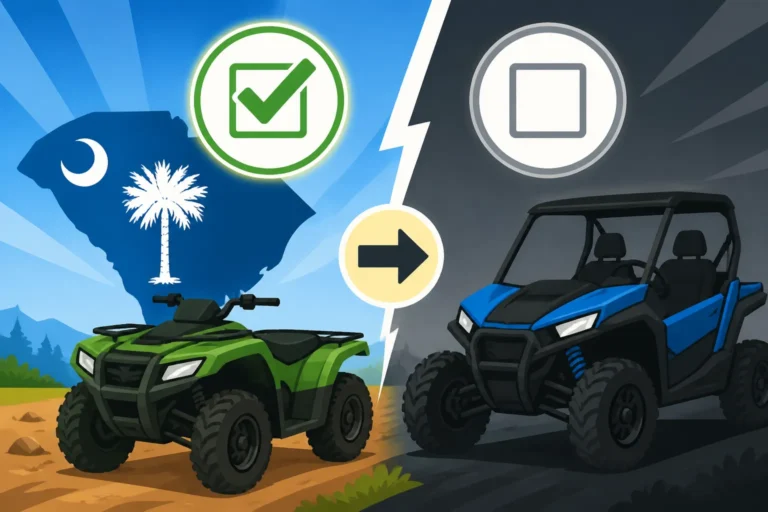
Many folks move to South Carolina from states where every vehicle, from a car to an ATV, must have a title. It's just how things are done. So, when you hear that South Carolina has a different approach, it can be a little jarring, even confusing. For off-road ATVs, those machines strictly used for recreation on private land or designated trails, the state doesn't actually require a title. I know, right? It goes against everything you might assume about vehicle ownership. This optional titling can feel like a breath of fresh air for some, meaning less red tape, but it can also be a source of anxiety, especially if you're used to that clear proof of ownership.
The state made this choice a while back, essentially classifying these machines as personal property rather than requiring them to be tracked through a title system in the same way cars or trucks are. This doesn't mean titles are never issued; it just means the state isn't going to chase you down if you don't have one for your dirt-only quad. It's a system designed to simplify things for owners of purely recreational off-road vehicles. However, while the state doesn't demand it, a title is still an incredibly smart thing to have. It protects you, the owner, in case of theft or if you ever decide to sell your machine. Think of it as an extra layer of security, even if it's not a legal mandate. [South Carolina Does Not Register Off-Road ATVs] is a concept many new residents struggle to grasp.
When you arrive in South Carolina, your ATV will still be legally recognized as yours, provided you have other forms of ownership proof like a bill of sale or your out-of-state title. The optional nature of titling primarily affects how you interact with the South Carolina DMV. They won't force you to get a title for your ATV, but they certainly can issue one if you choose to apply. This distinction is crucial for understanding your obligations and options as a new resident bringing an ATV into the state.
The Difference Between Titling and Registration
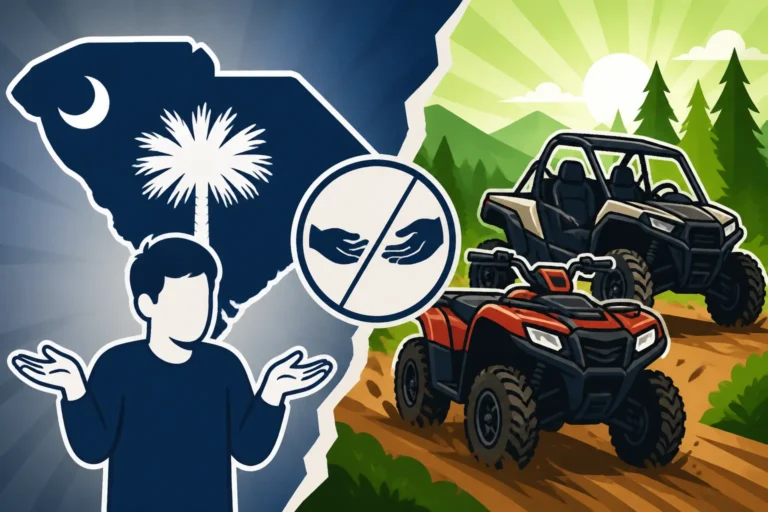
It’s easy to conflate titling and registration, especially when many states bundle them together. But in South Carolina, for off-road machines, they are two very distinct concepts. A title is a legal document proving ownership. It's like the deed to your house or the birth certificate for your machine. It confirms that you are the rightful owner. Registration, on the other hand, is generally about permission to operate a vehicle on public roads or trails, often involving a plate or decal and periodic renewal fees.
For most ATVs in South Carolina, there is no state registration requirement. They are considered off-road vehicles and, as such, are not typically allowed on public roads anyway (with very few exceptions and specific local ordinances). This means no license plate, no annual sticker, and no trip to the DMV for renewal every year just to ride your quad in the woods or on private property. This is a common point of confusion for new residents, who might wonder [Do You Need to Register an ATV in South Carolina?]. The answer, for a typical off-road ATV, is generally no.
However, this changes dramatically if you own a street-legal UTV. These are machines specifically designed and equipped to be legally driven on certain public roads. For street-legal UTVs, South Carolina does require both a title and registration. This dual requirement means you'll definitely be visiting the DMV for both steps. It's a critical distinction to make: pure off-road ATVs and UTVs have optional titling and no state registration, while street-legal UTVs have mandatory titling and registration. Keep this in mind as you determine how your particular machine fits into the Palmetto State's rules.
Bringing Your Titled ATV or UTV from Another State
So, you’re coming from a state that did title your ATV or UTV, and now you have this official document. That's actually a great starting point for establishing ownership in South Carolina! While an ATV title is optional here, having your out-of-state title makes proving ownership straightforward. You can absolutely apply for a [South Carolina Title for a New Resident]. Even though it's not strictly required for an off-road ATV, getting a South Carolina title for your machine is a smart move. It provides clear, undeniable proof of ownership issued by your new home state, which can be invaluable for insurance purposes, future sales, or simply for peace of mind.
To transfer your out-of-state title, you'll generally need to visit a South Carolina DMV office. Make sure you bring your current out-of-state title, proof of residency in South Carolina (like a utility bill or rental agreement), and your driver's license. The DMV will review your documents, and you’ll fill out a South Carolina title application. They'll verify the vehicle identification number (VIN) on your machine, so it's a good idea to have that readily accessible. While specific fees vary, there will be a modest title fee to process this transfer. It’s usually a small sum, much less than what you might pay for car titling, but it's important to budget for it. The process is typically designed to be fairly simple, allowing new residents to integrate their machines into the South Carolina system without undue hassle.
Remember, if your machine is a street-legal UTV, this step becomes mandatory, not optional. The state will require a South Carolina title before you can proceed with registration. So, for those machines, transferring your out-of-state title is the first critical step toward getting them legally on the road.
What if Your Home State Didn't Title Your ATV?
This is a scenario many new South Carolina residents encounter. Maybe you bought your ATV years ago in a state that, like South Carolina, didn't require titles for off-road machines. Or perhaps you've owned it for so long that the original paperwork has been lost to time. Don't panic! It’s still possible to establish ownership and even get a South Carolina title, if you choose, even without a formal out-of-state title. The key is to provide alternative proof of ownership.
The most common form of alternative proof is a bill of sale. If you purchased the machine from a dealer, your original sales agreement will work. If you bought it from a private seller, hopefully you have a clear, signed bill of sale detailing the transaction, including the VIN and both parties' information. Even if you don't have one, a simple one can be created retroactively using templates from resources like LawDepot, though it will be harder to prove the original transaction without supporting evidence. You might also use old registration documents from your previous state (if it had an off-road registration system), insurance policies, or even old repair receipts with the VIN listed. The goal is to show a clear chain of ownership and demonstrate that the machine genuinely belongs to you.
If you have absolutely no paperwork, the situation becomes more challenging but not impossible. The DMV may ask for a VIN inspection by law enforcement to ensure the machine isn't stolen. In some rare cases, if ownership is murky, they might even suggest a bonded title, though this is less common for ATVs. My advice? Gather every scrap of paper you have that links you to that machine. The more evidence you can provide, the smoother the process will be. [South Carolina Proof of Ownership Without a Title] is a common concern, and the DMV is generally set up to help you navigate it, even if it takes a bit more effort.
Registering Your Street-Legal UTV in South Carolina (If Applicable)
For years, UTV owners in South Carolina faced a real predicament. They had these versatile machines, perfect for cruising around town or getting to the hunting club, but couldn't legally drive them on most public roads. It was a huge frustration for many. Thankfully, the landscape has changed dramatically with [South Carolina Street-Legal UTV Registration Arrives]. This new legislation finally provides a clear pathway for certain UTVs to be titled and registered for road use, bringing a sigh of relief to countless owners.
Under the new law, a UTV must meet specific equipment and dimensional requirements to qualify as "street-legal." We're talking about things like turn signals, brake lights, mirrors, a windshield, seatbelts, and specific limits on width and weight. It's not just about adding a horn and calling it a day; these are serious safety and design standards. If your UTV already meets these specifications, or if you plan to modify it to do so, then you're in a good position to apply for street-legal status. However, if your UTV is primarily a stripped-down trail machine, it likely won't qualify for road registration.
It's important to understand that even with street-legal status, there are still restrictions. For instance, these UTVs are typically limited to roads with a posted speed limit of 55 mph or less, and they're prohibited on interstate highways. You'll also need to ensure you meet the age and license requirements for operation, which includes being at least 17 years old and holding a valid driver's license. Familiarizing yourself with these new rules is key before you attempt to register your UTV for the road. [South Carolina Street UTV Rules From November 2026] outlines these specifics in detail, so definitely give that a read.
The Registration Process for Your Palmetto Street UTV
Once you’ve established that your UTV meets South Carolina’s street-legal requirements and you’ve secured a South Carolina title (or transferred your out-of-state one), the next step is registration. This is where your UTV truly becomes a "street-legal" machine in the eyes of the state, allowing you to get those coveted license plates. The process for [South Carolina Street UTV Registration Steps] is fairly structured, and you’ll want to be prepared.
You'll need to head to the DMV, armed with your South Carolina title, proof of insurance (liability coverage is mandatory for street-legal vehicles), your South Carolina driver's license, and proof of residency. The DMV will process your registration, which involves a biennial fee. This fee is relatively modest, especially compared to yearly car registration, and it covers your right to operate the UTV on approved public roads for two years. Once registered, you'll receive a license plate that must be displayed on [The Rear Plate a Street-Legal UTV Must Carry].
Remember, this registration is specifically for street-legal UTVs. An off-road ATV or UTV that doesn't meet the street-legal criteria cannot be registered for road use. Trying to register a purely off-road machine as street-legal will simply result in a denial at the DMV. It's all about ensuring the right machine gets the right classification. This distinction is crucial for both compliance and safety on South Carolina's roads.
Essential Paperwork and What to Expect at the DMV
A trip to the DMV can either be a quick, efficient errand or a soul-crushing saga, and the difference often comes down to one thing: preparation. When you're moving to South Carolina with an ATV or UTV, especially one from out of state, having all your ducks in a row paperwork-wise is paramount. Don't just assume you have everything; make a checklist and double-check it.
Gathering Your Documents Before You Go
Here's a breakdown of what you'll generally need:
- Your existing Out-of-State Title: This is your primary proof of ownership. If you don't have one, gather alternative proofs like a comprehensive bill of sale (templates from LawDepot can help formalize this if you're selling or buying privately later), old registration cards, or insurance documents.
- Proof of South Carolina Residency: This could be your South Carolina driver's license (if you've already obtained it), a utility bill, a lease agreement, or a property tax bill showing your new address.
- Your Driver's License/State ID: For identification purposes.
- Vehicle Identification Number (VIN): Be ready to provide this. It's often helpful to have a clear photograph of the VIN plate on your machine, just in case.
- Bill of Sale: If you recently purchased the machine, even out of state, bring the bill of sale. If you're establishing ownership without a title, this document is critical. You can find robust LawDepot templates for bills of sale if you need one for a private transaction.
- Proof of Insurance: Mandatory if you are registering a street-legal UTV. While not required for purely off-road ATVs, having an insurance policy for your off-road machine is always a good idea. [Does an Off-Road Quad Need Insurance in South Carolina?] is a question often asked, and while not legally required, it's highly recommended.
- Payment for Fees: Be prepared for potential title fees, and if applicable, street-legal UTV registration fees. Check the South Carolina DMV website for current acceptable payment methods.
Walking in with a neat folder containing all these documents will significantly speed up your visit. It prevents those frustrating moments of realizing you've forgotten a crucial piece of paper and having to make another trip.
| Document Type | Off-Road ATV (Optional Title) | Street-Legal UTV (Mandatory Title & Reg) | Notes |
|---|---|---|---|
| Out-of-State Title | Recommended | Required | Proves ownership from previous state |
| Bill of Sale | Recommended | Recommended | Especially if no title; LawDepot has templates |
| SC Proof of Residency | Required | Required | Utility bill, lease, etc. |
| Driver's License/ID | Required | Required | For identification |
| VIN (clearly legible) | Required | Required | Have a photo handy |
| Proof of Insurance | Recommended | Required | Liability is mandatory for street-legal UTVs |
| Payment for Fees | Yes | Yes | Cash, card, or check (verify accepted methods) |
Navigating the DMV for Your Out-of-State Machine
Visiting the Department of Motor Vehicles (DMV) can sometimes feel like a test of patience, especially when you're dealing with something less common than a car title transfer. However, understanding the process and knowing what to expect can make it much smoother. When you enter a South Carolina DMV office, remember that the clerks handle a huge variety of transactions daily, and ATVs/UTVs, particularly those from out of state, might require a bit more detailed attention.
First, clarify your intent: are you looking for an optional South Carolina title for your off-road ATV, or are you trying to title and register a street-legal UTV? This distinction is critical and will guide the clerk in directing you to the correct forms and procedures. Be polite, patient, and clear in your communication. Don't be afraid to ask questions if something isn't clear. The folks at the counter are there to help, even if they sometimes seem overwhelmed.
You'll typically fill out [One DMV Form Handles Title, Registration or Both]. Be sure to tick the correct boxes for "title only" if you're just getting a title for an off-road ATV, or both "title and registration" if you have a street-legal UTV. They might also perform a quick visual inspection of your vehicle's VIN, or at least ask you to confirm it on the form. Once all your paperwork is processed and fees are paid, you'll usually receive a temporary title or registration document on the spot, with the official documents mailed to your South Carolina address within a few weeks. If you're in a hurry, inquire about the [South Carolina Expedite Fee of $20] which can often get you your title much faster. Congratulations, you've successfully brought your machine into the Palmetto State's system!
Disclaimer
This article is for general informational purposes only and does not constitute professional advice. Laws, prices and regulations vary by location and change over time. Consult a qualified professional for guidance on your specific situation.