Riding a Marked Ford Instead of the Streambed
There's nothing quite like exploring the beautiful South Carolina backcountry on your ATV or UTV. The rush of the wind, the scent of pine, and the challenge of the terrain—it's what we live for. But when you come across a creek or stream, it's easy to wonder, "Can I just cross it?" The answer, often frustratingly, is not a simple yes. This guide will walk you through the legal and environmental reasons why splashing through an unmarked streambed is a definite no-go in South Carolina, and more importantly, how to identify and safely navigate a designated "marked ford" so you can keep riding responsibly and legally.
The Peril of Streambed Riding: Why It's a Bad Idea (and Illegal) in South Carolina
We all see those enticing creeks snaking through the landscape, and the thought of just powering through in your quad or side-by-side can be tempting. It feels like an adventure, right? But here in South Carolina, riding directly in a streambed where there isn't a designated crossing is a big problem, both for the environment and for your wallet. It's not just a matter of "don't get caught"; it's about protecting our natural resources and avoiding hefty penalties.
Environmental Impact and Ecosystem Damage
Think about what happens when a heavy machine churns through a streambed. That sediment, mud, and debris get stirred up, clouding the water. This isn't just a temporary inconvenience; it severely impacts aquatic life. Fish gills can get clogged, spawning beds can be smothered, and the delicate balance of the ecosystem is thrown off. The vegetation along the banks, which helps prevent erosion, can be torn up, leading to more sediment runoff with every rain. This cycle can degrade water quality downstream, affecting everything from drinking water sources to recreational areas. It might seem like just one quick crossing, but multiplied by many riders, it becomes a significant source of pollution and habitat destruction. It's a stark reminder that our playground is also a living, breathing environment that needs our respect.
Legal Ramifications and Penalties
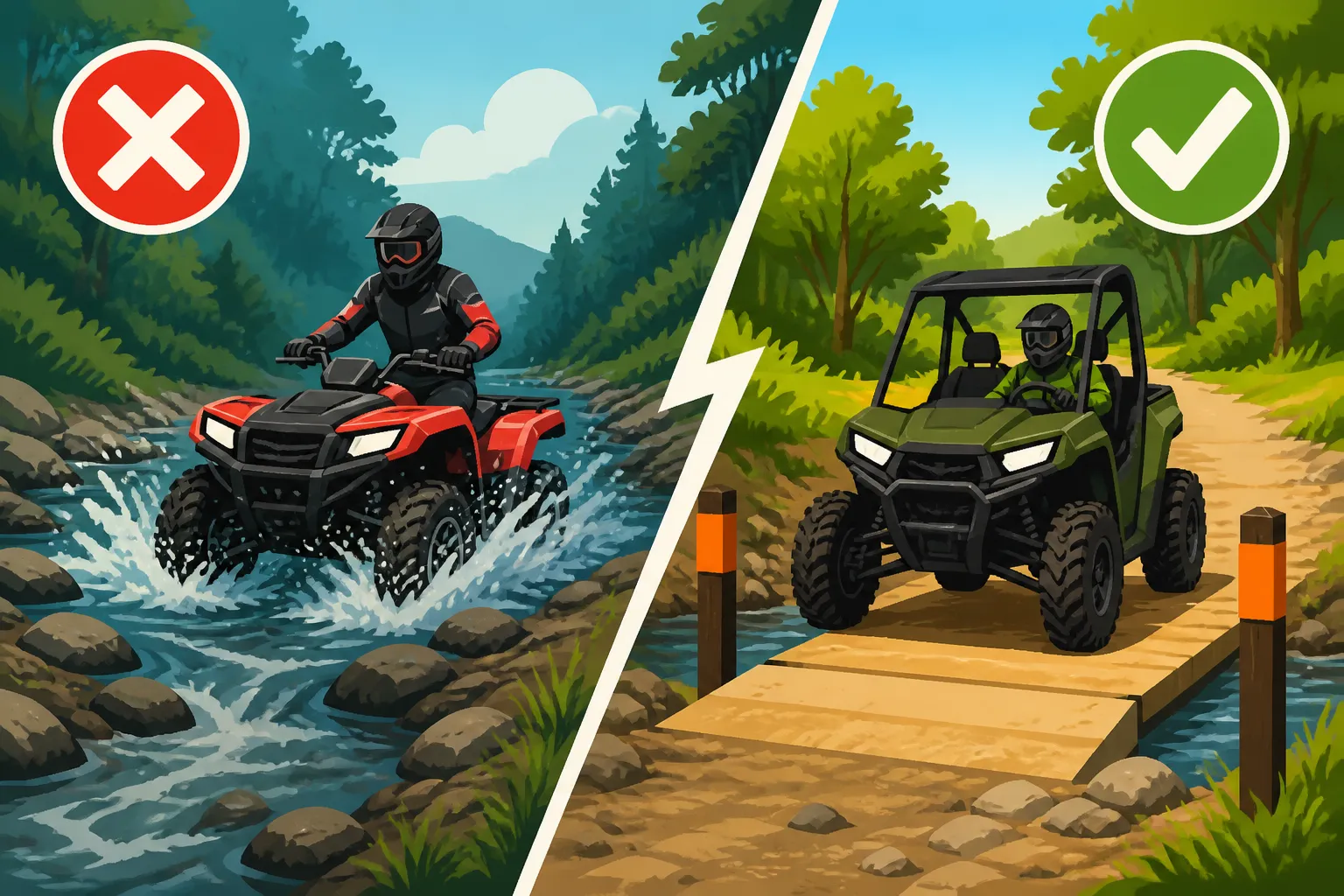
Beyond the environmental harm, riding in a streambed where it's not explicitly allowed can land you in serious trouble with the law. South Carolina has specific rules about watercourse crossings, and they're in place for a reason. [South Carolina Watercourse Crossing Rules] explicitly state that you should only cross at a marked ford. Ignoring these rules isn't just a slap on the wrist. You could face fines that range from minor to significant, depending on the severity of the damage and whether it's a repeat offense. Think about a ticket in the range of [South Carolina Fines of $50 to $200], and that's just for the initial violation. If you cause significant environmental damage, the penalties could escalate dramatically, including requirements for restitution or clean-up costs. It's simply not worth the risk, especially when there are legal alternatives available. Carrying proper identification and understanding [What Papers to Carry on a Back Road] can help, but it won't excuse illegal streambed riding.
Decoding "Marked Ford": What It Means for South Carolina Riders
So, if riding in streambeds is out, what's a responsible rider to do when faced with a water crossing? That's where the concept of a "marked ford" comes into play. It's a specific designation that makes all the difference, indicating a safe and legally sanctioned place to cross a watercourse. Understanding what a marked ford is, and how to spot one, is key to staying compliant and keeping our trails open.
Identifying a Legal Crossing Point
A marked ford is, quite simply, a section of a stream or river that has been specifically designated and often improved for vehicle crossings. These aren't just random spots; they're usually chosen because the streambed is naturally more resilient, or it has been reinforced to minimize environmental impact. When you're out on a designated trail system, especially in a national forest like the Sumter National Forest, look for clear signage. You might see a sign that explicitly says "Ford Crossing" or a symbol indicating an approved water crossing. Sometimes, the ford itself will be visibly different from the rest of the streambed – perhaps a hardened bottom of gravel or rock, or clearly defined entry and exit points that show regular use by vehicles without excessive erosion. It's often part of a wider trail system, not just an isolated spot. If you don't see any explicit markings or clear signs that it's a managed crossing, assume it's not a legal ford. When in doubt, turn around or find an alternative route. Always check [South Carolina Trail Conditions Before You Haul] to get the latest info on open routes and potential closures.
The Purpose Behind Marked Fords
Marked fords serve a critical dual purpose. First, they allow trail systems to continue across natural water barriers, providing continuity for riders and access to larger recreational areas. Without them, many trails would simply dead-end at the first creek. Second, and equally important, they concentrate the impact of crossings to specific, resilient areas. By directing all vehicle traffic through these pre-selected and often engineered spots, land managers can minimize the widespread damage that would occur if riders crossed anywhere they pleased. These designated crossings are designed to be as environmentally sound as possible, with stable bottoms that reduce sediment disturbance and clear approaches that prevent excessive bank erosion. They're a compromise between rider access and environmental protection, and it's our responsibility as riders to respect that balance. Many of the great [South Carolina ATV Trails: Where to Ride] utilize these types of crossings.
Navigating Marked Fords Safely and Responsibly in South Carolina
Okay, you've found a marked ford, great! Now comes the actual crossing. It's not just about hitting the gas and hoping for the best. There's a method to safely and responsibly navigate these water crossings, protecting both your machine and the environment. Preparation, caution, and knowing your equipment are all critical steps.
Pre-Crossing Checks and Assessment
Before you even think about entering the water, take a moment to assess the situation. This isn't just good advice; it's essential for safety and preventing breakdowns.
First, walk the ford if possible. If it's shallow enough and safe to do so, get out and check the depth, current, and bottom conditions on foot. Look for hidden rocks, logs, or deep holes that could cause issues. You'd be surprised what can hide under seemingly calm water.
Second, know your machine's limits. Every ATV and UTV has a maximum safe wading depth. Understand where your air intake is located, where the exhaust sits, and how high your electronics are. Going beyond these limits can lead to hydrolock, electrical damage, or stalling out mid-stream. If you have any doubt about the depth, it’s best to err on the side of caution. Some riders invest in snorkel kits for deeper water crossings, and companies like SuperATV offer robust solutions for these types of upgrades. Make sure your machine is up to date on [South Carolina Equipment Requirements for ATVs] and that things like spark arresters are in good working order for all riding conditions.
Finally, prepare for recovery. Even with the best preparation, things can go wrong. Always ride with others when tackling water crossings. Carry appropriate recovery gear, such as a winch (many off-road parts manufacturers, including SuperATV, make excellent winches for ATVs and UTVs), tow straps, and shackles. Make sure everyone in your group knows how to use this equipment safely.
Techniques for a Smooth Crossing
Once you've assessed the ford and prepared your machine, it's time to cross. The key is a controlled, steady approach, not brute force.
- Enter Slowly and Steadily: Don't hit the water at speed. Ease into it at a low, consistent pace. This creates a bow wave in front of your machine, which helps push water away from your engine and controls. A sudden splash can force water into places it shouldn't be.
- Maintain a Consistent Throttle: Once in the water, maintain a steady, low-to-moderate throttle. You want to keep your momentum, but not create a rooster tail. A constant speed helps maintain that bow wave and prevents stalling. Avoid rapid acceleration or deceleration.
- Steer Straight and Look Ahead: Keep your wheels pointed straight as much as possible, steering only to avoid obstacles you've already identified. Focus on your exit point, not just the water directly in front of you. This helps maintain a clear path and prevents you from getting disoriented by the current or murky water.
- Exit Carefully: As you approach the opposite bank, maintain your steady throttle to climb out smoothly. Once clear of the water, stop and perform some immediate checks.
Post-Crossing Checks
You're across, great job! But the work isn't over yet. Some immediate checks are crucial to ensure your machine is still running optimally and to prevent long-term damage.
- Check Brakes: Water can severely reduce brake effectiveness. Pump your brakes a few times while slowly moving to dry them out. You'll often feel them come back to full power after a few applications.
- Inspect Air Filter: If water got anywhere near your air intake, check your air filter for saturation. A wet filter can lead to poor engine performance or, worse, allow water into the engine. Carry a spare if you anticipate deep water.
- Drain Water: If your UTV has footwells or cargo areas, check for standing water and drain it. Trapped water can lead to rust and mildew.
- Look for Leaks/Damage: Quickly scan your machine for any visible leaks, bent components, or debris caught in the suspension or drivetrain.
By following these steps, you not only ensure your own safety and the longevity of your machine but also contribute to the responsible enjoyment of South Carolina's natural beauty. Remember that even on private land or [South Carolina Rules for Riding a Farm Road], responsible water crossing practices are important.
Beyond the Ford: Embracing Responsible ATV/UTV Stewardship
Riding a marked ford instead of an unmarked streambed isn't just about following rules; it's about being a good steward of the land. Our access to these incredible trails and natural spaces depends entirely on our collective commitment to responsible riding practices. Every time we make a conscious choice to ride legally and ethically, we're helping to preserve these opportunities for ourselves and for future generations of riders.
Why Respecting the Rules Matters for Trail Access
The rules and regulations, like those found in [South Carolina Code Section 50-26-50], might sometimes feel restrictive, but they exist for a reason. They're designed to balance recreational access with environmental protection, public safety, and the rights of other land users. When riders disregard these rules – whether it's by riding in prohibited areas, ignoring marked fords, or creating their own trails – it creates negative impacts that can lead to trail closures, stricter regulations, and a tarnished reputation for the entire off-road community. Land managers, environmental groups, and local communities are constantly evaluating our impact. Showcasing responsible behavior, adherence to [South Carolina Trail Etiquette Locals Expect], and a commitment to protecting the environment is our best defense against losing access to the places we love to ride.
Contributing to the Off-Road Community
Being a responsible rider extends beyond just following the letter of the law. It means actively contributing to the health and future of the sport. This could involve joining a local ATV or UTV club, participating in trail maintenance days, or simply leaving every riding area better than you found it. Educating newer riders on proper techniques and etiquette, like emphasizing the importance of riding marked fords, helps instill a culture of responsibility. When we invest in our community and our trails, we create a stronger voice for continued access and demonstrate our commitment to sustainable recreation. Remember, every ride is an opportunity to show that ATV and UTV enthusiasts are respectful, environmentally conscious, and dedicated to preserving the beauty of South Carolina's outdoors.
| Checklist Item | Description |
|---|---|
| Scout the Crossing | Walk it if possible (or observe carefully), look for depth, current, obstacles, and clear entry/exit points. Check for hidden hazards. |
| Know Your Machine | Understand your ATV/UTV's maximum safe water wading depth, location of air intake, and exhaust. Never exceed these limits. |
| Recovery Gear | Always carry a winch, tow strap, and basic tools. Reputable brands like SuperATV offer robust winches and recovery solutions. |
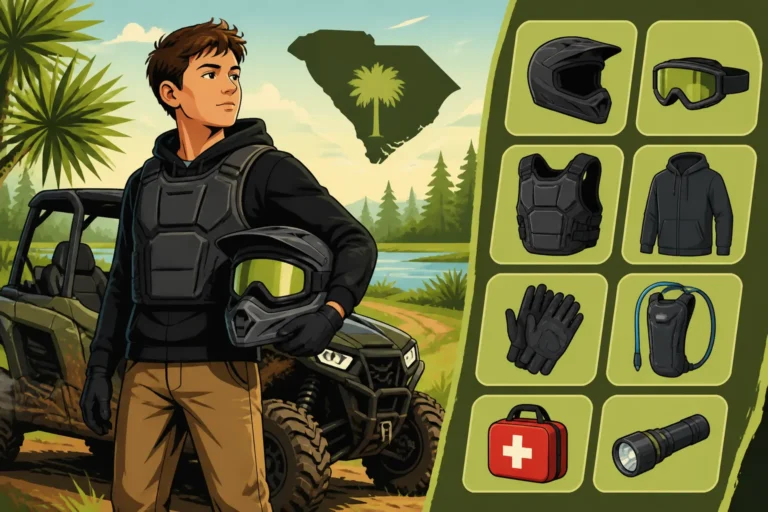
| Proper Riding Gear | Wear appropriate riding gear, including sturdy boots, helmet, and eye protection, which is essential for safety. |
| Approach Slowly | Enter the water at a low, consistent speed to create a bow wave and prevent splashing water into critical engine components. |
| Maintain Momentum | Keep a steady, low-to-moderate throttle. Avoid stopping abruptly or rapid acceleration while in the water to maintain control. |
| Look Ahead | Focus on your exit point and any potential hazards. Scan the path you intend to take, not just the immediate foreground. |
| Post-Crossing Check | Immediately after crossing, inspect and dry your brakes, check your air filter for moisture, and drain any water from compartments. |
Disclaimer
This article is for general informational purposes only and does not constitute professional advice. Laws, prices and regulations vary by location and change over time. Consult a qualified professional for guidance on your specific situation.