Putting Two Names on One ATV Title
You've just found the perfect side-by-side or ATV, one that truly speaks to your adventurous spirit. Maybe you're looking to share the cost with a friend, or perhaps you and your spouse want to tackle the trails together. It sounds ideal, right? Sharing the fun, sharing the expenses… until you get to the DMV paperwork and realize that putting two names on one ATV or UTV title isn't as straightforward as just writing down two names. This guide is here to walk you through the nuances of co-owning an off-road machine in the Palmetto State, covering everything from the legal distinctions to the practical considerations, so you can hit the trails with peace of mind.
Why Co-Own an ATV or UTV in South Carolina?
Co-owning an ATV or UTV in South Carolina can be a fantastic way to enjoy the outdoor lifestyle without shouldering the entire financial burden alone. Whether it's with a spouse, a close friend, or a family member, sharing the machine often means sharing the joy – and the bills. It’s a common scenario, especially for those looking to get into the hobby without a massive upfront investment.
Sharing the Cost and the Fun
Let's be real: ATVs and UTVs aren't cheap. The initial purchase price alone can be a significant hurdle for many enthusiasts. When you decide to co-own a machine, you immediately cut that initial cost in half, or by whatever percentage you agree upon. This means you might be able to afford a newer model, one with more features, or simply get into the sport sooner than if you were saving up on your own. It's not just about the sticker price, either; think about the ongoing expenses. [What a South Carolina ATV Title Costs] is a fixed fee, but insurance premiums, regular maintenance, and any upgrades or repairs can add up. Splitting these costs makes ownership far more manageable and sustainable over time.
Beyond the financial aspect, there's the sheer enjoyment of sharing an experience. Imagine hitting the trails at Carolina Adventure World or Parsons Mountain with your co-owner, making memories, and having someone to share the excitement (and maybe the occasional stuck situation!) with. It fosters camaraderie and can make the hobby even more rewarding. It also means you might have someone to help with the upkeep, like washing the clay off after a particularly muddy ride or performing routine checks before a big trip.
Navigating Shared Responsibilities
Co-ownership isn't just about sharing the good times; it also means sharing the responsibilities that come with owning a powerful off-road vehicle. A properly titled machine with two names clearly defines who has legal rights and, by extension, who shares the responsibilities. This can be incredibly important for things like deciding where the machine is stored, who is responsible for routine servicing, or even just coordinating when each person gets to use it.
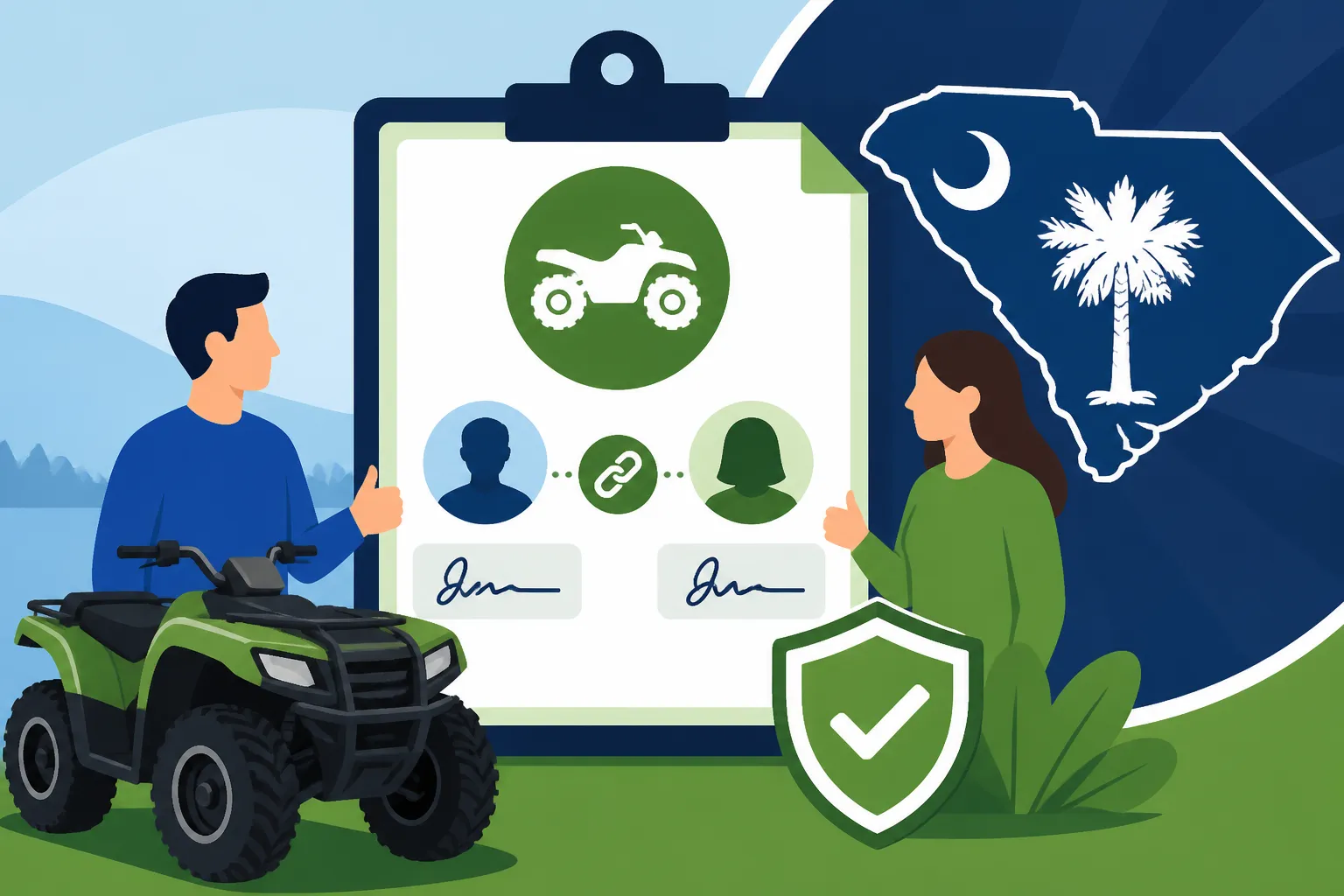
Having both names on the title formalizes your shared interest in the machine. It ensures that both parties have a say in major decisions, such as selling the ATV or UTV, taking out a loan against it, or even deciding on significant modifications. Without both names on the title, one person would hold all the legal power, which could lead to misunderstandings or disputes down the line. It's about establishing a clear, mutual understanding of ownership from the very beginning, laying the groundwork for a harmonious co-ownership experience.
The Mechanics of Titling with Multiple Owners in South Carolina
When you're ready to put two names on one ATV or UTV title in South Carolina, you'll be navigating the process with the South Carolina Department of Motor Vehicles (SCDMV). It's crucial to understand how the DMV typically handles multiple owners, as this will impact your rights and responsibilities, especially if circumstances change down the road. This isn't just about filling out a form; it's about making a legal designation that has real-world consequences.
Joint Tenancy vs. Tenants in Common
This is perhaps the most critical distinction to grasp when titling with multiple owners. It determines what happens to the ownership if one of the co-owners passes away. In South Carolina, as in many states, you typically have two main ways to hold title with more than one person:
-
Joint Tenancy with Right of Survivorship (JTWROS): This means that if one of the co-owners dies, their interest in the ATV or UTV automatically passes to the surviving owner(s). It bypasses probate, meaning the machine doesn't go through the deceased person's will. This is a very common choice for married couples or partners who intend for the machine to remain with the survivor. For example, if you and your spouse title an ATV as joint tenants and one of you passes, the surviving spouse automatically becomes the sole owner without extra paperwork beyond presenting a death certificate to the DMV if you ever needed to sell it.
-
Tenants in Common (TIC): Under this arrangement, each co-owner holds a distinct, undivided share in the ATV or UTV. If one owner dies, their share does not automatically transfer to the other owner(s). Instead, it passes to their heirs according to their will or state intestacy laws. This is often preferred by friends or business partners who want to ensure their share can be passed on to their own beneficiaries, rather than directly to the other co-owner. For instance, if you and a friend title a UTV as tenants in common, and your friend passes away, their share of the UTV would become part of their estate, and you would then co-own the machine with their heir(s) – which can get complicated if you hadn't planned for it.
The SCDMV title application form may have a specific box or section for you to indicate how you wish to hold title with multiple owners. If not explicitly stated, or if you're unsure, it's wise to consult with an attorney to ensure your intentions are legally documented. This choice has significant implications for [South Carolina Titles After the Owner Dies] and future transfers.
| Feature | Joint Tenancy with Right of Survivorship (JTWROS) | Tenants in Common (TIC) |
|---|---|---|
| Ownership Share | Undivided, equal shares | Undivided, but not necessarily equal shares |
| Right of Survivorship | Yes, interest automatically passes to surviving owner(s) | No, interest passes to deceased owner's heirs |
| Probate Avoidance | Yes, for the ATV/UTV | No, interest goes through probate |
| Common Use Cases | Married couples, life partners | Friends, business partners, family members (non-spousal) |
| Flexibility of Transfer | Requires all owners' consent for transfer | Each owner can transfer their share independently |
Completing the South Carolina Title Application
Once you understand the type of co-ownership you want, the next step is to accurately complete the South Carolina title application. This generally involves using a specific form, typically Form 400, titled "Application for Certificate of Title and Registration for New and Used Vehicles." Even though it mentions "vehicles," it's the standard form used for titling ATVs and UTVs in South Carolina, as long as you tick the correct boxes. [One DMV Form Handles Title, Registration or Both].
When filling out the form, ensure that all owners' full legal names and addresses are clearly written in the designated owner sections. There will be specific lines for primary and secondary owners, or simply multiple owner fields. It is absolutely critical that every single co-owner signs the application exactly as their name appears. A missing signature can easily stall your title application, leading to frustrating delays and extra trips to the DMV. If you're buying from a private seller, make sure the seller also signs the existing title over to all the new co-owners. [South Carolina Titles After a Private Sale] emphasizes clear ownership transfer, and this is doubly important with multiple buyers. For a new machine, you'll be presenting the Manufacturer's Certificate of Origin (MCO) which will then be used to generate your new title listing both names.
Remember that [South Carolina Title Applications at the DMV] require proper identification for all listed owners, and often proof of address. If not all owners can be present at the DMV, be prepared to have notarized forms or specific power of attorney documentation, though it's always easiest if everyone can go together. Double-check every field before submission to avoid any simple errors that could hold up your new co-owned title.
Practical Considerations and Potential Pitfalls of Co-Ownership
While the dream of sharing an ATV or UTV is often idyllic, the reality of co-ownership can sometimes hit snags if you haven't laid clear ground rules. Beyond the legalities of the title itself, successful co-ownership hinges on open communication and proactive planning. Ignoring these practical considerations can turn a shared adventure into a shared headache.
The Importance of a Co-Ownership Agreement
Even if you’re co-owning an ATV or UTV with your best friend, a sibling, or your spouse, having a written co-ownership agreement is one of the smartest moves you can make. Think of it as a pre-nup for your off-road machine! It might seem overly formal for a recreational vehicle, but a well-drafted agreement can prevent countless disputes down the line. This document, separate from the official title, outlines the specific terms of your shared ownership.
What should it cover? Everything from who pays what percentage of the purchase price, insurance, and maintenance, to a clear schedule or system for who gets to use the machine when. What if one person wants to upgrade the tires, but the other doesn't want to chip in? What if the machine needs a costly repair – how will that be split? The agreement can also detail procedures for dispute resolution, and most critically, what happens if one party wants to sell their share, or if the co-ownership needs to be dissolved entirely. For example, if one co-owner decides they're moving out of state or just losing interest in riding, the agreement can stipulate how their share will be bought out by the other owner, or how the machine will be sold and the proceeds divided. Tools like LawDepot can be incredibly helpful for drafting such an agreement, providing templates and guidance to ensure all crucial aspects are covered legally and clearly. Taking the time upfront to create this document will save you immense stress and potential financial strain in the future.
Selling, Inheriting, or Resolving Disputes
Life happens, and sometimes co-ownership needs to come to an end, whether voluntarily or due to unforeseen circumstances. When both names are on the title, selling the ATV or UTV typically requires the signatures of all titled owners. This ensures that no single owner can unilaterally sell the machine without the other's consent, providing protection for everyone involved. If you've financed the machine, remember that [South Carolina Title and Lien Records] will show the lender's interest, and they'll need to be satisfied before a clear title can be transferred to a new buyer.
If one of the co-owners passes away, the type of tenancy you chose (joint tenancy vs. tenants in common) becomes paramount. As discussed, joint tenancy means the survivor automatically gets full ownership. However, if you chose tenants in common, the deceased owner's share goes through their estate. This means the surviving owner might end up co-owning the machine with the deceased's heirs, which can be an uncomfortable and complicated situation, especially if those heirs have no interest in ATVs or UTVs. This is why discussing these scenarios and documenting your wishes in a co-ownership agreement is so vital, offering a roadmap for situations like [South Carolina Titles for an Inherited Machine].
Disputes, unfortunately, are a possibility even among the closest of friends or family. What if one person is consistently neglecting their maintenance duties? Or one person rides the machine much harder than the other, leading to more wear and tear? These are the moments where a clear co-ownership agreement, perhaps drafted with the help of resources like LawDepot, becomes your best friend. It provides a framework for addressing grievances, outlining steps to mediate disagreements, and ultimately, a path to legally resolving the issue if it can't be settled amicably. Without such an agreement, resolving these issues can be costly, time-consuming, and potentially damage relationships beyond repair.
Financial and Legal Implications Beyond the Title
While securing your co-owned ATV or UTV title is a huge step, it’s not the only financial or legal aspect to consider. Co-ownership extends to how you manage insurance, potential liability, and understanding the financial obligations that follow the machine, even if some of those costs are lighter in South Carolina than in other states. Thinking through these details beforehand can help you avoid unwelcome surprises down the road.
Insurance and Liability for Co-Owned Machines
When you have two names on an ATV or UTV title, both owners generally share the responsibility for the machine's safe operation and any potential liability that might arise from its use. This makes choosing the right insurance policy absolutely critical. [Does an Off-Road Quad Need Insurance in South Carolina?] notes that for off-road machines, insurance isn't mandated by the state unless it's a street-legal UTV. However, even if not required, it's a non-negotiable for smart co-owners.
Most insurance companies will allow you to list multiple owners on a single policy. It's vital that both co-owners are named insureds on the policy, as this ensures that both parties are covered in the event of an accident, theft, or damage. Imagine if only one owner was on the policy, and the other had an accident – you could be left with significant out-of-pocket expenses. The policy should cover not just damage to the machine, but also liability for injuries or property damage caused to others while either owner is operating it. Discussing deductibles, coverage limits, and who pays the premiums should be a part of your co-ownership agreement, perhaps drawn up using a template from a service like LawDepot, to ensure there are no misunderstandings when a bill or a claim arises.
Property Taxes and Other Fees
One piece of good news for South Carolina ATV owners is that the state has a long-standing exemption from property taxes for these machines. Since [South Carolina Exempts ATVs From Property Tax] as of 2011, you won't need to factor an annual county property tax bill into your co-ownership budget for an off-road ATV. This is a significant saving compared to owning other vehicles or property in the state and can make co-ownership even more appealing financially. You should still budget for the initial title fee, of course, which is a one-time cost paid to the SCDMV.
For UTVs, the situation can be different, especially if you plan to make it street-legal. [South Carolina Street-Legal UTV Registration Arrives] with its own set of fees and requirements, including liability insurance. If your co-owned UTV is registered for street use, you'll pay a biennial registration fee, but importantly, street-legal UTVs are also exempt from county property tax in South Carolina. So, whether your co-owned machine is an off-road ATV or a street-legal UTV, you can breathe a sigh of relief regarding ongoing property taxes. Always remember to check [What to Bring to a South Carolina DMV Counter] when handling any title or registration matters, ensuring you have all necessary documentation, including identification for both owners.
Disclaimer
This article is for general informational purposes only and does not constitute professional advice. Laws, prices and regulations vary by location and change over time. Consult a qualified professional for guidance on your specific situation.