South Carolina Day Passes Tied to a Plate
A South Carolina day pass for an OHV trail is connected to a vehicle plate, which can make a last-minute change of tow vehicle more than a small planning detail. Knowing which plate to enter, what to print, and what the pass does not cover helps prevent a wasted trip. Here’s how to prepare and what to check before heading to a trailhead.
What It Means for a Day Pass to Be Tied to a Plate
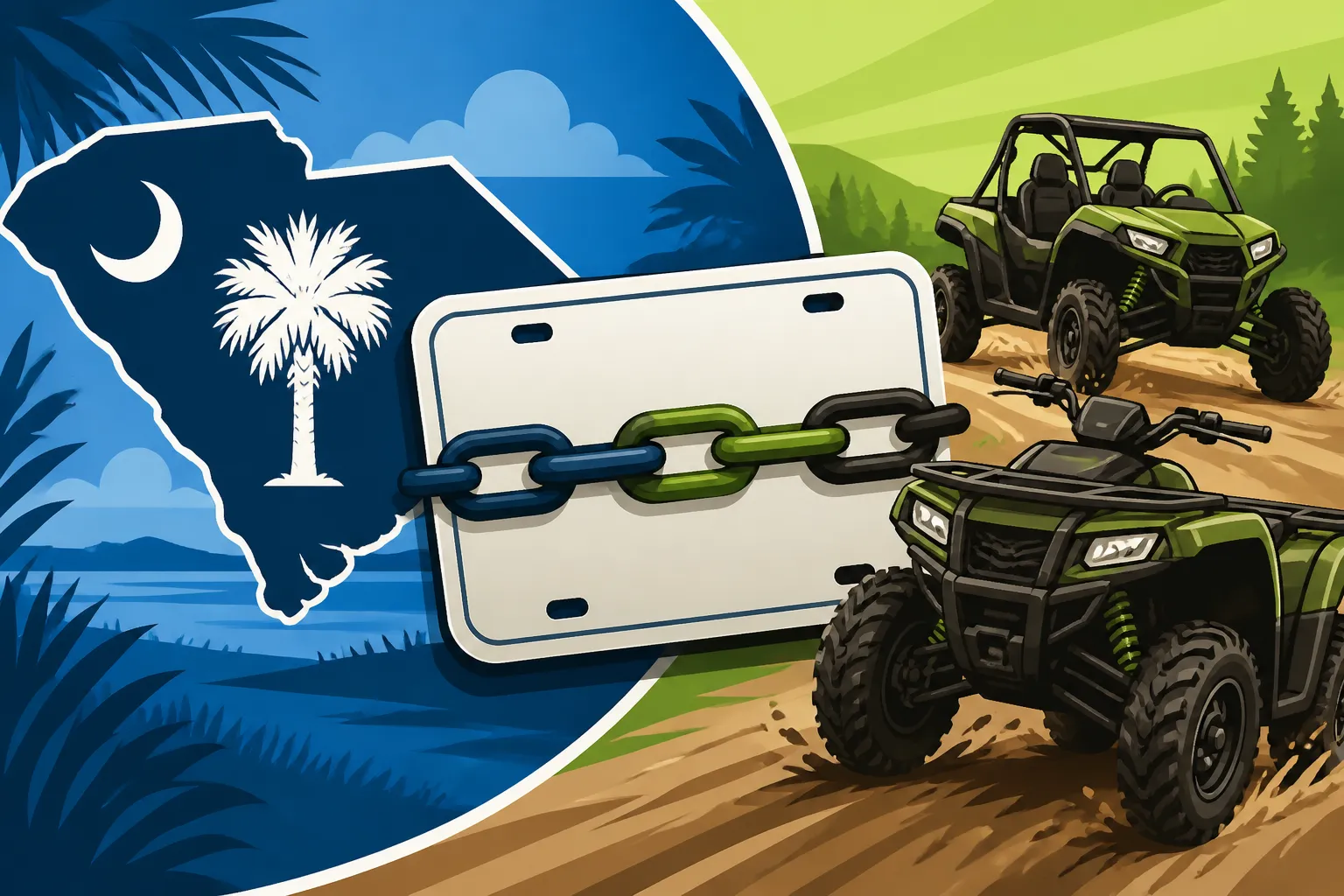
For South Carolina OHV trail access, a day pass is associated with the license plate entered when it is purchased. That connection helps identify the vehicle using the pass during a fee check. It is not simply a general ticket that can be handed to any driver or used with any vehicle without checking the pass conditions.
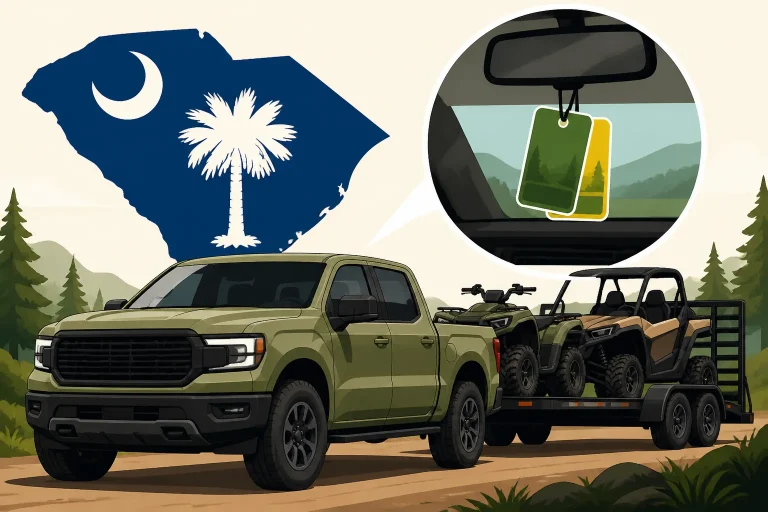
For a rider trailering an ATV or UTV, the relevant plate may be the tow vehicle’s plate. Do not assume the machine’s VIN, the trailer plate, or a different vehicle’s plate can be substituted. Follow the current purchase instructions and enter the plate they request. If the instructions specify the tow vehicle, use that plate exactly.
This arrangement is different from having a state registration for an ATV or UTV. A forest pass is for access to the designated OHV trail system under its rules. It does not register an off-road machine for general road use, make a machine street legal, or authorize riding on every public road. South Carolina’s trail-pass requirements and its rules for road use are separate matters. For that distinction, see South Carolina Does Not Register Off-Road ATVs and Can You Ride an ATV on the Road in South Carolina?.
A pass also does not mean every trail is open on the day you arrive. Access can depend on trail status, weather, maintenance, seasonal restrictions, and the rules for that particular trail. Check the current pass terms and trail conditions before leaving, even if you have already bought the pass.
| Question | What to check |
|---|---|
| Which plate should I enter? | Follow the purchase instructions; for a trailering trip, check whether they request the tow vehicle’s plate. |
| Can I swap vehicles later? | Do not assume so. Review the provider’s change, cancellation, and transfer rules before buying. |
| Does the pass register my ATV or UTV? | No. A forest access pass is not state vehicle registration. |
| Does buying a pass guarantee every trail is open? | No. Check current closures and access conditions before travel. |
| Is a day pass the same as an annual pass? | No. Their purchase and use conditions can differ. |
The important practical point is to treat the plate as part of the pass, not as an incidental detail. A typo or a last-minute change to the tow vehicle can create a mismatch when the pass is checked. If you are deciding between a single day and repeated visits, compare the conditions as well as the time period in South Carolina Day vs Season Pass Value.
Buy the Pass After Your Vehicle Plan Is Set
It is easier to buy the right pass once you know which vehicle will carry the machine to the trailhead. Before purchasing, settle the travel plan as much as possible: who is driving, which vehicle is towing, and whether the machine will be transported by trailer or carried in another permitted way. Then have the requested plate information available.
South Carolina forest passes are sold through the designated online process, rather than relying on a cash fee tube at the trailhead. Check the current purchase instructions through the official pass provider before you go. If you need help with the buying process, How to Buy a South Carolina Forest Pass explains the practical steps, and South Carolina Passes Sold Only Online covers why you should not plan on paying at the trailhead.
When entering the plate, copy it carefully from the vehicle registration or the plate itself. Check each letter and number before submitting. A plate that is nearly right may still fail to match the vehicle during a check. If the form asks for a state or other vehicle details, provide them as requested rather than relying on an old saved entry.
Before you finish, review the confirmation and pass conditions. Look for:
- The date or validity period covered by the pass.
- The plate or vehicle information connected to the purchase.
- Instructions on whether the pass must be printed, displayed, or carried.
- Any limits on the number or type of machines covered.
- Rules for changes, refunds, or use with a different vehicle.
- Trail locations or access conditions included in the pass.
Do not assume that a day pass for a vehicle automatically covers every person, machine, or trail in your group. Coverage depends on the current pass terms. If several riders are traveling together, confirm whether each person needs a separate pass, whether a pass is assigned to a vehicle, and whether additional machines require separate coverage. Those details are especially important when a group is sharing a trailer or arranging multiple vehicles.
A pass bought for one tow vehicle should not be treated as a transferable spare for a friend. If plans change after purchase, check the provider’s official process rather than changing the printed information yourself or relying on a verbal arrangement. A different driver using the same vehicle may be a different situation from a different vehicle using the same pass; read the exact conditions before assuming either is allowed.
Match the Plate and Follow the Display Instructions
A purchase confirmation is useful, but it may not be the only thing a ranger or fee-compliance officer expects to see. Follow the pass instructions for display and keep the required proof available. Some permits are meant to be displayed in a tow vehicle; others may have specific printing or placement directions. Use the instructions that come with the pass, not a guess based on how another trail handles permits.
If a printed copy is required, print it before you leave home. Check that the text and plate details are readable, and keep the paper from getting wet or damaged. A transparent document sleeve can protect a printout from moisture; options are available from office-supply stores and, if convenient, Amazon. The sleeve is only for protection. Do not cover information the official instructions say must remain visible, and do not alter the pass.
Keep a digital confirmation accessible as backup if the provider supplies one, but do not assume that a phone screen replaces a required printed display. Remote trailheads may have limited or unreliable cell service, and a low battery is a poor substitute for the required proof. Save the confirmation offline if possible and carry a printed copy when the instructions call for one.
Before loading up, compare the plate on the pass with the actual vehicle. A practical final check takes less than a minute:
- Read the plate from the tow vehicle, not from memory.
- Compare every character with the plate information on the pass.
- Check that the pass date matches the planned riding day.
- Confirm the pass is displayed or carried as instructed.
- Keep the purchase confirmation available in case you need to explain a valid purchase.
For more detail on the physical requirements, see South Carolina Pass Display Rules. The basic idea is simple: make it easy for an officer to confirm that the pass belongs with the vehicle being checked, while following the provider’s exact display directions.
If your vehicle is borrowed, rented, or replaced at the last minute, stop and review the pass terms before driving to the trail. A printed pass bearing the plate of a different vehicle is not something to fix by writing over it. Ask the pass provider how to correct the information, or purchase the appropriate pass if the rules require it. The right option depends on the provider’s current conditions.
Plan for Trailers, Rental Vehicles, and Extra Machines
The plate connection is easiest to manage when one vehicle and one machine are involved. Group trips and changing transport plans need more attention. Work through the details before purchase, especially when one truck is carrying machines for multiple riders or when the driver and machine owner are different people.
If you are hauling more than one machine
Do not infer that one pass covers multiple ATVs or UTVs just because they arrive on the same trailer. The pass may be associated with a vehicle, a rider, a machine, or a combination defined by its terms. Confirm what it covers, including any limits on the number or type of machines. If you need a pass for another machine, check [South Carolina Pass for a Second Machine] before paying.
This matters for a shared trailer. The tow vehicle plate may match the pass, but that fact alone does not establish that every machine on the trailer is covered. Keep the pass information and any relevant proof of ownership or authorization available as required by the trail rules. For trail-specific ownership documentation, see [South Carolina Proof of Ownership on the Trail].
If you are using a rental vehicle
Rental plans can change which plate is attached to the pass. You might book a rental before buying the pass, receive a different vehicle at pickup, or need to switch vehicles during the rental period. Check the provider’s policy for rented machines or transport vehicles before purchasing. [South Carolina Pass for a Rented Machine] may help you identify the questions to resolve.
If a rental company substitutes a vehicle after your pass is issued, compare the new plate with the pass immediately. Do not assume that the original pass remains valid just because the rental agreement is still active. Contact the pass provider for instructions on changing the vehicle information, and keep any written response with your documents.
If you are borrowing or changing the tow vehicle
A borrowed truck can create the same mismatch as a rental. Ask the owner for the exact plate and decide in advance whether that vehicle will be used for the entire trip. If the plan changes, find out whether the pass can be updated before you set out.
If two vehicles will separately transport machines to the trail, do not use one plate-linked pass as though it covers both. Confirm the requirements for each vehicle and each machine. When in doubt, ask the provider to explain exactly what must match: the plate, the person, the machine, or more than one of those.
A day pass tied to a plate is not a substitute for a trail reservation, a closure notice, or a group-access approval if one is required. Likewise, a group’s decision to meet at a trailhead does not automatically make one vehicle’s pass valid for everyone. Make the pass arrangement part of the trip plan, alongside trail selection, machine width, fuel, and parking.
Avoid Common Mismatches Before You Haul
Many pass problems are preventable. Most come from buying too early, using a plate from the wrong vehicle, or assuming the pass works like a different kind of permit. A quick review before departure is more useful than trying to sort out a discrepancy at a remote trailhead.
Buying before you know the tow vehicle
This is a common risk when a group has not decided who is driving. If you buy using one person’s plate and later switch to another truck, the pass information may no longer match. Decide on the tow vehicle first, or check the provider’s rules for changing a plate before buying.
Confusing a state plate with a forest pass
An ATV or UTV may have paperwork connected to its ownership, but that does not necessarily meet the forest’s access-pass requirement. Conversely, holding a forest pass does not make an off-road machine street legal. Keep the two issues separate: state rules concern ownership, title, registration, and road use; the forest pass concerns access to designated OHV trails.
Assuming a pass can be transferred
A pass connected to a specific plate should not be loaned, sold, or moved to another vehicle unless the provider’s terms explicitly allow it. A friend’s pass may not cover your vehicle even if you are riding the same trail on the same day. Check the terms instead of relying on what worked for someone else on a previous visit.
Relying only on a phone
A saved confirmation can help, but it may not satisfy display instructions. Cell coverage can also be poor in forest areas. Print the pass when required and keep the purchase record available offline. If the pass is supposed to be visible in the tow vehicle, place it according to the instructions before unloading.
Arriving without checking trail status
A valid pass is not a promise that every trail is open. Rain, maintenance, seasonal operations, or other restrictions can affect access. Check current conditions for the specific trail you plan to use, and have an alternative in mind if it is closed. South Carolina Trail Conditions Before You Haul is a useful companion for that last check.
Forgetting the trailer and parking details
A plate-linked pass concerns the vehicle information requested by the pass system; it does not resolve every question about trailer parking or machine access. Confirm that your intended staging area can accommodate the tow vehicle and trailer, and check trail limits for the machine you are bringing. A trailer that cannot fit safely or a machine that exceeds a trail restriction can derail an otherwise well-prepared trip.
For a broader comparison of access options, South Carolina’s Day and Season Forest Passes can help you decide which type fits your visit. If you are visiting from another state, do not assume that an out-of-state registration or permit replaces the South Carolina forest pass. Check both the pass requirement and the trail’s operating rules.
Frequently Asked Questions
Does a South Carolina day pass cover the tow vehicle or the ATV?
The pass is connected to the plate specified during purchase, and for a trailering trip that may be the tow vehicle’s plate. That does not, by itself, establish how many machines or riders the pass covers. Check the current terms for the exact coverage.
Can I use the same pass if I change trucks?
Do not assume you can. If the pass is tied to the original truck’s plate, contact the provider or follow its official change process before using a different vehicle. Do not alter the pass yourself.
Do I need a day pass if my ATV has a title?
A title is proof related to ownership; it is not a forest trail-access pass. Check the access requirements for the trail you plan to ride, even if the machine has ownership paperwork.
Can I buy a pass at the trailhead?
Do not plan on paying at the trailhead. Check the current official purchase instructions before traveling, since South Carolina forest passes are sold through the designated online process.
What should I do if the pass plate is wrong?
Use the provider’s official correction or support process and ask whether the pass can be updated or must be replaced. Keep the confirmation and any response available. A handwritten correction is not a reliable substitute for official approval.
Disclaimer
This article is for general informational purposes only and does not constitute professional advice. Laws, prices and regulations vary by location and change over time. Consult a qualified professional for guidance on your specific situation.