Skid Plates for Upstate Rock
Rocky trails in South Carolina’s Upstate can turn a routine ride into a costly repair if a rock catches your ATV or UTV’s exposed underside. A well-chosen skid plate helps shield vulnerable parts, but coverage, material, fit, and maintenance all matter. This guide explains what to protect, how to choose armor for local terrain, and what to check before heading out.
Why Upstate Rock Calls for Underside Protection
What can get damaged underneath
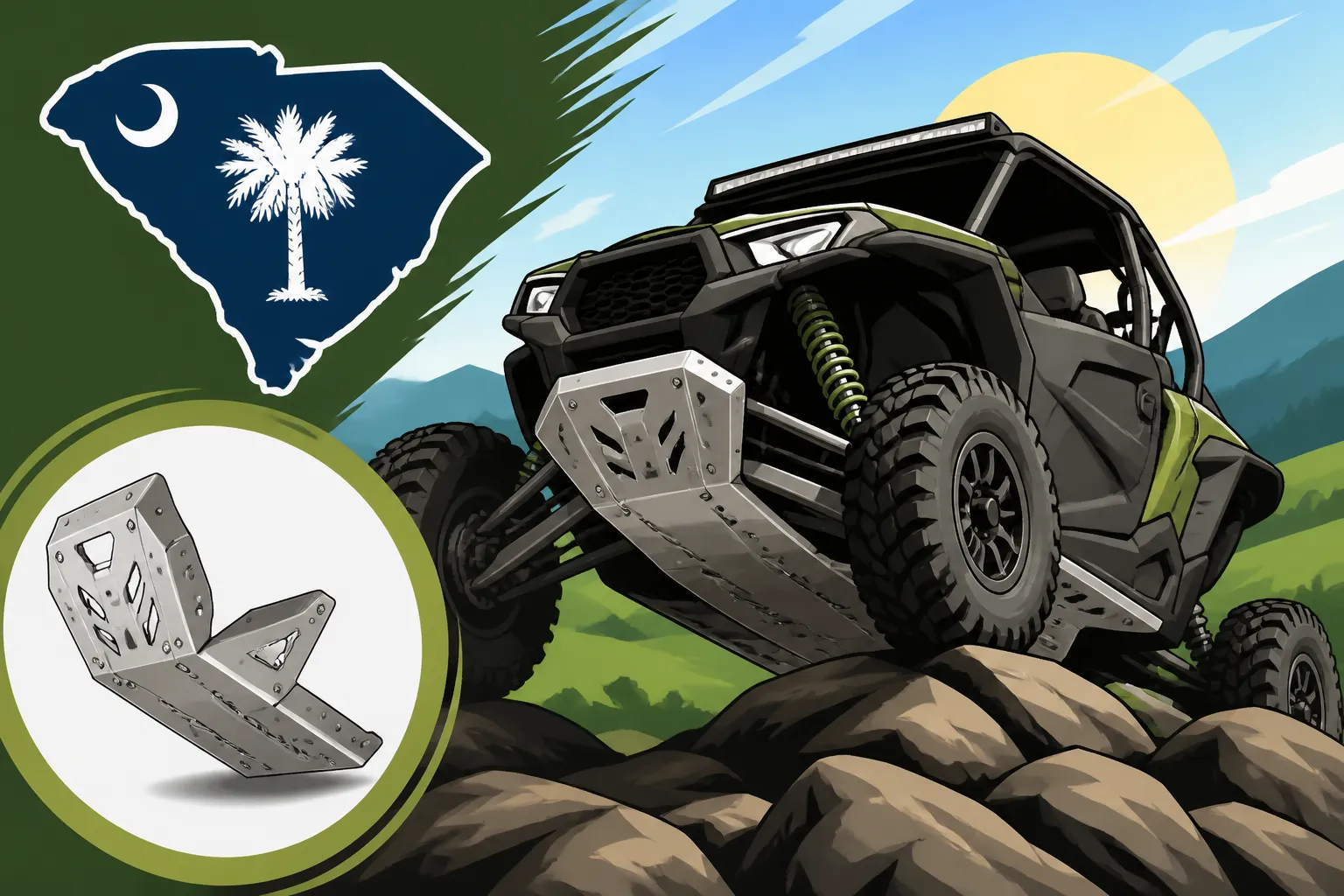
On rocky trails, the tires may roll over an obstacle while the machine’s belly, frame rails, or suspension components strike it. A slow crawl can still cause damage: the machine’s weight presses against a sharp edge, and the rock may scrape or catch an exposed part as you move forward.
Common areas worth checking include the engine and transmission cases, the underside of the frame, and the front and rear differentials on a side-by-side. Depending on the model, brake lines, wiring, and other components may also sit low enough to be exposed. Look underneath your machine rather than relying on a generic list; manufacturers place components differently, and a protective panel may cover some areas while leaving others open.
The kind of terrain matters, too. Smooth forest roads and rocky ledges pose different risks. A trail with loose stones can throw debris up toward the underside, while larger, fixed rocks can catch the machine as you cross a ridge or climb out of a rut. For an overview of places where rockier terrain may come into play, see South Carolina Trails With Rock Sections.
Where riders commonly encounter rocky terrain
Gulches ORV Park near Waterloo is one local riding destination associated with rock crawling and challenging terrain. A trail’s difficulty can vary by route and conditions, so don’t assume that every section is equally demanding—or that a machine suited to one obstacle is ready for every obstacle on the property. Check the park’s current rules and information before you travel. Gulches ORV Park in South Carolina and Gulches’ 80 Acres in South Carolina provide useful starting points for planning.
Rocky sections can also appear as part of a longer ride rather than as a dedicated rock-crawling route. A familiar trail may feel very different after erosion, heavy use, or a change in weather. That is why the right protection is less about making a machine indestructible and more about reducing the chance that an ordinary contact with a rock becomes a damaged case or punctured component.
If you’re choosing a route for a newer rider or a machine with limited clearance, compare the terrain and difficulty carefully. South Carolina Trail Difficulty Ratings can help you think through what to ask before choosing a route.
Choosing Skid Plates for an ATV or UTV
Compare materials by the way you ride
Skid plates are commonly made from materials such as plastic or UHMW polyethylene, aluminum, and steel. Each has different strengths, and the best fit depends on your machine, the terrain, and how much protection you need. A heavier or stiffer panel is not automatically better if it adds weight you don’t want or fails to protect the parts you’re concerned about.
| Material | Potential advantages | Possible trade-offs | Often worth considering for |
|---|---|---|---|
| UHMW polyethylene | Slides over obstacles and resists corrosion | Can flex, and thickness and design matter | Riders who want a smooth underside for trail use |
| Aluminum | Lightweight and rigid, with broad availability | Can dent or bend on hard impacts | Riders balancing protection and weight |
| Steel | Strong and durable against impacts | Heavier and may need attention to corrosion | Machines used on demanding terrain where added weight is acceptable |
Material alone doesn’t tell the whole story. The plate’s thickness, shape, mounting points, and coverage all affect how it performs. A thin panel with poor support may not protect as well as a carefully designed system, while a robust plate that doesn’t fit correctly can leave gaps or interfere with service access.
Before buying, verify that the plate is made for your exact year, make, and model. Two machines that look similar may have different frame layouts, drain locations, or underbody components. If you use a side-by-side, also check that the protection matches the configuration and intended use of your vehicle. South Carolina Trails That Allow Side-by-Sides can help with the separate question of where a particular machine may be allowed.
Think in terms of coverage, not just one panel
A front plate alone may leave the center of the frame or rear components exposed. A full-coverage setup may include separate sections for the front, middle, and rear, with additional guards for vulnerable areas. It’s useful to decide what you actually need to protect before shopping, especially if you ride a mix of easy routes and rocky obstacles.
Start by inspecting the machine’s underside. Note where the engine, transmission, differential, and exposed lines sit in relation to the frame. Then compare those locations with the coverage shown for the skid plate. Check whether panels overlap or leave gaps where a rock could catch an edge. Also consider openings: they can help with drainage or access, but a large opening may leave a component exposed.
For route planning, onX Offroad can help you review mapped trails and organize a ride, but a map cannot guarantee that every section will be clear, passable, or suitable for your machine. Use it alongside current local trail information, posted rules, and your own judgment. The best armor choice still comes from matching your machine’s actual exposure to the terrain you intend to ride.
Fit, Installation, and Maintenance
Check fitment and installation details before riding
A skid plate should fit securely without rubbing on moving parts or blocking essential access. Before installation, read the manufacturer’s directions for the exact machine. Compare the supplied hardware with the instructions, and check whether the plate requires existing mounting points or particular brackets. If a part doesn’t line up, don’t force it into place; forcing hardware can damage threads or create a poor fit.
During installation, pay attention to clearances around suspension components, exhaust parts, and any moving linkage. Confirm that drain plugs and routine service points remain reachable as intended. Tighten fasteners according to the product instructions, then check them again after the first ride. Vibration and repeated impacts can loosen hardware over time.
If you’re unsure about mounting points or the correct torque, have a qualified shop handle the installation or inspect your work. This is especially sensible if your machine has aftermarket accessories, a modified frame, or existing damage underneath. A plate that is installed incorrectly may shift, rattle, or trap debris even if it looked secure in the garage.
Clean and inspect the underside after rocky rides
After a ride, wash off mud and debris so you can inspect the plates and the components they cover. Clay, gravel, and packed leaves can hide cracks, bent edges, loose fasteners, or fresh scrapes. If you ride in wet or muddy conditions, pay particular attention to areas where mud can collect against the plate or around mounting points.
Use a safe lifting method if you need to inspect beneath the machine. Never rely on a jack alone to support a vehicle while you work underneath it. Once you can see the protection clearly, look for deep gouges, cracks, buckling, loose hardware, and signs that the plate has pushed against a component. A mark on a skid plate may mean it did its job, but it’s still worth checking what lies behind the mark.
Inspection is also a good time to notice how the machine is contacting the terrain. Repeated, severe hits in the same location may suggest that your route choice, speed, tire setup, or approach angle needs adjusting. Skid plates reduce risk; they don’t make it safe to drive over every obstacle. South Carolina Trail Etiquette Locals Expect is a helpful companion when you’re sharing narrow routes and technical sections with other riders.
Plan the Ride Along With the Protection
Match the machine and route
Choose a trail based on your machine’s ground clearance, width, experience level, and installed protection. If you’re riding with a group, discuss the route before departure. A rider on a compact ATV may be able to navigate a narrow line that isn’t suitable for a wider side-by-side, and a difficult obstacle can create a bottleneck if the group arrives without a plan.
Use onX Offroad as one planning tool to review available mapped routes and help keep your ride organized. Before leaving home, check the riding area’s official guidance for closures, permitted vehicle types, and access requirements. Conditions can change, so an old track or a route shown on a map should not be treated as proof that a trail is currently open or passable. South Carolina Trail Conditions Before You Haul is a useful reminder to confirm details before towing to a trailhead.
Once you arrive, follow posted signs and local instructions. If an obstacle looks beyond your machine or your group’s ability, turn around rather than gambling on the protection underneath. A skid plate can take an impact, but a hard hit can still bend a panel, damage a mounting point, or transfer force to the frame or component behind it.
Use mapping as a planning aid, not a substitute for judgment
onX Offroad can be useful for reviewing routes before a ride and keeping track of a planned outing. Save relevant map information ahead of time if you expect to ride where cellular coverage may be unreliable, and bring a backup way to navigate. Don’t assume that a phone will have a signal in a wooded or remote area.
Route lines also don’t show every rock, rut, washed-out section, or change in trail conditions. If the ground looks different from what you expected, slow down and reassess. A spotter can help a driver see tire placement and underbody clearance, but the spotter should stand where they are visible and out of the machine’s path. Agree on hand signals before tackling a challenging section.
The most dependable setup combines appropriate armor, careful driving, and realistic route planning. If you’re new to a riding area, choose a route that leaves room to learn how your machine handles the local terrain. As you gain experience, you can make more informed decisions about whether you need broader skid plate coverage, additional guards, or a different riding line. And before you head out, review South Carolina Trail Etiquette Locals Expect so your preparation includes the people and places you share the trail with.
Disclaimer
This article is for general informational purposes only and does not constitute professional advice. Laws, prices and regulations vary by location and change over time. Consult a qualified professional for guidance on your specific situation.