Locked Gates on a Private Timber Road
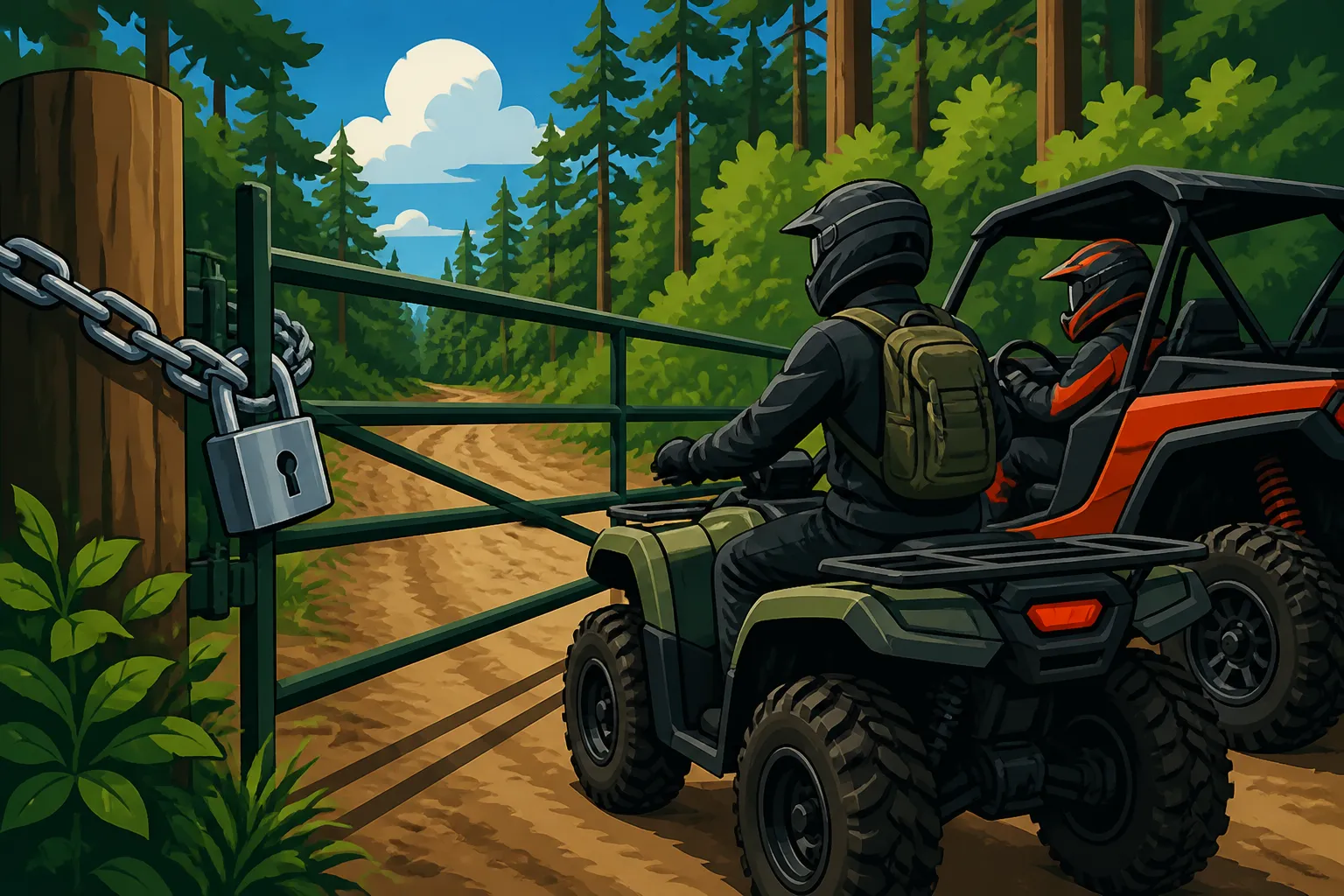
There's nothing quite as frustrating as hauling your ATV or UTV out to what you thought was a great spot, only to find a locked gate blocking your path on what looks like a perfectly good dirt or gravel road. It's a common scenario for riders in South Carolina, and it often leaves us scratching our heads about where we can legally ride. This guide will help you understand why those gates are there, what the law says about them, and how you might, just might, find a legitimate way to access these private timber roads for your riding adventures.
Understanding Private Timber Land in South Carolina
South Carolina is a beautiful state, rich with vast tracts of forested land, much of which is owned by timber companies, private estates, or individual landowners. These lands are often crisscrossed by a network of private roads used for logging, forestry management, hunting access, and other private activities. From the casual rider's perspective, these roads can look incredibly inviting, sometimes even appearing to lead to public trail systems or hidden gems.
The Purpose of Private Timber Roads
Timber roads, often unpaved and sometimes rudimentary, are essential infrastructure for landowners managing forests. They facilitate the movement of heavy equipment, logging trucks, and personnel for planting, thinning, harvesting, and fire suppression. These roads are specifically built and maintained (or not maintained, as the case may be!) for these operations, not for public recreational access. When you see a locked gate, it's a clear signal that the land beyond is not intended for general public use.
It's easy to assume that because a road isn't paved or has an older, weathered look, it must be public domain, but that's rarely the case with these private access routes. Landowners use these gates to control access, protect their property, and manage liability. For example, during harvesting operations, heavy machinery can pose significant dangers to unauthorized individuals. Furthermore, these companies often lease their lands to hunting clubs, which rely on exclusive access to manage wildlife and ensure safety for their members.
How Private Ownership Impacts Public Access
The fundamental truth about private property is that the owner dictates who can and cannot enter. This principle is strictly enforced with private timber lands in South Carolina. The presence of a gate, a chain, or even just a clearly visible "No Trespassing" sign, means that entry is forbidden without explicit permission. These gates aren't just there to keep vehicles out; they're a legal boundary.
Understanding that these are private domains helps clarify why the rules are so different from designated public trails like those in the National Forests. While you might enjoy wide-open spaces on a trail at [Carolina Adventure World] or [Gulches ORV Park], those are managed recreational areas with their own specific rules and fees. Private timber lands operate under a different set of prerogatives, primarily economic and proprietary. This distinction is crucial for any rider to grasp, as mistakenly entering private land can lead to serious legal repercussions. Remember that the landowner has the right to manage their property as they see fit, and that includes restricting entry.
The Law Behind Locked Gates and Trespassing
Encountering a locked gate isn't just an inconvenience; it's a clear legal boundary. In South Carolina, laws are in place to protect private property rights, and disregarding those gates can lead to significant penalties. It's vital for all ATV and UTV riders to understand these regulations to avoid legal trouble.
South Carolina's Trespass Laws
South Carolina has clear laws regarding trespassing on private property, which apply directly to those locked gates you encounter on timber roads. Simply put, if land is posted with "No Trespassing" signs, or access is blocked by gates, fences, or other physical barriers, you are prohibited from entering without the owner's express permission. This isn't just about riding your machine; it applies to walking, hiking, or any other form of entry.
The law considers unauthorized entry onto private land as trespassing. This means if you decide to go around a locked gate, cut a chain, or otherwise force your way onto a timber road, you are breaking the law. [South Carolina Trespass Law for Riders] is quite specific on this. The consequences can range from fines to even more severe legal actions, especially if any damage occurs to the property. Landowners and timber companies often have these areas regularly patrolled or monitored, and they are typically quite vigilant about unauthorized access due to the risks and liabilities involved.
Penalties for Illegal Entry
The penalties for trespassing in South Carolina can vary depending on the specific circumstances and whether it's a first offense or repeated violation. Typically, you could be facing fines, and in some cases, your ATV or UTV might even be impounded. [South Carolina Fines of $50 to $200] is a common range for initial violations, but these can increase for repeat offenses or if other offenses, such as property damage, are committed alongside the trespass.
Beyond the immediate legal and financial repercussions, there's the long-term impact. A trespassing charge can stay on your record, potentially affecting future opportunities. Furthermore, there's the very real risk of encountering landowners or their agents who are within their rights to protect their property. The best practice is always to respect the boundaries set by landowners. Trying to sneak onto a property, even if you think nobody will know, is a gamble that's simply not worth taking.
Distinguishing Private from Public Land
It can sometimes be confusing to tell the difference between a public access road and a private timber road, especially in rural areas where signs might be sparse or weathered. However, the presence of a locked gate, a chain across the road, or "No Trespassing" signs are usually definitive indicators of private land. Even if a road looks like a public right-of-way, if it has these markers, assume it's private. [What Posted Land Means for South Carolina Riders] is something every rider needs to understand.
Another strong indicator is the type of maintenance. Public roads, even dirt roads, are generally maintained by a county or state agency. Private timber roads, however, are maintained (or not) solely by the landowner. There might be no road signs, no culvert markers, and certainly no state-issued road names. If you're ever in doubt and there's no visible signage or barrier, it's always safer to assume the land is private until you can confirm otherwise. A good rule of thumb: when in doubt, don't go out.
How to Seek Access to Private Timber Roads
While many timber roads are strictly off-limits, it's not always an impossible dream to gain access. Sometimes, with a bit of research and a respectful approach, you might be able to secure permission for riding or other activities. The key is understanding who owns the land and how to properly ask for permission.
Identifying the Landowner
Before you can even think about asking for access, you need to know who owns the land. This can sometimes be the trickiest part, especially with vast timber holdings. Start by noting the location of the locked gate or the specific area of interest. You can then use online county tax assessor maps or visit the local county assessor's office in person. These public records will typically show parcel lines and the owner's name and mailing address. You might find that large sections are owned by major timber companies, smaller logging operations, or private individuals.
Once you have the landowner's information, do a little research on their general policies. Some large timber companies have specific departments or representatives that handle recreational access requests, while others might have a blanket "no public access" policy. Smaller landowners might be more approachable. Be prepared for a "no" answer, but a polite, well-researched inquiry is always your best first step.
Requesting Permission Properly
When you reach out to a landowner, whether it's a large corporation or a private individual, always do so in writing. This creates a clear record of your request and any permission granted. In your letter, be specific about what you want to do (e.g., ride your ATV/UTV), where you want to do it (provide maps or clear descriptions), and when (specific dates or a general timeframe). Emphasize your commitment to safety, respecting the land, and adhering to any rules they might set.
For example, you could mention that you'll pack out anything you pack in, ride responsibly, and respect all property boundaries. If you plan to be with a group, state the number of machines and riders. This level of detail shows you're serious and responsible. [Getting Written Permission From a Timber Landowner] is absolutely crucial. A verbal agreement is harder to prove if questions arise, and written permission protects both you and the landowner. Many landowners are concerned about liability, so if you offer to sign a liability waiver, it might increase your chances. Remember, be patient; it can take time for landowners to review and respond to requests.
Special Cases: Hunting Leases and Exemptions
Sometimes, private timber lands are leased to hunting clubs, which then control access during their lease period. If this is the case, you'll likely see signs indicating a hunting lease. In such situations, you would need to contact the hunting club directly to inquire about access, which is often unlikely unless you are a member or have a specific reason related to hunting. [South Carolina Hunting and Trapping Exemptions] allow hunters to use ATVs for certain activities on private land, but this is specific to their hunting activities and doesn't extend to general recreational riding.
Another scenario involves land that might have an easement for specific purposes, like utility lines or old public rights-of-way that have fallen into disuse but still exist on paper. These situations are rare and complex, requiring detailed legal research to confirm any public access rights. For the vast majority of private timber roads in South Carolina, the default is "no access" unless you have explicit, written permission from the current landowner. Never assume an old, overgrown path is open simply because it lacks a gate; if it's on private land, it's off-limits without permission.
Consequences of Disregarding Locked Gates
Ignoring a locked gate on a private timber road in South Carolina is not just rude; it's a serious matter with potential legal, financial, and personal ramifications. Understanding these consequences should be enough to deter any rider from attempting unauthorized access.
Legal Ramifications
The most immediate and direct consequence of pushing past a locked gate is facing legal charges for trespassing. As discussed, South Carolina law protects private property, and landowners are within their rights to contact law enforcement if they find unauthorized individuals on their land. A deputy or DNR officer can issue a citation, which can result in a fine. However, depending on the severity of the trespass, repeated offenses, or any additional damage, charges could escalate.
Imagine a scenario where you've ridden around a gate, and then an accident occurs on the private property. The landowner could pursue civil action against you for damages or injuries sustained by their property or personnel as a result of your unauthorized presence. Law enforcement officers have the authority to stop and question you if you're on private land without permission, and they can certainly ask to see identification and proof of ownership for your machine. [What a South Carolina Deputy Can Ask to See] includes asking for permission documentation. Without it, you could be in a heap of trouble.
Financial Penalties and Costs
Beyond the fines associated with a trespassing ticket, there are other potential financial hits. If your machine is impounded, you'll face towing and storage fees to get it back. If you caused any damage to the gate, the road, the timber, or other property while trespassing, you could be held financially responsible for repairs or replacement. This could easily run into hundreds or even thousands of dollars, far exceeding the cost of any fine.
Consider the cost of a flat tire or a broken axle on an unmaintained timber road, far from help. If you've illegally entered, you can't exactly call for assistance without admitting your trespass. Recovery services will charge you, and you'll be on the hook for those costs. It simply isn't worth the risk. Many riders invest good money in their machines, often equipping them with durable parts from brands like SuperATV, but even the toughest machine can break down, and illegal access means you're largely on your own when things go wrong.
Loss of Trust and Future Access
Every instance of illegal trespassing reflects poorly on the entire ATV and UTV riding community. When landowners repeatedly deal with unauthorized riders, they become less likely to grant permission to anyone, even those who approach them respectfully and legally. This can close off potential opportunities for future access, not just for you but for other responsible riders who might have otherwise been granted permission.
A single act of disregard can sour a landowner's perception of all off-road enthusiasts. This makes it harder for organizations and clubs to advocate for more riding areas or to establish partnerships for shared access. By respecting locked gates, you're not just avoiding legal trouble for yourself; you're also preserving the reputation of the sport and keeping open the possibility of future, legitimate access for everyone. It's about being a good ambassador for the sport, even when it means turning around and finding another place to ride.
Here's a quick comparison of approaching private land legally versus illegally:
| Aspect | Legal Approach (With Permission) | Illegal Approach (Trespassing) |
|---|---|---|
| Method | Identify landowner, submit written request, sign waivers. | Bypass gate, ignore signs, force entry. |
| Legality | Fully legal and sanctioned. | Illegal; subject to South Carolina trespass laws. |
| Consequences | Enjoy ride, build goodwill, potential for future access. | Fines, impoundment, legal charges, property damage liability, criminal record, loss of trust. |
| Safety/Support | Landowner may provide guidance on conditions, emergency contacts; less risk of confrontation. | No support; risk of confrontation, unknown hazards; difficulty getting assistance. |
| Equipment Use | Use your SuperATV winch or protective gear for fun, not recovery from illegal situations. | Risk damage to your machine or gear with no recourse. |
| Community Impact | Positive; fosters relationships, promotes responsible riding. | Negative; closes off future access for all riders, damages reputation. |
This article is for general informational purposes only and does not constitute professional advice. Laws, prices and regulations vary by location and change over time. Consult a qualified professional for guidance on your specific situation.