Why South Carolina Interstates Stay Closed to ATVs
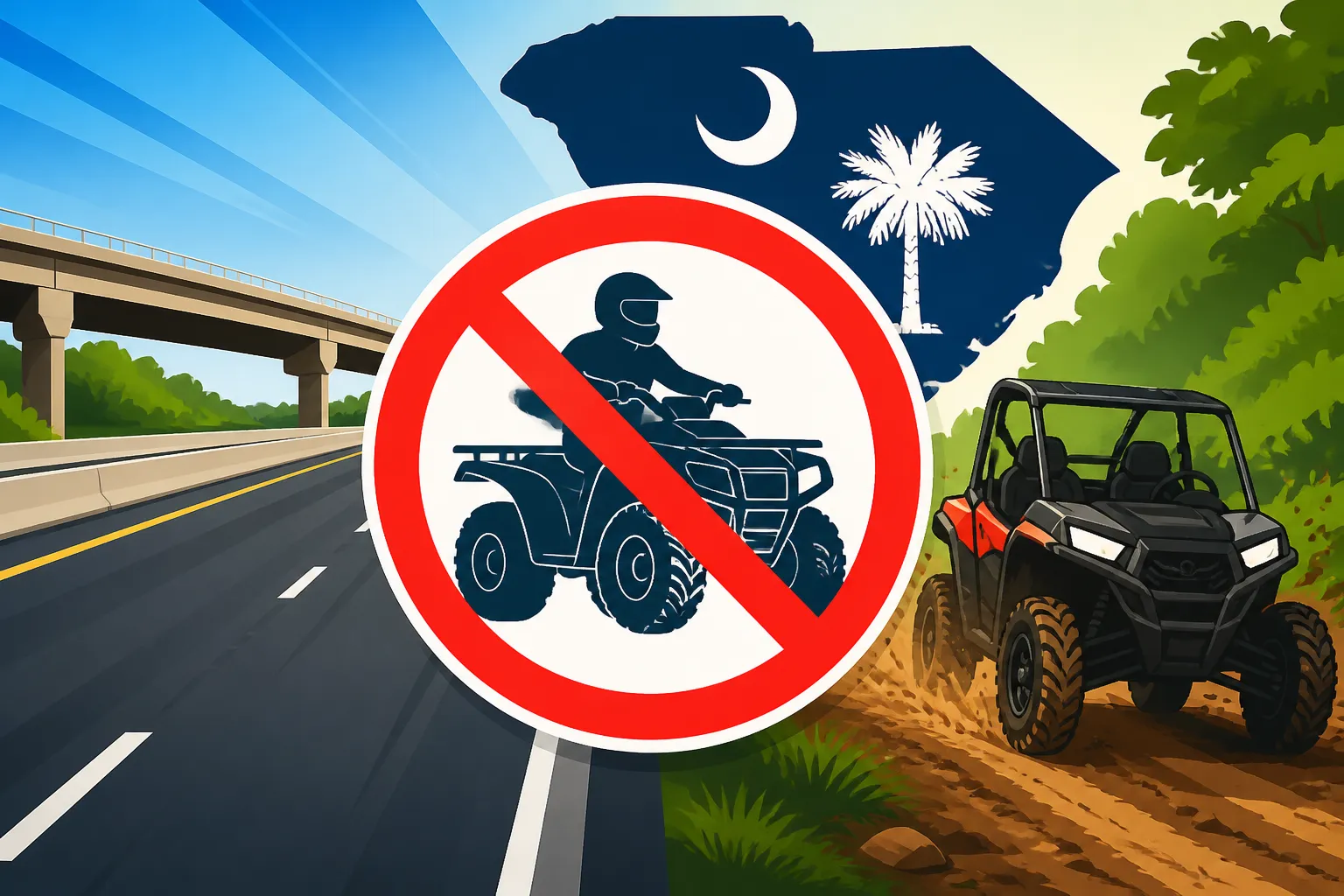
It's a common question for many of us who love hitting the trails or cruising our property on an ATV or UTV in South Carolina: "Can I just hop on the interstate to get to the next riding spot, or even just cross a bridge?" The reality is, while South Carolina has some fantastic opportunities for off-road vehicle enthusiasts, the grand, high-speed stretches of our interstates are strictly off-limits for ATVs. This guide will dive deep into why that is, exploring the legal, safety, and design reasons that keep these powerful machines off the I-26, I-77, or I-95.
The Core Rule: Why ATVs Are Not Road Legal (Generally)
Let's face it, the thrill of an ATV comes from its ability to conquer challenging terrain, tear through mud, and climb over obstacles that would stop a regular vehicle dead in its tracks. But these very characteristics, which make them so much fun off-road, are precisely why they're not built for public roads, especially not our high-speed interstates. It's not just a matter of someone deciding to ban them; it's rooted in their fundamental design and purpose.
Defining an ATV in South Carolina Law: What's on the Books?
In South Carolina, an All-Terrain Vehicle (ATV) has a very specific legal definition. It's essentially categorized as an off-road machine, designed for use off paved surfaces. Think about it: they typically have handlebars, straddle seats, and low-pressure tires. The whole point is agility and traction on unpaved ground. Our state laws, like those outlined in [South Carolina Code Title 50 Chapter 26], clearly differentiate ATVs from other vehicles you see on the highway. This designation as an "off-road vehicle" is the foundational reason why they don't belong on our major roadways. They aren't held to the same manufacturing or safety standards as cars, trucks, or motorcycles that are specifically engineered for highway speeds and conditions. This legal distinction is crucial; it’s not about personal preference, but about established regulatory frameworks.
Safety Concerns: Designed for Dirt, Not Highway Speeds
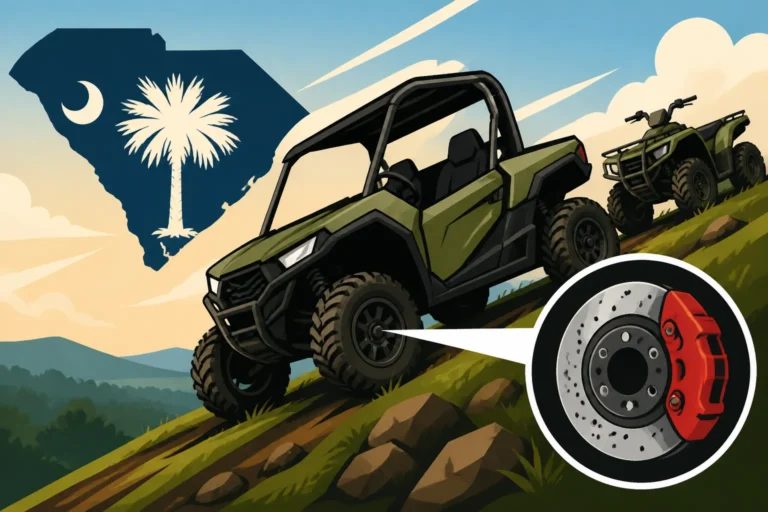
Imagine trying to navigate a narrow, rutted trail on a highway cruiser – it just wouldn't work, right? The same goes for an ATV on the interstate, but in reverse, and with far more dangerous consequences. ATVs are built with a high center of gravity, knobby tires, and suspensions designed to absorb impacts from rocks and bumps, not to provide smooth, stable tracking at 70 mph. Their steering is quick and responsive for agile maneuvering in tight off-road situations, but this can make them twitchy and unstable at high speeds on asphalt. They also lack many of the standard safety features required for road vehicles, like turn signals, brake lights that are clearly visible at highway distances, and adequate mirrors. Even with aftermarket additions, the fundamental design for stability on pavement at high speeds simply isn't there. It's a recipe for disaster, not just for the ATV rider, but for everyone else on the road.
The Interstate Exception: Why Highways Are a No-Go Zone
So, if ATVs aren't generally road legal, why are interstates specifically out of the question? It boils down to a combination of federal and state regulations, coupled with the sheer physics of operating an off-road machine in a high-speed, multi-lane environment. It's a different beast entirely from a quiet country back road.
Federal and State Regulations: Layers of Law
Interstates aren't just any roads; they're part of a national system, often governed by federal guidelines alongside state laws. These roads are designed for vehicles capable of maintaining high speeds safely and consistently. ATVs, by their very nature and design, do not meet these federal or state requirements for interstate travel. They're not titled or registered for such use in most states, including South Carolina, which historically has not even required titling for off-road ATVs, though many riders wisely choose to get one for [Why Optional Titling Still Helps]. These legal frameworks exist to ensure the safety and efficiency of these critical transportation arteries. Trying to bypass these regulations isn't just illegal; it's actively dangerous.
Speed and Stability: A Dangerous Mismatch
Picture an ATV on the shoulder of I-95, with semi-trucks thundering by at highway speeds. The difference in mass, speed, and overall stability is staggering. ATVs are simply not engineered to perform safely in such an environment. Their maximum speeds often fall well short of interstate speed limits, making them a slow-moving hazard. Even if an ATV could technically reach 70 mph, its short wheelbase, narrow track, and suspension designed for uneven terrain would make it incredibly unstable and prone to rollover or loss of control with even minor steering inputs or road imperfections. Wind buffeting from passing vehicles alone could be enough to cause a serious accident. Furthermore, ATVs don't have the protective cage or seatbelts found in cars, leaving riders highly exposed in the event of a collision. It's a fundamental mismatch between vehicle design and road environment that public safety officials simply cannot ignore.
What About Street-Legal UTVs? A Different Story
For years, side-by-sides (UTVs) were in a similar boat to ATVs when it came to road use. However, South Carolina has made some significant changes recently, creating a new category for street-legal UTVs. While this opens up some exciting possibilities, it's crucial to understand that even these machines face limitations, especially when it comes to interstates.
South Carolina's New Street UTV Law: A Game Changer
Good news for UTV enthusiasts! South Carolina has, through [South Carolina Act 164 and Street UTVs], created a framework for making UTVs street legal on certain public roads. This was a welcome development for many, allowing these versatile machines to be used for more than just off-road adventures. To qualify, a UTV needs specific equipment like headlights, tail lights, turn signals, seat belts, a horn, and a windshield – many of which can be added through quality aftermarket parts from companies like SuperATV. Once properly equipped and registered, these machines can be driven on secondary roads with speed limits of 55 mph or less, often within a certain radius of the owner's home or property. This means you can finally take your UTV on many county roads and smaller state highways. The new [South Carolina Street UTV Registration Arrives] has been a big topic of conversation for those looking to expand their riding horizons beyond private land.
Interstate Restrictions Still Apply to Street UTVs
Even with the exciting new street-legal UTV provisions, one thing remains steadfast: interstates are still off-limits. The new law specifically allows street-legal UTVs on "secondary roads," which are generally defined as those with speed limits of 55 mph or less. Interstates, by definition, are high-speed, limited-access highways, designed for vehicles traveling much faster and requiring a different level of safety and stability. The design limitations for high-speed stability and crash protection that plague ATVs on interstates also apply to UTVs. While a street-legal UTV might feel more stable than an ATV on a paved surface, it's still not engineered for sustained interstate speeds or the turbulent conditions created by other high-speed traffic. So, while you might be able to take your UTV to the grocery store on a county road, don't plan on merging onto I-85. The goal of the new law was to offer more local utility and access, not to turn UTVs into highway cruisers.
The Bigger Picture: Where You Can Ride Your ATV or UTV in SC
It might feel restrictive when you hear about all the places you can't ride, especially interstates. But let's shift focus to the amazing opportunities available for ATV and UTV riders in South Carolina. There are plenty of legal and thrilling places to enjoy your machine, whether you're looking for challenging trails or just a leisurely ride.
Designated Off-Road Trails and Private Land
South Carolina boasts some fantastic riding opportunities away from the pavement. Our state is home to several well-maintained national forest trails, like the Enoree OHV Trail and Parsons Mountain OHV Trail, where you can ride your ATV or UTV legally. There are also popular private parks such as Carolina Adventure World and Gulches ORV Park, which offer hundreds of acres of diverse terrain, from mud pits to rock crawling. These parks are specifically designed and managed for off-road vehicles, ensuring a safe and exciting experience. And, of course, private land remains a prime spot for riding, provided you have the landowner's permission. Just remember, even on private land, it's crucial to follow safety guidelines and local ordinances. For a full breakdown of where to go, check out [South Carolina ATV Trails: Where to Ride]. Investing in quality gear and parts, perhaps even from a brand like SuperATV, can truly enhance your experience on these designated off-road areas.
Golf Carts and Low-Speed Vehicles: Understanding the Differences
Sometimes, people confuse ATVs and UTVs with other limited-road vehicles like golf carts and low-speed vehicles (LSVs). While all these machines have restricted road access, their legal definitions and permitted uses are distinct.
Golf Carts:
Golf carts in South Carolina are primarily for golf courses but can be operated on certain secondary roads during daylight hours, typically within a 4-mile radius of the owner's home or golf course, and usually on roads with speed limits of 35 mph or less. They require a special permit from the DMV. For more details on these rules, see [South Carolina Golf Cart Road Rules]. They are much slower and less robust than ATVs or UTVs.
Low-Speed Vehicles (LSVs):
An LSV is typically a four-wheeled vehicle designed to go no faster than 25 mph and has safety features like headlights, brake lights, turn signals, seat belts, and a VIN. They can be driven on roads with speed limits up to 35 mph. They're built for neighborhood and local street travel, not high-speed highways. While they share some features with street-legal UTVs, an LSV is a distinct classification under federal motor vehicle safety standards, focusing purely on low-speed road use, whereas UTVs often retain their off-road prowess even when street-legal.
Neither golf carts nor LSVs are permitted on interstates, just like ATVs and street-legal UTVs. Each vehicle type has its own set of rules and limitations designed for its specific purpose and safety profile. Understanding these distinctions is key to staying safe and legal on South Carolina's diverse roadways and trails.
Comparative Look at Vehicle Types and Interstate Access in South Carolina
Here's a quick reference to help clarify which vehicles can access interstates in South Carolina.
| Vehicle Type | Primary Use | General SC Road Legality | Interstate Access | Key Safety & Design Limitation for Interstate |
|---|---|---|---|---|
| ATV | Off-road recreation | Generally not road legal | No | Unstable at high speeds, inadequate safety features |
| Street-Legal UTV | Off-road, secondary roads | Permitted on secondary roads (≤55 mph) | No | Not designed for sustained highway speeds or crash protection |
| Golf Cart | Golf courses, local travel | Limited local road access (radius rules, ≤35 mph) | No | Low speed, minimal safety features |
| Low-Speed Vehicle | Neighborhoods, local streets | Permitted on roads up to 35 mph | No | Low speed, not designed for high-speed impact protection |
| Passenger Car/Truck | Road/highway travel | Fully road legal | Yes | None (as designed for interstates) |
| Motorcycle | Road/highway travel | Fully road legal | Yes | None (as designed for interstates) |
In summary, while South Carolina has become more accommodating for UTVs on certain roads, the interstates remain a domain reserved for vehicles specifically designed, tested, and regulated for high-speed highway travel. Prioritizing safety and respecting these laws ensures everyone can enjoy their machines in the appropriate environment.
Disclaimer
This article is for general informational purposes only and does not constitute professional advice. Laws, prices and regulations vary by location and change over time. Consult a qualified professional for guidance on your specific situation.