No Beginner’s Permit Allowed
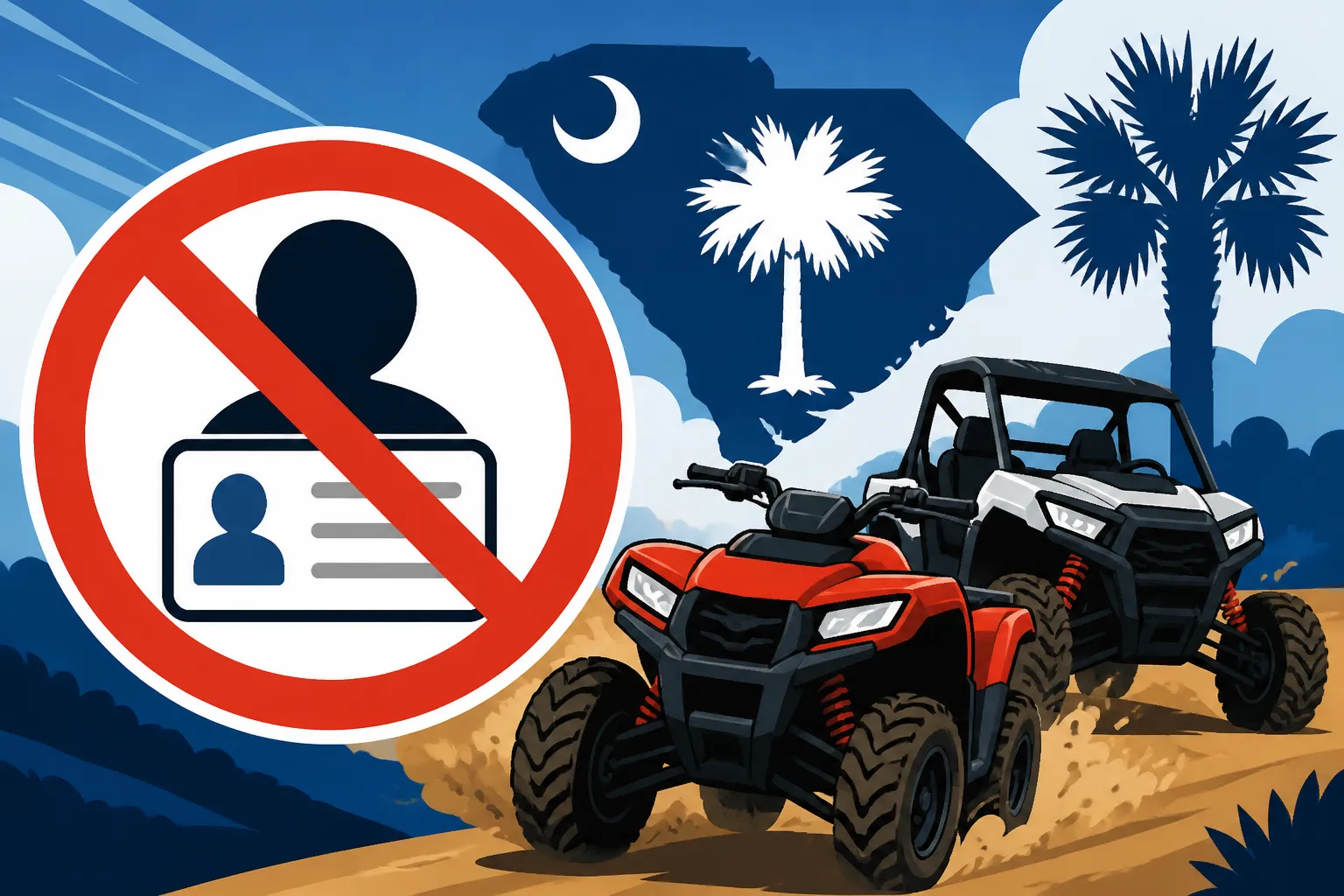
Navigating the rules for off-road vehicles in South Carolina can feel like trying to find your way through a winding dirt trail without a map. A common point of confusion for many riders, especially those new to the state or with younger family members eager to hit the road, revolves around whether a beginner's permit is sufficient to drive a street-legal UTV. The short answer, and a point of frustration for some, is that in South Carolina, a traditional beginner's permit simply won't cut it for operating a street-legal UTV on public roads. This guide aims to clear up that confusion, explaining exactly why no beginner's permit is allowed and what qualifications you actually need.
Understanding South Carolina's License Requirements for Street-Legal UTVs
When South Carolina finally opened up the roads to street-legal UTVs, it wasn't a free-for-all. The state laid down specific rules, and driver licensing was a big one. It's easy to assume that because a UTV is a unique vehicle, it might have unique permit rules, but that's not the case for getting onto the asphalt.
The Standard Driver's License Mandate
Let's get straight to it: to legally operate a street-legal UTV on public roads in South Carolina, you must possess a full, unrestricted driver's license. This means no learner's permits, no provisional licenses, and no permits that come with age or time-of-day restrictions. Think of it just like driving your family car or pickup truck. The state considers these street-legal UTVs vehicles operating on public thoroughfares, and as such, they demand the same level of driving qualification as any other road-going vehicle. This is all part of the legislative effort that brought about [South Carolina Street-Legal UTV Registration Arrives].
The rationale here is pretty straightforward: safety. While UTVs are incredibly fun and versatile, driving them on public roads, mixing with regular traffic, requires a certain level of experience and judgment. The state wants to ensure that anyone behind the wheel has demonstrated their ability to handle a vehicle safely, understand traffic laws, and react appropriately to road conditions and other drivers. This isn't just about protecting the UTV driver, but everyone else on the road too. A full license signifies that you've passed the necessary tests and completed any required supervised driving periods.
Why No Beginner's Permit for UTVs?
So, why the strict stance on beginner's permits for street-legal UTVs, especially when younger drivers can get permits for cars? It boils down to a few key factors that differentiate UTVs from standard passenger vehicles. For one, while many UTVs are equipped with features like seatbelts and roll cages, their handling characteristics, braking distances, and visibility can be different from a typical car. They often have a higher center of gravity, narrower track widths, and can feel much more responsive or, conversely, less refined on pavement than a vehicle designed solely for road use.
The state isn't just trying to be difficult; they're prioritizing public safety. A beginner's permit is designed to allow supervised practice in a controlled environment, gradually building skills in a vehicle type that is extremely common and whose road manners are well-understood. Street-legal UTVs, even with their modifications for road use, still retain many characteristics of off-road machines. Expecting a new, permit-level driver to safely navigate these unique vehicles in traffic, especially without the direct supervision often required by a beginner's permit, is seen as too high a risk. The goal is to ensure that when you're driving a street-legal UTV on a paved road, you're already a competent and experienced driver. [South Carolina Act 164 and Street UTVs] laid the groundwork for these rules.
Age Restrictions and Supervision for UTV Operation
Beyond the type of license, age plays a significant role in who can legally drive a street-legal UTV on South Carolina's roads. It's a different ballgame than what many are used to with off-road ATVs, and it’s important to understand the distinction to avoid running afoul of the law.
The Minimum Age for Street-Legal UTV Driving
For street-legal UTVs in South Carolina, the driver must be at least 17 years old. This age requirement is tied directly to the need for a full, unrestricted driver's license, as mentioned above. So, even if a 16-year-old has a provisional license allowing them to drive a car independently, that license won't grant them permission to operate a street-legal UTV on public roads. This specific requirement is spelled out in [South Carolina Street UTV Age of 17] and [South Carolina Street UTV License Requirements].
This age floor further underscores the state's cautious approach to integrating UTVs into general road traffic. It's not just about having a license; it's about having accumulated enough driving experience and maturity to handle the responsibilities that come with operating a unique vehicle like a street-legal UTV. While many younger riders are perfectly capable and responsible with ATVs off-road, the rules for public roads are designed for a broader context of traffic safety and legal precedent.
Supervising Young Riders on ATVs (Off-Road Context)
Now, here's where it gets a little nuanced and often causes confusion. While a full license and age 17 are strict requirements for street-legal UTVs on public roads, the rules for riding off-road ATVs are different, especially for younger riders. For off-road ATVs, South Carolina has specific guidelines regarding age and supervision, largely governed by Chandler's Law. For example, riders aged 6 to 15 must be supervised by an adult at least 18 years old when riding off-road, and they must have completed an ATV safety course. This is where [South Carolina ATV Age Requirements], [South Carolina Adult Accompaniment at 16 and Under], and [South Carolina Safety Certificates at 15 and Under] come into play.
This distinction is crucial: the state differentiates between machines operated purely in an off-road environment and those that are licensed and driven on public roads. So, while your 15-year-old might be a seasoned pro on their quad in the woods, that experience (and any associated safety certificates) does not translate to eligibility for driving a street-legal UTV on a public road, even with an adult in the passenger seat. It’s important to remember that off-road rules and street-legal rules live in two very different legal frameworks.
Here’s a quick overview to help clarify the differences:
| Feature | Street-Legal UTV (Public Roads) | Off-Road ATV (Off-Road Only) |
|---|---|---|
| Driver's License | Full, unrestricted driver's license | Not required |
| Minimum Driver Age | 17 years old | Varies (e.g., 6-15 supervised) |
| Beginner's Permit | Not allowed | Not applicable (no road driving) |
| Safety Course | Not required for adults | Required for riders 6-15 years old |
| Registration/Plates | Required (street-legal plate) | [South Carolina Does Not Register Off-Road ATVs] |
| Insurance | Required (liability minimums) | Often recommended, not legally required (off-road) |
What Paperwork and Qualifications You Do Need for Street-Legal UTVs
So, if a beginner's permit isn't the answer, what is? Getting your street-legal UTV ready for the road involves more than just a driver's license. There's a specific set of documents and vehicle requirements you'll need to satisfy to comply with South Carolina law.
Beyond the License: Essential Documents
Once you have your full, unrestricted driver's license in hand, you're on the right track. But for the UTV itself, you'll need a few critical pieces of paperwork and equipment before you can legally hit the road. First and foremost, you need to register your UTV as street-legal with the South Carolina Department of Motor Vehicles (DMV). This process will result in you receiving a license plate, often referred to as [The Rear Plate a Street-Legal UTV Must Carry]. Without this plate, your UTV is not considered road-legal, regardless of how many street-legal modifications it has.
Another non-negotiable requirement is insurance. Just like any other vehicle on public roads, your street-legal UTV must carry at least the state's minimum liability insurance coverage. You'll need to provide [South Carolina Insurance Proof at Registration], and it's wise to always carry proof of insurance with you when driving. Beyond the plate and insurance, you should also have your vehicle's title or proof of ownership, as well as your driver's license, readily available. These are all part of the standard [South Carolina Paperwork for a Street UTV] that a law enforcement officer might ask to see during a stop. Keeping these documents organized and accessible can save you a lot of hassle.
Machine Specifications for Street Legality
It's not just about the driver's qualifications; the UTV itself has to meet certain standards to be considered "street-legal" in South Carolina. Simply calling it street-legal doesn't make it so. The state has specific requirements for components like headlights, taillights, brake lights, turn signals, mirrors, a horn, and a windshield. It must also have seat belts, and generally, a maximum width and weight limit. These specifications are crucial and are detailed in [South Carolina Street UTV Requirements Explained].
Many UTVs don't come from the factory equipped with all these features, which is why aftermarket conversion kits are so popular. Companies like SuperATV specialize in providing these kits and individual components, from full glass windshields to turn signal kits, that help owners bring their UTVs up to snuff for street legality. It's important to do your homework and ensure that every single item on the state's checklist is addressed. Getting pulled over for missing a turn signal or having a UTV that's too wide for state road laws can lead to citations and take the fun right out of your ride. Additionally, these machines typically have [South Carolina Street UTV Road Speed Limits] that you must adhere to.
This article is for general informational purposes only and does not constitute professional advice. Laws, prices and regulations vary by location and change over time. Consult a qualified professional for guidance on your specific situation.