South Carolina Code Title 50 Chapter 26
Trying to make sense of South Carolina's ATV and UTV laws can feel like navigating a swamp after a heavy rain – confusing, mucky, and with hidden obstacles everywhere. You want to enjoy your machine responsibly, but the legal jargon often leaves you scratching your head, wondering if you're accidentally breaking a rule. This comprehensive guide will pull back the curtain on South Carolina Code Title 50 Chapter 26, commonly known as Chandler's Law, and clarify the regulations surrounding off-road and street-legal machines, helping you ride with confidence and stay on the right side of the law.
Unpacking South Carolina Code Title 50 Chapter 26: The Core of ATV and UTV Regulation
For anyone with an off-road machine in South Carolina, understanding Code Title 50 Chapter 26 isn't just a suggestion; it's absolutely crucial. This isn't some dusty, rarely enforced old law; it's the legislative bedrock that governs how, where, and by whom ATVs and, more recently, UTVs can be operated across the Palmetto State. Many riders get caught off guard because they assume off-road means "no rules," but that couldn't be further from the truth. This chapter was put in place for very important safety and environmental reasons, and knowing its ins and outs can save you a lot of headaches – and fines.
The Genesis of Chandler's Law and Its Impact
South Carolina Code Title 50 Chapter 26 is widely recognized as "Chandler's Law," named after a young boy, Chandler Rhoden, who tragically died in an ATV accident in 2005. His story brought much-needed attention to the dangers of unregulated ATV use, especially among youth. The law, which became effective in July 2011, wasn't created to punish riders but to establish clear guidelines for safety, particularly for minors. Before Chandler's Law, the state's ATV regulations were a patchwork, leaving many loopholes and much ambiguity. This legislation was a turning point, creating a uniform standard that all riders, parents, and landowners needed to heed. It fundamentally changed how ATVs are viewed and regulated, shifting from a mostly informal activity to one with specific legal requirements.
The impact of Chandler's Law cannot be overstated. It introduced age restrictions, mandatory safety courses, and helmet requirements that were previously absent or poorly enforced. For years, the lack of clear rules meant parents weren't always aware of the risks or the best practices for safe riding. Suddenly, there were clear expectations, which, while sometimes frustrating for seasoned riders, ultimately aimed to prevent future tragedies. This law underscored the state's commitment to rider safety and provided a framework for accountability, making everyone think twice about letting a young child hop on an adult-sized quad or ride without proper gear. It's a prime example of how real-world events can shape legislation, and why understanding its origins helps grasp its current form.
Defining "All-Terrain Vehicle" in South Carolina
One of the first things Chapter 26 does is provide a very specific definition of an "all-terrain vehicle" or ATV. This might seem like a minor detail, but it's critical because the rules within the chapter primarily apply to machines that fit this definition. In South Carolina, an ATV is generally defined as a motorized vehicle, 50 inches or less in width, having three or more low-pressure tires, a seat designed to be straddled by the operator, and handlebars for steering. Think of your traditional quad or three-wheeler; these are the machines Chandler's Law was initially crafted to regulate. This precise definition helps differentiate ATVs from other types of off-road vehicles like dirt bikes, golf carts, or the increasingly popular side-by-sides (UTVs), which have their own, sometimes overlapping, but often distinct, set of rules.
This definition is important because if your machine doesn't meet it, some aspects of Chapter 26 might not apply to you, or other laws might kick in. For example, a dirt bike, while an off-road vehicle, is not an ATV under this chapter, and thus its specific operating rules may differ. Similarly, golf carts have their own separate set of regulations under a different part of the code, primarily governing their limited street use. Knowing exactly how your vehicle is classified by the state is the first step in understanding which rules apply to your machine, so you aren't inadvertently applying ATV rules to a UTV or vice-versa. Always check your machine's dimensions and features against the statutory definition to be sure.
The Broader Scope of Chapter 26 Beyond ATVs
While "Chandler's Law" often makes people think only about ATVs, South Carolina Code Title 50 Chapter 26 actually has a broader reach that impacts various aspects of off-road and recreational vehicle use. It doesn't just stop at defining ATVs; it sets the stage for where these machines can legally go, the equipment they must have, and the behavioral expectations of their operators. This chapter also serves as the legislative home for penalties for non-compliance, outlining the fines and consequences for breaking the rules.
More recently, Chapter 26 has also become the foundation upon which new laws regarding the street-legal operation of UTVs have been built. Although UTVs technically fall outside the traditional ATV definition (being wider and having steering wheels, for example), the state's approach to integrating them into the legal framework often references and expands upon the existing structure of Chapter 26. This means that while UTVs have their own specific set of requirements for street legality, the underlying principles of safety, responsible operation, and adherence to state code are consistent. Understanding this chapter is therefore not just about quads; it's about grasping the overarching legal philosophy that governs recreational vehicle use on and off the trails in South Carolina, from the back forty to those exciting [South Carolina Street-Legal UTV Registration Arrives] initiatives.
Navigating Age, Safety, and Passenger Rules for ATVs
One of the most significant and often misunderstood aspects of South Carolina Code Title 50 Chapter 26 revolves around the rules for who can ride an ATV, how they should be protected, and who can ride along. These aren't just suggestions; they are legally binding mandates designed to protect riders, especially the youngest and most vulnerable. Many seasoned riders might recall a time when these rules were much more relaxed, but the post-Chandler's Law landscape is decidedly different. Ignoring these provisions can lead to serious injury, heavy fines, and even legal liability, so it's paramount to know them cold.
Strict Age Restrictions and Supervision Mandates
South Carolina has very specific and strict age requirements for ATV operators, directly addressed by Chandler's Law. It's a common misconception that if a child can reach the pedals, they can ride. The law says otherwise. No one under the age of six is permitted to operate an ATV under any circumstances. This isn't a recommendation; it's a hard and fast rule designed to protect very young children who lack the physical strength, coordination, and judgment necessary to safely control these powerful machines. For riders between the ages of six and fifteen, there's a crucial requirement: they must operate the ATV under the direct supervision of an adult on private land. This adult supervision means the adult must be physically present and able to intervene if needed.
Furthermore, riders under the age of sixteen must possess a valid ATV safety certificate to operate an ATV. This isn't just a piece of paper; it signifies that they've completed an approved safety course, learning about safe operating procedures, maintenance, and hazard awareness. This is a critical step in ensuring young riders have the foundational knowledge to handle an ATV responsibly. [South Carolina Safety Certificate Requirements] are a cornerstone of this law. For any rider under sixteen, an adult at least eighteen years old must accompany them when riding off-road. These rules are non-negotiable and are frequently checked by law enforcement, especially after an incident. Parents, it's on us to ensure our kids meet these requirements – for their safety and our peace of mind.
The Critical Role of Helmets and Eye Protection
Beyond age, Chapter 26 places a strong emphasis on protective gear. It states unequivocally that anyone under the age of sixteen operating an ATV must wear a safety helmet that complies with federal standards. This is not optional; it's a lifesaver. Head injuries are among the most severe and debilitating in ATV accidents, and a proper helmet dramatically reduces that risk. Think of it this way: just as you wouldn't let a child ride a bicycle on a busy street without a helmet, an ATV, with its higher speeds and off-road terrain, demands even greater protection. Many brands, including those offering aftermarket accessories like SuperATV, provide a range of helmets designed for comfort and safety, ensuring compliance with these essential rules.
In addition to helmets, eye protection is also mandated for riders under sixteen. This means goggles or a face shield that protects the eyes from dust, debris, branches, and impacts. Losing vision even for a second while riding can lead to a serious crash, so clear and protected vision is paramount. Even for adult riders, while not explicitly mandated by this specific part of the law, wearing a helmet and eye protection is just plain common sense. Accidents can happen to anyone, regardless of age or experience, and adequate protective gear is your first line of defense against severe injury. Always prioritize safety over comfort or perceived inconvenience when gearing up for a ride. [South Carolina ATV Helmet Law] is clear for a reason.
Understanding Passenger Limitations
Another area where Chandler's Law is very clear is regarding passengers on ATVs. Most ATVs are designed for a single operator. Riding with a passenger on a single-rider ATV drastically changes the machine's balance and handling characteristics, making it much more difficult to control and significantly increasing the risk of rollover or collision. Chapter 26 specifically prohibits carrying a passenger on an ATV unless the ATV is specifically designed by the manufacturer to carry more than one person and is equipped with a designated passenger seat and handholds. This is a critical distinction, as many riders mistakenly believe that if there's enough room, a passenger is fine.
Even if an ATV is designed for two people, the law still imposes restrictions, especially concerning minors. A minor cannot carry a passenger unless they are licensed and meet all other age requirements. This rule aims to prevent situations where an inexperienced young rider is responsible for another person's safety on a challenging machine. If you're riding a side-by-side (UTV), which often has multiple seats, these rules are different and are typically governed by the specific street-legal UTV regulations when on public roads. However, for traditional ATVs, the general rule of thumb is: one rider, unless explicitly designed for two. Adhering to [South Carolina Rules for a Child Passenger] helps ensure that everyone stays safe on the trails.
| Age of Rider | Helmet Required | Eye Protection | Safety Course | Adult Supervision (Private Land) | Max Passengers (Single-Rider ATV) |
|---|---|---|---|---|---|
| Under 6 | Prohibited to Operate | N/A | |||
| 6-15 | Yes (Federal Standard) | Yes | Yes | Yes (Physically Present) | 0 |
| 16+ | No (Recommended) | No (Recommended) | No | No | 0 (Unless designed for 2) |
Where to Ride: Public Roads, Private Land, and Prohibited Areas
Knowing the legal framework for who can ride is only half the battle; understanding where you can operate your ATV is equally vital. South Carolina's laws are pretty definitive about this, largely restricting ATVs from public roads and emphasizing private land use. Many riders get into trouble by making assumptions about public access or by not understanding the nuances of private property permissions. This section will clarify these boundaries, helping you avoid accidental trespass or illegal road use.
The General Ban on Public Road Use and Key Exemptions
One of the most foundational tenets of South Carolina Code Title 50 Chapter 26 is the general prohibition against operating an ATV on public roads, streets, or highways. This includes paved roads, dirt roads maintained by the state or county, and even shoulders. The reasoning is clear: ATVs are designed for off-road terrain, not for interacting with conventional vehicle traffic. They lack the standard safety features (like turn signals, mirrors, and specific lighting) required for road vehicles, and their handling characteristics are not suited for asphalt. [Can You Ride an ATV on the Road in South Carolina?] The answer, generally, is no.
However, as with many laws, there are some very specific and limited exemptions. ATVs may be operated on a public road for certain agricultural purposes, like when a farmer needs to cross a road to access another part of their property, or for utility work. These exemptions are typically for short distances and specific tasks, not for recreational cruising. There's also an allowance for crossing a public road at approximately a 90-degree angle, but only if the crossing is made safely, does not interfere with traffic, and is at a point where the operation is otherwise lawful. This isn't an invitation to weave through traffic; it's strictly for transitioning between legal riding areas. Always remember, if you're pulling your machine to a trail, it needs to be on a trailer, not driven down the highway. [South Carolina Trailer Plates for Hauling Your Quad] are definitely worth looking into.
Riding on Private Property: Permissions and Responsibilities
Private property is generally where ATVs are intended to be ridden in South Carolina, and Chandler's Law explicitly supports this. On private land, the owner sets the rules. If you own the land, you can ride your ATV there, subject to the age, helmet, and passenger restrictions of Chapter 26, especially for minors. If you are riding on someone else's private property, obtaining express permission from the landowner is absolutely crucial. Verbal permission might suffice in some casual situations, but written permission is always best, especially for recurring rides or if there's any doubt. This protects both you and the landowner from potential issues like trespass charges.
Even on private property, there's a responsibility to ride safely and respect the land. This includes not damaging property, avoiding excessive noise that disturbs neighbors, and adhering to any specific rules the landowner might have. For those who ride on large tracts of timber land or hunting leases, permission often comes with conditions, such as specific operating hours or restricted areas during hunting season. [South Carolina Hunting and Trapping Exemptions] allow use of ATVs, but with limitations. Responsible riding on private land helps maintain good relationships with landowners and ensures continued access to riding areas. Remember, your actions reflect on the entire riding community, so always leave the land better than you found it.
Environmental Sensitivities: Waterways and Protected Lands
South Carolina, with its beautiful coastlines, rivers, and forests, has specific rules to protect its natural resources, and these often impact ATV operation. Chapter 26, along with other environmental regulations, generally prohibits operating ATVs in navigable waterways, including rivers, streams, and coastal marshes. This is primarily to prevent environmental damage from erosion, pollution (oil, gas), and disturbance to aquatic habitats. While there might be designated crossings or fords where an ATV can legally traverse a stream, riding directly in a streambed or along a sensitive bank is almost always prohibited and can lead to significant fines.
Furthermore, state and federal protected lands, such as wildlife management areas (WMAs), state parks, and national forests, have their own distinct rules regarding ATV access. While some national forests like Sumter and Francis Marion offer designated OHV trails ([Enoree OHV Trail in South Carolina], [Parsons Mountain OHV Trail in South Carolina]), many WMAs and state parks strictly prohibit ATV use altogether. It's imperative to research and understand the specific regulations of any public land you plan to visit before you haul your machine there. A simple call to the local ranger station or checking their official website can save you a wasted trip and potential legal trouble. Responsible riders respect these environmental boundaries to preserve the natural beauty and ecological health of South Carolina for everyone.
The New Era: Street-Legal UTVs Under South Carolina Law
For years, the idea of legally driving a side-by-side on South Carolina's public roads was a dream for many riders. UTVs offer versatility, comfort, and the ability to carry passengers and gear, making them incredibly useful for everything from farm work to exploring trails. However, the existing laws largely restricted them to private land or designated off-road parks. That all changed with a significant legislative update, ushering in a new era for UTV enthusiasts. This shift, while exciting, comes with its own set of strict requirements that must be understood and followed.
Act 164: Opening Secondary Roads to UTVs
A landmark change arrived with South Carolina's Act 164, which was signed into law and became effective in November 2026. This act specifically creates a new vehicle class for street-legal utility terrain vehicles (UTVs), finally allowing them to be registered and operated on many of the state's secondary roads. This was a huge win for UTV owners who longed for the ability to drive their machines from home to the gas station, to a local fishing spot, or between nearby trailheads without having to load them onto a trailer. The intent behind Act 164 was to provide a legal framework for these popular machines, acknowledging their growing presence and capabilities, while still ensuring public safety.
The law permits UTVs to operate on roads with a posted speed limit of 55 miles per hour or less, provided they adhere to specific equipment, registration, and insurance requirements. This means interstates and major four-lane highways remain off-limits, focusing UTV use on smaller, local routes where speeds are lower and traffic volumes are typically lighter. It's a pragmatic approach that recognizes the limitations of UTVs compared to traditional cars, while granting them valuable road access. This legislative shift has opened up new possibilities for UTV owners, fostering a greater sense of community and utility for their machines across the state. The [South Carolina Act 164 and Street UTVs] has truly transformed the UTV landscape.
Essential Equipment Upgrades for Street Legality
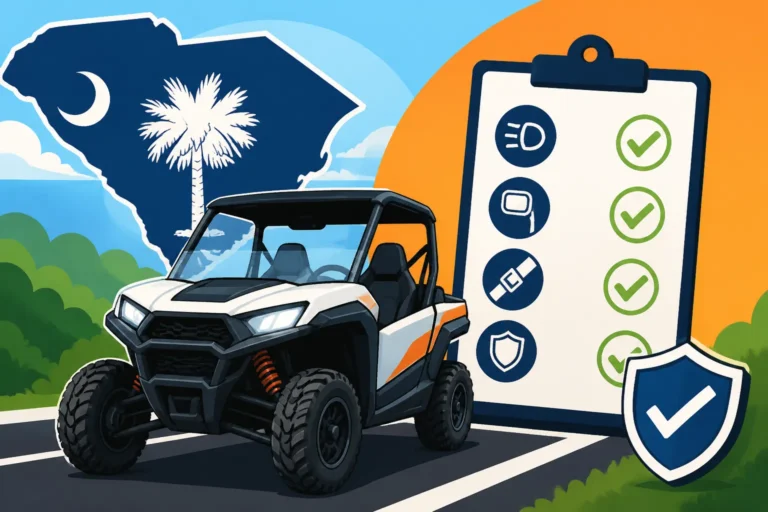
Becoming street-legal isn't just about getting a plate; it requires specific modifications and safety equipment to bring a UTV up to road-worthy standards. Just like a car, a street-legal UTV must be equipped with headlights, taillights, brake lights, and turn signals – not just for visibility, but to communicate intentions to other drivers. A horn is also mandatory, as are rear-view mirrors (at least one, though two are highly recommended for better situational awareness). Seatbelts are required for all occupants, and they must be worn whenever the vehicle is in motion.
Beyond the basics, a street-legal UTV needs a windshield, an operating speedometer, and tires that are approved for road use. Many aftermarket companies, like SuperATV, offer complete kits and individual components to help UTV owners meet these requirements, ensuring their machines are not only compliant but also safe for road travel. The goal is to make these UTVs as visible and predictable as possible to other motorists. These equipment upgrades are critical for passing inspection and, more importantly, for mitigating risks when sharing the road with other vehicles. It’s not just about ticking boxes; it’s about making your machine genuinely safe for public thoroughfares. [South Carolina Street UTV Equipment Requirements Explained] are rigorous for a reason.
Licensing, Registration, and Insurance for Street UTVs
Once a UTV is properly equipped, the next steps involve the administrative hurdles of licensing, registration, and insurance – requirements that parallel those for conventional automobiles. To operate a street-legal UTV, the driver must possess a valid South Carolina driver's license; a beginner's permit is not sufficient. This ensures that operators have demonstrated basic driving competency and knowledge of road rules. The age requirement for driving a street-legal UTV is 17, aligning with other standard vehicle operations. [South Carolina Street UTV Age of 17] is a key point to remember.
Registration is a mandatory step, involving a trip to the South Carolina DMV. This process requires submitting an application, proof of ownership (like a manufacturer's certificate of origin for new machines or an assigned title for used ones), and paying the necessary fees. Upon successful registration, the UTV will be issued a license plate that must be affixed to the rear of the vehicle, just like a car. Critically, proof of liability insurance is also mandatory. Your UTV must be covered by a policy that meets South Carolina's minimum liability requirements, ensuring that in the event of an accident, there is financial protection for damages or injuries caused. Without proper licensing, registration, and insurance, even a fully equipped UTV cannot legally be driven on public roads. [South Carolina Street UTV Insurance Rules] are not to be overlooked.
Consequences of Non-Compliance: Fines, Penalties, and Enforcement
Navigating the complexities of South Carolina Code Title 50 Chapter 26 isn't just an academic exercise; there are real-world consequences for failing to adhere to its provisions. Law enforcement agencies across the state, from local police to county sheriffs and DNR officers, are tasked with enforcing these regulations. Many riders learn about these rules the hard way – through a citation or, worse, after an accident. Understanding the potential penalties can be a powerful motivator to ensure you and your riding companions are always compliant.
Common Violations and Their Financial Repercussions
Violations of South Carolina Code Title 50 Chapter 26 can range from relatively minor infractions to serious offenses, each carrying its own set of penalties. Some of the most common violations include underage operation, failure to wear a helmet or eye protection (especially for riders under 16), operating on prohibited public roads, and carrying an unauthorized passenger on a single-rider ATV. Each of these can result in a fine, and those fines can add up quickly. While specific amounts can vary, many ATV-related violations carry fines in the range of $50 to $200, plus court costs. [South Carolina Fines of $50 to $200] is a realistic expectation.
Beyond the initial fine, repeated offenses or more egregious violations can lead to more severe consequences. For example, allowing an underage or unqualified rider to operate an ATV can result in charges against the adult supervisor or landowner. In some cases, especially involving reckless operation or significant property damage, machines may even be impounded. It's not just about the money; receiving a citation means dealing with court appearances, potential increases in insurance rates, and a mark on your record. The best way to avoid these financial and legal headaches is to simply know and follow the rules every time you ride.
What to Expect During a Stop or Inspection
If you're stopped by law enforcement while operating an ATV or UTV, it's natural to feel a bit nervous, but knowing what to expect can help you navigate the situation smoothly. First and foremost, always comply with the officer's instructions. Pull over safely, turn off your engine, and keep your hands visible. Officers will typically ask for your identification and, if applicable, your ATV safety certificate. They may also inquire about your destination, the ownership of the machine, and whether you have permission to be on the land you're riding. For street-legal UTVs, expect to provide proof of insurance, registration, and your driver's license.
Officers are checking for compliance with all aspects of Chapter 26, including age, helmet use, passenger rules, and where you're riding. They might also visually inspect your machine for required equipment if you're on a public road with a UTV, or for safety features like spark arresters if you're in a national forest. The key is to remain polite, cooperative, and answer questions truthfully. If you believe a mistake has been made, you'll have an opportunity to address it in court, but arguing with an officer at the roadside is rarely productive. Being prepared with your paperwork and knowing the rules can make a traffic stop a quick and straightforward interaction.
Proactive Steps for Safe and Legal Riding
Staying compliant with South Carolina Code Title 50 Chapter 26 doesn't have to be a guessing game. The best approach is always proactive. Start by educating yourself and your family on the law, especially the sections pertaining to age, helmets, and passengers. If you have young riders, ensure they complete an approved [South Carolina Safety Course Cost] and carry their certificate. Always wear appropriate safety gear, even if you're an adult and it's not strictly mandated for you. Consider upgrading your machine with quality accessories from providers like SuperATV that enhance safety, such as improved lighting or sturdy roll cages, especially if you plan to hit challenging trails.
Before you head out, plan your route and know the regulations for the specific area you'll be riding in. If it's private land, confirm you have explicit permission. If it's a public trail, check its specific rules and any temporary closures. For street-legal UTV owners, perform a quick pre-ride check to ensure all your lights, signals, and mirrors are working correctly, and always carry your license, registration, and insurance proof. By taking these proactive steps, you not only minimize your risk of fines and accidents but also contribute to a safer, more responsible riding community in South Carolina. Ignorance of the law is never an excuse, but being well-informed ensures your adventures are both thrilling and within legal bounds.
Disclaimer
This article is for general informational purposes only and does not constitute professional advice. Laws, prices and regulations vary by location and change over time. Consult a qualified professional for guidance on your specific situation.