South Carolina Golf Cart Road Rules
Navigating the ins and outs of golf cart rules in South Carolina can feel like trying to hit a golf ball blindfolded – a lot of confusion, a few unexpected hazards, and no clear path. Many folks assume a golf cart is just a golf cart, and you can tool around anywhere near a course or beach. But the truth is, the Palmetto State has very specific regulations governing where, when, and how you can operate these convenient little machines on public roads, and misunderstanding them can lead to some hefty fines. This guide is here to clear up all that confusion, breaking down South Carolina's golf cart road rules so you can ride with confidence and peace of mind.
Understanding South Carolina's Golf Cart Definition
Before we even think about hitting the pavement, it's crucial to understand what the state actually considers a "golf cart." It might seem obvious, but there are subtle differences in the eyes of the law that can drastically change how and where you're allowed to operate your machine. Getting this distinction right is the very first step to staying compliant and avoiding trouble.
What Qualifies as a Golf Cart?
In South Carolina, a golf cart isn't just any small, open-air vehicle. The law is quite specific. Generally, it's defined as a motor vehicle that has at least three wheels, is designed to transport people and equipment for golf and other short-distance travel, and is not capable of exceeding 20 miles per hour. That "not capable of exceeding 20 mph" part is critical. If your cart can go faster than that straight off the factory floor, or if you've modified it to pick up more speed, it starts moving into a different legal category, which we'll get into in a moment.
Think about the typical golf course machine: usually two or four seats, a small cargo area for bags, and a relatively low top speed. It's meant for cruising slowly around a course, a campground, or a very small community. These are the machines that fall squarely under South Carolina's golf cart regulations. They're designed for leisure and convenience, not for keeping up with traffic. Any significant departure from these design specs means you might not actually be driving a golf cart in the legal sense.
It’s also important to remember that manufacturers design these vehicles with specific uses in mind. While many modern golf carts have more power and can be equipped with impressive aftermarket accessories – a sturdy windshield, comfortable seating, even lift kits from a place like SuperATV – the core legal definition in South Carolina still hinges on that speed limit and original intent. If your modifications push it beyond what the law considers a golf cart, you could be opening yourself up to unforeseen issues.
Distinguishing Carts from Low-Speed Vehicles (LSVs)
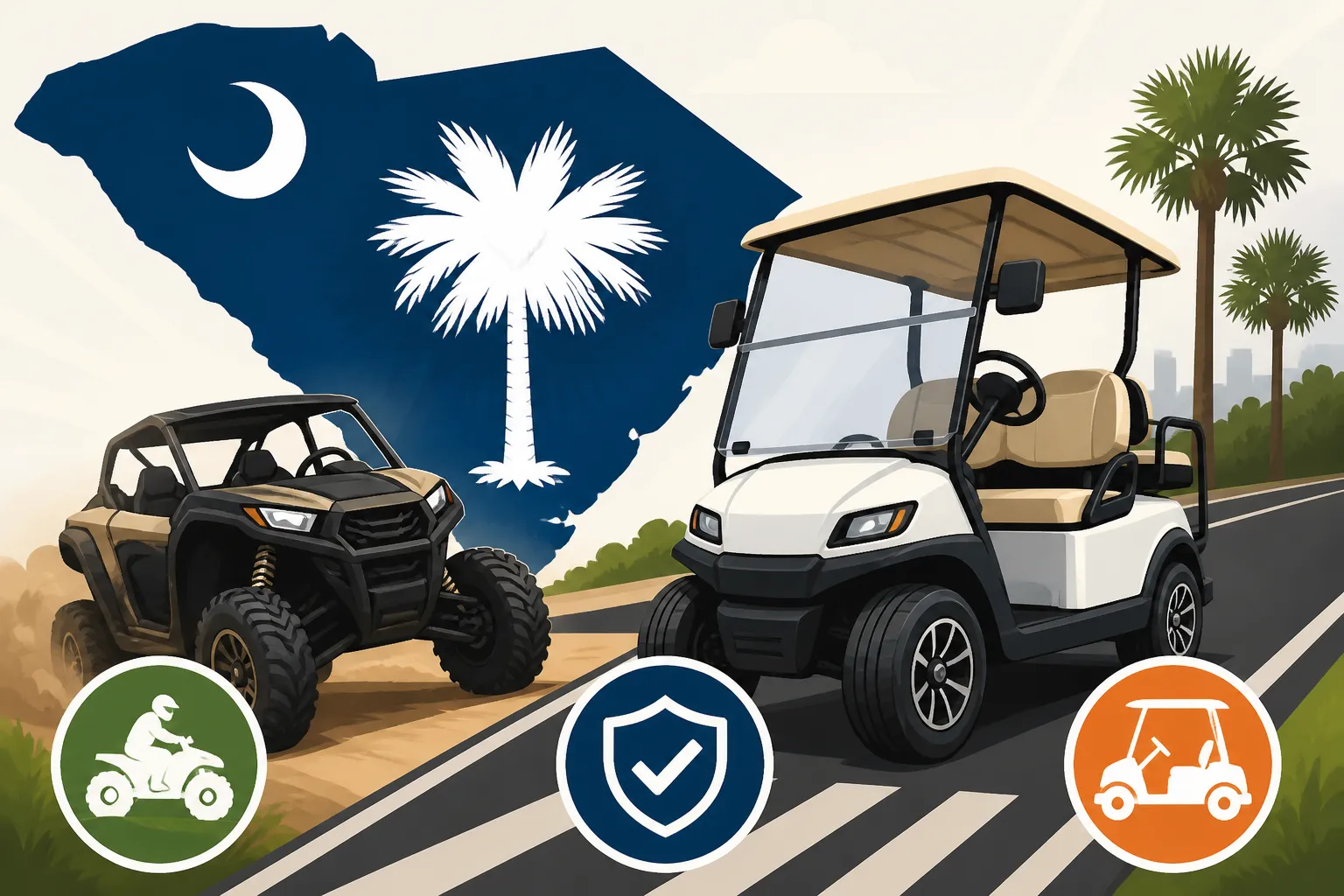
This is where a lot of confusion comes in, and it's absolutely vital to understand the difference. While a golf cart is capped at 20 mph, a Low-Speed Vehicle (LSV) is a whole different beast in South Carolina. An LSV is a four-wheeled vehicle whose top speed is more than 20 mph but not more than 25 mph. See that small but significant speed difference? That five miles per hour changes everything. An LSV also has to meet specific federal safety standards, including headlamps, stop lamps, turn signal lamps, taillamps, reflex reflectors, a rearview mirror, a parking brake, a windshield, seat belts, and a vehicle identification number (VIN).
Because LSVs meet these higher safety standards and can go a little faster, they are treated much more like traditional cars in terms of registration and road use. They require a title, vehicle registration, and a license plate, much like a regular car. They can generally operate on roads with a posted speed limit of 35 mph or less, and they don't have the same strict radius restrictions as golf carts. This is a critical distinction, as attempting to operate an LSV under golf cart rules will lead to immediate problems. Check out [A Low-Speed Vehicle Is Not a South Carolina UTV] for more details on this.
So, how do you tell the difference at a glance? Look for a license plate. If it has one, it's likely an LSV or perhaps even a newly authorized street-legal UTV. If it only has a small decal, it's a golf cart. You can also tell by the equipment: LSVs will have turn signals, proper headlights, brake lights, and seat belts from the factory. Golf carts might have some of these as accessories, but they're not required to meet the same federal motor vehicle safety standards as an LSV. Don't confuse the two, because the rules for each are vastly different. When you’re considering buying or modifying a cart, always keep that 20 mph distinction firmly in mind. If you accidentally make your golf cart an LSV without going through the proper channels for [South Carolina Low-Speed Vehicle Plates], you’re driving an unregistered, uninsured, and potentially illegal vehicle.
| Feature | Golf Cart | Low-Speed Vehicle (LSV) |
|---|---|---|
| Top Speed | Not more than 20 mph | More than 20 mph, but not more than 25 mph |
| Registration | Requires a SCDMV permit/decal | Requires title, registration, and license plate |
| Road Use | Limited to secondary roads, 4-mile radius | Roads 35 mph or less, no radius restriction |
| Safety Gear | Basic, often aftermarket lights/brakes | Federally mandated: head/tail/brake/turn lights, reflectors, mirrors, seat belts, windshield, parking brake |
| Insurance | Not explicitly required by law, but highly recommended | Mandatory liability insurance required |
| Driver's License | Required | Required (valid driver's license) |
The Essential Golf Cart Permit
Alright, so you've confirmed you have a genuine golf cart that falls within the state's legal definition. Fantastic! But before you load up the clubs or head to the beach, there's another crucial step: getting the proper permit. This isn't just a suggestion; it's a non-negotiable legal requirement in South Carolina if you plan to operate your golf cart on any public road.
Why You Need a Permit
Think of the golf cart permit as your golf cart's driver's license for the road. It signals to law enforcement that your vehicle has been acknowledged by the state, and that you're aware of the rules. Without this permit, operating your golf cart on any public highway, street, or road is illegal, plain and simple. It doesn't matter if you're just going a block or two to a neighbor's house or putting along to the community pool; if it's a public thoroughfare, you need that permit.
The permit system helps the state track these vehicles and ensures that operators are at least attempting to follow the guidelines. It’s also a way for law enforcement to quickly identify legally operating golf carts versus those that might be unauthorized or stolen. Skipping this step is a common mistake and one that can easily lead to a ticket, a fine, and a lot of unnecessary hassle. It’s not just a formality; it’s a foundational piece of the legal framework for golf cart operation. Many new residents or seasonal visitors often overlook this, assuming a golf cart is treated like a bicycle, but that's a dangerous assumption.
Applying for and Renewing Your Permit
Getting your permit is a straightforward process, thankfully. You'll apply for it through the South Carolina Department of Motor Vehicles (SCDMV). You'll typically need to be at least 16 years old and hold a valid driver's license. The process usually involves filling out an application form, providing proof of ownership (like a bill of sale or manufacturer's statement of origin), and paying a small fee. Once approved, you'll receive a decal that must be displayed prominently on the golf cart. For a step-by-step guide, you can refer to [South Carolina Golf Cart Permit Steps].
This permit isn't a one-and-done deal, though. It needs to be renewed. The permits are issued for five years, so you'll need to keep an eye on the expiration date and make sure you renew it well in advance. Renewing is just as important as getting the initial permit, as an expired permit makes your golf cart just as illegal on public roads as if you never had one. The process for renewal is generally similar to the initial application, often requiring updated information and another fee. Make a note in your calendar or on your phone so you don't forget to renew; it's easy to let it slip your mind when five years is such a long time. Find more info on [South Carolina Golf Cart Permit Renewal].
Displaying Your Permit Decal
Once you’ve successfully applied for and received your golf cart permit, you’ll be issued a decal. This decal is more than just a sticker; it's your visible proof of compliance. South Carolina law is clear: this decal must be conspicuously displayed on the rear of your golf cart. "Conspicuously displayed" means it should be easily seen and readable by law enforcement officers. Don't hide it under a fender, tuck it away in a corner, or stick it somewhere obscure. It's meant to be a quick visual identifier.
Why is this so important? Because when a police officer sees a golf cart on a public road, the first thing they're often looking for is that decal. If it's missing, expired, or improperly displayed, it's an immediate red flag and an invitation for them to pull you over. It's a simple, easy step that saves you a potential ticket and having to explain yourself. Treat that decal like a license plate for your golf cart – it needs to be there, visible, and current. You can find more details on [South Carolina Golf Cart Decals Every Five Years], which are issued for five years at a time. This small, often overlooked detail is a huge part of staying on the right side of the law.
Where You Can (and Can't) Ride Your Golf Cart
Now that your golf cart is properly permitted, let's talk about the big question: where can you actually take this thing? This is perhaps the most nuanced part of South Carolina's golf cart laws, and it's where most riders make critical errors. The state draws clear lines on what types of roads are permissible and under what conditions.
The 4-Mile Radius Rule Explained
The cornerstone of South Carolina's golf cart road rules is the "four-mile radius" rule. Generally, a permitted golf cart may only be operated on secondary roads or streets during daylight hours and within four miles of the address where the golf cart is registered. This radius rule is designed to keep golf carts confined to local areas, primarily residential neighborhoods, and away from busier traffic arteries. The key here is "secondary roads or streets," which typically means your residential streets, neighborhood roads, and other smaller thoroughfares, not main highways or primary state routes.
Many people interpret this rule incorrectly, thinking they can travel four miles in any direction from their home. While that's technically true, the constraint is also the type of road. You can't just hop on a major highway that happens to be within four miles of your house. You're confined to those quieter, slower secondary roads. This rule is particularly important in popular coastal towns where golf carts are prevalent, and the temptation to venture further afield is strong. Sticking to this four-mile boundary and secondary roads is paramount to staying legal. If you live in a larger development, for instance, you can likely traverse most of it, but venturing into the next town over is probably not allowed if it requires hitting a main thoroughfare. For more specific information, check out [South Carolina Cart Rules 4 Miles From Home].
Crossing Primary and Secondary Roads
While you're generally restricted to secondary roads, there are specific provisions for crossing primary roads or highways. A permitted golf cart may cross a highway or street at an intersection where the highway or street has a posted speed limit of 35 miles per hour or less. However, this crossing must be done at a 90-degree angle to the highway or street, meaning you go straight across, not diagonally. This is strictly for crossing, not for traveling along the primary road.
It's critical to understand that this is a very limited allowance. You cannot drive down a primary road, even for a short distance, just to get to another secondary road. It's about getting from one permitted zone to another, and only at appropriately marked intersections. This rule is designed for safety, minimizing the time a slow-moving golf cart spends in the path of faster-moving traffic. Always exercise extreme caution when crossing any busier road, looking out for cars, cyclists, and pedestrians. Never assume a driver sees you. Even if a road technically falls within the 35 mph limit, if it’s heavily trafficked, it's safer to find an alternative route if possible.
Specific Restrictions and Exemptions
Beyond the general rules, there are some specific restrictions and exemptions to be aware of. For instance, golf carts are generally prohibited from operating on sidewalks, bicycle paths, or multi-use trails unless explicitly authorized by a local ordinance. This is because they can pose a hazard to pedestrians and cyclists due to their size and speed. You'll also find that some specific planned communities, gated resorts, or private properties may have their own internal rules that differ from state law, but these only apply to their private roads. Once you exit onto a public street, state law prevails.
There are also instances where golf carts might be allowed in special circumstances, such as during parades or special events, with proper permits and police escort. However, these are exceptions, not the norm. Additionally, some beachfront towns might have specific ordinances regarding golf cart use on or near the beach, so always check with local authorities if you plan to explore coastal areas. Riding your golf cart directly on the sand or in designated [South Carolina Rules for Riding a Beach] areas is usually restricted or requires specific local permits. Always check local ordinances in the area you plan to ride, as a town may have more restrictive rules than the state, though they cannot be less restrictive.
Operating Your Golf Cart Legally and Safely
Having the right permit and knowing where to ride is crucial, but how you operate your golf cart on those permitted roads is equally important. South Carolina has guidelines that ensure not just your safety, but the safety of everyone else around you. Cutting corners here can lead to accidents or citations.
Daylight Hours and Equipment Requirements
A fundamental rule for golf cart operation on public roads in South Carolina is that they can only be operated during daylight hours. This means from roughly 30 minutes before sunrise to 30 minutes after sunset. Operating a golf cart after dark is generally prohibited, even if your cart has aftermarket lights. This rule is in place because golf carts, by their nature, are smaller, slower, and often less visible than conventional vehicles, making them a significant hazard in low-light conditions. Even the best LED light bar from SuperATV, while great for private land, doesn't change the state's daylight-only rule for public roads.
However, if your golf cart is equipped with working headlights, taillights, and turn signals, some local ordinances may allow for nighttime operation on specific roads within their jurisdiction. This is a big "if," and it always requires checking with the local municipality first. Never assume your lights make it okay to drive at night without confirming local rules. Beyond lighting, your golf cart must also be equipped with efficient brakes. While not always explicitly detailed in the law, common sense and safety dictate that your tires should be in good condition, and any other safety features like mirrors should be properly functioning. These basic equipment requirements are about ensuring you can see and be seen, and that you can stop safely. For more clarity on when your cart can be out, see [South Carolina Golf Cart Daylight Rules].
Driver Age and License Requirements
This is another point often misunderstood: who can actually drive a golf cart on a public road in South Carolina? The answer is clear: the operator must hold a valid driver's license. This means a full, unrestricted driver's license, not just a learner's permit. Unlike some states where younger teens might be allowed to drive golf carts with restrictions, South Carolina law for public roads requires a licensed adult.
This rule is in place for several reasons, primarily safety. Driving a golf cart on public roads, even secondary ones, requires judgment, awareness of traffic laws, and the ability to react to unexpected situations—skills typically associated with licensed drivers. Allowing unlicensed minors to operate golf carts on public roads would introduce an unnecessary risk. So, if your teenager wants to drive the golf cart to the community pool, make sure they have their actual driver's license in hand, not just a permit. Failing to meet this requirement can lead to a citation for the driver and potentially for the owner of the golf cart. For more info, check [South Carolina Golf Cart Permit Rules].
Passenger Rules and Safety
Just like any other vehicle, there are considerations for passengers on a golf cart. While the law doesn't explicitly state age limits for passengers in a golf cart (unlike, say, an ATV), common sense and safety best practices should prevail. Never overload your golf cart beyond its manufacturer-designated seating capacity. Most golf carts are designed for two or four passengers, sometimes six if it's an extended model. Adding more people than there are seats, especially having passengers stand or hang off the sides, is incredibly dangerous and dramatically increases the risk of falls and injuries, especially during turns or sudden stops.
Children, in particular, should always be seated and supervised. Young children should ideally be in the rear-facing seats (if applicable) where they are less likely to fall out, or in a forward-facing seat with adult supervision. Ensure that everyone keeps their arms and legs inside the vehicle at all times. While seat belts are not typically mandatory on golf carts (unless it's an LSV), if your cart has them, encourage everyone to use them. The general rule of thumb is to treat your golf cart with the same respect and safety considerations you would a car, especially when carrying precious cargo. Overloading or reckless passenger behavior is a common reason for accidents and can certainly draw the attention of law enforcement. For details on how South Carolina treats other young passengers, [South Carolina Passenger Rules Under 16] might offer relevant context, though specific to ATVs.
Navigating Local Ordinances and Exceptions
South Carolina's state laws provide the overarching framework for golf cart operation, but it’s crucial to understand that local municipalities—cities, towns, and counties—have the authority to create their own ordinances that can further restrict or, in some cases, expand golf cart use within their specific boundaries. This means that rules can vary significantly from one coastal town to another, or even between neighboring inland communities.
When Local Laws Override State Rules
This is where things can get tricky. While state law sets the baseline, a local government can enact ordinances that are more restrictive than the state's rules, but generally not less restrictive. For example, a town might decide that golf carts are only allowed on roads with a posted speed limit of 25 mph or less, even if state law allows for crossing roads up to 35 mph. Or, they might designate specific golf cart zones, or even prohibit them entirely from certain roads where the state might otherwise allow them. They could also modify the 4-mile radius rule for their specific jurisdiction, though this is less common.
The critical takeaway here is: always check with the local police department or municipal government where you plan to ride your golf cart. A quick phone call or a visit to their website before you head out can save you from an unexpected ticket. This is especially true if you’re visiting a popular tourist area like Myrtle Beach, Hilton Head, or Charleston, where golf cart use is common but tightly regulated to manage traffic and safety. Don't rely on what your friend said about "how they do it down the road"; rules can change literally at a town line. For broader context on how local speed limits can affect cart use, refer to [South Carolina Golf Cart Radius and Speed Rules].
Golf Cart Communities and Resorts
Many planned communities, gated neighborhoods, and resorts across South Carolina are designed with golf carts in mind. These areas often have extensive networks of private roads where golf carts are the primary mode of transportation. On private roads within these communities, the rules of the state often give way to the rules set by the property owner, homeowners association (HOA), or resort management. This means you might be able to drive at night, or without a state permit, purely within the confines of that private property.
However, the moment you exit the private property onto a public street, state and local laws immediately apply. This distinction is vital. Just because you can cruise freely on the private roads of your resort doesn't mean you can do the same when you venture out for groceries on a public road. Some communities even have their own internal permitting or registration systems, which might be required in addition to the state permit if you plan to use public roads near the community. Always clarify the specific rules of any private community or resort you are visiting or residing in. Compare options by reading [South Carolina Golf Cart Permits Compared].
Enforcement and Penalties for Violations
Ignoring South Carolina's golf cart laws or local ordinances can lead to more than just a stern talking-to. Law enforcement takes these regulations seriously, especially in areas with high golf cart traffic or where safety concerns are prevalent. The penalties for golf cart violations can vary depending on the specific infraction and the local jurisdiction, but they generally involve fines. These fines can range from minor citations for not displaying a permit to more substantial penalties for reckless driving, driving under the influence, or operating a cart on a prohibited road.
In some cases, particularly for repeat offenses or severe safety violations, your golf cart could even be impounded. This means not only paying a fine but also dealing with the hassle and cost of retrieving your vehicle from an impound lot. Furthermore, if you're involved in an accident while operating a golf cart illegally (e.g., without a valid permit, on a prohibited road, or after dark), you could face additional legal liabilities, even if you weren't at fault for the collision itself. It's simply not worth the risk to disregard the rules. Be aware that [South Carolina Fines of $50 to $200] are common for such infractions.
Maintaining Your Golf Cart for Road Use
Just like any other vehicle you operate on public roads, your golf cart needs to be in good working order. Proper maintenance isn't just about prolonging the life of your machine; it's a critical safety component that ensures your golf cart performs reliably and safely, reducing the risk of breakdowns or accidents when you're out and about.
Regular Inspections and Upgrades
Think of your golf cart's maintenance like a mini-car checkup. Regularly inspect your tires for proper inflation and wear. Bald tires can be extremely dangerous, especially on wet pavement. Check your brakes frequently to ensure they are responsive and effective; a golf cart stopping unexpectedly can be just as dangerous as a car with faulty brakes. Test all lights—headlights (if equipped), taillights, and turn signals (if equipped)—to ensure they are working. A burnt-out bulb might seem minor, but it can impair your visibility or ability to signal, leading to a hazard.
Battery health is also crucial, whether you have an electric or gas cart. Ensure connections are clean and secure, and that batteries are adequately charged or fueled. Keep your steering system tight and responsive. Over time, components can wear out, making steering loose or unpredictable. Many golf cart owners also opt for upgrades to enhance safety and performance. This might include adding proper mirrors, a horn, a sturdy windshield, or even a basic roof for protection from the elements. Reputable aftermarket brands like SuperATV offer a wide array of golf cart accessories, from lift kits and wheels to lighting and protective gear, that can enhance both the aesthetics and functionality of your cart, making it safer and more enjoyable to ride. Just remember to keep the 20 mph speed limit in mind when making modifications.
Insurance Considerations for Golf Carts
This is a frequently asked question, and the answer in South Carolina for golf carts (not LSVs or street-legal UTVs) is generally: specific golf cart liability insurance is not legally required by the state for operation on public roads. However, just because it's not mandated doesn't mean it's not a smart idea. In fact, relying solely on not being legally required to have it is a huge gamble.
Your homeowner's insurance policy might offer some limited coverage for a golf cart operated on your private property, but it's highly unlikely to extend to incidents that occur on public roads. If you're involved in an accident on a public street and cause damage or injury, and you don't have dedicated golf cart insurance, you could be personally liable for all the costs. This could include medical bills, property damage, and legal fees, which can quickly add up to tens or even hundreds of thousands of dollars. It's a risk most people don't want to take. Many insurance providers offer affordable policies specifically for golf carts, providing liability, collision, and even comprehensive coverage. It’s a small investment for significant peace of mind. While [Does an Off-Road Quad Need Insurance in South Carolina?] pertains to ATVs, the principle of considering coverage even when not legally mandated is the same for golf carts.
Prepping Your Cart for the Road
Before each ride, especially if you're going to be on public roads, take a few moments for a quick pre-ride check. Walk around your golf cart:
- Are the tires inflated properly?
- Are there any obvious loose parts or damaged components?
- Do the brakes feel firm?
- Do your lights and turn signals (if you have them) work?
- Is your permit decal clearly visible?
- Do you have your valid driver's license with you?
- Is the battery fully charged or the fuel tank adequately filled?
It’s also wise to consider what you're carrying. Secure any loose items that could fly out of the cart, especially if you're carrying golf clubs, beach gear, or groceries. Avoid overloading the cart with too much weight, which can affect its handling and braking performance. A small first-aid kit, a phone, and perhaps a small toolkit can also be good additions for longer rides, even if "longer" for a golf cart is just a few miles. These quick checks can prevent minor annoyances from becoming major headaches or even accidents.
Common Misconceptions and FAQs
Despite the rules being fairly clear, there are always lingering questions and persistent misunderstandings about golf cart operation in South Carolina. Let's tackle some of the most common ones to ensure you're fully informed.
Can I Modify My Golf Cart for More Speed?
This is a big one, and the answer, for legal operation on public roads in South Carolina, is a resounding no. As we discussed, a golf cart is legally defined as a vehicle incapable of exceeding 20 miles per hour. If you modify your golf cart to go faster than 20 mph, it immediately ceases to be a "golf cart" in the eyes of South Carolina law. It doesn't magically become an LSV (which has to meet federal safety standards and be registered), nor does it become a street-legal UTV (which has its own set of upcoming regulations).
What it becomes, essentially, is an unregistered, unclassified vehicle that is not legally permitted on public roads. If a law enforcement officer pulls you over and determines your "golf cart" exceeds the 20 mph limit, you could face significant penalties, including fines, impoundment, and charges for operating an illegal vehicle. This is a common trap for enthusiasts who want to boost their cart's performance. Save the speed modifications for private property where you have explicit permission. For more on the specific speed limits, see [35 mph for a Cart].
Do I Need a Title for My Golf Cart?
Unlike cars, motorcycles, or even Low-Speed Vehicles (LSVs) and street-legal UTVs, golf carts in South Carolina generally do not require a title. This is another key differentiator. The state sees them as recreational vehicles for specific, limited road use rather than full-fledged motor vehicles that require ownership documentation like a title.
Instead of a title, proof of ownership for a golf cart typically comes in the form of a bill of sale or a Manufacturer's Statement of Origin (MSO) if it's a brand new machine. When you apply for your golf cart permit, you'll need to provide one of these documents to establish that you are the rightful owner. So, don't worry about needing a [Titling a Golf Cart in South Carolina] process, as that's usually not applicable. This lack of a title can sometimes make private sales a bit more informal, but always ensure you get a clear bill of sale when buying or selling to prove legitimate ownership.
What About Golf Carts and Street-Legal UTVs?
This is a point of growing confusion, especially with the relatively new legislation allowing street-legal UTVs in South Carolina. Let's be very clear: a golf cart is not a street-legal UTV, and a street-legal UTV is not a golf cart. They are entirely separate categories of vehicles with distinct definitions, requirements, and road rules.
Street-legal UTVs (or side-by-sides) are generally larger, more powerful machines designed for off-road use but which, under a specific law, can be made street-legal in South Carolina starting in November 2026. These UTVs will require full vehicle registration, a license plate, mandatory insurance, and must meet extensive safety equipment requirements far beyond what a golf cart needs. They also have different speed limits and road access rules. Trying to pass off your golf cart as a street-legal UTV, or vice-versa, will not work. Each category has its own set of laws, and mixing them up will only lead to legal issues. For a deep dive into the new UTV laws, check out [South Carolina Street-Legal UTV Registration Arrives] and [A Low-Speed Vehicle Is Not a South Carolina UTV]. These are exciting developments for off-road enthusiasts, but they are entirely separate from golf cart regulations.
Disclaimer
This article is for general informational purposes only and does not constitute professional advice. Laws, prices and regulations vary by location and change over time. Consult a qualified professional for guidance on your specific situation.