South Carolina’s 10-Mile Radius Rule
Riding your ATV or UTV in South Carolina can sometimes feel like navigating a maze, especially when it comes to understanding where you can and cannot legally operate your machine. Many folks get confused by whispers of a "10-mile radius rule," unsure if it applies to their quad, their side-by-side, or even their golf cart. This guide is here to clear up that confusion once and for all, explaining exactly what the 10-mile radius means for different machines and how you can ride legally and confidently in the Palmetto State.
Unpacking South Carolina's 10-Mile Radius Rule for Golf Carts
Let's start with the machine that many South Carolinians associate most readily with a radius rule: the golf cart. For years, folks living in coastal communities, lake towns, or even sprawling neighborhoods have relied on their golf carts for quick trips to the store, the beach, or a neighbor's house. But there are specific rules that govern this convenience.
What the 10-Mile Rule Actually Means for Carts
When we talk about the 10-mile rule for golf carts in South Carolina, we're primarily referring to the permit system that allows these machines to operate on certain public roads. It's not a blanket free pass for every cart; rather, it’s a specific allowance tied to a valid permit. Essentially, this rule dictates that a permitted golf cart can be operated on secondary roads or streets within a four-mile radius of the address where the golf cart is registered. Yes, you read that right – it's actually four miles, not ten! This is one of the most common points of confusion for residents and visitors alike.
This four-mile radius is meant to cover local errands and recreational use, keeping golf carts close to their point of origin. It's a localized convenience, acknowledging that in many communities, golf carts are a legitimate mode of short-distance transportation. This is vastly different from the rules governing what are called "low-speed vehicles" (LSVs), which are built to much higher safety standards and have different registration requirements, allowing them greater freedom on public roads. An LSV is not a golf cart, and mixing up their rules can lead to a roadside chat with law enforcement. Understanding the exact limits of your [South Carolina Golf Cart Permit Rules] is key to avoiding an unwelcome surprise.
Navigating the Permitted Roads and Speed Limits
So, within that permitted four-mile radius, what kind of roads can your golf cart actually use? The law specifies that golf carts can be driven on secondary highways or streets where the posted speed limit is 35 miles per hour or less. This means you won't be taking your cart out on major arteries, state highways, or any road where traffic typically moves faster than 35 mph. The whole idea is to keep golf carts in low-speed environments, where they pose less of a risk to themselves and other motorists.
Furthermore, golf carts are generally restricted to daylight hours. You can't just slap a permit on your cart and cruise around after dark, even if your cart has lights. There are very specific requirements for operating a golf cart, and visibility is a huge factor. This means planning your errands and recreational rides to ensure you're back home or parked before dusk. It's all about safety, both for the golf cart operator and everyone else sharing the road. For a deeper dive into these specifics, check out [South Carolina Golf Cart Road Rules]. It’s easy to think a permit grants full freedom, but the details truly matter here.
Local Ordinances and the 10-Mile Rule
Now, here's where things can get a bit more nuanced. While the state law establishes the four-mile radius, individual cities, towns, and counties in South Carolina have the authority to modify these rules through local ordinances. This means that while the state sets a baseline, your specific municipality might have different regulations. For example, some coastal towns, recognizing the unique needs of their residents and visitors, might have ordinances that expand the permissible operating area or allow golf carts on certain roads that state law would otherwise restrict. Conversely, some areas might impose stricter limits or ban golf carts from certain areas altogether for safety or traffic management reasons.
It's absolutely crucial to check with your local municipality's police department or city/county clerk's office to understand any specific golf cart ordinances in your area. Don't just assume that what applies in Myrtle Beach will apply in Aiken or Greenville. That assumption could lead to a ticket! For instance, you might find that while the state allows four miles, your particular town has a [South Carolina Cart Rules 4 Miles From Home] modification that creates unique parameters. Always do your homework before you head out, because local rules can often trump or add to state guidelines, leaving you scratching your head if you're not prepared.
The New Era: 10-Mile Radius for Street-Legal UTVs (Act 164)
While golf carts have had their localized rules for a while, the landscape for Utility Terrain Vehicles (UTVs) in South Carolina has recently undergone a significant transformation. For years, UTV owners faced immense frustration, often investing in expensive machines only to be restricted to private property or dedicated off-road parks. That all changed with a landmark piece of legislation that specifically addressed the desire for street-legal UTVs, and yes, it introduced its own version of a radius rule.
How Act 164 Introduced the Radius for UTVs
The big game-changer for UTV owners in South Carolina was Act 164, which was signed into law and went into effect in stages, with key provisions becoming active in late 2026. This act officially created a pathway for UTVs to be registered as street-legal vehicles, allowing them to legally traverse certain public roads. Before Act 164, trying to ride your UTV on a public road, even a quiet dirt track, was largely illegal, save for very specific farm or emergency exemptions. This new law recognized the growing popularity and utility of side-by-sides and aimed to provide a regulated framework for their integration onto the road network.
A critical component of Act 164 is the allowance for street-legal UTVs to operate within a ten-mile radius of the operator's home or primary place of business. This is the "10-mile rule" that many UTV enthusiasts have been hearing about! It's important to differentiate this from the golf cart rule; this is for a properly equipped, registered, and insured UTV. The intent behind this radius is similar to golf carts – to facilitate local travel, errands, and access to trails or amenities without requiring these machines to meet full automotive standards for unrestricted highway use. Understanding [South Carolina Act 164 and Street UTVs] is crucial for any UTV owner looking to enjoy public road access.
Understanding the "10 Miles Unless a Town Says Otherwise"
Just like with golf carts, the ten-mile radius for street-legal UTVs isn't an absolute, unwavering mandate. While the state law establishes this ten-mile zone from your registered address, it also grants local municipalities the power to modify, expand, or even restrict this radius within their own jurisdictions. This means that in one town, you might truly have a full ten miles of access, while in another, local ordinances might reduce that to, say, five miles, or even open up more options. This legislative flexibility acknowledges the diverse needs and traffic patterns of South Carolina's many communities.
This local discretion can be both a blessing and a curse. It's a blessing because it allows communities to tailor rules that best suit their unique circumstances – think of a large rural area versus a densely populated urban center. It's a curse because it places the burden on the UTV owner to diligently research and understand the specific rules for every area they plan to ride in. You cannot assume that because you can legally ride ten miles from your home in one county, you can do the same when visiting a friend in another. Always, always check local laws to avoid a citation. Keeping abreast of [South Carolina Street UTV Radius Exceptions] will save you a lot of headache and potential fines.
The Types of Roads Street-Legal UTVs Can Access
With your street-legal UTV properly registered and operating within its ten-mile radius (adjusted for local ordinances), what roads are fair game? Act 164 specifically allows these machines on secondary roads with a posted speed limit of 55 miles per hour or less. This is a broader allowance than golf carts, reflecting the higher speeds and more robust construction of UTVs. This means you can often use your side-by-side to get to that hidden fishing spot, the local gas station, or even connect to an off-road trail system, as long as you stay on approved secondary routes.
However, there are clear restrictions. Street-legal UTVs are not permitted on interstates or controlled-access highways. These are high-speed environments designed for vehicles capable of sustaining much higher speeds and greater impact resistance. The law is designed to give UTV owners more options for local travel, not to turn them into highway cruisers. Always pay attention to speed limits and road signs, and remember that even if a road is within your ten-mile radius, if its speed limit exceeds 55 mph or it's a major interstate, your UTV is not allowed. Familiarize yourself with the [South Carolina Street UTV Road Speed Limits] to ensure you're always riding within the bounds of the law.
Differentiating Street-Legal UTVs, ATVs, and Golf Carts
One of the biggest sources of confusion for riders, and even for some folks in law enforcement, is the vast difference between various off-road and recreational vehicles. Just because a machine has four wheels and an engine doesn't mean it's treated the same under South Carolina law. Understanding these distinctions is paramount to avoiding trouble and riding safely.
Why Traditional ATVs Don't Belong on Roads (Generally)
Let's be crystal clear about this: the 10-mile radius rule, or even the 4-mile rule for that matter, does not apply to traditional All-Terrain Vehicles (ATVs). When we talk about ATVs, we're generally referring to the single-rider, straddle-seat machines designed exclusively for off-road use. These machines lack the safety features, such as seatbelts, roll cages, turn signals, and proper lighting, that are legally required for street operation. For the most part, [Can You Ride an ATV on the Road in South Carolina?] The answer is almost always a resounding "no."
There are very limited exceptions, typically involving agricultural use on private land or crossing a public road at a 90-degree angle if it's the only way to get from one private property to another. Even in these rare instances, strict rules apply regarding visibility, speed, and safety. Attempting to ride a standard off-road ATV on public roads, regardless of distance from your home, is illegal and dangerous. It puts you and others at serious risk and will most certainly lead to a citation and potentially an impounded machine. The laws are in place for safety, recognizing that ATVs are built for rugged, unpredictable terrain, not paved roads with traffic.
Key Differences: Street-Legal UTVs vs. Golf Carts vs. LSVs
To help untangle the web of rules, let's break down the core differences between these three types of machines that sometimes get confused on South Carolina roads. Each has its own design, purpose, and legal framework. Understanding these distinctions is fundamental to knowing what you can and cannot do.
| Feature | Traditional Off-Road ATV | Golf Cart | Street-Legal UTV (Act 164) | Low-Speed Vehicle (LSV) |
|---|---|---|---|---|
| Purpose | Recreation, Utility (off-road only) | Short-distance transport (low-speed, local) | Recreation, Utility (on/off-road capable) | Local transport (on-road primary) |
| Seating | Straddle-seat, 1-2 riders | Bench seats, 2-6+ riders | Bucket/bench seats, 2-6+ riders, roll cage | Bench seats, 2-4+ riders, full body |
| Top Speed | Varies greatly (30-80+ mph) | Typically 20-25 mph | Varies (many over 50 mph) | 20-25 mph (governed) |
| Road Legal Status | Generally NO (few exceptions) | YES (permit, 4-mile radius, 35 mph roads) | YES (registration, 10-mile radius, 55 mph roads) | YES (full registration, broader road use) |
| Registration | Optional title only | Permit only (no title/reg required) | Required title & registration | Required title & registration |
| License Plate | No | Decal only | YES, rear plate required | YES, rear plate required |
| Insurance | Optional (recommended for off-road) | Optional (recommended) | Mandatory liability | Mandatory liability |
| Safety Equipment | No mirrors, signals, seatbelts | Lights, horn (sometimes signals) | DOT tires, signals, horn, mirrors, windshield, seatbelts, lights, roll cage | Headlights, signals, mirrors, windshield, seatbelts, horn |
| Radius Rule Applies? | NO (it's not road legal) | YES (4 miles from home/business) | YES (10 miles from home/business) | NO (broader road access) |
As you can see, a traditional off-road ATV is in a class by itself, completely separate from road-legal considerations like the 10-mile rule. Street-legal UTVs, while sharing some visual similarities with their off-road counterparts, undergo significant modification to meet safety and equipment standards for road use. Companies like SuperATV specialize in providing the necessary components – from windshields and DOT-approved tires to turn signal kits – to help UTV owners convert their machines to meet these requirements. The differences are not just cosmetic; they're foundational to legal operation on public roads. Understanding that [A Low-Speed Vehicle Is Not a South Carolina UTV] is another key distinction that will prevent issues.
The Importance of Proper Registration and Equipment
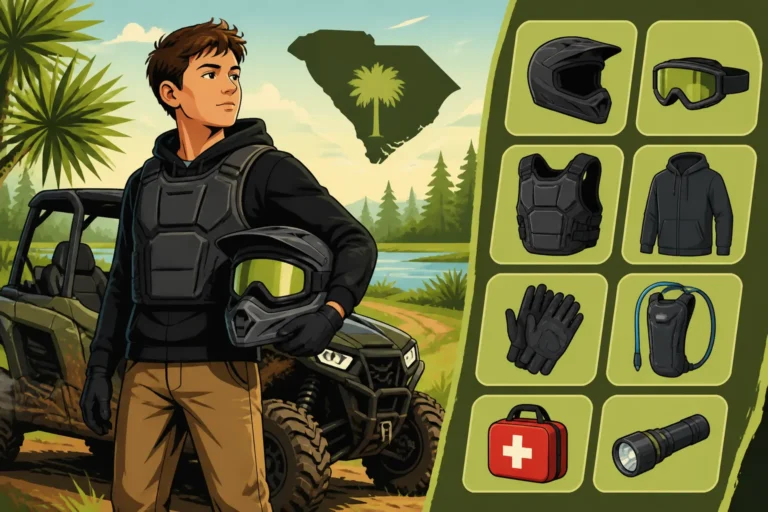
This brings us to a critical point: if you intend to use any machine on South Carolina's public roads, even within a limited radius, it absolutely must be properly registered and equipped according to the law. For a street-legal UTV, this means having a valid title, official registration from the DMV, a license plate, and mandatory liability insurance. It also means your UTV must be outfitted with all the required safety equipment: DOT-approved tires, functional headlights, tail lights, brake lights, turn signals, a horn, a rearview mirror (and potentially side mirrors), a windshield, and seatbelts for all occupants.
Without these essentials, you're not just risking a ticket; you're risking a serious accident and potential liability. The law is designed to ensure that these vehicles, when sharing the road with cars and trucks, can be seen, communicate their intentions (like turning or stopping), and offer a reasonable level of occupant protection. Don't cut corners on these requirements. It's not just about compliance; it's about your safety and the safety of everyone around you. For a complete list of what's needed, refer to [South Carolina Street UTV Requirements Explained]. This isn't just bureaucratic red tape; it's about ensuring your machine is fit for public roads.
Practical Implications for South Carolina Riders
So, you've got your head wrapped around the various machines and their respective radius rules. Now, let's talk about what this means for you, the rider, in the real world of cruising Palmetto State roads. Navigating these rules successfully requires a bit of planning and a good dose of awareness.
Planning Your Route: Staying Within the Limits
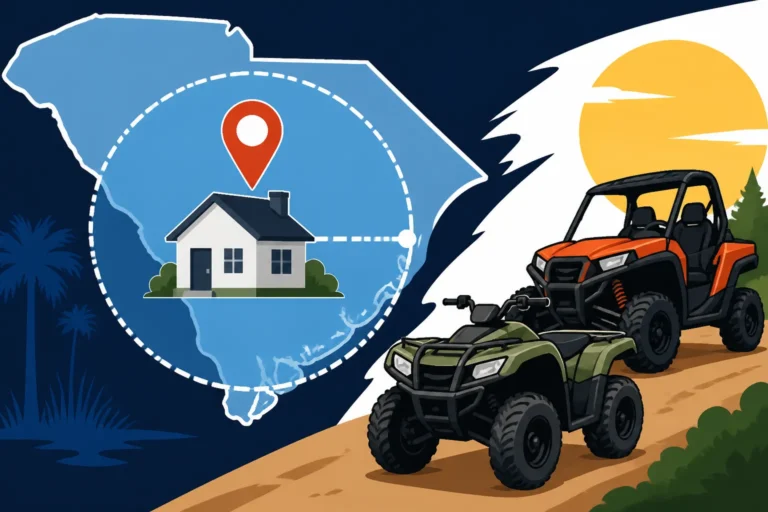
The most immediate practical implication of the 4-mile golf cart rule and the 10-mile street-legal UTV rule is that you need to be mindful of your geographic boundaries. This isn't about general directions; it's about a specific radius measured from your registered address. For street-legal UTV owners, this means visualizing a circle on a map, with your home or business at the center, and a ten-mile reach in every direction. For golf cart operators, it’s a tighter four-mile circle.
It's highly advisable to use mapping tools to understand your permissible zone. Many riders use GPS apps on their phones or dedicated off-road navigators that can display custom radii. Before you head out for a cruise or an errand, take a moment to plot your route and ensure every leg of your journey stays within that legal circle. Veering outside the designated radius, even by a short distance, can put you in violation of the law. Imagine being pulled over just a few blocks past your limit – that's a frustrating situation that can be easily avoided with a little forethought and pre-planning. Think of your [10 Miles Measured From Your Registered Address] as a literal bubble you operate within.
Checking Local Ordinances: Don't Get Caught Off Guard
We've touched on this before, but it bears repeating because it's such a common pitfall: local ordinances can and do change the state's baseline radius rules. Relying solely on the state's 4-mile or 10-mile rule without checking your specific city or county can lead to an unexpected ticket. This is especially true for those living in or visiting popular tourist areas, where local governments often implement specific rules to manage traffic, safety, and parking.
How do you check? The best approach is to contact your local municipal government directly. A quick call to the city clerk's office or the local police department (non-emergency line, of course!) can provide clarity. Many municipalities also post their ordinances online, often under sections related to vehicles, traffic, or recreational vehicles. Don't rely on hearsay from a neighbor or a fellow rider, as rules can change, and interpretations vary. It's your responsibility to know the specific local laws that apply where you're riding. This proactive step is well worth the effort and could save you the cost of [South Carolina Golf Cart Permit Fees] plus a hefty fine.
What to Carry When Riding on Roads
When you're operating a street-legal UTV or a permitted golf cart on public roads in South Carolina, you need to be prepared for the possibility of a stop by law enforcement. Just like driving your car, you'll need to have certain documents readily accessible.
For a street-legal UTV, this means carrying your valid driver's license (yes, a full driver's license is required for UTVs on public roads), your UTV's registration card, and proof of liability insurance. These are non-negotiable. For a golf cart, you'll need your driver's license and your current golf cart permit. While insurance isn't legally mandatory for golf carts, it's highly recommended, and having proof of it readily available is a good idea. Beyond documents, ensure your machine itself is in compliance. This means all required lights are working, your horn functions, and you have your license plate (for UTVs) or permit decal (for golf carts) properly displayed. Being caught unprepared can quickly escalate a routine stop into a more complicated situation. Always be ready for a [South Carolina Equipment Checks by Officers].
Challenges and Common Misconceptions
Despite the laws being relatively clear, widespread misconceptions and challenges still plague the South Carolina ATV and UTV community. These misunderstandings often lead to frustration, tickets, and sometimes, dangerous situations. Let's tackle some of the most persistent myths and realities.
The Myth of "Any ATV Can Go 10 Miles"
This is arguably the most dangerous and pervasive misconception out there. Many people, hearing about the "10-mile rule," incorrectly assume it applies to any ATV or off-road vehicle they own. This is absolutely, unequivocally false. As we covered, the 10-mile radius is specifically for registered street-legal UTVs under Act 164, and the 4-mile radius is for permitted golf carts. Traditional, purpose-built off-road ATVs are, for the most part, forbidden from public roads in South Carolina. There's no magical radius that suddenly makes your dirt bike or sport quad legal on the pavement.
This myth often stems from anecdotal stories, misinterpretations of news reports, or confusion with laws in other states. It's incredibly important to challenge this idea whenever you hear it, as encouraging someone to ride an off-road ATV on a public road is putting them and others at severe risk. These machines are not designed for road conditions, traffic, or the speeds involved, and they lack critical safety features. Being informed about [South Carolina Rules Riders Get Wrong] is not just about avoiding a fine; it's about saving lives and preventing serious injury.
Enforcement and Penalties for Violations
Ignoring the rules, whether intentionally or out of ignorance, carries real consequences. Law enforcement in South Carolina, particularly in areas where off-road vehicle use is prevalent or where complaints about illegal riding are common, is increasingly vigilant. Officers are becoming more educated on the nuances of Act 164, golf cart permits, and the limitations of traditional ATVs.
Penalties for violations can range from monetary fines to more severe actions. Riding an unregistered or unequipped street-legal UTV, or an illegal ATV, on public roads can result in significant tickets, and repeated offenses could lead to your machine being impounded. This means not only paying fines but also impoundment fees, which can quickly add up. Imagine having to pay hundreds of dollars just to get your machine out of a lot, on top of the initial citation. The [South Carolina Fines of $50 to $200] is just a starting point for many of these violations, and court costs can make things even more expensive. It's a costly lesson that's entirely avoidable by simply understanding and adhering to the law.
The Future of Road Riding for Off-Road Vehicles
The passage of Act 164 clearly demonstrates a shifting landscape for how South Carolina views off-road vehicles and their potential for limited road access. As UTV technology continues to advance and their popularity grows, it's plausible that we might see further adjustments or refinements to these laws. There could be ongoing debates about expanding the radius, modifying speed limits, or integrating more specific safety requirements.
For riders, this means staying informed. Join local riding clubs, follow state legislative updates, and keep an eye on reputable sources for news concerning ATV and UTV laws. Manufacturers and aftermarket suppliers like SuperATV, who produce components that enable street-legal conversions, are often at the forefront of these discussions, understanding the needs of riders and the regulatory environment. While predicting the exact future is impossible, one thing is certain: the conversation around off-road vehicles on public roads will continue to evolve, making continuous education a rider's best friend.
Making Your UTV Street Legal for the 10-Mile Rule (and Beyond)
Given the new opportunities presented by Act 164 and the 10-mile radius rule for UTVs, many off-road enthusiasts are seriously considering converting their machines to be street-legal. It's a fantastic way to expand your riding horizons, make your machine more versatile, and truly get the most out of your investment. But what exactly does that conversion entail?
Essential Equipment for Street-Legal Conversion
Transforming your UTV from a pure off-road beast into a road-worthy machine involves adding a suite of specific safety and signaling equipment. These aren't optional extras; they're legal necessities that allow your UTV to communicate with other vehicles and safely navigate public roads. Here's a rundown of the typical requirements:
- Headlights and Taillights: Must be fully functional and meet brightness standards.
- Brake Lights: Clear and visible when the brakes are applied.
- Turn Signals: Front and rear, amber or red, to indicate your intentions.
- Horn: An audible signal to alert others.
- Rearview Mirror: Essential for seeing traffic behind you. Many kits also include side mirrors for better visibility.
- Windshield: Provides protection from debris and elements.
- Seatbelts: Crucial for occupant safety; typically required for all seating positions.
- DOT-Approved Tires: Your knobby off-road tires won't cut it on the street; you'll need tires specifically rated for highway use.
- License Plate Mount: A designated, illuminated spot for your rear license plate.
Many companies, including SuperATV, offer comprehensive street-legal kits that bundle many of these components together, making the conversion process much simpler. These kits are designed to meet state requirements and often come with instructions to guide you through the installation. These upgrades directly enable your UTV to comply with the [South Carolina Street UTV Machine Specs] and legally use those secondary roads within your designated radius.
The Registration Process for a Street-Legal UTV
Once your UTV is equipped for street-legal operation, the next step is navigating the South Carolina Department of Motor Vehicles (DMV) process to get it titled and registered. This involves several key pieces of paperwork and steps:
- Manufacturer's Certificate of Origin (MCO) or Existing Title: If your UTV is new, you'll need the MCO from the dealer. If it's used, you'll need the properly assigned title from the previous owner.
- Bill of Sale: Documenting the purchase and sale of the machine.
- Proof of Insurance: You will need to show proof of liability insurance that meets South Carolina's minimum requirements before a license plate will be issued.
- Completed Title and Registration Application (Form 400): This is the main DMV form where you'll apply for both the title and registration. You'll indicate that you want a street-legal UTV registration.
- Payment of Fees: There will be a title fee, and for street-legal UTVs, a new biennial registration fee.
The DMV will review your paperwork and, once approved, issue you a title and a license plate that must be prominently displayed on the rear of your UTV. This entire process, while perhaps seeming daunting, is a straightforward pathway to legally expanding where you can ride. Be sure to understand the [South Carolina Street UTV Registration Steps] to ensure a smooth process.
Why Invest in Street-Legal Upgrades?
You might be asking if all this effort and expense for conversion is truly worth it. For many UTV owners in South Carolina, the answer is a resounding yes. The ability to legally drive your UTV on secondary roads, even within a limited radius, opens up a world of convenience and enjoyment. Imagine being able to:
- Connect Trails: Drive your UTV a few miles on a public road to connect two separate off-road trail systems, rather than having to load it onto a trailer.
- Run Errands: Make a quick trip to the local gas station, hardware store, or even a friend's house without needing to unhook the truck and trailer.
- Increase Versatility: Your UTV becomes more than just a weekend toy; it transforms into a multi-purpose vehicle for both work and play, able to transition seamlessly between your private property and local roads.
- Enhance Resale Value: A UTV that is already street-legal and properly equipped often commands a higher resale value, as it appeals to a broader market of potential buyers.
Companies like SuperATV are not just selling parts; they're selling an enhanced riding experience, allowing you to unlock the full potential of your UTV within the bounds of South Carolina law. Investing in these upgrades, when paired with proper registration, makes your machine immensely more useful and enjoyable. It's about freedom, flexibility, and getting more out of your machine, which is why [Why Optional Titling Still Helps] is a relevant consideration even for off-road machines – and even more so for those venturing onto public roads.
Disclaimer
This article is for general informational purposes only and does not constitute professional advice. Laws, prices and regulations vary by location and change over time. Consult a qualified professional for guidance on your specific situation.