South Carolina Adult Accompaniment at 16 and Under
Riding ATVs and UTVs in South Carolina is an incredible way to experience the outdoors, but for families with younger riders, the rules can feel like a maze of age limits and supervision requirements. It's easy to get confused about who needs to ride with an adult, what that "accompaniment" actually entails, and when your kids can finally hit the trails independently. This comprehensive guide will clear up all that uncertainty, walking you through South Carolina's specific laws regarding adult accompaniment for riders aged 16 and under, so you can ride with confidence and peace of mind.
Understanding Chandler's Law: The Foundation of Youth Rider Rules
For anyone who loves off-road machines in South Carolina, understanding "Chandler's Law" is absolutely foundational, especially when it comes to youth riders. This isn't just some dusty old statute; it's a critical piece of legislation that profoundly impacts how and where younger enthusiasts can ride. If you've ever felt like the rules for kids on ATVs are overly complicated or hard to pin down, you're not alone. But at its heart, Chandler's Law is about safety, aiming to prevent tragic accidents by setting clear guidelines for young riders and their supervisors.
What is Chandler's Law?
Let's cut right to it: [Chandler's Law and South Carolina ATV Rules] refers to the South Carolina All-Terrain Vehicle Safety Act, codified in South Carolina Code Section 50-26-10, and onwards. This law didn't just appear out of nowhere; it was enacted to address a serious public safety concern regarding ATV-related injuries and fatalities, especially among children. It's named after a young boy, Chandler Boswell, who tragically lost his life in an ATV accident. His story spurred lawmakers to create a more robust framework for safe ATV operation, particularly focusing on those who are most vulnerable: our kids.
The law covers a lot of ground, from safety certificates and helmet requirements to age restrictions and, crucially for our discussion today, adult supervision. It's the legislative backbone that governs most off-highway vehicle (OHV) use in the state, establishing a set of responsibilities for both riders and parents or guardians. Without understanding its core tenets, you might inadvertently put yourself or your young riders in a non-compliant, and potentially unsafe, situation. It's not about stifling fun; it's about making sure that fun is safe and responsible.
Who Does it Apply To?
Chandler's Law applies to virtually anyone operating an ATV in South Carolina, but it has very specific and stringent requirements for riders under the age of 16. This includes your son, your daughter, your niece, your nephew—any child or teenager who might be tempted to jump on a quad. While the law broadly defines an ATV as a motorized vehicle designed for off-highway use, having three or more wheels, a seat designed to be straddled by the operator, and handlebars for steering, its strictest provisions are clearly aimed at protecting youth.
It's important to note that the law makes distinctions based on age, gradually increasing the privileges and responsibilities as a rider gets older. For example, children under a certain age are completely prohibited from operating an ATV, while those in their early teens have specific requirements like safety certificates and, yes, adult accompaniment. If your machine fits the description of an ATV, and you have a rider aged 16 or under, this law is absolutely pertinent to your riding plans, whether you're on a public trail or even on your own property.
Why Was it Enacted?
The driving force behind Chandler's Law was the alarming statistics surrounding ATV accidents. Before its enactment, South Carolina, like many other states, saw too many preventable injuries and deaths involving ATVs, with a disproportionate number affecting young people. There was a clear need for a legal framework that would encourage safer riding practices and provide a layer of protection for minors who might not fully grasp the risks involved in operating such powerful machines.
Think about it: ATVs are not toys. They require skill, judgment, and physical capability to operate safely, especially on varied terrain. A child's developing judgment and physical size often aren't suited to handle the demands of an ATV without proper training and direct supervision. The law aims to mitigate these risks by mandating training, protective gear, and the watchful eye of a responsible adult. It's about ensuring that the thrill of the ride doesn't come at the cost of a child's safety, helping to create a culture of responsible off-road enjoyment across the Palmetto State.
The Specifics of Adult Accompaniment in South Carolina
Alright, let's zero in on the core of our discussion: what exactly does South Carolina say about adults riding with younger ATV operators? This is where many parents and guardians often get tripped up, wondering if "accompaniment" means riding right next to them, or just being somewhere on the property. The law is quite specific here, and understanding these details is crucial not only for compliance but, more importantly, for the safety of your young riders. It's not just a suggestion; it's a legal requirement designed to keep kids out of harm's way.
Defining "Accompaniment" – What Does it Mean to Supervise?
South Carolina's Chandler's Law mandates that an ATV operator under the age of 16 must be "accompanied" by an adult. But what does that really mean in practical terms? The law clarifies that this supervising adult must be at least 18 years old and must be "within sight or hearing" of the minor operator. This isn't about letting your 12-year-old disappear over the hill while you read a book back at camp. It means maintaining a direct, active presence and awareness of the child's riding.
For instance, if you're riding a wide-open field, being within sight might mean being on your own machine a reasonable distance behind or to the side of them, observing their actions and ready to intervene. If you're on a tighter, winding trail, "within sight or hearing" might necessitate riding much closer, perhaps directly behind them, or even pulling over occasionally to let them catch up if you're leading. The key is the ability to immediately perceive a problem and respond. It's active supervision, not passive oversight. The goal is that if a child gets into trouble, the adult is right there, or can be there instantly.
Age Breakdown: Riders 6-15 and the Adult Rule
South Carolina has a tiered approach to ATV operation based on age. For children between the ages of 6 and 15, the adult accompaniment rule is firmly in place. This means that if you have a child in this age bracket, they cannot operate an ATV without a qualified adult within sight or hearing. This applies whether they're on public land, like a designated trail in Sumter National Forest, or even on private property you own or have permission to use. There’s no exception for your backyard or a friend’s farm.
It's a straightforward rule, but one that's sometimes misunderstood. Some parents assume that if their child is an "experienced" rider, or if they're on familiar private land, the rule doesn't apply. That's a dangerous assumption. The law doesn't make those distinctions based on perceived skill or location; it's based purely on age. Ignoring this can lead to fines and, more importantly, could put a child at unnecessary risk. Always ensure that for riders in this age group, an adult is actively accompanying them throughout the entire ride. This also ties into other rules, such as needing a [South Carolina Safety Certificate Requirements] for this age group.
The 16-Year-Old Threshold: When Accompaniment Ends
The good news for parents of teenagers is that the mandatory adult accompaniment requirement for ATV operators typically ends once a rider turns 16. At this age, South Carolina law generally considers them mature enough to operate an ATV without direct adult supervision, provided they meet other requirements. This is a significant milestone for young riders, granting them a new level of independence on the trails.
However, keep in mind that this newfound freedom doesn't mean all rules disappear. Riders aged 16 and up are still expected to follow all other applicable ATV laws, including helmet requirements for certain ages, safe operating practices, and adherence to property access rules. Also, while the law allows for independent riding at 16, prudent parents might still choose to supervise, or at least ride with their new 16-year-old for a while, especially in new or challenging riding environments. Safety isn't just about legal minimums; it's about good judgment. For some of the best gear to help your older teen tackle more challenging terrain, you might check out options from brands like SuperATV, known for robust off-road accessories.
Who Qualifies as a Supervising Adult?
When the law talks about an "adult" who needs to accompany younger riders, it's not just anyone over 18. There are specific expectations for this individual, both in terms of their age and, implicitly, their responsibility. It's not enough to simply be present; the supervising adult has a vital role to play in ensuring the safety of the minor rider. Understanding these qualifications is paramount to being a responsible supervisor and staying within the bounds of South Carolina law.
Age and Competency Requirements for Supervisors
South Carolina law explicitly states that a supervising adult must be at least 18 years of age. This is the minimum legal requirement. Beyond that, while the law doesn't explicitly detail "competency," it's certainly implied by the nature of supervision. A supervising adult should ideally be an experienced and responsible ATV operator themselves, capable of not only observing but also instructing and, if necessary, intervening safely.
Consider this scenario: if a child is having trouble with a steep incline or gets stuck in mud, the adult needs to be able to guide them through the situation or assist physically. This means having their own understanding of ATV operation, safety protocols, and the specific terrain. An adult who has never ridden an ATV, or who is unfamiliar with the machine the child is operating, might be legally "accompanying" but may not be providing effective supervision. While the law focuses on age, practical safety dictates a level of experience and sound judgment from the adult in charge.
Responsibilities of the Supervising Adult
The role of a supervising adult goes far beyond just being physically present. You are, in essence, the safety officer for that young rider. Your responsibilities include:
- Direct Observation: As discussed, you must be within sight or hearing, actively watching the minor's operation of the ATV. This isn't a time to be distracted by your phone or other activities.
- Instruction and Guidance: Before and during the ride, you should be providing instruction on safe riding techniques, pointing out hazards, and reinforcing good habits. This might include how to navigate turns, manage throttle control, or handle uneven terrain.
- Emergency Preparedness: You should be prepared to intervene if the minor encounters difficulties or gets into an unsafe situation. This means carrying a first-aid kit, knowing how to call for help, and understanding basic machine recovery if the ATV gets stuck.
- Ensuring Compliance: It's the adult's responsibility to make sure the minor is following all other aspects of Chandler's Law, such as wearing appropriate [South Carolina Helmet Rules for Young Riders] and eye protection, and only operating a machine appropriate for their age and size.
Essentially, you're not just a passenger; you're an active participant in ensuring a safe and lawful riding experience for the child. This level of responsibility is why the law sets an age minimum for supervisors – it's assumed that an 18-year-old has a greater capacity for judgment and responsibility than a younger individual.
Consequences for Non-Compliance
Let's not mince words: ignoring these rules can have serious consequences. If a minor under 16 is caught operating an ATV without a supervising adult present (within sight or hearing), both the minor operator and the adult who permitted or furnished the ATV can face penalties. [South Carolina Fines of $50 to $200] are typical for violations of Chandler's Law. This means you could be cited and fined if you allow a child to ride unsupervised.
Beyond the legal penalties, there's the far more significant consequence of potential injury or even fatality. The law was put in place to protect lives, and when ignored, those protections are removed. Imagine the guilt and grief if an accident occurred because supervision wasn't in place. Furthermore, if an accident involves property damage or injury to others, your liability could be significantly increased if you were found to be in violation of the state's ATV safety laws. It's simply not worth the risk, financially or emotionally, to disregard the accompaniment rule.
Where Do These Rules Apply? Navigating Public vs. Private Land
A common question that arises is whether these rules about adult accompaniment apply everywhere, or only on public trails. Many people assume that if they're on their own land, or land they have permission to use, they can set their own rules. However, when it comes to the safety of youth riders in South Carolina, the law is quite encompassing. Understanding where and when these rules apply is crucial for all ATV and UTV enthusiasts.
Riding on Private Property: Still Subject to Rules?
This is where a lot of confusion lies. Many landowners or parents believe that because it's their private property, they're exempt from state ATV laws like Chandler's Law. In South Carolina, that's simply not the case, especially concerning youth rider safety. The adult accompaniment requirements for riders aged 6 to 15 apply regardless of whether the ATV is being operated on public land or on private property.
Think of it this way: the state has a vested interest in the safety and well-being of its residents, particularly children. Laws like Chandler's Law are designed as broad safety measures, not just public land regulations. So, whether your child is riding a small youth quad in your expansive backyard or tearing up trails on your family's hunting lease, the same requirement for an adult (18 years or older) to be within sight or hearing holds true. [South Carolina Private Property Exemptions] exist for certain activities like farming or hunting, but those are generally related to how the machine is used, not who is riding it or where they are riding in terms of private vs. public land for general recreation.
Public Lands and Forest Trails: Strict Enforcement
When it comes to public lands, such as the national forests or designated OHV parks like Carolina Adventure World or Gulches ORV Park, the enforcement of Chandler's Law, including adult accompaniment, is typically very strict. Park rangers, forest service personnel, and local law enforcement are well aware of these regulations and are prepared to issue citations for non-compliance. These areas are often maintained with safety in mind, and part of that safety involves ensuring all riders adhere to the rules.
If you're planning a trip to the Enoree OHV Trail or Parsons Mountain OHV Trail, or any other public riding area, expect to be held to the letter of the law. These locations are frequented by many riders, and the potential for accidents increases with higher traffic. Ensuring that young riders have proper adult supervision helps to maintain a safe environment for everyone. Always check specific park rules in addition to state law, as some private parks might have even stricter age or supervision requirements. It's always best practice to know the rules before you haul your machines out for a day of fun.
Exemptions to the Accompaniment Rule (e.g., farm, hunting)
While the general rule for adult accompaniment is broad, South Carolina law does provide a few specific exemptions related to purpose rather than location. These exemptions are typically for practical, essential uses of ATVs, rather than recreational riding.
For instance, an ATV operator under the age of 16 is generally exempt from the accompaniment requirement if they are operating the ATV "for the purpose of farming, ranching, or other agricultural purposes" on land owned or leased by their parent or guardian. This acknowledges that ATVs are often critical tools for work on farms. Similarly, there might be specific exemptions for using ATVs for [South Carolina Hunting and Trapping Exemptions], often related to retrieving game or accessing remote stands on private property, under certain conditions.
However, these exemptions are very specific and narrow. They don't give a blanket pass for recreational riding on a farm. If your child is just out joyriding on the tractor trails, the accompaniment rule still applies. It's crucial to understand these exemptions precisely and not misinterpret them as general loopholes. When in doubt, always err on the side of caution and ensure a child under 16 is accompanied by an adult, or seek clarification from the DMV or a legal professional if you have a unique circumstance.
Beyond Accompaniment: Other Key Rules for Young Riders
While adult accompaniment is a cornerstone of South Carolina's ATV safety laws for youth, it's far from the only rule parents and guardians need to know. Chandler's Law is comprehensive, laying out several other critical requirements that work in tandem to create a safer riding environment for kids. Ignoring any one of these can not only lead to fines but significantly increase the risk of injury. It’s all part of the larger picture of responsible off-road enjoyment.
Helmet and Eye Protection Requirements
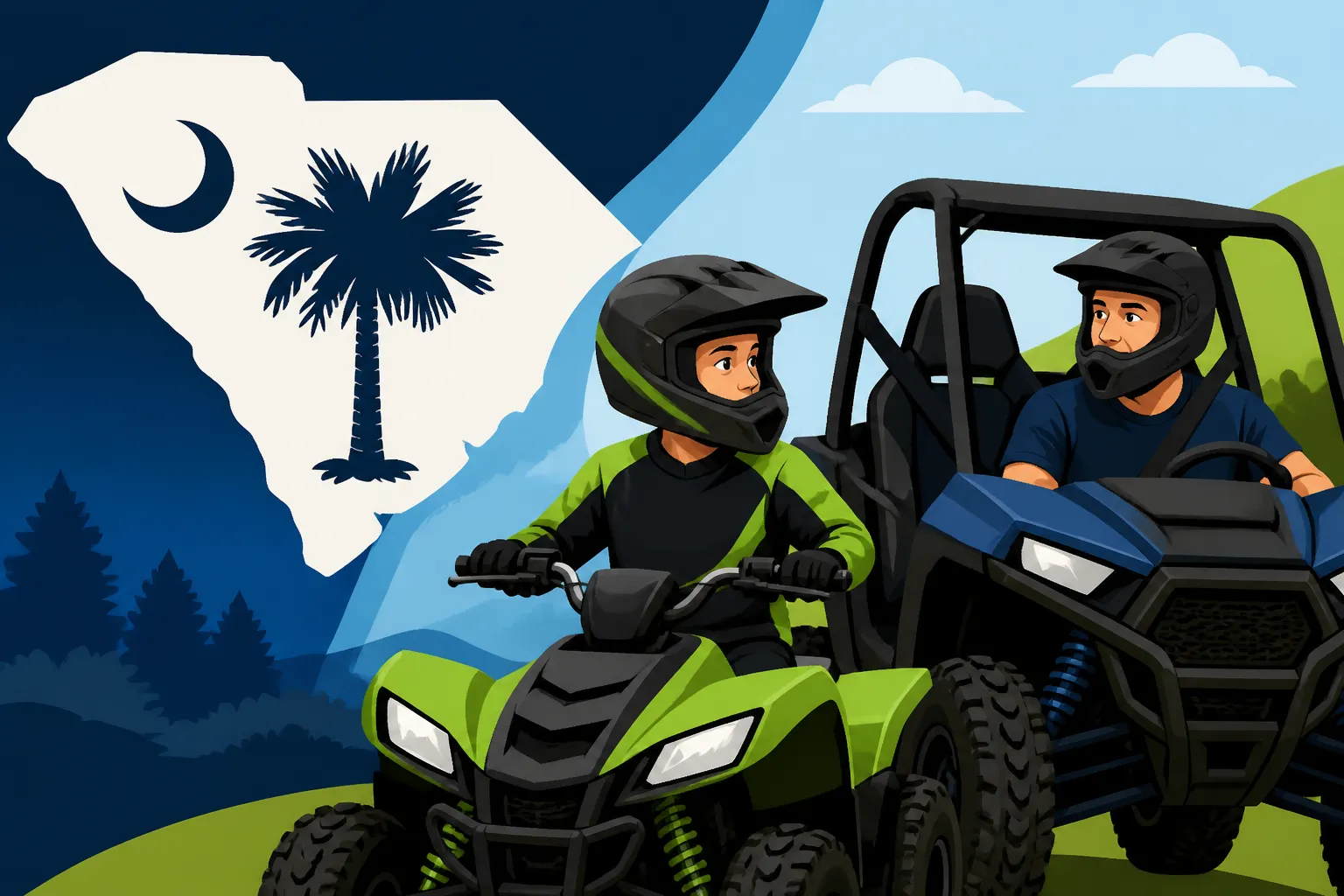
One of the most important aspects of rider safety, regardless of age, is proper protective gear. For young ATV operators in South Carolina, helmet and eye protection are not optional – they are legally mandated. [South Carolina Helmet Rules for Young Riders] stipulate that anyone operating or riding as a passenger on an ATV who is 15 years of age or younger must wear a safety helmet. This helmet must be approved by the Department of Transportation (DOT) and fastened securely. This isn't just any helmet; it needs to be one specifically designed for motor vehicle use, offering appropriate protection.
Furthermore, these young riders (15 and under) are also required to wear eye protection. This could be goggles that fit snugly with the helmet, or a full face shield on the helmet itself. The goal is to protect against flying debris, dust, insects, and branches, which can all cause serious eye injuries or distract a rider, leading to an accident. Just like with accompaniment, these rules apply on both public and private lands. No exceptions for a quick spin around the yard!
Safety Certificates: A Must for Young Riders
Beyond direct supervision and protective gear, South Carolina recognizes the importance of formal training for young ATV operators. That's why the state requires a safety certificate for most riders under a certain age. Specifically, [South Carolina Safety Certificates at 15 and Under] are mandatory for any person aged 6 through 15 who operates an ATV. This certificate proves that the rider has completed an approved ATV safety course.
These courses teach crucial skills like safe operating procedures, risk assessment, environmental awareness, and maintenance. They're designed to give young riders the knowledge and confidence to handle their machines responsibly. There's usually an online component followed by a hands-on riding session with a certified instructor. This isn't just busywork; it's a vital educational step. An adult accompanying a minor must also ensure the minor has this certificate, or risk additional penalties. Think of it as getting your learner's permit for an off-road machine – it's a foundational step towards safe, independent riding.
Machine Age and Size Restrictions for Youth
It's not just about the rider's age; it's also about ensuring the ATV itself is appropriate for the rider's physical capabilities. South Carolina's Chandler's Law includes provisions that address the suitability of the machine for the operator, though these are more generally stated than specific cubic centimeter limits. The spirit of the law, and widely accepted safety guidelines, is that children should only operate ATVs that are appropriately sized for them. This means:
- No Child on an Adult Machine: A common and dangerous mistake is putting a small child on a full-size adult ATV. These machines are too heavy, too powerful, and too large for a child to control safely, increasing the risk of rollovers and loss of control.
- Youth-Specific ATVs: Many manufacturers produce youth ATVs with smaller engines, lighter frames, and restricted top speeds, specifically designed for different age groups (e.g., 90cc for younger kids, 125cc-250cc for older teens). Always consult the manufacturer's recommendations and [South Carolina Age Restriction Warning Labels] that come with the machine.
- Physical Fit: A rider should be able to comfortably reach the handlebars, operate the throttle and brakes, and place their feet flat on the footrests while seated. They should also be able to shift their weight effectively to steer and navigate terrain.
While the law doesn't specify exact engine displacement limits for youth, it falls on the supervising adult and parent to exercise good judgment. [South Carolina Equipment Requirements for ATVs] also imply that the machine itself should be safe and well-maintained. Always choose a machine that fits your child, not one they'll "grow into," to ensure maximum control and safety.
Navigating the Nuances: Common Questions and Misconceptions
Even with a clear understanding of the core rules, the world of ATV and UTV laws can still throw curveballs. Riders often have specific scenarios in mind that don't seem to fit neatly into the general guidelines, leading to confusion and, sometimes, accidental non-compliance. Let's tackle some of these common questions and misconceptions to help you navigate the nuances of South Carolina's ATV laws with confidence.
Passenger Rules: When Can a Child Ride Along?
This is a big one, and it's where many people get it wrong. The general rule in South Carolina is quite clear: ATVs are designed for a single operator. Riding with a passenger on a single-rider ATV is generally prohibited, and this is especially true for children. [South Carolina Passenger Rules Under 16] state that an operator under 16 may not carry a passenger. Period. This is because carrying a passenger, especially a child, drastically alters the ATV's balance and handling characteristics, making it much more difficult to control and significantly increasing the risk of a rollover.
Even for adults, carrying a passenger on a single-rider ATV is highly discouraged and often illegal. The only exception is if the ATV is specifically designed by the manufacturer to carry more than one person, typically referred to as a "tandem" ATV or, more commonly, a side-by-side UTV. These machines have multiple seats, seatbelts, and a roll cage, making them inherently safer for carrying passengers. So, if your child is on a quad designed for one, they should be riding alone. Don't risk it by trying to squeeze two onto a seat meant for one.
Out-of-State Visitors: Do SC Rules Apply?
Planning a trip to South Carolina with your ATVs and your kids? Or perhaps you're a South Carolina resident hosting out-of-state family. A frequent question is whether South Carolina's ATV laws, including those for youth riders and adult accompaniment, apply to visitors from other states. The answer is a resounding yes. When you are operating an ATV within the borders of South Carolina, you are subject to South Carolina law, regardless of where you normally reside or where your ATV is registered.
This means if you're visiting from North Carolina, Georgia, or any other state, and you have a child under 16 operating an ATV, they must adhere to South Carolina's rules for helmets, safety certificates, and adult accompaniment. [South Carolina Rules for a Visiting Georgia Rider] would be the same as for a local rider. It's not a matter of reciprocal agreements; it's about the law of the land where the vehicle is being operated. Always research the local laws of any state you plan to ride in, as they can vary significantly.
What a Deputy Can Ask to See
If you're riding in South Carolina, especially on public lands or areas where law enforcement patrols, it's possible you might be stopped by a deputy or a forest ranger. Knowing what they can legally ask for can make the interaction smooth and stress-free. [What a South Carolina Deputy Can Ask to See] generally includes proof that you and your young riders are compliant with state law.
For an adult accompanying a minor, a deputy might ask for:
- Identification: Your driver's license or other valid ID to verify your age (18+) as the supervising adult.
- Minor's Safety Certificate: Proof that the minor (aged 6-15) has completed the required ATV safety course. This could be a physical card or a verifiable digital record.
- Observation of Accompaniment: The deputy will observe whether the adult was indeed "within sight or hearing" of the minor operator.
- Helmet and Eye Protection Check: They'll verify that the minor is wearing an approved helmet and appropriate eye protection.
- Proof of Ownership/Permission: While not directly related to youth rules, they might ask for proof of ownership for the ATV (like a bill of sale or title if you chose to get one), or permission to be on the land you're riding on.
Being prepared with these documents and understanding your responsibilities can prevent misunderstandings and potential citations. It shows you're a responsible rider who takes safety and compliance seriously.
| Age Group | Adult Accompaniment (18+) | Helmet (DOT Approved) | Eye Protection | ATV Safety Certificate | Passenger Allowed (on single-rider ATV) |
|---|---|---|---|---|---|
| Under 6 | Prohibited from operating ATV | Mandatory | Mandatory | Not Applicable | No |
| 6 to 15 | Mandatory (within sight/hearing) | Mandatory | Mandatory | Mandatory | No |
| 16 and Over | Not Required | Not Required (but highly recommended) | Not Required (but highly recommended) | Not Required | No (on single-rider ATV) |
Ensuring a Safe Riding Experience for the Whole Family
Riding ATVs and UTVs should be a fun, memorable experience for the entire family, creating bonds and outdoor adventures that last a lifetime. But that can only happen when safety is paramount, especially when involving younger riders. Beyond just adhering to the legal requirements of adult accompaniment and other rules, there are practical steps you can take to foster a truly safe riding environment. It's about building good habits, being prepared, and continuously learning, so every ride is a positive one.
Pre-Ride Checks and Safety Briefings
Safety starts before the ignition key even turns. Implementing a routine of pre-ride checks and safety briefings can significantly reduce risks. This is a great opportunity to teach young riders about responsibility and preparedness.
Before heading out:
- Machine Check: Do a quick once-over of all ATVs. Check tires for proper inflation, ensure brakes are working, verify fluid levels (oil, coolant), and check that all lights (if applicable) are functional. Look for any loose parts or obvious damage. This is a perfect time to teach your child about basic maintenance. If you're looking for heavy-duty components that can withstand tough conditions, especially for critical steering and suspension, check out SuperATV's range of parts.
- Gear Check: Ensure everyone, especially youth riders, is wearing appropriate gear: DOT-approved helmets, eye protection (goggles or face shield), long-sleeved shirts, long pants, over-the-ankle boots, and gloves. Make sure helmets fit snugly and are securely fastened.
- Rider Briefing: Gather everyone for a quick safety talk. Review the day's route, discuss potential hazards (mud, hidden roots, inclines), and remind younger riders of key safety rules like maintaining a safe speed, keeping a safe distance, and never riding beyond their skill level. For children under 16, reiterate the importance of staying within sight and hearing of the supervising adult.
- Weather Conditions: Briefly discuss the weather and how it might affect trail conditions. If it's been raining, trails might be muddier and slicker, requiring more cautious riding.
These simple routines create a culture of safety and preparedness, setting a positive example for young riders.
Choosing the Right Gear for Young Riders
We've already touched on helmets and eye protection as legal requirements, but equipping young riders correctly goes beyond the bare minimum. Proper gear protects them from impacts, scrapes, and environmental factors, making their ride more comfortable and safer.
Consider investing in:
- High-Quality Helmet: Don't skimp here. A good DOT-approved helmet specifically sized for a child's head is critical. Make sure it fits snugly without being uncomfortable, and that the chin strap is always fastened.
- Durable Eye Protection: Goggles should fit well with the helmet and offer good peripheral vision. Anti-fog and scratch-resistant lenses are a plus.
- Body Armor/Chest Protector: While not legally required, a chest protector or body armor can provide significant protection against roost, impacts from falls, and debris, especially for more aggressive riders or challenging terrain.
- Gloves: Protect hands from blisters, abrasions, and impacts.
- Sturdy Footwear: Over-the-ankle boots provide ankle support and protect feet from impacts and heat from the engine.
- Appropriate Clothing: Long pants and long-sleeved shirts made of durable material protect against scrapes, sun exposure, and branches. Layering is key for comfort in varied temperatures.
Remember, comfort equals control. If a child is uncomfortable in their gear, they'll be distracted, which can lead to mistakes. Ensure everything fits correctly and allows for full range of motion.
Continuing Education and Skill Building
Getting that initial [The Safety Certificate Riders 15 and Under Need] is a fantastic start, but ATV safety is an ongoing process of learning and skill building. Encourage a mindset of continuous improvement for both young riders and supervising adults.
- Practice, Practice, Practice: Regularly dedicate time to practicing fundamental riding skills in a safe, controlled environment. This includes turning, braking, hill climbing, descending, and obstacle avoidance. The more confident and skilled a rider becomes, the safer they will be.
- Lead by Example: As a supervising adult, always demonstrate safe riding practices. Wear your gear, follow the rules, and show good judgment. Children are always watching and learning from the adults around them.
- Advanced Training: Consider advanced riding courses or workshops as your child grows and gains experience. These can introduce more complex techniques and strategies for challenging terrain.
- Stay Informed: Keep up-to-date with any changes to South Carolina's ATV laws and best practices for safety. Resources from the ATV Safety Institute or your local DMV can be invaluable. The [South Carolina Code Title 50 Chapter 26] is always there for reference.
By taking a proactive approach to safety, from pre-ride checks to ongoing education, you can ensure that your family's ATV and UTV adventures in South Carolina are not only thrilling but also safe and responsible for years to come.
Disclaimer
This article is for general informational purposes only and does not constitute professional advice. Laws, prices and regulations vary by location and change over time. Consult a qualified professional for guidance on your specific situation.