Buying a Golf Cart Permit for $5
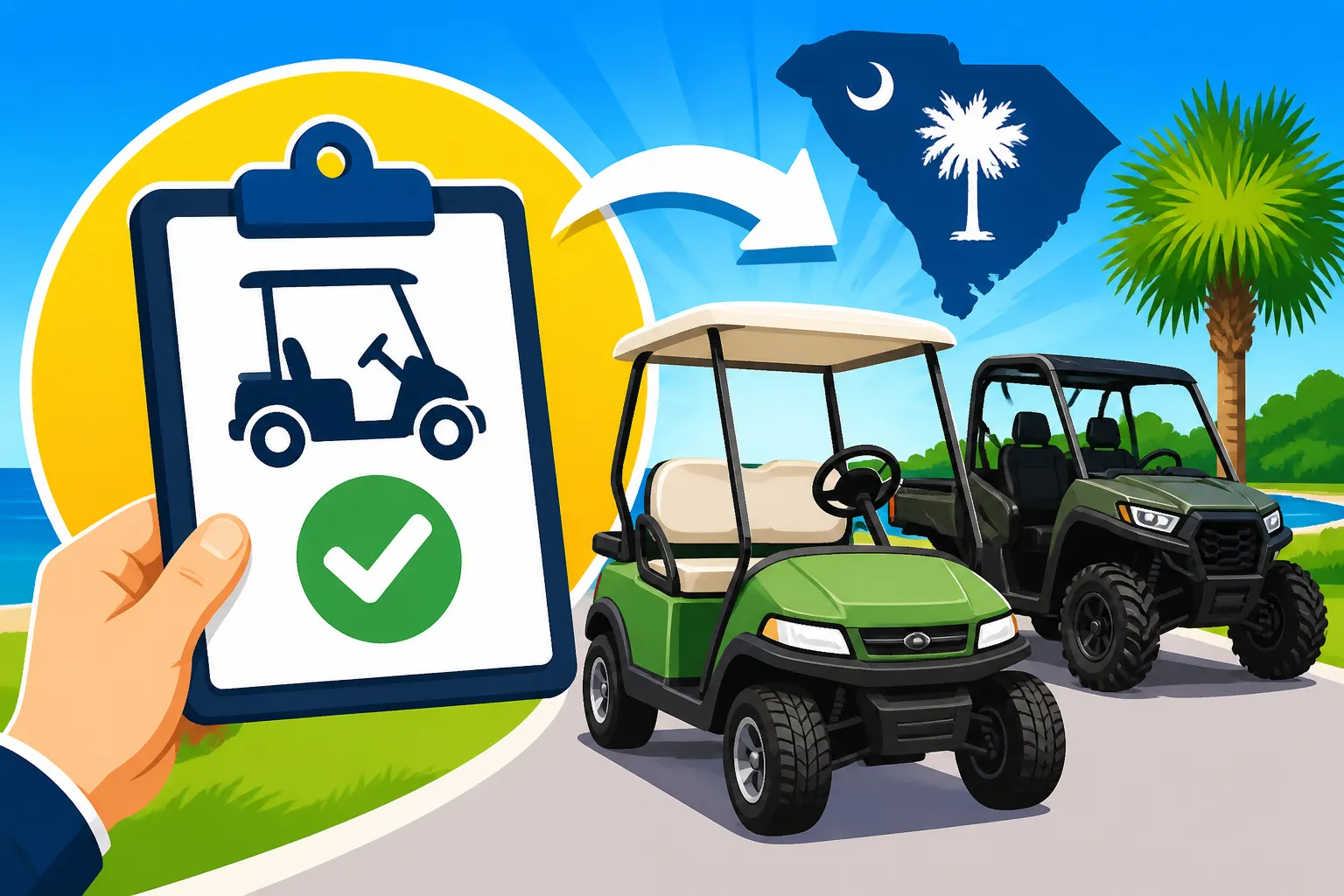
Navigating the ins and outs of getting your golf cart road-ready in South Carolina can feel like a maze, full of conflicting information and confusing regulations. Many folks just want to hop in their cart and head to the neighborhood pool or a friend's house without worrying about getting pulled over, but figuring out the proper paperwork to do that legally can be a real headache. This guide is here to untangle the process, specifically focusing on how you can get that essential South Carolina golf cart permit for just $5, outlining exactly what you need to do and what rules you'll need to follow.
Understanding South Carolina's Golf Cart Permit Requirement
It’s a common misconception that golf carts are just for the greens or your private property. While that’s certainly where they shine, South Carolina has carved out specific pathways for you to use your golf cart on certain public roads. This isn't about full-blown vehicle registration, which comes with its own set of paperwork and fees; instead, it's about a special permit that acknowledges the limited, regulated use of golf carts for local errands and cruising.
Why a Permit is Even Necessary
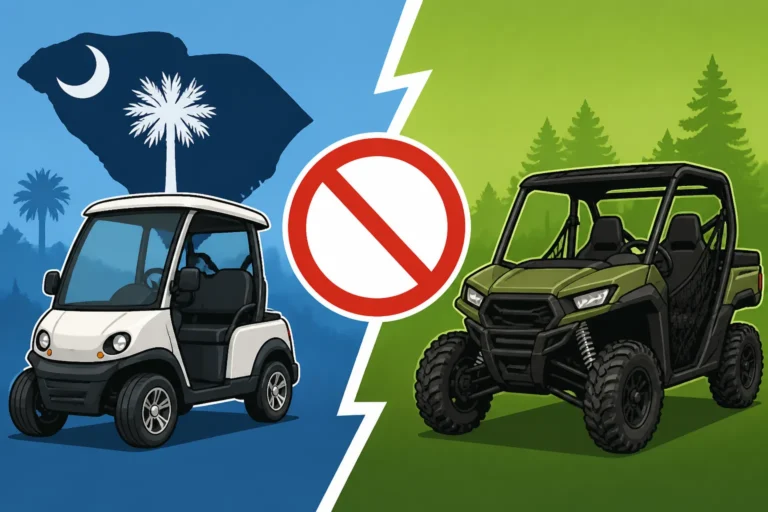
You might be thinking, "Why do I need a permit for a golf cart? It's not a car!" And you're right, it's not a car, but when it touches public roads, it falls under the purview of state law designed to keep everyone safe. The permit system is South Carolina's way of giving a nod to the golf cart's utility in communities while ensuring a basic level of accountability and safety. Without this permit, riding your golf cart on any public road, even a quiet residential street, could lead to a citation. It essentially serves as your official permission slip to mingle with other vehicles on designated pathways, clearly distinguishing it from machines like ATVs, which have different rules entirely, as detailed in [South Carolina Has No Off-Road ATV Registration]. The permit helps maintain order and ensures that anyone operating a golf cart on public thoroughfares has at least acknowledged and agreed to abide by the specific limitations governing its use.
The Elusive $5 Fee and What It Covers
The $5 fee for a South Carolina golf cart permit is one of the most budget-friendly aspects of vehicle ownership in the state, and it’s a relief for many. What this small sum buys you is a decal that allows you to legally operate your golf cart on certain secondary roads and streets for five years. This isn't an annual fee that sneaks up on you every 12 months, which is a common source of confusion for new owners. It's a one-time payment for the five-year validity of the decal. The permit specifically grants you the ability to operate the golf cart during daylight hours, within a four-mile radius of your home or primary residence, and only on roads where the posted speed limit is 35 miles per hour or less. It’s important to understand that this permit is quite distinct from what you might get for a [South Carolina Street-Legal UTV Registration Arrives] or even [South Carolina Low-Speed Vehicle Plates]. Those options involve different equipment requirements, broader road access, and significantly higher fees. The golf cart permit is truly designed for hyper-local, low-speed travel, a convenient way to get around your immediate neighborhood without the need for a full vehicle title and registration like a car or truck.
Step-by-Step Guide to Getting Your Golf Cart Permit
Getting your golf cart permit in South Carolina is a fairly straightforward process, but like anything involving the DMV, having all your ducks in a row beforehand makes a world of difference. Being prepared can save you a lot of time and potential frustration, ensuring you walk out with your new decal instead of a list of missing items.
Gathering Your Essential Documents
Before you even think about heading to a South Carolina Department of Motor Vehicles (DMV) office, you need to gather a few key pieces of paperwork. These documents are crucial for proving who you are, that the golf cart belongs to you, and that you have the necessary insurance coverage. Without these, your trip to the DMV will likely be a wasted effort.
First and foremost, you'll need proof of ownership for your golf cart. This typically comes in the form of a bill of sale. If you bought your golf cart brand new from a dealer, you might have an official purchase agreement or even a Manufacturer's Certificate of Origin (MCO). For a used golf cart bought from a private seller, a clearly written bill of sale signed by both parties is usually sufficient. Make sure it includes the seller's and buyer's names, the date of sale, the purchase price, and a detailed description of the golf cart, including its Vehicle Identification Number (VIN) if it has one, or a serial number. If you find yourself in a bind, perhaps you lost the original bill of sale or are inheriting a golf cart, you might need to create an affidavit of ownership. Resources like LawDepot can provide templates for these kinds of legal documents, helping you draft a clear and comprehensive statement to present as proof.
Next, you'll need proof of liability insurance. Unlike ATVs used strictly off-road where [Does an Off-Road Quad Need Insurance in South Carolina?] isn't mandatory, any vehicle operating on public roads, even a golf cart, needs at least basic liability coverage. Your insurance provider can give you an insurance card or a declaration page that clearly shows your golf cart is covered. Make sure the policy is active and meets South Carolina’s minimum liability requirements.
Finally, you'll need your valid South Carolina Driver's License. The person applying for the permit must be a licensed driver in the state. This demonstrates that you are legally authorized to operate a motor vehicle. If your license has expired or is suspended, you won't be able to get the permit. Always double-check these items before you leave your driveway to avoid a frustrating second trip.
Navigating the DMV Process
With your documents in hand, the next step is to head to your local South Carolina DMV office. While the permit application process isn't as involved as titling a new car, it still requires your presence at the counter. When you arrive, let the clerk know you're there to apply for a golf cart permit. They will likely direct you to the correct form, or in some cases, simply process the information directly into their system based on your documents.
You'll present your proof of ownership, insurance, and driver's license. The clerk will verify all the details, including checking the VIN or serial number on your golf cart against the ownership documents. This is a routine step to ensure the golf cart isn't stolen and genuinely belongs to you. Once everything checks out, you'll pay the nominal $5 fee. For payment, most DMV offices accept cash, checks, and major credit or debit cards, similar to how they handle other fees like those discussed in [South Carolina Title Payment Methods]. You'll then be issued a distinctive decal. It’s a pretty quick process when you come prepared; many people are in and out in less than 30 minutes, especially if the DMV isn't overly crowded.
Displaying Your Permit Correctly
Once you have that shiny new decal in hand, it’s not enough to just toss it in the glove compartment. The South Carolina law is clear: the permit decal must be permanently affixed and displayed on the left side of the golf cart, clearly visible from the rear. This means the driver’s side, somewhere on the body, usually near the rear wheel well or bumper. The intention is for law enforcement to easily spot it and verify that your golf cart is permitted for road use.
Failing to display the decal correctly, or having it obscured, could result in you being pulled over. An officer might treat it as if you don't have a permit at all, which could lead to a fine. It's a small detail, but an important one for avoiding unnecessary headaches. Think of it as a license plate for your golf cart; it needs to be where it can be seen. Taking the time to properly affix it ensures you're fully compliant with the rules.
Rules of the Road for Permitted Golf Carts in South Carolina
Getting the permit is just the first hurdle. Operating your golf cart legally in South Carolina involves adhering to a specific set of rules that govern where, when, and how you can ride. These rules are in place to integrate golf carts safely into the existing road network, which wasn't originally designed with them in mind. Ignoring these regulations can lead to tickets, fines, and even potential accidents, so understanding them thoroughly is key.
The 4-Mile Radius Rule Explained
One of the most critical aspects of the South Carolina golf cart permit is the "four-mile radius" rule. This law dictates that you can only operate your permitted golf cart on a public road within a four-mile radius of your home or primary residence. This means that if you live in a coastal town, you can take your golf cart to the beach, the grocery store, or a friend's house, as long as it's within that four-mile circle measured from your address.
This rule is designed to keep golf carts primarily within local neighborhoods and communities, preventing them from traveling long distances on busier roads. It's not uncommon for riders to misjudge this distance, especially in rural areas or when visiting new towns. You can’t just assume any road is fair game. Some local jurisdictions, especially popular resort towns, may have their own ordinances that slightly modify this rule, sometimes expanding or restricting the radius, or specifying approved routes. Always check with local authorities if you're unsure, as mentioned in [South Carolina Golf Cart Radius and Speed Rules]. It's your responsibility to know your local four-mile zone to avoid unintended violations.
Speed Limits and Daylight Operation
Beyond the geographic limitations, there are strict rules about when and how fast you can operate a permitted golf cart on South Carolina roads.
Firstly, golf carts are strictly limited to roads with a posted speed limit of 35 miles per hour or less. You cannot legally operate a golf cart on any road where the speed limit exceeds 35 mph, even if you stay on the shoulder. This means major thoroughfares, highways, and many state routes are entirely off-limits. This rule is a major differentiator from [A Low-Speed Vehicle Is Not a South Carolina UTV] which might have broader road access. The purpose is safety; golf carts are not designed to keep up with higher-speed traffic, and attempting to do so is incredibly dangerous for both the golf cart occupants and other drivers.
Secondly, golf cart operation is restricted to daylight hours only. This is a non-negotiable rule. Your golf cart cannot be operated on public roads from a half-hour after sunset until a half-hour before sunrise. While many golf carts come with headlights and taillights, these are primarily for visibility in low-light conditions during the day or on private property, not for nighttime road use. Attempting to ride your golf cart after dark on a public road, even within your four-mile radius, is a direct violation of the permit rules and will result in a citation. This emphasizes the recreational and local-travel nature of the golf cart permit.
Safety Equipment and Operator Requirements
While golf carts aren't held to the same stringent safety equipment standards as cars, there are still fundamental requirements for safe operation and specific rules for who can drive them.
The operator of a permitted golf cart on a public road must hold a valid South Carolina Driver's License. This means a learner's permit or a suspended license won't cut it. The person behind the wheel must be a fully licensed driver. Furthermore, while the permit itself doesn't explicitly list specific equipment, common sense and general traffic laws still apply. Your golf cart should be in safe operating condition, with working brakes, a steering mechanism that functions properly, and functioning headlights and taillights (even though you can only ride in daylight, these are essential for visibility). A rearview mirror is also a smart addition if your cart doesn't have one, enhancing your awareness of surrounding traffic. While not mandated by the permit for equipment, operating a golf cart unsafely due to poor maintenance could still lead to issues with law enforcement. Understanding [South Carolina Golf Cart Permit Rules] in their entirety helps ensure you're not just legal but also safe.
Renewing Your Golf Cart Permit and Common Pitfalls
The South Carolina golf cart permit is a fantastic way to enjoy your machine on local roads, but it’s not a "set it and forget it" kind of deal. Permits expire, circumstances change, and there are common mistakes that can easily land you in hot water. Staying informed about renewal procedures and typical pitfalls will save you a lot of hassle down the road.
When and How to Renew
Your South Carolina golf cart permit decal is valid for five years from its issue date. This means you'll need to remember to renew it before it expires to continue legal operation on public roads. The renewal process is very similar to the initial application. You’ll need to revisit a South Carolina DMV office, bringing your current permit decal, updated proof of insurance, and your valid driver's license. The DMV will verify your information, confirm that your golf cart still meets the basic requirements for a permit, and you’ll pay the modest $5 renewal fee. They will then issue you a new decal with an updated expiration date. It's important not to let your permit lapse, as operating with an expired decal is just like having no permit at all, potentially leading to tickets and fines. Keeping track of the expiration date is key to seamless enjoyment of your golf cart. For a deeper dive into this, you might look into [South Carolina Golf Cart Permit Renewal].
Address Changes and Transferring Permits
Life happens, and sometimes that means moving to a new house, even if it's just down the street. If you change your residential address, you’ll need to take action regarding your golf cart permit. Because the permit's validity is tied to a four-mile radius of your primary residence, a new address usually means you need a new decal reflecting this change. This might seem like an extra step, but it's crucial for compliance. You’ll need to go to the DMV, declare your new address, and likely pay another $5 fee for a new decal. The old decal is then rendered invalid for your new location. This concept is similar to what happens when [Moving House Means a New Cart Decal].
When it comes to transferring permits, it’s a bit different. If you sell your golf cart, the permit decal does not transfer to the new owner. The permit is issued to a specific person at a specific address for a specific golf cart. The new owner will need to apply for their own separate permit, following the same steps you did initially. This also means if you buy a used golf cart that still has a permit decal from the previous owner, that decal is not valid for you. You must apply for your own permit immediately.
Avoiding Fines and Confusion
The best way to avoid fines and confusion is to diligently follow all the rules associated with your South Carolina golf cart permit. Operating your golf cart outside the four-mile radius, riding it on roads with speed limits over 35 mph, or driving it after dark are the most common violations, and they can lead to citations and penalties. [South Carolina Fines of $50 to $200] are a real possibility for non-compliance, and no one wants to turn a leisurely ride into a costly mistake.
Furthermore, always be aware of local ordinances. While the state law sets the baseline, individual cities and towns across South Carolina have the authority to impose stricter rules on golf cart use within their municipal limits. For instance, a town might further restrict the hours of operation, designate specific roads as off-limits, or even have different speed regulations. What’s allowed in one coastal community might be prohibited in another. Always check with the local police department or municipal government website for any additional regulations that apply to your specific area. Being proactive and informed is your best defense against unexpected fines and ensures you can enjoy your golf cart permit without any worries.
Comparing Golf Cart Permits to Other Street-Legal Options in South Carolina
To help clarify the specific niche of the South Carolina golf cart permit, let's look at how it compares to other common forms of street-legal personal transportation in the state. Many riders confuse these categories, leading to misunderstandings about where and when they can ride.
| Feature | Golf Cart Permit | Low-Speed Vehicle (LSV) | Street-Legal UTV (Post-Nov 2026) |
|---|---|---|---|
| Primary Use | Local, recreational, short-distance | Local, utility, personal transport | Broader road use, off-road capable |
| Permit/Registration | Decal, 5-year validity, $5 fee | Full Title & Registration, annual fees | Full Title & Registration, biennial fees |
| Road Access | 4-mile radius of home, 35 mph roads only | Roads up to 35 mph, no radius limit | Roads up to 55 mph, specific state highways |
| Operating Hours | Daylight hours only | Day & Night (with proper lighting) | Day & Night (with proper lighting) |
| Insurance Req. | Liability insurance required | Full liability insurance required | Full liability insurance required |
| Operator License | Valid SC Driver's License | Valid SC Driver's License | Valid SC Driver's License (17+ for UTV) |
| Equipment Req. | Basic lights, brakes (not explicitly in permit) | Headlights, taillights, brake lights, turn signals, mirrors, seatbelts, VIN | Headlights, taillights, brake lights, turn signals, mirrors, seatbelts, DOT tires, VIN |
| Property Tax | Exempt from county property tax | Subject to county property tax | Exempt from county property tax |
This table clearly illustrates that the $5 golf cart permit is a highly specialized option, designed for a very specific type of use. It's the most restricted in terms of where and when you can ride, but it's also the simplest and most affordable way to get a cart on the road legally for short, local trips. Meanwhile, an LSV offers more freedom but comes with more stringent requirements, similar to a regular vehicle. The new street-legal UTV category, as discussed in articles like [South Carolina's Biennial Street UTV Fee], opens up even more possibilities for side-by-sides, but with a different set of rules and higher costs, signifying a different level of road-worthiness. Understanding these distinctions is crucial for choosing the right path for your specific machine and intended use.
Disclaimer
This article is for general informational purposes only and does not constitute professional advice. Laws, prices and regulations vary by location and change over time. Consult a qualified professional for guidance on your specific situation.