Leaving a Printed Pass on Your Dashboard
A printed pass can be easy to forget, hard to keep legible, or confusing to position when you arrive at a South Carolina forest trailhead. The right place depends on which pass you bought. Here’s how to display it, keep it readable, and avoid assuming that one pass or display method works for every vehicle.
Which South Carolina forest pass are you displaying?
South Carolina’s National Forest OHV pass rules distinguish between day and season passes. Both are connected to trail access, but they do not work in exactly the same way. Before you print anything, check the instructions for the pass you purchased and make sure you understand which vehicle or rider it applies to.
| Pass type | What it is associated with | Practical display approach |
|---|---|---|
| Season pass | The individual rider; it is non-transferable | Display it in the tow vehicle as directed, where it can be seen through the windshield |
| Day pass | The tow vehicle’s plate | Follow the pass instructions for matching it to the vehicle and displaying any printed proof |
| Private riding-area pass | The private park’s rules | Use that park’s instructions; forest pass rules do not automatically apply |
The season pass is associated with a person, not simply with whichever machine happens to be on the trailer. If you bought one, another rider cannot use it just because you are sharing a vehicle. The printed copy is a way to show the pass at the trailhead; it does not turn a personal pass into a household or vehicle pass. See South Carolina Passes Are Non-Transferable for more on that distinction.
A day pass works differently: it is tied to the tow vehicle’s plate. The plate is therefore important when you purchase the pass and when its use is checked. Don’t assume a day pass bought for one vehicle automatically covers another vehicle you use to tow the machine. The details are covered in South Carolina Day Passes Tied to a Plate.
These distinctions matter when you travel with a group, change tow vehicles, or leave one machine at home and bring another. For the broader comparison, South Carolina’s Day and Season Forest Passes explains how the pass types differ. If you are riding at a private park rather than on a National Forest trail, check the park’s own entry and display rules instead.
Where to put a printed pass in the tow vehicle
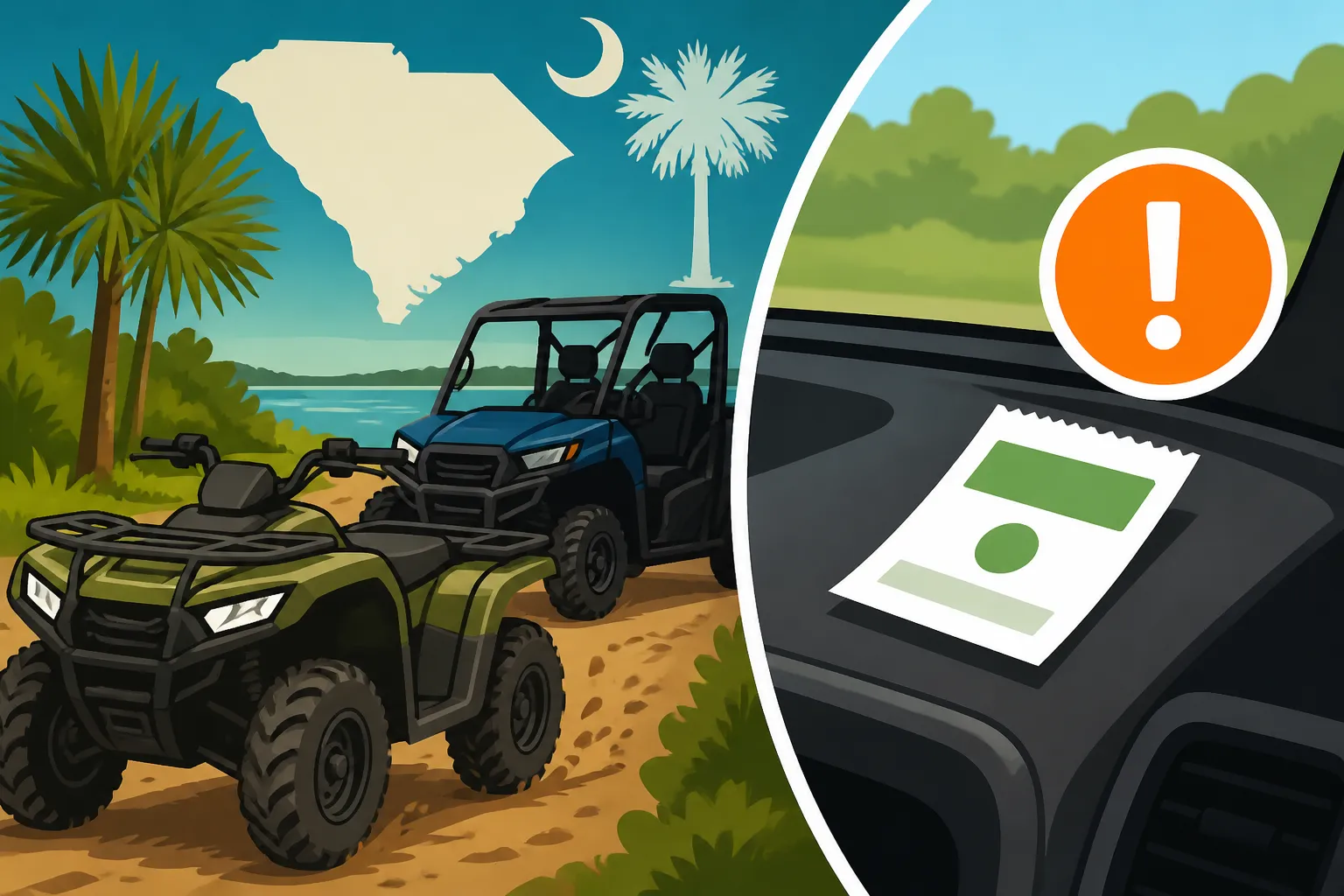
For an annual or season forest pass, the listed display approach is to place the printed pass in the tow vehicle. Put it where a person checking the vehicle can see it through the windshield without needing to search through the cab. A flat, visible position on the dashboard is usually the most practical choice, provided it does not block the driver’s view.
Do not treat “leave it on the dashboard” as a universal instruction for every pass. The specific directions supplied with your purchase take priority. A day pass may be checked using the tow vehicle’s plate rather than the same display arrangement used for a season pass. If the confirmation gives a particular placement or asks you to print a specific page, follow those directions.
A useful routine is to prepare the pass before leaving home:
- Print the pass or confirmation in the format the provider specifies.
- Check that the name, pass details, and any vehicle information are readable.
- Put the document in the tow vehicle before loading up, rather than carrying it loose in a riding bag.
- Place it in a visible spot that does not obstruct the driver’s sightline.
- Before unloading, check that it is still in place and has not slid under a sunshade, map, or other paper.
A clear document sleeve can help keep a paper pass from curling, getting damp, or sticking to the dashboard. Choose one that keeps the entire printed information visible; a sleeve with a dark tint, glare, or an opaque flap can make a pass harder to inspect. Office-supply stores and Amazon carry basic clear sleeves, but no special holder is needed unless the current pass instructions say otherwise.
Avoid placing the pass where direct sunlight, a windshield wiper, or loose gear could make it unreadable. A folded, faded, or wet printout may be difficult to check. If you have to reprint it, use the provider’s official account or confirmation process and follow its rules about duplicate copies. A phone screenshot can be a useful backup for finding the purchase details, but do not assume it replaces a printed pass when the instructions require a paper copy displayed in the vehicle.
Keep the pass in the tow vehicle while you ride, rather than taking the only copy out onto the trail. That reduces the chance of losing it in a pocket or pack and leaves it available if staff check the parked vehicle. If you drive a vehicle with a low or steeply angled dashboard, choose a spot that remains visible from outside without creating a driving hazard. Never tape or prop a document where it could obstruct the windshield or interfere with an airbag area.
For step-by-step purchase information, use How to Buy a South Carolina Forest Pass. Passes are sold through the authorized online process, so print the correct document from your purchase confirmation rather than relying on an old copy or a generic pass template. South Carolina Passes Sold Only Online describes the purchase channel.
Avoiding problems at the trailhead
A pass can be valid and still cause confusion if it is associated with the wrong person or vehicle, difficult to read, or displayed in the wrong place. A quick check before you unload is easier than trying to sort out paperwork after the machines are off the trailer.
Check the vehicle and rider details
For a day pass, compare the tow vehicle’s plate with the information associated with the purchase. This is especially important if you switched trucks, borrowed a vehicle, or are arriving with a friend who bought the pass. If the vehicle changed after purchase, check the official pass instructions or contact the pass provider before you assume the pass can be reassigned.
For a season pass, confirm that the person riding is the pass holder. A pass that follows the rider is not automatically valid for every member of a group. If several people in your party plan to ride, make sure each person has the required pass rather than relying on one printed copy in the truck. South Carolina Season Passes Are Per Person covers the individual-pass rule.
Keep the confirmation and any relevant purchase details available in case you need to resolve a mismatch. Having the order information on a phone can help you look up the transaction, but it is a backup for resolving questions, not a reason to ignore the display directions.
Keep the paper legible, but protect your view
A pass has little practical value as proof if the printed details are too faint to read. Use a clear print, avoid shrinking the document until the text is tiny, and make sure the complete pass appears on the page. If the printer cuts off the edges, try the print settings again instead of trimming away information.
Place the paper where it is visible from outside the vehicle while leaving the driver’s view clear. A dashboard corner may work better than the center of the windshield. Do not put the pass under a dark dash cover or behind tinted material that makes the details difficult to see.
If rain, condensation, or a hot cab is likely to damage the paper, protect it with a transparent sleeve. Check for glare before you leave: a glossy surface can reflect sunlight and make the text hard to see from outside. A sleeve is useful only if it improves protection without hiding the information.
Don’t confuse a pass with trail status
A pass does not guarantee that a particular trail is open, suitable for your machine, or accessible under current conditions. Forest roads and OHV trails can close for maintenance, weather, or other operational reasons. Check access conditions before you tow, and confirm that the route allows your vehicle type. South Carolina Trail Conditions Before You Haul is a useful next step.
A forest pass also should not be assumed to cover entry at a private riding park. Private areas set their own access, machine, and pass requirements. Likewise, a permit for one kind of riding area does not automatically authorize use somewhere else. Review South Carolina Passes Cover All Four Trails for the National Forest pass context, and verify the relevant land manager’s rules for the specific place you plan to ride.
If a ranger or other authorized staff member asks to see proof, be prepared to show the pass and answer basic questions about the rider or tow vehicle it covers. Do not move the pass to another vehicle simply to make it easier to display if doing so conflicts with its conditions. When the purchase information and display instructions do not match your situation, resolve that before riding rather than guessing at the trailhead.
A simple pre-trip checklist
Before leaving, confirm the following:
- You have the correct pass type for the place you plan to ride.
- The season-pass holder is among the riders, if you are using a season pass.
- The day-pass vehicle information matches the tow vehicle, if applicable.
- The required printed document is complete and readable.
- The pass is displayed as directed and does not block the driver’s view.
- You have a backup copy of the purchase details, without relying on it as a substitute for required display.
- The trail is open and accepts your machine.
These small checks prevent common mix-ups: showing a pass for the wrong person, bringing a day pass tied to a different truck, or arriving with a printout that cannot be read through the windshield. If you are unsure which display rule applies, use the instructions for that specific pass and confirm details through the official pass provider before heading out.
Disclaimer
This article is for general informational purposes only and does not constitute professional advice. Laws, prices and regulations vary by location and change over time. Consult a qualified professional for guidance on your specific situation.