South Carolina Private Park Helmet Rules
Planning a ride at a privately operated park in South Carolina? A helmet that is legal for one rider may not meet the park’s entry rules, and policies can differ for adults, children, ATV riders, and UTV passengers. The safest approach is to check both the rules that apply to your ride and the park’s current requirements before you load up.
Why a Private Park Can Set Its Own Helmet Rules
A private riding park can make helmet use a condition of admission or participation. Its policy may require helmets for everyone, even when a rider believes state law does not require one for that person. It may also specify a helmet type, require eye protection, or apply separate rules to ATVs and side-by-sides.
That means there are two checks to make:
- Check the rules that apply to the rider and vehicle. South Carolina has ATV safety requirements that include provisions for young riders. Those requirements are separate from a park’s admission and operating rules. For an overview of the state law, see South Carolina ATV Helmet Law and South Carolina Helmet Rules for Young Riders.
- Check the park’s current rules. A park may set a stricter policy than the minimum a rider expects from state law. The park can also enforce its rules as a condition of entry, even if a rider’s planned route is private property.
This distinction matters most when a group includes both adults and children. An adult may be accustomed to riding without a helmet on private land, while the park requires helmets for all riders. A young rider may need to meet state safety requirements as well as the park’s age, helmet, and supervision policies. Check the rules for every person in the group rather than assuming one answer applies to everyone.
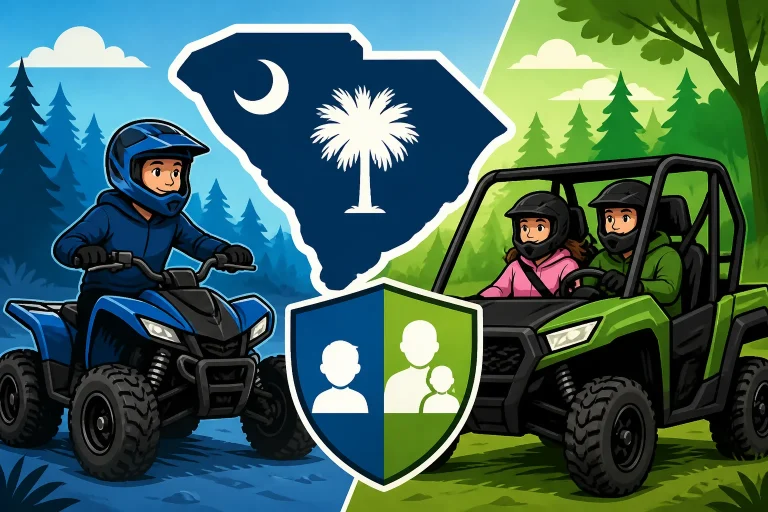
It also helps to distinguish an ATV from a UTV. A traditional ATV generally has a straddle seat and handlebars; a UTV usually has seats, a steering wheel, and seat belts. A park might use one helmet policy for every vehicle, or spell out different requirements for each. Don’t assume that a seat belt makes a helmet unnecessary—or that a helmet rule written for ATVs automatically describes the park’s UTV policy.
If the park’s website has a general rules page, look for separate sections on safety equipment, youth riders, passengers, and vehicle types. South Carolina Private Park Passes and Rules can help with the broader distinction between a park’s own conditions and public-land requirements.
What Helmet Rules May Require
Private parks do not all use the same wording. A rule may simply say that helmets are required, or it may specify which riders must wear them and what kind of helmet is accepted. Before visiting, look for the details below and contact the park if a requirement is unclear.
| Rule detail | What to confirm |
|---|---|
| Who must wear a helmet | Every rider, only minors, or riders in particular vehicle types |
| Approved helmet type | Whether a motorcycle-style helmet is required or another type is accepted |
| Certification | Whether the park requires a recognized safety label, such as a DOT label |
| Eye protection | Whether goggles, glasses, or a helmet visor must be worn |
| UTV occupants | Whether drivers and passengers must wear helmets while seated and belted |
| Youth rules | Minimum age, adult supervision, and any additional gear requirements |
| Fit and condition | Whether damaged, poorly fitting, or visibly altered helmets can be refused |
If the park names a particular certification, follow the park’s wording rather than relying on a generic product description. A helmet described as “off-road style” or “DOT style” is not necessarily the same thing as a helmet that meets the standard the park specifies. Check the labeling on the helmet itself and ask the park what it accepts if the rule is not precise.
Eye protection is worth confirming separately. Some policies require goggles or other protection even when a helmet has a face shield. Dust, grit, low branches, and debris from other vehicles can make eye protection useful on the trail, but the park’s written policy determines what it will accept at the gate. A visor should not be assumed to satisfy a goggles requirement.
For a UTV, ask whether the helmet rule applies to every occupant, including passengers who are wearing seat belts. A helmet does not replace a seat belt, and a seat belt does not automatically replace a helmet when the park requires both. Read the vehicle’s safety rules as a complete set rather than treating the helmet line as the only equipment requirement.
Parks may also impose requirements beyond helmets, such as minimum rider ages or rules about who may ride as a passenger. If children are coming, check South Carolina Private Park Age Minimums and South Carolina Private Park Passenger Rules. Those policies can affect whether a child may enter a particular vehicle or trail, even when the child has the required safety gear.
How to Check Before You Travel
A quick check before departure can prevent a frustrating surprise at the entrance. Park rules can change, and a policy that applied on a previous visit may not be the current one. Use the park’s latest written information where available, then ask directly about anything that remains ambiguous.
- Identify the vehicle and riders. Note whether you are bringing ATVs, UTVs, or both, and list the ages of riders and passengers. A park may treat those categories differently.
- Read the current rules page. Search for helmet, protective gear, youth, passenger, and UTV requirements. Check for any rules that apply specifically to organized rides or particular trails.
- Ask about the exact helmet you plan to bring. If the wording says “approved” or names a certification, provide the helmet’s type and label details. Ask whether goggles or a face shield are also required.
- Confirm rules for children and passengers. Do not rely on a general statement that “helmets are required.” Ask whether the child’s age, vehicle, seating position, or supervision changes what is allowed.
- Check whether the park supplies or rents equipment. If you expect to borrow a helmet, verify availability, acceptable sizes, condition, and whether the park requires you to bring your own eye protection.
- Save the answer and pack accordingly. Keep a screenshot or copy of the current rules and bring the helmet, goggles, and any other required equipment for each rider.
If you are shopping for a helmet, focus on fit and on the certification the park actually accepts. A listing on Amazon can be a starting point for comparing models, but read the full product details and check the helmet’s own label rather than relying only on a short listing title. Make sure the helmet fits the intended rider; an adult helmet that is loose on a child is not a safe substitute for a properly sized one.
A helmet should sit securely and comfortably, without shifting easily when the wearer moves their head. Follow the manufacturer’s fitting guidance, and check the strap and shell before riding. Do not assume a helmet remains suitable after a significant impact. If it has been in a crash or shows damage, follow its manufacturer’s replacement guidance and do not take a chance on a park refusing visibly damaged gear.
When a park’s rule is vague, ask a specific question instead of requesting a general confirmation. For example: “Does every UTV passenger need a helmet while wearing a seat belt?” or “Do you require a DOT-labeled helmet for adults riding an ATV?” A clear answer is more useful than assuming that a helmet that looks suitable will pass inspection.
At the Park: Avoiding a Gate-Day Problem
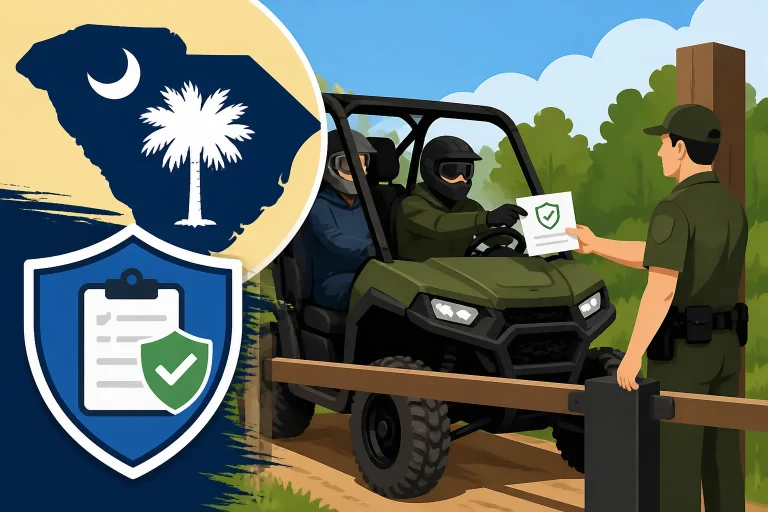
Have each helmet ready before unloading. If staff check safety equipment, you can show the helmet’s label and ask whether it meets the park’s policy before the group gets dressed or queues for entry. Bring a suitable backup only if you already know it meets the same rule; two helmets that fail the requirement do not solve the problem.
For families, check the fit again when the child is wearing the gear they will ride in. A helmet that seems secure at home may shift after the strap is fastened incorrectly or after the rider changes clothing. Make sure the strap is secured as directed, and confirm that the child can see and move comfortably. Park staff may not be able to make an unsuitable helmet acceptable simply because it is the only one available.
For UTV occupants, go over helmets and restraints together. Confirm that the driver and passengers know where to sit, how to fasten their belts, and what protective equipment the park requires. If a passenger does not meet the park’s age or seating rules, bringing a helmet will not make that passenger eligible to ride. The park’s South Carolina Private Park Passenger Rules are a useful companion when planning who can ride in each vehicle.
Keep the helmet on wherever the park’s policy requires it, not just at the entrance or on difficult trails. If staff say helmets must remain on while riding, do not treat a short, slow trip between areas as an exception unless the park explicitly says so. Follow posted signs and staff instructions, and ask before removing protective gear in a staging or pit area.
If a rule conflicts with what you expected, stop and clarify it with park staff. Do not argue that a helmet is optional for your particular age or vehicle if the park’s admission terms require it. You can choose not to ride, change equipment, or ask about another permitted activity, but entering a trail without the required gear can put your group at risk of being turned away or removed.
The simplest plan is to pack a properly fitting helmet for every rider and passenger, bring eye protection, and confirm the park’s exact certification and vehicle rules before leaving home. State safety requirements, park policies, and equipment standards are related, but they are not interchangeable. Check each one so the helmet you bring is suitable for the person, the machine, and the specific park.
Disclaimer
This article is for general informational purposes only and does not constitute professional advice. Laws, prices and regulations vary by location and change over time. Consult a qualified professional for guidance on your specific situation.