South Carolina Parks With Yurts
A South Carolina riding weekend can get complicated when the group wants real trail time but not a night in a tent. Yurts offer a more sheltered base, yet “near a trail” and “inside the riding park” are not the same thing. This guide explains how to find a yurt stay, plan around the riding area, and check the details before you book.
Where to Find Yurts Near South Carolina Riding Areas
Carolina Adventure World as a starting point
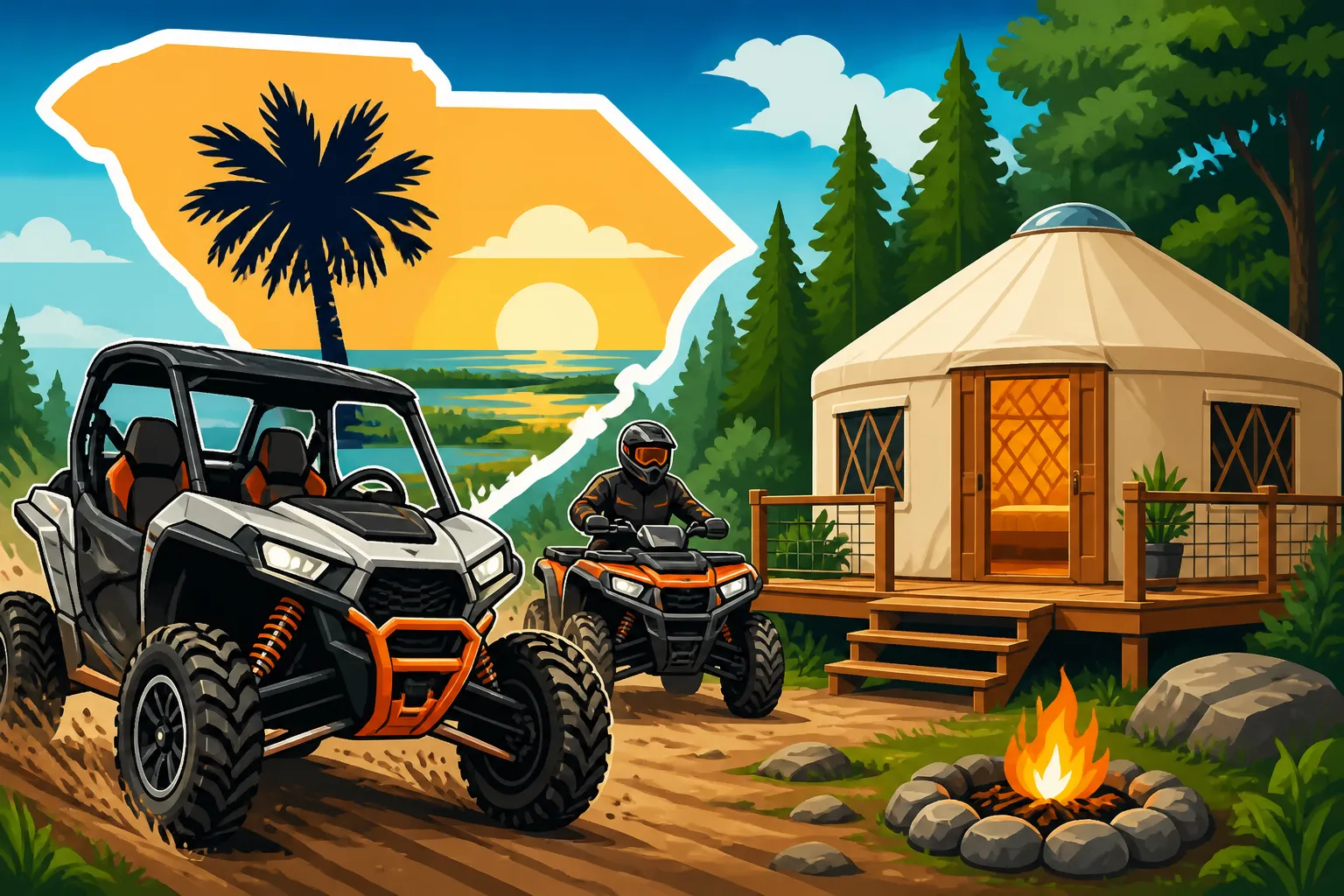
For riders searching for a yurt alongside an off-road outing, Carolina Adventure World near Winnsboro is a useful place to begin. It is a private riding destination with a substantial trail network, and its accommodation options include yurts and cabins. That combination can make planning easier for a group that wants trail access and a roof overhead without arranging a separate campground or hotel.
Still, it pays to confirm exactly what “near the trails” means for the accommodation you choose. Ask whether the yurt is within the riding property, whether you can ride directly from it, and where machines must be parked overnight. Rules may differ between the trail system and the lodging area, even when both are part of the same destination. Don’t assume the ride back to your yurt is permitted just because it looks close on a map.
Look closely at what the specific unit provides, too. A yurt is not automatically equipped like a hotel room or a full-service cabin. Ask about beds, linens, electricity, heating or cooling, bathrooms, cooking facilities, and what you need to bring. For a broader look at the accommodation style, see [Yurts at a Riding Park] and [Cabins Beside a Private Trail System].
Distinguish a yurt on-site from a nearby stay
A yurt listed near an ATV destination may belong to a public campground, a private park, or a separate lodging property. Those arrangements can involve different check-in points, parking rules, access gates, and riding permissions. A short drive between lodging and a trailhead can feel trivial on a map but become a real hassle when you have a trailer, muddy gear, children, or a group trying to leave together.
Before booking, confirm the address and the route between your lodging and the riding entrance. Ask whether the reservation includes any riding access or whether the trail pass is a separate purchase. A lodging reservation does not necessarily include permission to ride, and a trail pass may not include a campsite or yurt. Treat each as a separate item until the property confirms otherwise.
This distinction also helps when comparing public-land riding with privately operated parks. South Carolina’s national forest trails have their own access rules and pass requirements, while a private park sets its own operating policies. For the broader lodging picture, compare [South Carolina Trails With Cabins Nearby] and [South Carolina Campgrounds Next to a Riding Area]. These options may suit a trip even when the accommodation itself is not a yurt.
How to Choose the Right Yurt for Your Ride
Match the stay to your group and machine
Start with the people, not the property photos. Count adults and children, then ask how the sleeping arrangement works in the exact yurt you are considering. “Sleeps a group” can mean shared beds, bunks, or a layout that only works if everyone is comfortable with close quarters. If one person needs a quieter sleeping space or a child has an early bedtime, ask about the floor plan rather than relying on a general occupancy description.
Next, consider the machines and trailer. Ask where the tow vehicle and trailer can be parked, whether there is room to turn around, and whether the parking area is level and secure. A roomy yurt can still be inconvenient if the trailer must be left somewhere else or if you have to unload machines far from the permitted staging area. If your group brings more than one machine, check how the property handles overnight storage and whether trailers can remain connected.
Also clarify what “riding access” means for the vehicle you have. Trail systems may have width restrictions or may be limited to particular machine types. The riding rules at a private park are not interchangeable with the rules for a forest trail. If you are bringing a side-by-side, check the specific trail and park requirements before paying. [South Carolina Trails That Allow Side-by-Sides] can help frame the questions to ask.
Compare practical amenities, not just the word yurt
A comfortable lodging choice depends on the details that matter after a full day outdoors. Ask whether there is a private bathroom or a shared facility, whether there is a place to wash up, and how far it is from the unit. If you are riding in hot weather, ventilation and a way to cool down can matter more than decorative features. In cooler or rainy conditions, ask how the space is heated and whether the floor stays dry.
Cooking arrangements deserve the same attention. Find out whether you can prepare food inside, whether there is an outdoor cooking area, and what equipment is supplied. Some guests prefer to pack simple meals and snacks rather than rely on finding food after riding. If cooking is restricted, ask about the nearest allowed food options and whether you can store a cooler safely. Never assume a fire pit, grill, or open flame is permitted; local conditions and park rules can change what is allowed.
Here is a simple comparison framework to use when calling or messaging a property:
| What to confirm | Why it matters | Question to ask |
|---|---|---|
| Distance to riding access | Determines whether you can walk, drive, or trailer to the trailhead | “How do guests get from the yurt to the riding entrance?” |
| Sleeping setup | Helps avoid a crowded or unsuitable layout | “How many beds are there, and what bedding is included?” |
| Bathroom access | Affects comfort, especially for families | “Is the bathroom inside the unit or shared?” |
| Machine and trailer parking | Prevents arrival-day surprises | “Where can we park the trailer and machines overnight?” |
| Included trail access | Lodging and riding may be separate bookings | “Does this reservation include riding access or a pass?” |
| Food and cooking rules | Helps you plan meals and supplies | “What cooking equipment is allowed and provided?” |
| Weather arrangements | Comfort can depend on heating, cooling, and shelter | “How is the unit ventilated or heated?” |
Planning a Yurt Weekend Around Trail Time
Build the schedule around check-in and riding hours
A common mistake is planning the first ride as though arrival, unloading, check-in, and orientation will take only a few minutes. With a trailer and several machines, the first afternoon can disappear quickly. Ask when you may arrive, when the yurt is available, and whether you can access the riding area before the accommodation is ready. If those schedules do not align, plan a shorter first ride or make the travel day a non-riding day.
Make a realistic plan for the final day as well. Check whether you need to pack out before a set time and whether riding is allowed after checkout. If the stay and trail access have different hours, you may need to load the trailer before your last ride or arrange another place to leave your belongings. That is much easier to decide at home than while everyone is waiting in riding gear.
For route planning, use the property’s official map and rules as the source of truth. A navigation app can help you understand the surrounding area, but a mapped line does not prove that a route is open or legal to ride. onX Offroad can be useful for reviewing terrain and organizing routes before a trip, but compare any map information with the riding area’s current directions and posted restrictions. Keep a printed or saved property map available in case cell service is unreliable.
Pack for the lodging you actually booked
Make a packing list only after confirming what the yurt supplies. If linens, towels, or kitchen basics are not included, a group can arrive with plenty of riding gear and still be short on everyday essentials. Ask whether drinking water is available, what kind of lighting is provided, and whether you should bring a flashlight or headlamp. A small tote for dry clothes can also keep riding gear separate from bedding and food.
Pack with mud and wet weather in mind. South Carolina clay can cling to boots, tires, and machine parts, so bring sturdy bags or bins for dirty gear. Ask whether there is a wash station or a designated place to rinse machines before assuming you can clean them wherever you are staying. [South Carolina Riding Areas With Wash Stations] and [Washing Clay Off a Carolina Machine] are useful planning reads if your trip includes wet or muddy trails.
Food and hydration take a little forethought, too. Plan breakfast and trail snacks before you arrive, especially if the riding area is away from shops. Carry enough drinking water for the day and avoid leaving food where wildlife can reach it. If you are unsure what is allowed at the yurt or campsite, ask the property before packing a stove, charcoal, or firewood. A quick question can prevent an uncomfortable conversation after check-in.
Understanding Access, Rules, and Costs
Treat lodging rules and riding rules separately
A yurt reservation answers where you are sleeping; it does not answer where you may ride. Review the riding area’s machine restrictions, age requirements, helmet rules, permitted routes, and operating hours separately. A private riding park may set policies that differ from those for public forest land, and a guest may have to follow both the accommodation rules and the riding rules during one trip.
Ask whether you need a pass for every rider, each machine, or the tow vehicle, and clarify what is included in the booking. Also ask whether trail access is limited by the type or width of machine. If you are considering a national forest trail instead of a private park, check the applicable pass and access requirements before traveling. [South Carolina National Forest OHV Passes] explains why public-land access should be planned independently from lodging.
Permission matters beyond the trailhead, too. Do not assume a nearby dirt road, timber road, or private track is open to riders because it appears on a map or leads toward the park. Stay within marked and authorized riding areas. If your route planning uses onX Offroad or another navigation tool, use it to prepare and communicate, not as a replacement for posted signs or the property’s own directions.
Budget for the whole trip, not just the bed
The advertised lodging cost is only one piece of a riding weekend. Consider trail access, machine or vehicle fees, fuel, food, parking, and any optional equipment or services. If you are bringing a larger group, ask whether each person needs a separate pass and whether guests pay different amounts for lodging and riding. Check the property’s booking details for current figures and policies rather than relying on an old screenshot or a friend’s past trip.
Ask about cancellation and weather policies before confirming the stay. Rain can change trail conditions, and a property may close routes or restrict riding when conditions are poor. Find out whether a lodging reservation can be changed independently from a trail pass, and whether any fees are refundable if riding becomes unavailable. Read the cancellation terms closely; “weather permitting” does not necessarily mean every part of a trip will be refunded.
For a useful comparison, make a short budget for each option: an on-site yurt, a nearby campground, and a cabin or hotel. Include the extra time and fuel required to reach the riding entrance. [South Carolina Parks With RV Sites] and [South Carolina Parks With Camping] can help you compare alternatives if a yurt is full or does not fit your group’s needs. A slightly different stay may be more convenient if it simplifies parking, access, or sleeping arrangements.
A Practical Checklist Before You Book
Questions to ask the property
Contact the lodging provider and riding area directly, even if the same business manages both. Ask for the exact address, directions for trailers, check-in instructions, and the process for getting trail access. Confirm whether your reservation includes a yurt only, a riding pass, or any other services. If separate departments handle lodging and trails, get the name or contact details of the person who can answer each part.
Then confirm the details that could change your decision: sleeping capacity, bathroom access, bedding, cooking arrangements, parking, machine storage, quiet hours, and pet rules. If you have a child, ask about the property’s age policies and the riding area’s rules for young riders. If anyone in your group has accessibility needs, describe what would make the stay workable and ask specific questions about the route from parking to the unit.
Finally, ask how the property communicates closures or rule changes. Save the contact information and the booking confirmation where the whole group can access them. Keep a backup plan for a nearby campground or lodging option, especially for a group traveling a long distance. For more ideas on trip logistics, see [South Carolina Weekend Riding Itineraries] and [South Carolina Trail Conditions Before You Haul].
A simple arrival-day and departure-day plan
Before leaving home, confirm the trailer is road-ready and that every machine is secure. Photograph each machine’s condition and note any existing damage, then check that you have the documents and equipment your group needs. Share the route and arrival plan with everyone traveling separately. If you expect to arrive after dark, ask about gate access and check-in arrangements in advance rather than trying to sort them out from the road.
At arrival, park where directed and check in before unloading. Verify the allowed route from the lodging area to the staging area, and make sure every rider understands boundaries and speed rules. A quick group check-in can prevent a rider from taking an unapproved shortcut or leaving a machine in a restricted area. If a sign or instruction differs from what you expected, ask staff before proceeding.
Before departure, leave the unit as required and inspect the machines for loose equipment, mud, and trail damage. Make sure the group has packed chargers, keys, helmets, and personal belongings before the trailer leaves. If you plan another trip, jot down what worked and what you would change: whether the yurt layout suited your group, whether the parking was practical, and how much time it took to reach the trails. Those notes make the next booking much easier.
Disclaimer
This article is for general informational purposes only and does not constitute professional advice. Laws, prices and regulations vary by location and change over time. Consult a qualified professional for guidance on your specific situation.