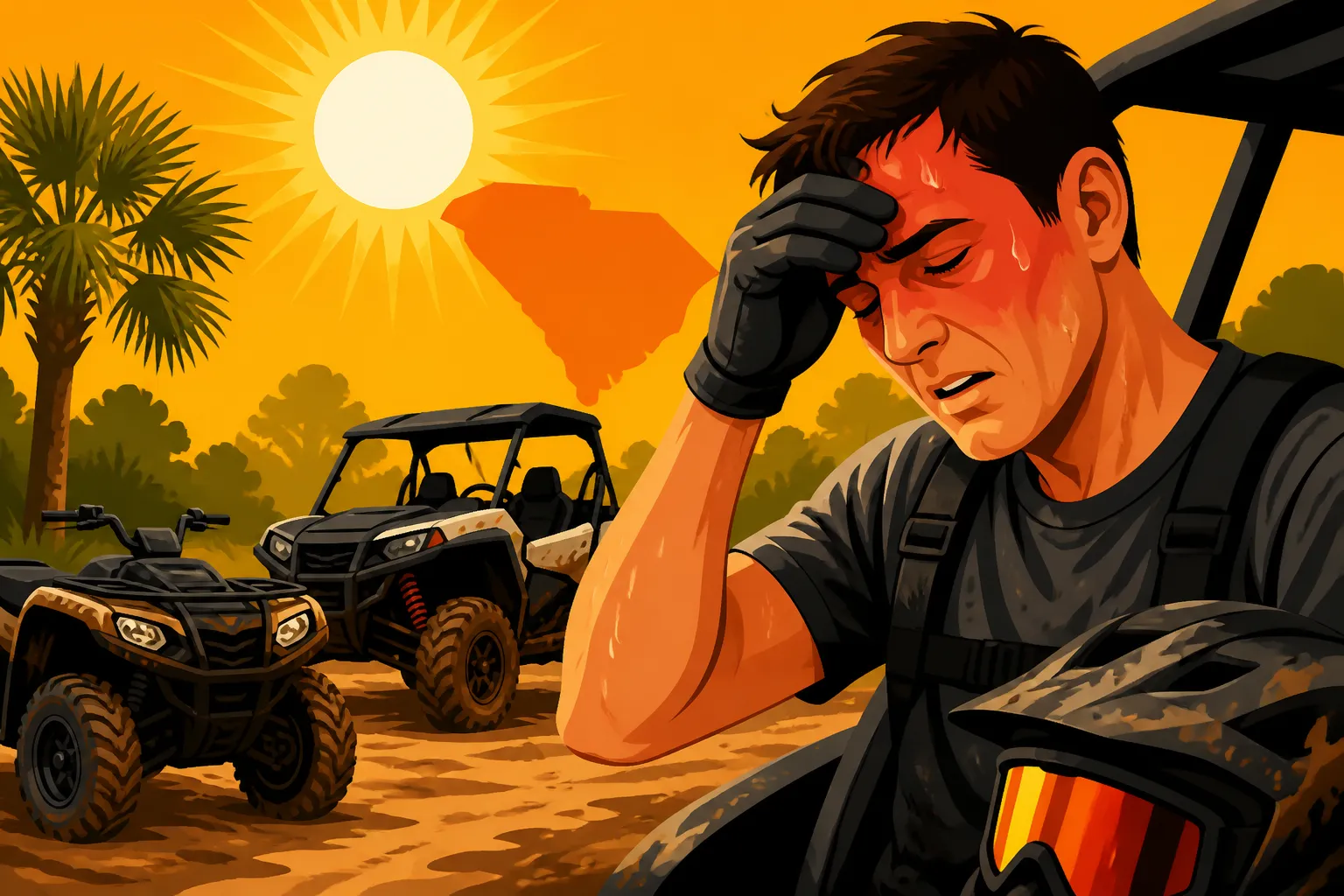
Heat Illness on a Carolina Summer Ride
A summer ride near Enoree, Wambaw, or another South Carolina trail can turn miserable fast when heat, humidity, riding gear, and slow-moving trail sections pile up. This guide explains how to spot heat illness early, cool someone safely, and plan a ride so the group is less likely to face an emergency far from the trailhead.
Why heat illness can sneak up on a South Carolina ride
Humidity and riding gear make it harder to cool down
Your body cools itself largely by releasing heat through the skin and evaporating sweat. In humid South Carolina weather, sweat may not evaporate as easily. Add a helmet, goggles, gloves, boots, and protective clothing, and your body can struggle to shed heat even when you are moving.
The risk is not limited to a midday ride in direct sunlight. A slow climb, a muddy section, a recovery stop, or time spent helping a stuck machine can leave you working hard while airflow drops. Riders may also feel cooler while moving, then realize how overheated they are when the group stops.
It is easy to overlook the early signs because a hot, tired rider may simply seem quiet, impatient, or less focused than usual. On a group ride, keep an eye on one another rather than assuming everyone will speak up. That is particularly important for younger riders, guests who are unfamiliar with the route, and anyone who has had little time to adjust to hot weather.
Know the difference between heat exhaustion and heat stroke
Heat exhaustion can cause heavy sweating, weakness, headache, nausea, dizziness, muscle cramps, and unusual tiredness. A person may look pale or feel faint. They may still be alert and able to answer questions, but they should stop riding and begin cooling down right away.
Heat stroke is a medical emergency. Warning signs can include confusion, unusual behavior, fainting, seizures, or loss of consciousness. The person may feel very hot, and their skin may be dry or sweaty. Do not wait for every sign to appear, and do not rely on sweating alone to judge how serious the situation is.
| What you notice | What to do |
|---|---|
| Thirst, fatigue, or mild cramps while alert | Stop, rest in shade, loosen gear, and sip fluids |
| Nausea, dizziness, weakness, or heavy sweating | Stop riding, begin active cooling, and watch closely |
| Confusion, fainting, seizure, or inability to respond normally | Call 911, cool the person immediately, and do not give them anything to drink |
If symptoms are worsening or you are unsure whether someone is experiencing heat stroke, treat the situation as urgent. A ride can be resumed another day; delaying care can make a serious condition more dangerous.
What to do when a rider becomes overheated
Stop the ride and cool the person
Move the rider out of direct sun if you can do so safely. Choose a shaded, stable spot away from traffic and moving machines. Stop exertion, help them remove or loosen unnecessary gear, and get them somewhere they can sit or lie down without risk of falling.
Cool their body promptly. Wet their skin or clothing with available water, fan them, and place cold packs or wrapped ice against areas such as the neck, armpits, and groin if available. Keep checking whether they are becoming more alert and whether symptoms are improving. If the person is confused, fainting, having a seizure, or not responding normally, have someone call 911 while others continue cooling.
Do not send a sick rider back onto a machine to “take it easy” to the staging area. If they are dizzy, weak, nauseated, or mentally foggy, they are not in a safe condition to operate an ATV or UTV. Arrange a safe way to get them out, and make sure another capable adult stays with them.
Give fluids only when the person is alert
If the rider is fully awake, able to swallow normally, and not vomiting, offer small, frequent sips of cool water or an appropriate electrolyte drink. Do not pressure them to gulp a large amount at once. If they are confused, unconscious, having a seizure, or unable to swallow safely, do not give food or drink; call emergency services and focus on cooling.
Muscle cramps after heavy sweating can be a sign to stop, rest, cool down, and replace fluids. But cramps are not a reason to ignore other symptoms. If the person also has nausea, dizziness, weakness, or unusual behavior, treat the whole picture seriously rather than assuming it is only a cramp.
For a longer ride, plan where you can pause and refill before leaving the staging area. The advice in Hydration at a Carolina Riding Park can help you think through water access, while First Aid on a Long Carolina Loop is useful for building a broader trail-response kit. Carrying water is only part of the plan: riders need to be willing to stop and use it.
How to prevent heat illness before and during the ride
Choose a realistic schedule and pace
When possible, ride during cooler parts of the day and make the hardest sections shorter or less demanding. Build in breaks before anyone feels unwell, especially after a long transport, a strenuous climb, or a recovery effort. A stop is more useful when riders can get out of direct sun, loosen gear, and cool down rather than standing beside a hot machine on an exposed trail.
Agree in advance that anyone can call for a break without being teased or pressured to keep up. Groups often lose time when one person becomes ill and everyone scrambles to respond. A short planned pause can protect the whole group’s day.
Use the route plan to avoid being surprised by a long stretch without an easy exit. An offline-capable navigation tool such as onX Offroad can help you review a route before setting out, but download or save what you need in advance and do not assume a phone will have service in the woods. Share the planned route and expected return time with someone who is not riding.
Conditions and access can change, so check trail information before hauling to the trailhead. South Carolina Trail Conditions Before You Haul and South Carolina Trail Closures After Rain are useful reminders to confirm that a ride is practical before you commit to the drive.
Pack for heat, not just for the trail
Wear protective gear that fits properly, but avoid unnecessary layers when conditions allow. Light-colored, breathable base layers can help with comfort under riding gear. A cooling towel or a change of dry clothing may be useful during a longer day, but neither replaces stopping, shade, and fluids.
Pack more water than you expect to need, and keep it accessible rather than buried under tools or recovery equipment. For a group, assign someone to check that every rider has water and knows where extra supplies are. Consider bringing electrolyte drinks or suitable replacement options for a long, sweaty ride, particularly when ordinary water alone is not appealing to someone who has been sweating heavily.
A practical heat kit might include:
- Drinking water for each rider, plus a reserve for delays.
- An electrolyte option for prolonged sweating.
- A basic first-aid kit and a way to contact emergency services.
- A light towel or cloth that can be wetted for cooling.
- A charged phone, with the route saved for offline use where possible.
- A plan for who stays with an ill rider and who seeks help.
The detailed checklist in Packing for Carolina Humidity can help you account for the less obvious discomforts, from damp gear to insects. If you use onX Offroad or another navigation app, check the route and download needed maps before you leave a reliable connection. Keep the phone protected from heat and water, and do not let navigation become a reason to miss signs that a rider is struggling.
Make a heat-aware ride plan for the whole group
Set check-in points and a turnaround rule
Before engines start, agree on a simple check-in routine. At each planned stop, ask riders how they feel, whether they have been drinking, and whether anyone is developing a headache, nausea, dizziness, or cramps. A quick “I’m fine” is useful, but pay attention to behavior too: someone who is unusually quiet, confused, irritable, or unsteady may need help even if they downplay it.
Choose a clear turnaround point based on the group’s condition, not just the distance left on the route. If heat is building, water is running low, or a rider is slowing down, change the plan early. A navigation app such as onX Offroad may help the group understand its position relative to known routes, but make decisions with the group’s safety and actual conditions in mind.
Keep the group together when someone is feeling unwell. Do not leave a struggling rider alone while others race ahead to the trailhead. If emergency help is needed, one person can contact 911 while another remains with the rider and gives responders the clearest location information available. In a low-service area, try to identify landmarks, trail names, junctions, or the nearest access point before the ride.
Learn the route and know how to call for help
A scenic trail can feel very different when someone needs urgent care. Before riding, identify the staging area, likely access roads, and any places where a vehicle could meet the group. Tell someone at home where you plan to ride and when you expect to check in. If the route changes, update them when you regain service.
Cell reception may be unreliable in forested or remote areas. Read Cell Dead Zones in a Carolina Forest before relying on a phone as your only safety plan. Save route information offline, carry a backup power source, and make sure at least one person in the group knows how to describe the location without depending on a map pin.
A little preparation can also reduce stress during a response. Keep a first-aid kit and water where they can be reached quickly, not beneath a pile of cargo. Make sure riders know who is carrying the emergency supplies and who will take charge if someone becomes ill. For general trail planning, South Carolina ATV Trails: Where to Ride can help you consider the kind of riding area and route that fits your group.
South Carolina heat does not have to end a good day outside, but it does deserve respect. Stop early when symptoms appear, cool an overheated rider promptly, and call 911 for signs of heat stroke. The best ride plan is one that gives everyone permission to slow down, change course, or head back before a manageable problem becomes an emergency.
Disclaimer
This article is for general informational purposes only and does not constitute professional advice. Laws, prices and regulations vary by location and change over time. Consult a qualified professional for guidance on your specific situation.