Tires for Carolina Clay
Carolina clay can turn a confident ride into a slippery, tire-spinning slog, especially after rain or on a churned-up trail. The right ATV or UTV tires help, but tread alone cannot fix poor pressure, a mismatched machine, or trail conditions that have changed since you left home. This guide explains what to look for, how to prepare, and when to turn around.
What Carolina clay does to ATV and UTV tires
Why clay feels different from loose dirt
Clay can be firm and grippy when it is dry, then become slick and adhesive when wet. Instead of breaking away like loose sand, damp clay may smear across the tread and pack between the lugs. Once that happens, the tire has less open space to bite into the ground, and the machine can start sliding or spinning even when the tread looks aggressive.
The change can happen over a short distance. A dry stretch of trail may lead into a shaded hollow, low spot, creek approach, or patch of ground that holds water longer. The surface can also vary across the state and within a riding area. Conditions around the Sumter National Forest may not match those at a private park or a coastal trail system.
That is why “clay tires” are not a magic category. Your useful choice depends on whether you usually ride hard-packed ground, wet ruts, sticky mud, rocks, roots, or a mix. It also depends on the machine’s weight, drivetrain, tire size limits, and the kind of riding you actually do.
How tread design changes traction
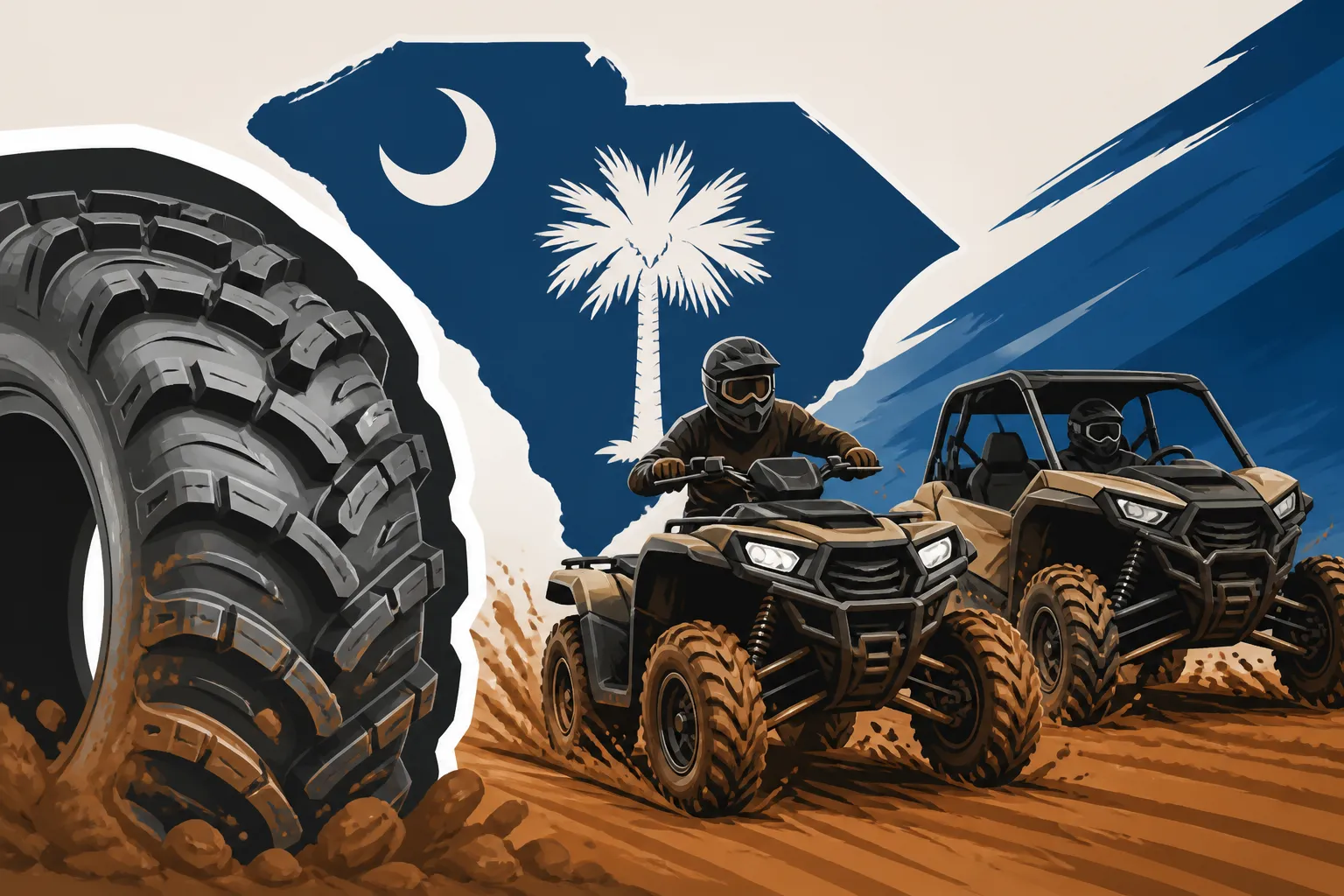
Tire lugs need room to contact the ground and clear mud as the tire turns. A more open tread can help in soft, wet conditions because there is space between the lugs for clay to release. A tighter tread can feel more predictable on hard-packed trails and may be a better compromise for riders who encounter mixed surfaces rather than deep mud every outing.
Very tall or widely spaced lugs can have trade-offs. They may improve bite in certain soft conditions, but can feel less settled on firm ground, increase vibration, or place more strain on parts of the drivetrain when paired with an unsuitable size or aggressive riding. A tire that is oversized for the machine can also affect steering, clearance, gearing, and belt or axle loads.
Before buying, compare the tire’s intended terrain, dimensions, load rating, and construction with the machine’s owner information. If your usual route combines clay with exposed roots or rock, consider how the tire will behave on those surfaces too. For a closer look at a related terrain concern, see South Carolina Clay and What It Does to a Machine and Skid Plates for Upstate Rock.
Match the tire to the ride, not just the muddiest day
A dedicated mud tire may make sense for a rider who deliberately seeks deep, wet terrain on private land where that type of riding is allowed. It may be an uncomfortable choice for someone whose regular outings involve forest roads, hard-pack, and occasional muddy patches. For mixed riding, a versatile all-terrain tread can be easier to live with, even if it does not excel in the deepest mud.
Be honest about your normal ride. If you mostly travel maintained trails and only occasionally cross a muddy section, you may benefit more from choosing a balanced tire and improving your riding technique than from fitting the most aggressive tread available. If you regularly encounter deep ruts, evaluate whether your machine’s clearance, tire size, recovery equipment, and experience are suited to that terrain.
Also account for who rides with you. A tire setup that works well for a cautious solo rider on familiar land might be a poor fit for a group with different machines and skill levels. Before heading out, check South Carolina ATV Trails: Where to Ride and confirm that the location permits your machine type and riding style.
Choosing tires and setting them up
Compare common tire priorities
Use this table as a starting point, not a promise that one tread will behave the same on every machine or in every condition.
| Riding conditions | Tire qualities to consider | Possible trade-offs |
|---|---|---|
| Mostly dry, hard-packed trails | A stable tread suited to firm ground | May offer less bite in sticky mud |
| Mixed clay, roots, and occasional wet spots | A versatile tread with usable spacing between lugs | May not be ideal for deep mud or specialized terrain |
| Frequent soft, wet conditions | More open tread that can clear mud | Can feel less comfortable on hard surfaces |
| Clay mixed with exposed rock | Durable construction and a tread suited to mixed terrain | Aggressive tread alone does not protect the underside of the machine |
| Work or property use with trail riding | A tire that balances traction, load needs, and predictable handling | A highly specialized trail tire may not suit everyday tasks |
The exact result depends on tire size, rubber compound, vehicle weight, suspension, and how the tires are maintained. Ask a qualified tire or powersports shop to confirm that a proposed size is compatible with your ATV or UTV rather than assuming that a tire will fit because it looks close to the original.
Set tire pressure carefully
Pressure affects how much of the tire contacts the ground and how the sidewall supports the machine. Too much pressure can make a tire feel harsh and reduce its footprint on uneven ground. Too little can increase the chance of sidewall damage, bead problems, or a tire coming off the rim, particularly during hard turns or impacts.
Start with the vehicle and tire manufacturers’ guidance. Do not copy a pressure number from another rider unless you know that their machine, tires, load, and use are comparable. Check pressure with a reliable gauge before the ride, and recheck after changing tires or making a substantial adjustment. A tire that looks fine can still be far from the pressure you intended.
Avoid lowering pressure just because the clay is slippery. Pressure changes are not a substitute for suitable tread, careful throttle control, or turning back when the route is unsafe. If you experiment with adjustments, make small, deliberate changes within the manufacturers’ limits and test them at low speed in a safe, open area.
Check the whole tire, not only the tread
Before each ride, inspect the tread and sidewalls for cuts, embedded debris, cracking, bulges, and uneven wear. Look at the valve stems and make sure the wheels have no obvious damage. On a UTV, check all four tires, including the inside sidewalls that are harder to see when the machine is parked.
New tires also need a careful first ride. Get used to how the machine steers and brakes on familiar ground before tackling steep or slick sections. If you have changed tire size or tread substantially, pay attention to steering effort, clearance at full turn, and whether the tire contacts bodywork or suspension components.
Carry the tools and repair supplies appropriate to your machine and riding area. A plug kit may help with some punctures, but it is not a fix for every kind of sidewall damage or a tire that has come off the bead. For remote trips, plan for a repair you can realistically perform and a way to get help if the damage is beyond a trail-side fix.
Riding clay without losing control
Use smooth throttle and plan your line
On slick clay, sudden throttle can break traction and make a tire spin. Once it spins, it may dig a rut without moving the machine forward. Smooth, steady input is usually more useful than repeatedly accelerating harder. Give yourself room to slow down, steer gently, and avoid abrupt braking or sharp turns on a slick slope.
Look ahead for the firmer part of the trail, but do not assume the edge is safer. Trail edges can be soft, eroded, or hiding a drop. Avoid deep ruts if you cannot see what lies inside them, and do not cross a wet section at speed. A machine that slides sideways can be difficult to recover, particularly on a hill or near a ditch.
When riding with others, leave enough space to avoid being caught in the spray or forced into a sudden stop. If someone gets stuck, do not crowd the machine or attach a recovery line without understanding the equipment and the hazards. A winch line under tension can cause serious injury if it fails or is handled carelessly.
Know when weather has changed the route
A trail that was manageable when you arrived may become difficult after rain. Clay can hold water, and repeated traffic can turn a firm route into a set of slick ruts. Before towing to a trailhead, check the riding area’s current notices and closures. South Carolina Trail Conditions Before You Haul and South Carolina Wet Weather Trail Closures are useful reading before making the drive.
For route planning, onX Offroad can help you review mapped routes and identify areas to investigate before you leave. Treat map information as a planning aid, not confirmation that a trail is open, legal for your machine, or passable after rain. Check the land manager or riding venue directly, and follow posted signs when you arrive. A route line on a map cannot show every fresh washout, gate, or muddy section.
If you are unsure about a route’s condition, choose a shorter or easier option rather than pushing farther in. OnX Offroad may be useful for comparing route options before the trip, but local notices and on-site directions should guide the final decision. A third sensible use is to keep your intended route and nearby alternatives in mind so the group has a plan if conditions deteriorate.
Protect the trail and your machine
Spinning tires can deepen ruts and damage trails, particularly when the soil is wet. If a section is too slick to cross without aggressive wheelspin, stop and reassess rather than digging it out. Turn around if it is safe to do so, or use a permitted alternate route. Follow the riding area’s rules about closures, bypasses, and recovery; making a new path around an obstacle can damage vegetation or land you where riding is not allowed.
After a clay ride, inspect the machine before the next outing. Mud packed around wheels, suspension, brakes, and cooling areas can hide damage or affect operation. Clean carefully and check for loosened hardware, torn boots, damaged lines, and signs of tire rubbing. The guide Washing Clay Off a Carolina Machine covers cleanup considerations, while South Carolina Trail Etiquette Locals Expect offers helpful reminders about sharing riding areas responsibly.
A snorkel or aggressive tire does not make every creek or muddy route safe. Water depth, current, hidden obstacles, and the machine’s design all matter. If your rides include water crossings, review Snorkels for a Carolina Creek and the specific crossing rules for the place you plan to ride. Never enter water when you cannot judge the bottom or the current.
A practical tire-preparation routine
Before buying or changing tires
- Write down the terrain you encounter most often, not just the most dramatic conditions you have seen.
- Check your machine’s approved tire sizes and load requirements.
- Compare tread designs for the surfaces you ride, including hard ground, roots, rock, and wet clay.
- Ask a qualified shop to confirm fit, clearance, and compatibility with your vehicle.
- Consider whether the tire’s trade-offs make sense for your normal route, passengers, cargo, and riding style.
- Keep records of the tire model and size so you can replace it consistently if it suits your needs.
Take your time with this decision. A rider who buys tires after getting stuck once may end up with a setup that is excellent in mud but tiring on every other ride. A better question is, “What do I need the machine to do most weekends?” That answer usually leads to a more useful choice.
Before each ride
Check the forecast and trail notices, then inspect the tires and confirm their pressure. Look for visible damage, unusual wear, and anything lodged in the tread. Make sure the route is open and appropriate for your machine, and tell your group what you will do if a section is too slick.
When planning with onX Offroad, use it to think through possible routes and alternatives, then confirm access and conditions with the riding area itself. Do not rely on a digital map to replace signs, closures, or instructions from land managers. If rain has changed the ground, a flexible plan is more valuable than a more aggressive tire.
After the ride
Remove packed clay before it hardens, then look over the tires again. Check whether the tread has trapped stones or debris, and note any cuts or changes in handling. If the machine felt unusually unstable, pulled to one side, or struggled on terrain it normally handles, investigate before the next outing instead of assuming the conditions were solely to blame.
Keep a simple log of tire pressure, route conditions, and how the machine behaved. Over several rides, that record can help distinguish a genuine tire issue from wet ground, worn components, or an unsuitable line choice. The goal is not to make every muddy trail passable. It is to choose a setup that fits your riding, preserve control, and recognize when the safest decision is to leave the clay for another day.
Disclaimer
This article is for general informational purposes only and does not constitute professional advice. Laws, prices and regulations vary by location and change over time. Consult a qualified professional for guidance on your specific situation.