South Carolina Riding Areas With Wash Stations
A muddy ride around Winnsboro or the Sumter National Forest can leave your ATV or UTV caked in Carolina clay, and finding a place to rinse it before loading up is not always easy. This guide explains which South Carolina riding areas are worth asking about, what to confirm before you haul, and how to wash your machine without creating a mess at the trailhead or campground.
Where to Look for ATV and UTV Wash Stations
A wash station is more likely to be available at a privately operated riding park than at a public forest trailhead. Private parks may offer rinse areas or other post-ride amenities, but facilities and rules can change, so confirm directly before you count on being able to clean your machine on-site.
Private riding parks are the best first call
Carolina Adventure World near Winnsboro and Gulches ORV Park near Waterloo are two well-known private riding destinations to check first. Their facilities, machine rules, and available services may differ, so ask specifically whether riders can wash ATVs or UTVs, where the wash area is located, and whether there are restrictions on soap, pressure washers, or drainage.
Do not assume that “wash station” means a full-service wash bay. It could mean a designated rinse area, a hose connection, or a place to spray mud off before loading. Ask whether you need to bring your own hose or other equipment, whether the station is available to day visitors, and whether it is open after a wet-weather ride. These details matter when you are planning around a long drive home.
For a group ride, make one person responsible for checking the policy before everyone leaves. A ten-machine group arriving on the expectation of washing can create a bottleneck if only one rinse point is available—or a headache if washing is not allowed. Ask about any queueing procedure, time limits, and whether the park has a preferred area for cleaning trailers or recovery gear as well.
You can compare private parks and access rules with [South Carolina Private Park Passes and Rules] and find more options in [South Carolina Riding Areas With Wash Stations]. Before traveling, check the park’s own current visitor information or contact its staff; an old social media post or a rider’s memory may not reflect today’s setup.
Public forest trailheads may not have washing facilities
South Carolina’s public OHV trails are a different kind of outing. Enoree OHV Trail, Parsons Mountain OHV Trail, Cedar Springs Trail, and Wambaw Cycle Trail are forest riding destinations, not private resorts. A trailhead may provide staging or parking, but riders should not presume there is a machine wash station, water supply, or approved place to discharge muddy rinse water.
That distinction affects how you pack. If you ride at Enoree, for example, plan to load a muddy machine and clean it later at home unless you have confirmed an approved facility nearby. The same conservative approach makes sense when visiting Parsons Mountain or Wambaw. Review [South Carolina's Four National Forest Trails] and [South Carolina ATV Trail Map Downloads] as part of your route planning, then contact the managing office if you have questions about facilities or closures.
A map app can help you find trailheads, access roads, and nearby services, but a map pin does not confirm that a wash bay is open or permitted for public use. onX Offroad can be useful for planning a route and locating riding areas, but confirm amenities and washing rules with the actual site before building your schedule around them.
| Riding destination | Type of riding area | Wash-station planning |
|---|---|---|
| Carolina Adventure World near Winnsboro | Private riding park | Contact the park to confirm availability, access, and rules |
| Gulches ORV Park near Waterloo | Private riding park | Ask whether washing is allowed and what facilities are provided |
| Enoree OHV Trail | Public forest trail | Do not assume a wash station is available at the trailhead |
| Parsons Mountain OHV Trail | Public forest trail | Plan to clean the machine elsewhere unless confirmed |
| Wambaw Cycle Trail | Public forest trail | Check local facility information and avoid unauthorized washing |
How to Confirm a Wash Station Before You Go
A little preparation can prevent the familiar end-of-day scramble: muddy gear packed into the truck, a trailer that needs rinsing, and no clear idea where washing is allowed. Make the wash-station question part of your trip planning rather than an afterthought.
Ask specific questions, not just whether washing is available
When you call or message a riding park, ask what “washing” includes. A brief rinse-only area is different from a designated wash bay with drainage. Find out whether there is a hose, whether you can bring a portable washer, and whether the facility is available to day riders as well as overnight guests or members.
Also ask about the rules for cleaning more than the machine. Some riders need to rinse a trailer ramp, boots, helmets, or recovery straps after a muddy day. A facility intended for quick machine rinsing may not be suitable for washing an entire trailer or leaving mud pooled around a parking space. Clarifying the boundaries helps you avoid inconveniencing other riders and helps staff give you an accurate answer.
A practical pre-trip checklist includes:
- Confirm that the wash area is operating on your planned visit.
- Ask whether it is included with your visit or subject to a separate policy.
- Check what equipment is available and what you must bring.
- Ask whether soap or pressure washing is prohibited.
- Confirm how the site handles mud and wastewater.
- Find out whether washing is permitted after the riding area closes.
- Ask whether there is a separate place to rinse trailers or gear.
If you are using onX Offroad to compare routes or riding areas, treat that as a planning aid—not a substitute for a direct facility check. Conditions, access, and amenities can differ from one location to another, even within the same region.
Check trail conditions and closures along with amenities
Wash-station planning is only one part of a successful ride. A public trail may close or become unsuitable after heavy rain, while wet conditions at a private park may change which routes are open. A long drive to a muddy trail that is closed—or a private facility whose rinse area is unavailable—can turn a planned ride into a frustrating day.
Check the destination’s updates shortly before leaving, especially after substantial rainfall. Look for trail closures, maintenance notices, access restrictions, and any limits on machine types. [South Carolina Wet Weather Trail Closures] and [South Carolina Trail Conditions Before You Haul] offer useful planning topics to review. If the trail is open but deeply saturated, consider whether riding will damage the trail or create a mud load that is difficult to transport safely.
When you contact a park, ask whether its wash area is affected by the same weather. A wash station could be temporarily unavailable because of maintenance or site conditions even if riding continues. If the answer is unclear, have a fallback plan: carry a tarp for the trailer, bring basic cleanup supplies, and identify a legal place to wash once you are home.
Washing Mud Off Without Damaging Your Machine or the Site
South Carolina clay can cling to tires, frame rails, floorboards, and suspension components. A quick rinse may make the machine look cleaner while leaving packed mud in places that affect handling or maintenance. Washing thoughtfully protects your ATV or UTV—and keeps the riding area usable for everyone.
Remove heavy mud before using water
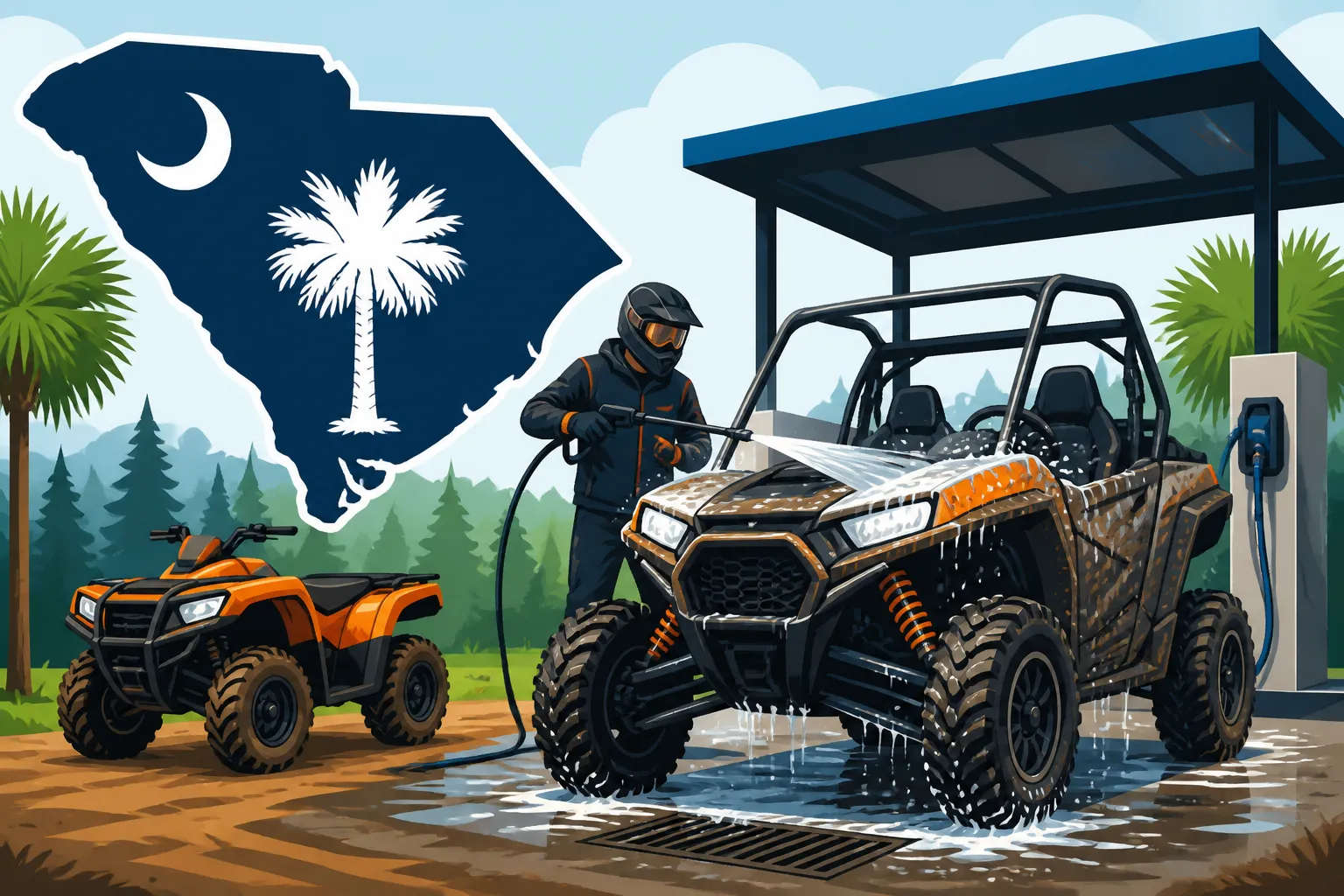
Start by letting thick clumps fall away in the designated wash area, if the site permits it. Use a plastic scraper or a gloved hand to remove bulky mud from tires, fenders, skid plates, and the underside. This reduces the amount of sediment that ends up in a drain or on the ground.
Avoid aiming a pressure washer directly at seals, electrical connections, bearings, radiator fins, or other sensitive components. High-pressure water can force grit into places you are trying to protect. Use a moderate rinse and work from higher areas downward, paying attention to packed mud around the wheels, suspension, and underbody without lingering on delicate parts.
A sensible post-ride routine is:
- Park on the designated surface and follow the facility’s instructions.
- Remove loose mud by hand or with an approved tool.
- Rinse the tires, wheel wells, frame, and skid plates.
- Check the radiator area and clear debris gently.
- Inspect the machine for leaks, loose parts, or trapped vegetation.
- Let the machine drain before securing it for transport.
If the machine is extremely muddy, a thorough wash at home may be more appropriate. A park’s rinse area is often intended to remove the worst of the dirt, not replace regular maintenance.
Keep wash water and mud out of drains and waterways
Do not wash a machine beside a creek, pond, storm drain, or trailhead drainage ditch unless the location explicitly provides a designated wash area for that purpose. Muddy runoff can carry sediment, oil, fuel residue, and cleaning products into nearby water. Even a seemingly small rinse can create a mess when several riders do the same thing.
Follow posted rules about soap and detergents. If a site says rinse-only, do not use a household cleaner because it seems harmless. Likewise, do not empty a portable wash system or bucket onto public land. Ask staff where runoff is directed and use only the area they approve.
Good trail etiquette also includes leaving the space usable for the next rider. Pick up packaging, keep hoses from crossing traffic lanes, and do not leave piles of scraped mud where they could create a slippery walking surface. For more preparation and cleanup guidance, see [Washing Clay Off a Carolina Machine] and [South Carolina Trail Etiquette Locals Expect].
A Practical Plan for a Muddy South Carolina Ride
The right wash plan depends on where you ride, how muddy conditions are, and how far you need to travel afterward. Private parks near Winnsboro or Waterloo may be worth contacting about designated rinse facilities; public forest trailheads should be treated as no-wash locations unless the managing office confirms otherwise.
Choose the plan that fits your trip
If a confirmed wash station is available, use it for a careful rinse and save the detailed cleanup for home. If no facility is confirmed, bring a tarp, a small hand brush, gloves, and bags for muddy gear. Secure the machine so mud cannot drop onto the road during transport, and check your trailer lights and tie-downs before leaving.
For a long drive, cleaning the tires and undercarriage can reduce the amount of loose mud that falls off on the way home. But do not improvise a roadside wash or use a business’s hose without permission. If you need to clean the machine before entering a garage or storage space, arrange an appropriate location ahead of time.
Your route research can include [South Carolina Trailheads With Trailer Parking] and [South Carolina Riding Areas With Wash Stations]. onX Offroad may help with route planning and locating riding areas, while official park or forest information is the place to confirm current access details. Keep the two jobs separate: navigation helps you get there; the operator tells you what amenities and rules apply.
Make the wash question part of your checklist
Before you leave, confirm your riding destination, trail status, parking arrangements, and wash policy. Decide what you will do if washing is not available, and pack accordingly. That small bit of planning can spare you from unloading a muddy machine at an unsuitable location or discovering too late that the rinse area is closed.
Above all, treat washing as part of responsible riding. Keep mud and runoff where the site allows them, avoid unnecessary pressure on sensitive machine parts, and leave the area clean for the next visitor. For public-land rides, plan to transport the machine as-is and wash it at an approved location later unless you have clear confirmation that a facility is provided.
Disclaimer
This article is for general informational purposes only and does not constitute professional advice. Laws, prices and regulations vary by location and change over time. Consult a qualified professional for guidance on your specific situation.