South Carolina Riding Near Winnsboro
Finding a legal place to ride near Winnsboro can be harder than loading the trailer: a road that looks like a trail may be private, a forest route may not allow your machine, and conditions can change after rain. This guide explains the practical options around Winnsboro, what to check before leaving home, and how to plan a safer ride.
Where to ride near Winnsboro
Winnsboro is a useful starting point for exploring the region, but “nearby” does not always mean public, open, or suitable for every ATV or UTV. The most important first step is matching the type of riding area to your machine and confirming that the specific route is open to it.
Carolina Adventure World for a private-park ride
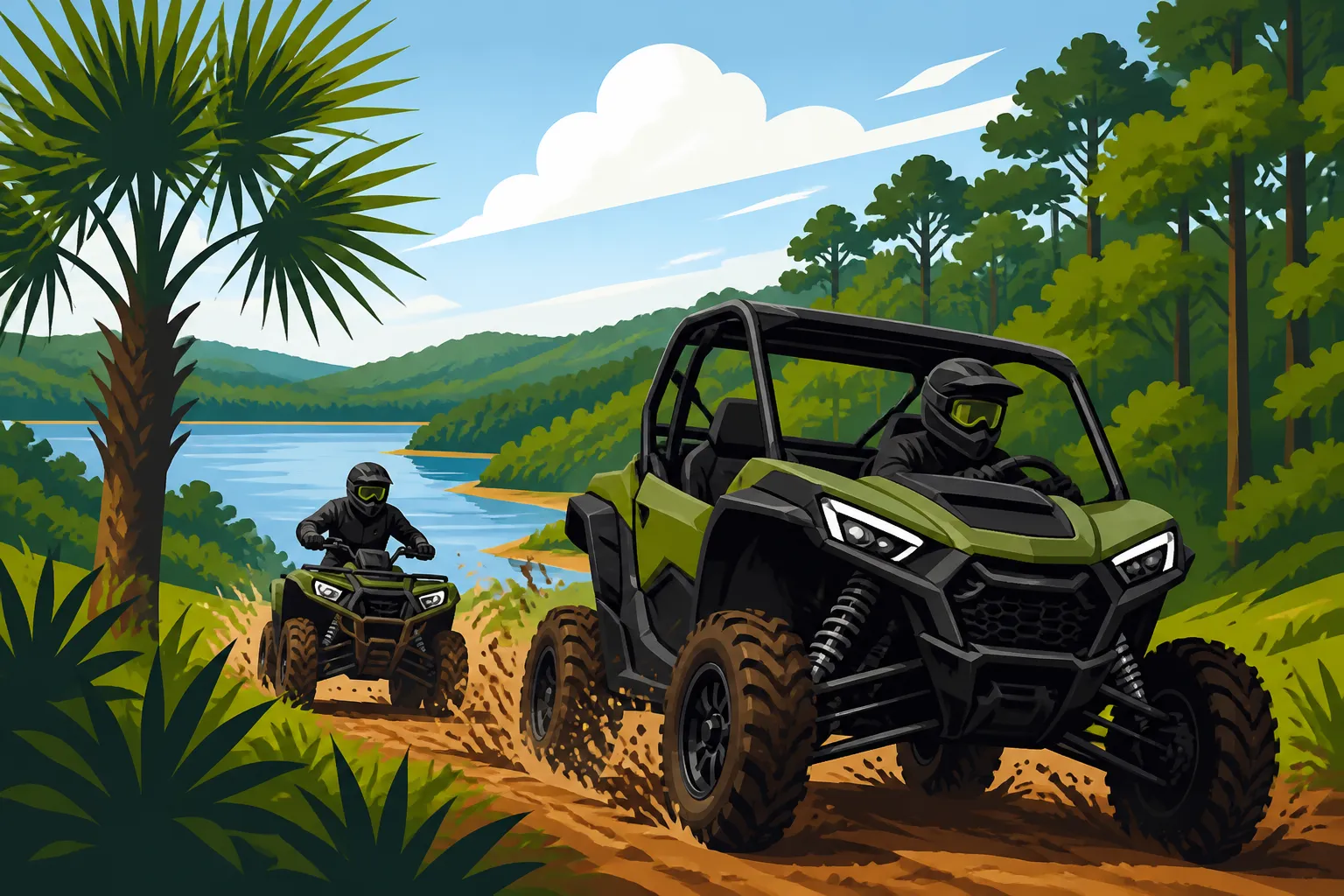
Carolina Adventure World is a major private riding option in the Winnsboro area. Its trail system offers a different experience from riding on public forest land: access is managed by the park, and riders need to follow the park’s admission, vehicle, safety, and trail-use rules. It can be a practical choice if you want an established riding destination rather than trying to piece together access across unfamiliar roads and land.
The property is commonly described as having thousands of acres and an extensive trail network, but a large acreage figure does not mean every route is open to every vehicle on every visit. A narrow trail may not suit a wide side-by-side, and a route that feels manageable in dry weather can become challenging after rain. Check the park’s current vehicle requirements, trail information, hours, and any closures before you set out. For background on the size of the property, see [Carolina Adventure World's 2,600 Acres] and [Carolina Adventure World's 100 Miles].
A private park can be especially convenient for a mixed-ability group. One rider may want a mellow loop while another hopes to tackle more technical terrain, and a managed trail system can make it easier to plan around different comfort levels. Still, don’t assume that a park is automatically beginner-friendly in every section. Ask about trail difficulty, width restrictions, passenger rules, and whether the routes you have in mind are appropriate for your machine.
Public forest trails require a different plan
Public OHV trails are another possibility in South Carolina, but the closest well-known trailhead may involve a longer drive from Winnsboro than a private park does. Enoree OHV Trail and other forest trail systems are separate destinations, with their own access points and restrictions. Before making a day of it, verify the driving route, trailhead location, permitted vehicle types, pass requirements, and current status. The overview [South Carolina ATV Trails: Where to Ride] can help you compare the state’s main riding options.
A public trail is not the same thing as any unpaved road passing through a national forest. Roads may be maintained for other uses, closed to recreational vehicles, or subject to seasonal restrictions. Likewise, a Wildlife Management Area is not an alternative place to ride just because it appears open on a map. Check land-management rules for the exact place you intend to enter, rather than relying on the appearance of a road or a dropped pin.
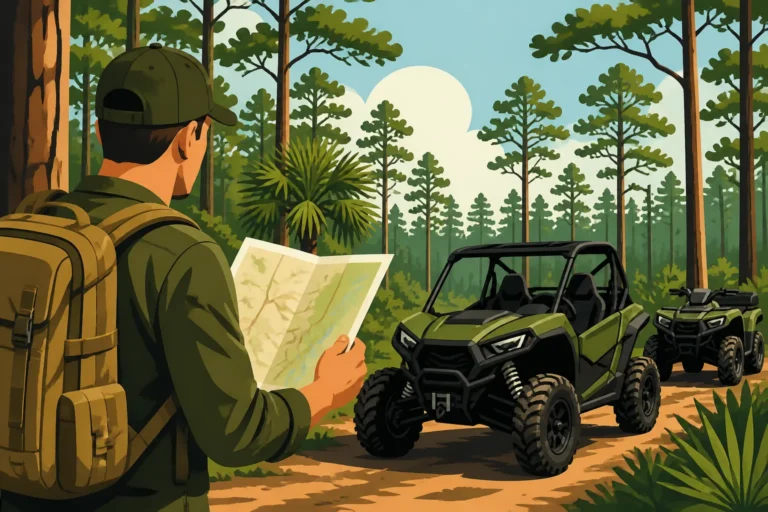
For trip planning, use a map to understand the general area, then confirm details with the land manager or riding destination. A tool such as onX Offroad can help you inspect mapped routes and estimate how trail segments connect, but a digital map is not permission to ride. Gates, signs, closures, and posted restrictions on the ground still matter.
Choose a riding area that fits your machine and group
A trail that works for a small trail quad may be a poor fit for a wide UTV. Group members’ experience, the weather, and the kind of ride you want also matter. Thinking through those factors before you leave can prevent the frustrating situation of arriving at a gate only to discover that your vehicle cannot use the route.
Compare access, terrain, and vehicle fit
Use the following as a planning guide, not a substitute for checking the specific destination’s rules. Conditions and permitted vehicles can vary by trail system and change over time.
| Riding option | Often a good fit for | Main planning question | Before you go |
|---|---|---|---|
| Carolina Adventure World | Riders looking for a managed private riding destination | Which trails suit your machine and skill level? | Confirm admission details, vehicle rules, closures, and amenities |
| Public OHV trail system | Riders prepared to follow forest access and pass rules | Is your machine allowed on the trail you plan to ride? | Check trail status, permitted vehicle types, and pass requirements |
| Private land with permission | Riders with clear landowner approval | What exact areas and activities are permitted? | Get permission directly and follow boundaries and conditions |
| An unpaved road on a map | Usually not enough information to decide | Is recreational ATV or UTV use legally allowed? | Verify the road’s status and look for posted restrictions |
If you ride a side-by-side, pay attention to trail width and any size or vehicle-class limits. A route that accommodates a narrow ATV may not accommodate a wider machine, especially at barriers, tight turns, or narrow bridges. Check [South Carolina Trails That Allow Side-by-Sides] before planning around a public trail, and don’t assume that a trailhead’s parking area means every vehicle parked there is allowed on every route.
The same caution applies when choosing a destination for a family ride. Consider the youngest rider’s experience, the group’s ability to stay together, and whether everyone can handle the route’s terrain. If there is uncertainty, select a destination where you can ask staff or a land manager about appropriate beginner routes before riding.
Be honest about skill level and trail difficulty
A “moderate” route can feel very different to someone on a light ATV than to a new UTV driver negotiating mud, roots, or steep ground. Think about what your least experienced rider can handle, not just what the most confident person in the group wants to try. A comfortable pace is usually more enjoyable than spending the afternoon recovering a stuck machine or trying to guide a nervous rider through a difficult section.
Ask what difficulty ratings mean at the specific park or trail system. If ratings are posted, use them as a starting point, not a guarantee. Rain can deepen ruts, loosen the surface, and make slopes harder to climb or descend. A dry trail you have ridden before may require a more cautious approach after a storm.
It also helps to agree on a simple group plan before starting. Pick a lead rider and a sweep rider, decide how often you will stop, and make sure everyone knows what to do if the group gets separated. Keep a comfortable following distance so the rider behind you can see through dust and has room to react to a sudden stop.
Check rules, passes, and land access before you load up
Many unpleasant riding-day surprises are paperwork or access problems rather than mechanical breakdowns. A little checking the night before can save a long tow and a disappointed group.
Confirm that the land is open to your vehicle
In South Carolina, the right to ride depends on the type of property and its rules. A trail park sets its own admission and operating requirements. Public forest trails have their own rules, and private timber land or farm roads require permission from the owner. A road shown on a navigation app does not prove that ATV or UTV riding is allowed there.
For private land, get permission from the landowner or an authorized manager and be specific about where you plan to ride. Ask whether guests are allowed, whether there are boundaries you must avoid, and whether there are restrictions on vehicles, speed, noise, or riding hours. A vague assumption that a gate is open or that another person has ridden there before is not a safe substitute for permission. [Carrying Written Landowner Permission in South Carolina] is useful background if you are arranging access to private ground.
When you are looking at public trails, check for closures and posted instructions close to the day of your trip. Maintenance, weather, and land-management needs can affect access. The page [South Carolina Trail Conditions Before You Haul] is a helpful reminder to make trail status part of your departure checklist, not an afterthought once the trailer is already on the road.
Understand passes and destination-specific requirements
Pass requirements depend on where you ride. A public forest pass and a private park admission pass are not interchangeable, and a pass for one riding area does not automatically cover another. Check whether access is charged per rider, per vehicle, or by another method, and make sure the pass is associated with the correct person or machine where required.
For a forest trail, find out how the pass is purchased, displayed, and checked. Bring any confirmation or documentation the land manager requires, and don’t assume that an old pass remains valid for a later season. If you are considering an overnight trip, check whether camping is permitted at or near the trail system, whether reservations are needed, and whether the campground allows trailers and riding vehicles. [South Carolina OHV Camping With Trail Access] can help you think through that part of the plan.
A private park may also have rules about helmets, passengers, age limits, alcohol, pets, noise, and operating hours. Read the destination’s own current policies rather than relying on a friend’s memory from a previous visit. If you are bringing children or a first-time rider, make sure the rules and available routes work for them before committing to the trip.
Plan the drive and prepare for Carolina trail conditions
The ride starts well before the first turn of the throttle. Loading safely, planning for weather, and carrying the right essentials are particularly important when the trailhead is unfamiliar or your group is traveling from outside the immediate area.
Check weather, closures, and route details
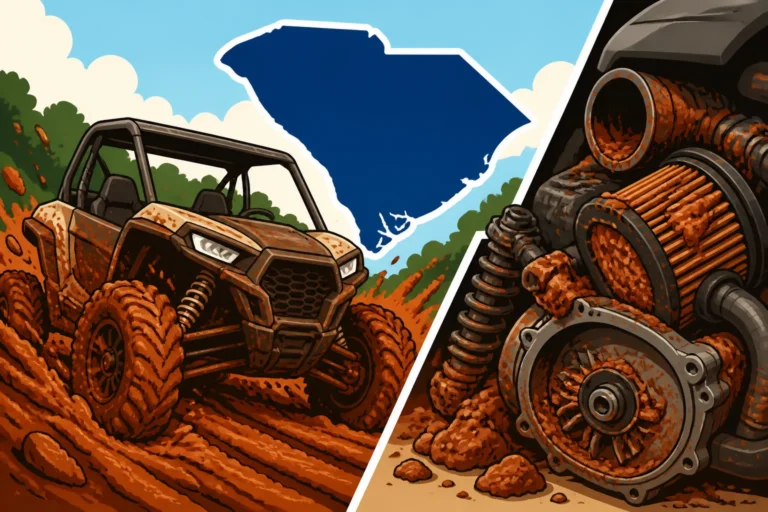
Rain can change the feel of a trail quickly. Red clay and other wet surfaces may become slick, and standing water can conceal ruts, roots, or soft edges. If there has been heavy rain, check the destination’s updates and reconsider whether your machine and group are suited to the conditions. A closed trail is not a challenge to get around; it is a direction to stay out.
Maps can help you plan, but treat them as planning aids rather than real-time authority. Before leaving, review the route to the trailhead and save useful information for areas with limited cell service. onX Offroad may help you visualize trails and identify nearby roads, while an official trail notice or direct confirmation from the destination should guide decisions about current access.
A sensible plan includes a turnaround point. If the group is behind schedule, a route is worse than expected, or the weather changes, agree in advance that you can shorten the ride. That decision is easier to make before anyone is tired, cold, overheated, or worried about getting back before dark.
Pack for the ride you are actually doing
Bring essentials that match your vehicle, the length of the ride, and the number of people in your group. At a minimum, think about water, weather-appropriate clothing, basic first aid, a charged phone, and a way to communicate if someone gets separated. For longer or remote rides, consider carrying a paper map, a portable power bank, and tools suited to common problems on your machine.
Inspect the ATV or UTV before loading it. Check tires, brakes, lights, steering, fluid levels, and any equipment that could become a hazard if it fails. Secure the machine properly on the trailer and confirm that the trailer’s tires, lights, hitch, and tie-downs are ready for the drive. A quick inspection at home is much easier than discovering a loose strap or tire problem at the trailhead.
Your group should also agree on what to do if a machine breaks down. Decide who has recovery gear, whether anyone has experience using it, and how the group will stay together while help is arranged. Don’t attempt a risky recovery simply to avoid waiting; a damaged machine is frustrating, but an injury can turn a ride into something far more serious.
Ride responsibly and leave room for a better next trip
A good day near Winnsboro is not only about finding a trail. It is also about respecting the people, land, and other riders who share the area. Following a few basic habits helps protect access and makes the ride more comfortable for everyone.
Respect other trail users and private boundaries
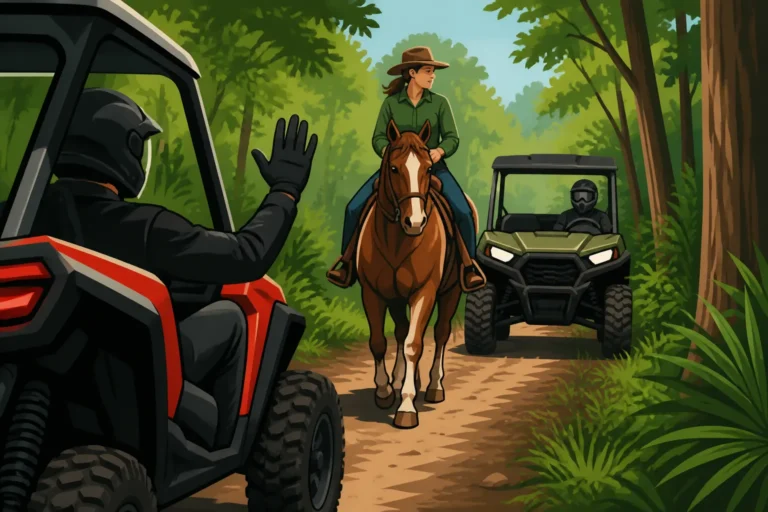
Stay on routes that are open to your vehicle and avoid cutting new paths around mud, obstacles, gates, or closures. Riding around a barrier can damage land and undermine access for everyone. If you encounter hikers, other riders, maintenance crews, or work vehicles, slow down and give them space. Dust and noise can travel farther than you expect, especially around campsites and quieter roads.
Do not treat a timber road, farm lane, or trail through private property as public access. Follow posted signs, respect locked gates, and keep clear of homes, livestock, equipment, and active work areas. If you have written permission, stick to the area and conditions the landowner approved.
Use a navigation app such as onX Offroad to help keep your bearings, but compare what you see on the screen with signs and conditions on the ground. If a mapped route appears to cross a boundary or conflicts with a closure notice, stop and confirm access rather than pushing ahead. That small pause is better than explaining an accidental trespass or putting your group in a difficult position.
Review the ride before heading home
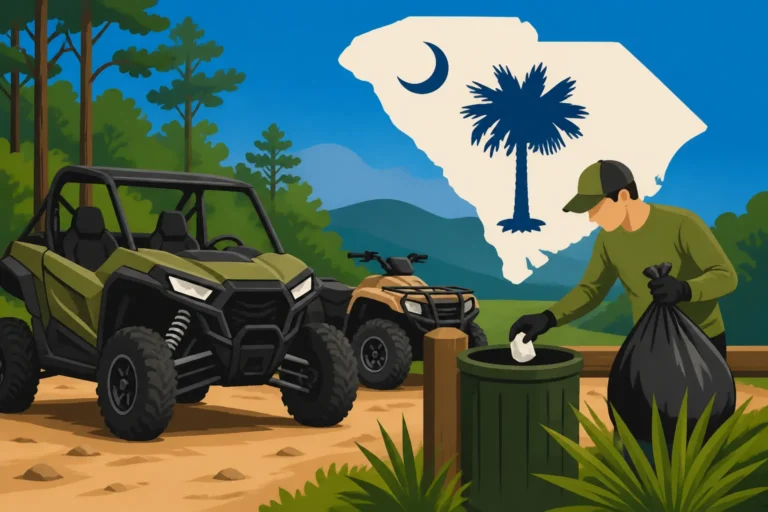
Before leaving the trailhead, make sure everyone is accounted for and that machines and gear are secured. Take a moment to check for obvious damage, leaks, loose parts, or anything that should be handled before the next ride. Mud and debris can hide problems, so a basic look over the machine is worthwhile even after an uneventful outing.
If conditions were unusually wet, dusty, or crowded, make a note of it for your next visit. Record which routes suited your group, where you stopped, and what you wish you had packed. If an area was closed or a rule was unclear, confirm the answer before planning another trip instead of assuming the same conditions will apply later.
Winnsboro can work well as a base for a private-park outing or a longer trip to a public trail system, but the right choice depends on your vehicle, group, and appetite for planning. Confirm access, match the route to your machine, and check conditions before hauling. Those simple steps make it much more likely that your day ends with a good ride story rather than a preventable problem.
Disclaimer
This article is for general informational purposes only and does not constitute professional advice. Laws, prices and regulations vary by location and change over time. Consult a qualified professional for guidance on your specific situation.