The Farm Exemption Written Into Chandler’s Law
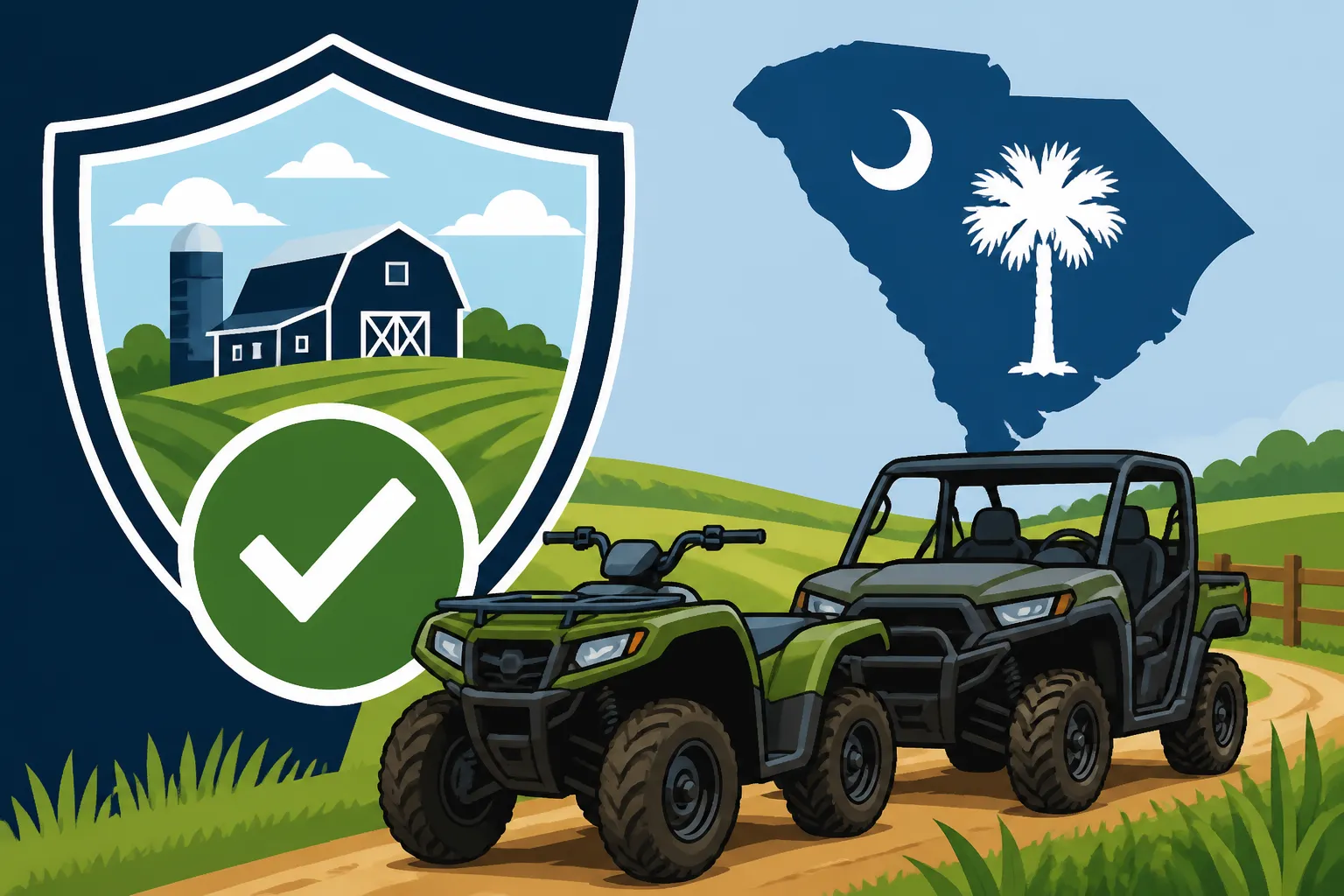
There's a specific kind of frustration that washes over you when you're a farmer, a forester, or someone managing a large tract of land in South Carolina, and you need to move your ATV or UTV a short distance on a public road. You're not out joyriding; you're just trying to get from one field to another, or check a fence line that runs along the county road, or move some equipment to a different part of your property. Yet, the rules around ATVs and public roads can feel incredibly restrictive, leaving you wondering if you're breaking the law just trying to do your job. This guide is here to clarify a very important exception to those rules: the farm exemption specifically written into Chandler's Law, designed to help folks like you get their work done without unnecessary legal headaches.
Understanding Chandler's Law and Its Impact on Rural Operations
For years, many folks in South Carolina treated their ATVs and UTVs as purely off-road machines, with limited specific state regulations governing their use. That changed significantly with Chandler's Law, a comprehensive set of rules aimed at improving safety and regulating ATV use, particularly concerning minors. While the law introduced important safety measures like age restrictions and helmet requirements for younger riders, it also brought stricter rules regarding where these machines could be operated. Generally, public roads became a no-go zone for typical off-road ATVs and UTVs.
Imagine owning two parcels of farmland separated by a narrow paved county road. Before Chandler's Law, you might have thought nothing of riding your quad across that road, or even a short distance down it, to tend to your crops or livestock on the other side. After the law came into effect, suddenly that simple, necessary action was thrown into question. Farmers, timber managers, and even those using their machines for hunting management on their own extensive properties faced a dilemma. They needed their machines to traverse their land efficiently, and sometimes, that land happened to be bisected by a public thoroughfare. The idea of having to load a quad onto a trailer, drive 100 yards, and then unload it just to access another part of your property felt absurd and counterproductive. This is precisely the kind of real-world challenge that led to the inclusion of crucial exemptions within the law, recognizing the practicalities of rural life. If you're wondering [Why South Carolina's ATV Law Is Called Chandler's Law], it's a testament to the community's effort to address safety while also acknowledging practical needs.
The Core of the Farm Exemption: What the Law Allows
Thankfully, the folks who drafted Chandler's Law understood these unique needs of South Carolina's agricultural and forestry communities. They explicitly carved out an exemption that allows ATVs and UTVs to be operated on public roads under very specific, work-related circumstances. This isn't a free pass to take your machine for a spin down Main Street, but rather a targeted provision to facilitate legitimate work.
At its heart, the exemption permits the use of an ATV or UTV on a public road when that road is either adjacent to or crossing land that you own, lease, or are otherwise authorized to manage for agricultural, silvicultural (forestry), or hunting/trapping purposes. The crucial qualifier here is that the operation must be for those specific purposes and directly related to the management of that land. This means you can use your machine to move between fields, check irrigation systems that span properties, or transport tools to a timber stand, even if it requires a brief stint on a public road. You can find the specific language in [South Carolina Code Section 50-26-50]. This is designed for utility, not recreation.
Let's break down those key terms:
- Adjacent to or Crossing: This is critical. It defines the geographical limit of the exemption. It's not about driving miles down the highway to the hardware store. It's about connecting parts of your property that are separated by or border a public road. Think of a dirt road running through the middle of your farm, or a paved county road forming one boundary of your hunting lease. The exemption allows you to bridge those gaps.
- Agricultural Purposes: This covers a wide range of activities typical for farming operations. This could include tasks like planting crops, spraying fields, checking on livestock, repairing fences, hauling feed, or inspecting irrigation equipment. If it's directly related to the cultivation of land, raising animals, or producing agricultural goods, it generally falls under this umbrella.
- Silvicultural Purposes: This refers to forestry-related activities. If you're managing timberland, whether it's planting trees, thinning stands, clearing brush, inspecting fire breaks, or transporting tools for logging operations, this exemption applies. It ensures that those working in the state's vital timber industry can efficiently manage their resources.
- Hunting or Trapping Purposes: This aspect of the exemption is specifically for managing land for hunting or trapping. This means if you own or lease land for these activities, you can use your ATV or UTV on adjacent or crossing public roads to access different parts of that property for tasks like planting food plots, checking game cameras, maintaining deer stands, or setting traps. It's not for general access to a public hunting area, but for active management of private hunting lands. For more specifics, consider [South Carolina Hunting and Trapping Exemptions].
Who Can Use This Exemption and Under What Conditions?
The farm exemption isn't just for the registered landowner; it extends to others actively involved in the agricultural, forestry, or hunting/trapping operations. This inclusivity ensures that the practical needs of a working farm or timber operation are met by all who contribute.
Permitted Operators:
- The Landowner or Lessee: This is the primary individual for whom the exemption is designed. If you own the land or have a formal lease for agricultural, silvicultural, or hunting/trapping purposes, you are covered.
- Immediate Family Members: Often, farming is a family affair. The exemption extends to immediate family members who are assisting with the permitted activities. This means your spouse, children, or even parents working on the farm can also operate the ATV or UTV under the exemption.
- Employees: For larger operations, hired farmhands, foresters, or hunting land managers are essential. The exemption specifically includes employees who are operating the machine within the scope of their employment for the designated purposes. This ensures that the workforce can perform their duties effectively.
The "Purpose" Test is Paramount:
The most critical aspect of this exemption is the "purpose" test. The sole reason for the ATV or UTV being on the public road must be directly and exclusively for agricultural, silvicultural, or hunting/trapping purposes on the land to which it is adjacent or crossing. This means:
- No Personal Errands: You cannot use the exemption to ride your quad to the local store for supplies, even if your farm is nearby. That would be considered a recreational or personal trip, not a work-related one under the exemption.
- No Joyriding: The exemption is not a loophole for recreational riding on public roads. If you're simply out for a ride, you are not covered.
- Direct Access: The travel should be the most direct route necessary to get from one part of the property to another, or to access the property from a public right-of-way.
Consider a hypothetical: You run a small cattle operation, and your pasture is on one side of a county road, while your barn where you store feed is on the other. The exemption allows you to cross or travel a short distance down that road to bring feed to your cattle or move them between pastures. However, if you finish your chores and decide to take a scenic ride down the road, you've stepped outside the bounds of the exemption. For more information on general farm use, you might find [South Carolina Rules for Riding a Farm Road] helpful.
Road Type and Distance:
While the law states "adjacent to or crossing," it's generally understood that this applies to local, low-speed public roads like dirt roads, unpaved county roads, or smaller paved state roads. It's highly unlikely that this exemption would cover operating an ATV on a multi-lane highway or a road with significant traffic volumes. The intent is to connect parcels of land, not to integrate off-road vehicles into high-speed traffic. While a street-legal UTV might be allowed on some secondary roads with speed limits up to 55 mph, this is a distinct category. The farm exemption does not grant off-road machines the same privileges as street-legal vehicles that meet specific equipment and registration requirements, as detailed in articles like [South Carolina Street-Legal UTV Registration Arrives].
Common Pitfalls and Misconceptions about the Exemption
Even with the best intentions, it's easy to misunderstand the nuances of the farm exemption, leading to potential issues with law enforcement. It's critical to be aware of what the exemption doesn't cover and to prepare for potential questions from deputies.
It's Not a Blanket Road Use License:
This is perhaps the biggest misconception. Many individuals assume that because they own farmland, they have a general right to operate their ATVs or UTVs on any public road near their property for any reason. This is simply not true. The exemption is highly specific regarding the purpose of the travel (agricultural, silvicultural, hunting/trapping) and the location (adjacent to or crossing the property). Any deviation from these specific conditions can result in a citation. For example, if you're using your ATV for purely recreational purposes on a public road, even if it's near your farm, you are likely in violation.
Chandler's Law Safety Provisions Still Largely Apply:
While the farm exemption allows for road access, it doesn't automatically override all other aspects of Chandler's Law. Specifically, age restrictions and helmet laws for minors generally remain in effect. This means if a minor (under 16) is operating an ATV under the farm exemption on a public road, they still typically need to comply with [South Carolina ATV Helmet Law] and [South Carolina ATV Age Requirements] mandates, such as wearing an approved helmet and being supervised by an adult if required by their age. Adults, while not legally required to wear helmets on ATVs, are always encouraged to do so for their own safety. The exemption primarily addresses where you can ride, not how safely you must operate or who can operate it from an age perspective.
Proof of Purpose and Ownership is Key:
If you're stopped by law enforcement while operating an ATV or UTV on a public road under the farm exemption, you should be prepared to explain your purpose and demonstrate that you meet the exemption's criteria. It's a good idea to carry:
- Proof of Land Ownership or Lease: A copy of your property deed, tax record, or lease agreement for the agricultural, timber, or hunting land.
- Identification: Your driver's license or other valid ID.
- Explanation of Activity: Be ready to clearly articulate what specific agricultural, silvicultural, or hunting/trapping task you are performing and how the road use is essential to that task.
Failing to provide clear justification could lead to a misunderstanding and potentially a citation. Having documentation handy can make a significant difference in these interactions.
Farm Exemption vs. Street-Legal UTVs:
It's vital to distinguish the farm exemption from the recently implemented provisions for street-legal UTVs. These are two entirely different legal pathways for road use. The farm exemption is for off-road machines used for specific work-related purposes with minimal equipment requirements for road use beyond basic safety. Street-legal UTVs, on the other hand, require a full range of street-legal equipment (headlights, taillights, brake lights, turn signals, mirrors, windshield, seatbelts, etc.), mandatory registration, a license plate (e.g., [The Rear Plate a Street-Legal UTV Must Carry]), and liability insurance ([South Carolina Street UTV Insurance Rules]). These machines are treated more like cars for road travel, whereas the farm exemption maintains the off-road identity of the machine while granting limited road access for work. Don't confuse the two, as their requirements and permissible uses are distinct.
The table below summarizes the key differences between these common scenarios for ATV/UTV road use in South Carolina:
| Feature | Farm Exemption (Off-Road Machine) | General Off-Road ATV/UTV (No Exemption) | Street-Legal UTV (Registered) |
|---|---|---|---|
| Purpose of Road Travel | Direct agricultural, forestry, hunting/trapping work on own land | Not permitted on public roads | General transportation, recreational road use |
| Roads Allowed | Adjacent to or crossing owned/leased land | Public roads are generally prohibited | Secondary roads with speed limits 55 mph or less |
| Who Can Operate | Landowner, immediate family, employees | Not applicable on public roads | Licensed drivers (17+ years old) |
| Machine Type | Off-road ATV/UTV (no street-legal modifications required) | Off-road ATV/UTV (not for public road use) | Specific UTVs meeting street-legal equipment requirements |
| Registration/Plating | Not required for road use under exemption | Not required for road use | Required, specific plate issued |
| Insurance | Not specifically mandated for exemption, but recommended | Not mandated for off-road use | Mandatory liability insurance |
| Helmet Rules (Minors) | Generally still apply (Chandler's Law) | Apply on public land/any public road use (if allowed) | For riders under 21, face shields/helmets required |
| Age Restrictions | Generally still apply (Chandler's Law) | Apply on public land/any public road use (if allowed) | Driver 17+, passenger rules apply |
| Enforcement/Proof | May need to demonstrate purpose and land ownership | Will be cited for illegal road use | Must adhere to traffic laws, carry registration/insurance proof |
Navigating the rules for ATVs and UTVs in South Carolina can feel like a maze, especially with changes to laws. But for those working the land, the farm exemption in Chandler's Law is a vital lifeline. Understanding its specific parameters and being prepared to explain your use can prevent frustration and keep you focused on the important work you do. It's about respecting the law while ensuring you can continue your essential operations without undue burden. For a deeper dive into these kinds of rules, check out [South Carolina Farm and Ranch Exemptions] and [South Carolina Private Property Exemptions].
Disclaimer
This article is for general informational purposes only and does not constitute professional advice. Laws, prices and regulations vary by location and change over time. Consult a qualified professional for guidance on your specific situation.