No Passenger for an Unlicensed Minor
Riding an ATV or UTV in the beautiful South Carolina outdoors is an incredible experience for many families, but it comes with serious responsibilities, especially when young riders are involved. One particular area that causes a lot of confusion and, unfortunately, can lead to dangerous situations and legal trouble, is understanding who can carry a passenger. This guide will clarify the rules in the Palmetto State, focusing on the critical prohibition against an unlicensed minor carrying a passenger on an ATV or UTV, and what that truly means for you and your family's safety.
Understanding South Carolina's ATV and UTV Passenger Laws for Minors
Navigating the rules for off-road vehicles in South Carolina can feel like trying to find your way through a thick pine forest without a map. But when it comes to young riders and passengers, the stakes are too high to be confused. The state has specific regulations in place, primarily under what's known as [Chandler's Law and South Carolina ATV Rules], designed to keep everyone safe. One of the clearest directives is that minors who are not properly licensed or certified are strictly prohibited from carrying passengers.
Defining "Unlicensed Minor" and "Passenger" in the Palmetto State
Let's break down what these terms mean in the eyes of South Carolina law, because a simple misunderstanding could lead to a serious incident or a hefty fine. When the law refers to an "unlicensed minor" in the context of ATV or UTV operation, it's not talking about a traditional driver's license for a car. Instead, it typically refers to a rider who is either below the minimum legal age to operate a specific machine or, more commonly, hasn't completed the mandatory safety certification course if they are 15 years old or younger.
For instance, South Carolina law states that riders aged 6 to 15 must hold an ATV safety certificate to operate an ATV. If a child in this age group hasn't completed that course and doesn't have their certificate, they are considered "unlicensed" for the purpose of carrying a passenger, even if they're otherwise of an age where they can operate the machine. This is crucial because many parents assume that if their child can physically ride the quad, they're all set. But without that certificate, or if they are simply too young to legally operate the machine at all, they fall under this restriction. [South Carolina Safety Certificates at 15 and Under] provides more details on this requirement.
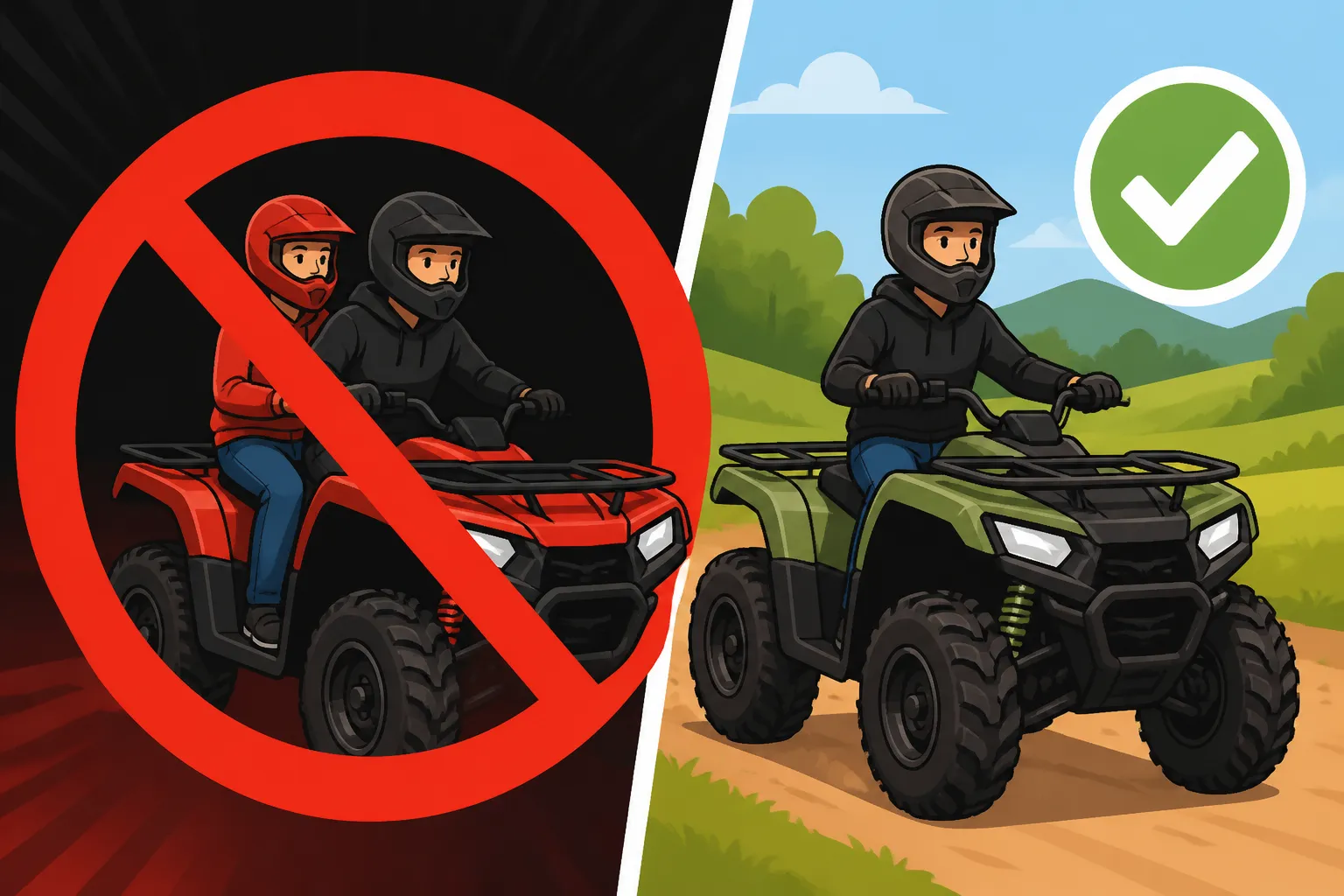
A "passenger," in this context, is pretty straightforward: it's anyone riding on the ATV or UTV who is not the operator. This includes siblings, friends, or even an adult attempting to "supervise" from the back of the machine. The design of many ATVs, often single-rider, makes carrying a passenger inherently risky, regardless of age or skill. For UTVs, while they are designed for multiple occupants, the rules still apply to minors who are not properly authorized to operate them.
The Rationale Behind Passenger Restrictions for Young Riders
It's easy to feel frustrated by rules that seem to limit the fun, especially when you see experienced young riders handling their machines with ease. However, these laws aren't just arbitrary roadblocks; they are rooted deeply in safety and designed to prevent tragic accidents. The primary reason No Passenger for an Unlicensed Minor is a hard and fast rule in South Carolina boils down to control and judgment.
A minor, particularly one who hasn't completed a formal safety course or is still developing their riding skills, often lacks the experience, physical strength, and mature judgment required to safely operate an ATV or UTV, let alone handle the added complexity of a passenger. A passenger shifts the machine's center of gravity, affects steering and braking, and can be a significant distraction. Imagine a young rider encountering an unexpected obstacle or a sudden dip in the terrain; their reaction time and ability to maintain control are already challenged, and adding another person to the equation dramatically increases the risk of a rollover or collision.
Furthermore, the law also considers the vulnerability of the passenger. If an unlicensed minor operating an ATV or UTV loses control, not only is the operator at risk, but the passenger, who has no control over the machine, is often in an even more precarious position. [South Carolina Passenger Rules Under 16] outlines specific age and supervision rules for passengers themselves, highlighting the state's comprehensive approach to keeping everyone safe on the trails. These regulations are a direct response to countless incidents and studies demonstrating the increased danger when inexperienced operators carry additional weight.
The Risks and Consequences of Non-Compliance
Ignoring South Carolina's ATV and UTV passenger laws for minors isn't just about bending a rule; it's about putting lives at risk and facing significant repercussions. I've seen firsthand how quickly a day of fun can turn into a nightmare when safety guidelines are overlooked. It’s crucial to understand both the immediate dangers and the lasting legal and financial impacts.
Safety Hazards and Real-World Scenarios
The most immediate and devastating risk of an unlicensed minor carrying a passenger is a severe accident. ATVs and UTVs are powerful machines, and their operation requires a specific skill set, constant attention, and the ability to react instantly to changing conditions. When an inexperienced or uncertified minor is at the controls, especially with the added challenge of a passenger, the potential for mishap skyrockets.
Consider a common scenario: a 12-year-old, who hasn't taken a [South Carolina Safety Course Length] course, is riding a utility quad on a family farm with a younger sibling perched precariously behind them. They come around a blind curve and hit a patch of loose gravel. The minor, lacking formal training in weight distribution and emergency braking, instinctively squeezes the brakes. The sudden stop, combined with the shifted weight of the passenger, could easily cause the ATV to pitch forward or roll over. The results could range from minor scrapes to broken bones, head injuries, or worse, for both the operator and the passenger.
Another scenario might involve a slightly older minor, say a 15-year-old, operating a UTV on private land with a friend in the passenger seat. This minor has not yet obtained the required safety certificate. They might be navigating a familiar, but still challenging, wooded trail. An unexpected dip or a hidden tree root could cause the UTV to lurch. A trained adult driver might compensate smoothly, but an inexperienced minor might overcorrect, leading to a loss of control and the UTV veering off the trail or rolling. Even with safety features like seatbelts, a rollover can still result in serious injury, especially if the passenger is not securely restrained or is too young to brace themselves properly. The added weight of a passenger reduces agility and increases stopping distances, making evasive maneuvers far more challenging for a less experienced rider.
Legal Ramifications for Riders and Responsible Adults
Beyond the immediate safety concerns, violating South Carolina's passenger laws for minors carries significant legal weight. The state's laws, particularly [South Carolina Code Title 50 Chapter 26], are designed to hold individuals accountable for reckless or unlawful operation of ATVs and UTVs.
If an unlicensed minor is caught operating an ATV with a passenger by law enforcement, there will be consequences. While specific ticket costs can vary, [South Carolina Fines of $50 to $200] are typical for violations under Chandler's Law. However, the fines are often just the tip of the iceberg. The more serious repercussions come into play if an accident occurs.
In the event of an accident involving an unlicensed minor carrying a passenger, the supervising adult – typically a parent or guardian – can face serious charges. These might include child endangerment, negligence, or aiding and abetting an unlawful act. The legal fees, court costs, and potential for civil lawsuits if someone is injured can be astronomically higher than any initial fine. Imagine facing medical bills for an injured child, potential lifelong care, and legal battles, all stemming from a moment of overlooking a simple safety rule.
Furthermore, liability for damages to property or other individuals could fall squarely on the shoulders of the supervising adult. Your homeowner's insurance policy might not cover such an incident, especially if unlawful operation was involved, leaving you personally responsible for all costs. This is why understanding [South Carolina Adult Accompaniment at 16 and Under] is so critical, as it places clear responsibilities on adults to ensure minors are riding safely and legally. The state takes these matters seriously because they directly impact public safety and the well-being of its youngest residents.
Ensuring Safe and Legal Riding Practices
As a blogger who deeply cares about enjoying the outdoors responsibly, I know that staying safe and legal isn't just about avoiding trouble; it's about fostering a culture of mindful riding that protects everyone. It's about empowering young riders to gain confidence and skills without putting themselves or others in harm's way.
Necessary Training and Supervision for Young Riders
The cornerstone of safe and legal ATV and UTV operation for minors in South Carolina is proper training and vigilant supervision. The state mandates specific requirements for a reason: they work.
For any rider aged 6 to 15, completing an approved ATV safety course is non-negotiable. This isn't just a hoop to jump through; it's a vital educational experience that teaches essential riding techniques, hazard awareness, and responsible operation. These courses cover everything from throttle control and braking to turning and navigating obstacles, all crucial skills for managing a machine on varied terrain. A minor who has completed a [South Carolina Safety Course Structure] is much better equipped to handle unexpected situations and make sound judgments while riding. They learn about proper gear, understanding trail etiquette, and the limitations of their machines, making them safer operators overall.
Beyond formal training, consistent adult supervision is paramount, especially for younger riders. South Carolina law specifies that riders under 16 must be accompanied by an adult, reinforcing the need for continuous oversight. This means the adult isn't just on the property; they are actively monitoring the minor's riding, stepping in when necessary, and reinforcing safe practices. This isn't just about watching for infractions; it's about teaching. An adult can point out potential hazards, offer advice on navigating tricky sections, and demonstrate responsible riding habits. This mentorship is invaluable, helping to build responsible riders who understand the power of their machines and the importance of respecting the rules. Whether on private land or permitted trails, an adult's presence is key to preventing situations where an unlicensed minor might be tempted to carry a passenger.
Equipping Your Machine for Safe Operation
While the rules around unlicensed minors and passengers focus heavily on the rider's skill and legal status, the machine itself plays a significant role in overall safety. Properly equipping and maintaining your ATV or UTV can vastly improve the riding experience and reduce risks for all riders, including those young enthusiasts learning the ropes.
Even if a minor is riding solo and legally, ensuring their machine is in top condition and outfitted with appropriate safety accessories adds an extra layer of protection. This includes basics like well-maintained brakes, properly inflated tires, and a functional spark arrester. But you can go further.
For UTVs, for example, consider adding aftermarket safety features that can enhance occupant protection. Companies like SuperATV offer a range of products designed to beef up your UTV's resilience and safety profile. Things like stronger roll cages or sport cages can provide superior protection in the event of a rollover, which is a real concern on challenging terrain. Upgraded seatbelts, such as multi-point harnesses, can keep occupants more securely fastened than standard lap belts, significantly reducing movement and potential injury during sudden stops or impacts. Adding robust windshields or rear panels can protect against debris, enhancing visibility and comfort for the operator. Even simple additions like side mirrors and enhanced lighting, especially if riding in low-light conditions, improve situational awareness and help prevent collisions.
For ATVs, while options are more limited due to their single-rider design, ensuring appropriate size for the rider is crucial – a child should never operate an adult-sized ATV. Installing an emergency kill switch that can be operated by a supervising adult from a distance is another excellent safety measure for younger, learning riders. Regular maintenance checks, ensuring all moving parts are lubricated and secure, and that no fluids are leaking, are also part of making sure the machine itself is not a contributing factor to an accident. Investing in high-quality helmets and other protective gear is also a must, as [South Carolina Helmet Rules for Young Riders] makes clear. By combining responsible operation with a well-equipped and maintained machine, you create the safest possible environment for your young riders.
| Age Group | Safety Certificate Required? | Passenger Allowed (if Unlicensed)? | Adult Supervision Required? | Helmet Requirement |
|---|---|---|---|---|
| Under 6 | No | No (Cannot operate ATV) | Yes (Cannot operate ATV) | No (Cannot operate ATV) |
| 6-15 | Yes | No | Yes | Yes |
| 16 | No | No (Must meet age/license for Street UTV) | Yes (for ATVs) | Yes (for ATVs) |
| 17+ (ATV) | No | No (ATVs are single-rider) | No | No (Recommended) |
| 17+ (Street UTV) | No | Yes (if licensed and machine is street-legal) | No | Yes (Under 21) |
Disclaimer
This article is for general informational purposes only and does not constitute professional advice. Laws, prices and regulations vary by location and change over time. Consult a qualified professional for guidance on your specific situation.