What a 15-Year-Old Must Carry on the Trail
It’s a unique mix of excitement and responsibility when your 15-year-old is ready to hit the trails on an ATV or UTV in South Carolina. As a parent, you’re likely grappling with all sorts of questions, from what they legally need to carry to simply keeping them safe. This guide is here to break down exactly what your young rider should have on them, and why, to ensure their adventures are both thrilling and within the bounds of South Carolina law.
The Absolute Must-Haves for a 15-Year-Old Rider
Navigating the rules for young ATV and UTV riders in South Carolina can feel like trying to find your way through a thicket of palmetto trees. But when it comes to a 15-year-old, two items stand out as non-negotiable legal requirements: a safety certificate and a proper helmet. These aren't just suggestions; they are the bedrock of youth ATV safety laws in our state, designed to protect riders and ensure they have a foundational understanding of safe operation. Without these, a fun day on the trails can quickly turn into a costly and potentially dangerous situation.
The Mandatory Safety Certificate
First and foremost, any rider under the age of 16 in South Carolina, including your 15-year-old, is legally required to possess an ATV safety certificate. This isn't just a piece of paper; it represents a crucial educational step designed to instill responsible riding habits from a young age. The idea behind this certificate, part of what's often referred to as [Chandler's Law and South Carolina ATV Rules], is to ensure that young riders understand the mechanics of their machine, the potential hazards of off-road riding, and the rules of the trail.
Obtaining this certificate involves completing an approved ATV RiderCourse. Typically, these courses have two components: an online module and a hands-on riding session. The online portion covers theoretical knowledge, such as ATV components, pre-ride inspections, risk assessment, and basic riding techniques. Then, the hands-on session, led by a certified instructor, puts that knowledge into practice, teaching balance, turning, braking, and hill climbing in a controlled environment. Without this certificate, your 15-year-old is not only riding unlawfully but also missing out on essential training that could prevent an accident. For more details, you can look up [The Safety Certificate Riders 15 and Under Need] and [South Carolina Safety Certificate Requirements].
Federal Standard Helmet Requirements
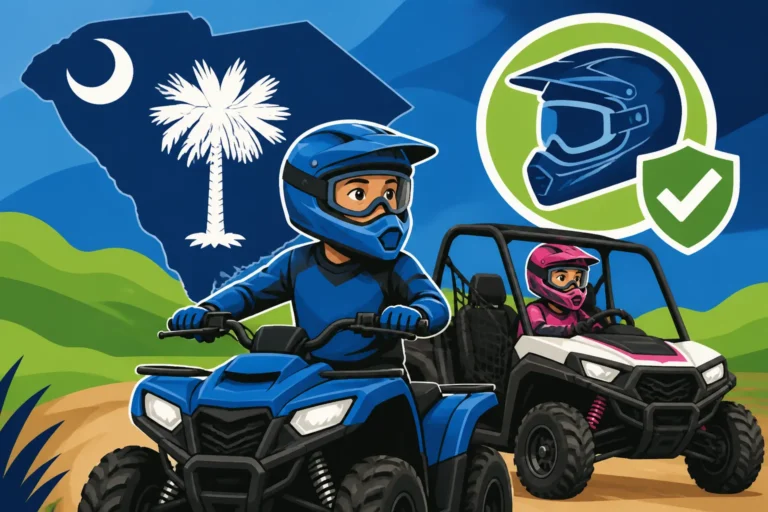
Equally important to the safety certificate is the helmet. For any rider under 16 years old in South Carolina, a helmet isn't optional; it's a legal mandate. But it's not just any helmet that will do. The law specifies that the helmet must meet the safety standards established by the U.S. Department of Transportation (DOT). This is a critical distinction because many novelty helmets or non-certified helmets might look cool, but they simply don't offer the level of protection needed in a crash. When you're choosing a helmet, look for the DOT certification sticker on the back. This sticker signifies that the helmet has undergone rigorous testing to ensure it can absorb impact effectively, protecting the rider's most vital organ.
Beyond meeting the DOT standard, proper fit is paramount. A helmet that's too loose can shift during a ride or impact, reducing its protective capabilities, while one that's too tight can be uncomfortable and distracting. When trying on a helmet, it should fit snugly all around, without excessive pressure points. It shouldn't move independently of the head when you try to rotate it. Additionally, while often overlooked, [Eye Protection Beside a Helmet] is also legally required for youth riders. Goggles or a face shield are essential to protect eyes from dust, debris, branches, and insects, ensuring clear vision and preventing potential injuries that could impair a rider's ability to react safely. Remember, [Helmets Under 16 Must Meet the Federal Standard] for a reason—to provide critical protection in unpredictable off-road environments.
Essential Documents and Proof of Ownership
While the focus on youth riding often defaults to safety gear, it’s just as crucial to ensure that your 15-year-old has the right paperwork or knows where it is kept. South Carolina might not have a statewide registration for off-road ATVs, but that doesn't mean you can completely forgo documentation. When a deputy or landowner stops a rider, they're looking for proof that the machine isn't stolen and that the rider has permission to be where they are. This is where having the proper documents, or at least easy access to them, becomes incredibly important.
Proof of Ownership for the Machine
Even though [South Carolina Has No Off-Road ATV Registration] for ATVs, it's vital to be able to prove ownership of the machine itself. For a brand-new ATV or UTV, this means carrying the Manufacturer's Certificate of Origin (MCO). The MCO is essentially the birth certificate of your vehicle; it lists the manufacturer, the vehicle identification number (VIN), and verifies that it's a new machine. It's what the dealer gives you when you purchase a new machine. Without it, proving you lawfully own the machine can be incredibly difficult if questions arise. [South Carolina Requires an MCO for a New Machine] to establish its first owner.
For a used machine, proof of ownership often comes in the form of a bill of sale, or ideally, a title if the previous owner opted to title it. While titling an ATV in South Carolina is optional, it's highly recommended for establishing clear ownership, especially for resale value and peace of mind. A comprehensive bill of sale should include the buyer's and seller's names and addresses, the sale date, the purchase price, and a detailed description of the ATV, including its VIN. While [South Carolina Proof of Ownership Without a Title] is possible with a strong bill of sale, having a title eliminates any ambiguity. You don't necessarily need to have these documents physically on your person while riding, but they should be easily accessible, perhaps with the supervising adult, or securely stored at the staging area or home. A deputy or landowner may ask to see them, so knowing exactly where they are is key to avoiding unnecessary hassle.
The Importance of Landowner Permission
Riding an ATV or UTV in South Carolina, whether it's on private land or designated trails, requires permission. It sounds simple, but this is an area where many young riders (and their parents) can run into trouble. If your 15-year-old is riding on land that isn't yours, they absolutely must have explicit permission from the landowner. This could be a written note from a private landowner, a permit for a state forest, or a pass for a private riding park. For instance, if you're riding on a friend's farm, a simple written note from the friend stating that your child has permission to ride their ATV on their property, along with contact information, can make a huge difference if questioned by law enforcement or concerned neighbors.
Without this permission, riding on private property is considered trespassing, which can lead to fines, impoundment of the machine, or even legal action. Even if you believe the land is public, always verify access rules beforehand. Designated trails in national forests, for example, typically require a day or season pass. Having that pass displayed or on your person is your proof of permission. Understanding [South Carolina Private Property Exemptions] is crucial, as these apply to landowners allowing specific uses, but they don't give you carte blanche to ride anywhere. Always assume you need permission, and always be prepared to show it. It’s a simple step that shows respect for property rights and keeps your young rider out of trouble.
Safety Gear Beyond the Helmet
While the safety certificate and DOT-approved helmet are legally required for a 15-year-old, true safety on the trail extends far beyond these two items. The unpredictable nature of off-road riding means that scrapes, bumps, and unexpected situations are always a possibility. Equipping your young rider with appropriate gear and a basic emergency kit can significantly mitigate risks and enhance their overall riding experience. Think of it as preparing for the inevitable "oops" moments that come with learning and pushing limits. This proactive approach ensures that minor incidents don't escalate into major problems, allowing your teenager to focus on skill development and enjoyment.
Proper Riding Apparel
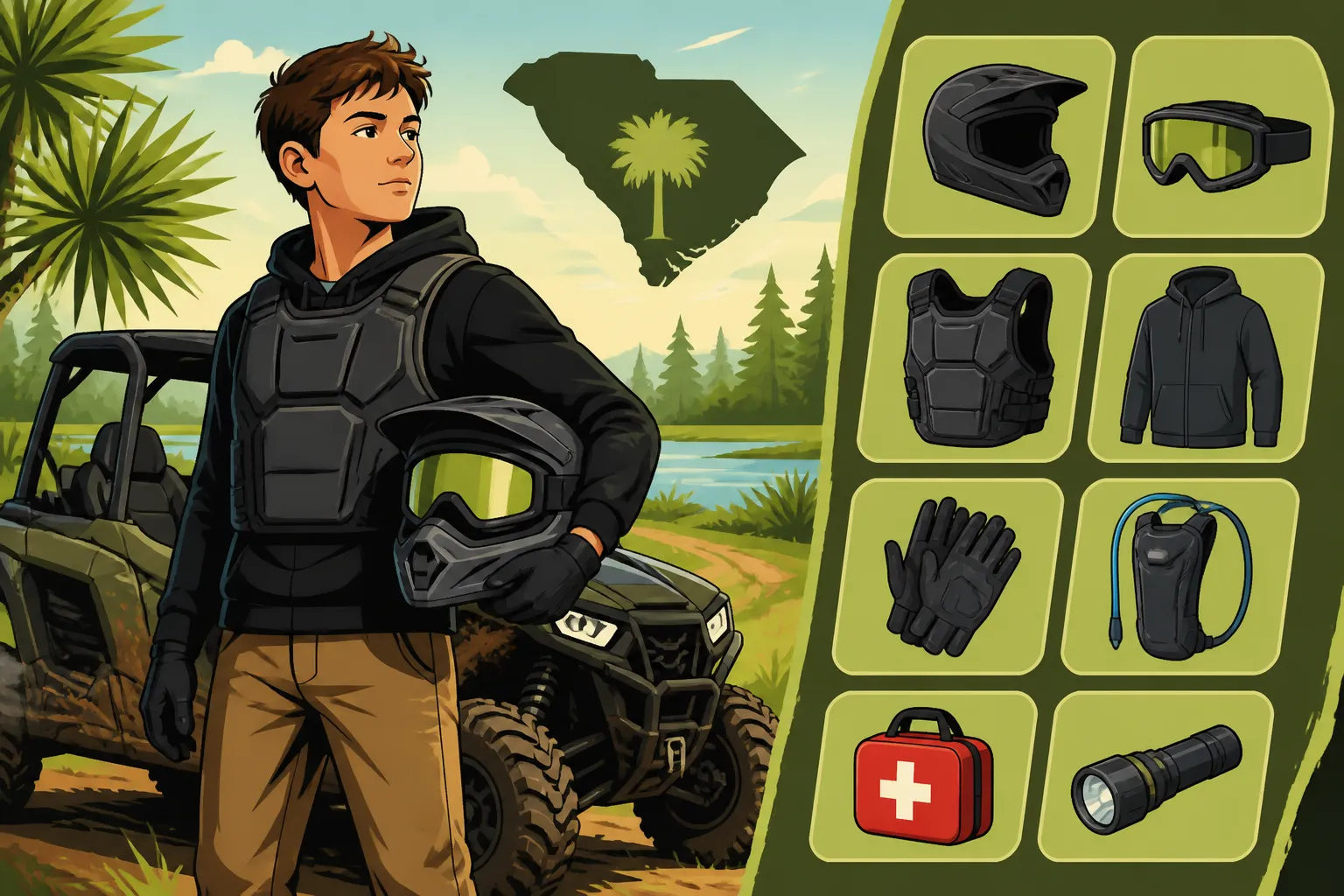
Beyond the helmet and eye protection, wearing the right clothing is a critical, though often overlooked, aspect of ATV safety. Your 15-year-old should always ride in long pants, a long-sleeved shirt, sturdy over-the-ankle boots, and gloves. This isn't about fashion; it's about protection from abrasions, branches, exhaust heat, and flying debris. Jeans, while seemingly durable, can offer limited protection in a slide or impact. Specialized riding pants and jerseys, often made from tougher, abrasion-resistant materials, provide superior protection and ventilation. Brands like SuperATV, for example, offer a range of accessories and parts that cater to durable off-road use, indirectly supporting the need for equally robust rider protection.
Boots are particularly important. Regular sneakers or hiking boots won't cut it. Riding boots offer ankle support to prevent twists and sprains, and their stiff soles provide better grip on footpegs and protection from impacts. Gloves protect hands from blisters, provide a better grip on the handlebars, and offer a crucial layer of defense against scrapes and impacts. Even in warm South Carolina weather, the risk of injury outweighs the discomfort of long sleeves and pants. Sunscreen is also a good idea on exposed skin, along with insect repellent during warmer months. Remember, [South Carolina Equipment Requirements for ATVs] focus on the machine, but personal protective equipment is just as vital for the rider.
First Aid and Emergency Preparedness
Accidents, big or small, can happen even to the most skilled riders. Therefore, having a basic first-aid kit readily accessible is a smart move. This kit doesn't need to be extensive, but it should contain essentials like bandages, antiseptic wipes, pain relievers, athletic tape, and any personal medications your child might need (e.g., an EpiPen for allergies). A small, waterproof kit can be stowed on the ATV or with the supervising adult. It's also incredibly important for your 15-year-old to carry a fully charged cell phone, even if service is spotty in some remote areas. In an emergency, even a weak signal might be enough to send a text or make a call.
Beyond the kit and phone, basic emergency knowledge is invaluable. Ensure your young rider knows how to administer basic first aid, whom to call in an emergency, and how to describe their location accurately. A small, laminated card with emergency contacts, important medical information, and instructions for how to find help could be carried in a secure pocket. Knowing [What a South Carolina Deputy Can Ask to See] might extend to asking about emergency preparedness, especially if an incident occurs. Teaching them how to remain calm, assess the situation, and signal for help is just as important as the physical gear they carry.
What a 15-Year-Old Doesn't Need to Carry (and Why)
It's easy to get bogged down in what you think your child needs to carry, especially when you're trying to cover all your bases for safety and legal compliance. However, South Carolina's laws regarding off-road ATVs and UTVs are quite specific, and some items that are mandatory for street-legal vehicles simply aren't applicable for an off-road machine. Clearing up these misconceptions can save you from unnecessary worry and ensure your 15-year-old isn't burdened with superfluous items. Understanding these distinctions is key to focusing on what truly matters for their off-road safety and compliance.
No Registration for Off-Road ATVs
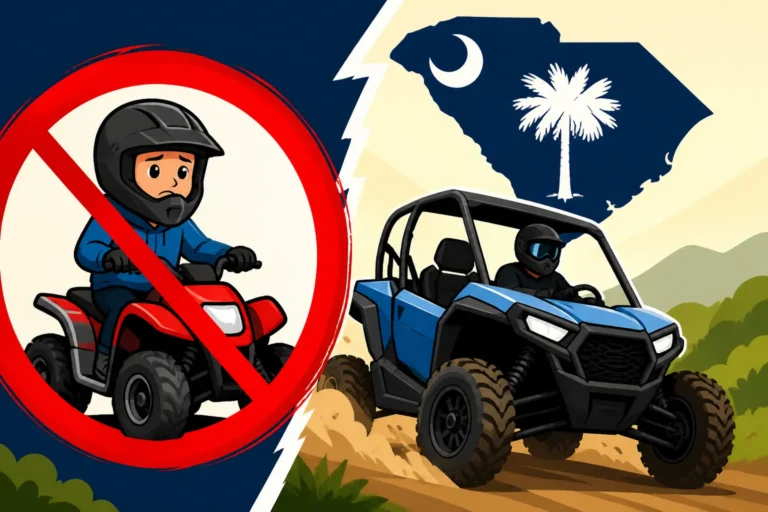
Perhaps one of the most common areas of confusion for new ATV owners in South Carolina is the concept of registration. Unlike cars, trucks, or even street-legal UTVs (which have a separate set of rules that start in November 2026 for a license plate), off-road ATVs are not required to be registered with the South Carolina Department of Motor Vehicles (SCDMV). This means your 15-year-old does not need to carry a registration card, and the ATV will not have a license plate if it's strictly for off-road use. This is a significant difference from many other states and can often lead to misunderstandings.
Because there's no registration, there's also no annual renewal fee or sticker to worry about for an off-road ATV. The state explicitly does not register these machines for off-highway use. This policy simplifies the process for off-road enthusiasts but also emphasizes the importance of carrying strong proof of ownership like the MCO or a detailed bill of sale, as mentioned earlier. While you don't need to carry a registration, it's worth noting that if you choose to title your ATV (which is optional for off-road machines), you would receive a title certificate, but this isn't the same as a registration. The key takeaway here is that for a true off-road ATV, forget about registration documents; they simply don't exist in South Carolina.
No Driver's License Required (Yet!)
Another common misconception is that a 15-year-old rider needs a driver's license or even a learner's permit to operate an ATV off-road in South Carolina. This is incorrect. While driver's licenses are essential for operating vehicles on public roads, they are not a requirement for operating an off-road ATV on trails, private land, or designated riding parks. The emphasis for youth riders is instead placed on the ATV safety certificate, which demonstrates competence in operating the specific type of vehicle in an off-road environment.
It’s a different story, of course, once a UTV becomes street-legal in South Carolina, which begins with [South Carolina Street-Legal UTV Registration Arrives] in November 2026. At that point, a licensed driver over the age of 17 will be required to operate it on public roads. But for a 15-year-old on a typical off-road ATV or UTV, their focus should be entirely on the safety course and proper riding techniques, not on getting a driver's license. The state's laws prioritize education and safety for young riders over a road-driving credential, recognizing the distinct skills and environments involved in off-road operation. So, while your 15-year-old might be thinking about getting their permit soon, it's not a prerequisite for hitting the trails.
Required vs. Recommended Gear for a 15-Year-Old ATV Rider in South Carolina
| Category | Required (Legal) | Recommended (Safety & Preparedness) |
|---|---|---|
| Rider Specific | ATV Safety Certificate (under 16) | Long-sleeved shirt & pants |
| DOT-approved Helmet (under 16) | Over-the-ankle boots | |
| Eye Protection (goggles/face shield) | Gloves | |
| Machine & Property | Proof of Ownership (MCO/Bill of Sale) | Basic First-Aid Kit |
| Landowner Permission | Fully Charged Cell Phone | |
| Water/Snacks | ||
| Small Multi-tool/Basic Repair Kit | ||
| Sunscreen & Insect Repellent |
Disclaimer
This article is for general informational purposes only and does not constitute professional advice. Laws, prices and regulations vary by location and change over time. Consult a qualified professional for guidance on your specific situation.