10 Miles Measured From Your Registered Address
It's incredibly frustrating when you want to enjoy your golf cart or UTV on the local roads in South Carolina, only to be met with confusing rules about where you can go, how fast, and how far from your house. Many folks assume a simple permit means open season, but the reality is far more nuanced, leading to potential tickets and headaches. This comprehensive guide will meticulously break down the specific regulations, particularly the often-misunderstood 10-mile radius rule for golf carts, and clarify what's allowed for street-legal UTVs, ensuring you have the clearest path to enjoying your machine responsibly and legally in the Palmetto State.
Understanding the 10-Mile Radius Rule for Golf Carts
The idea of being able to cruise your golf cart around your neighborhood is a big draw for many South Carolinians. It’s perfect for quick trips to the local store, visiting a neighbor, or just enjoying the nice weather without firing up the car. However, the exact limitations of where you can take that cart often cause a lot of confusion, and getting it wrong can lead to unnecessary fines.
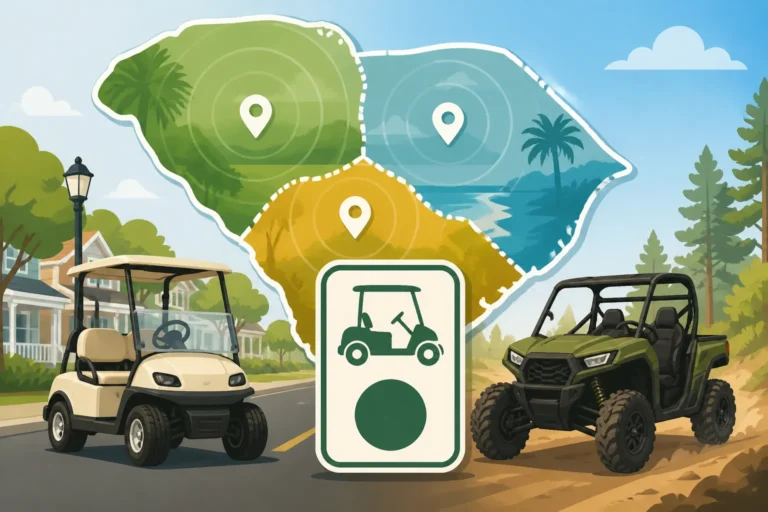
What "10 Miles Measured From Your Registered Address" Actually Means
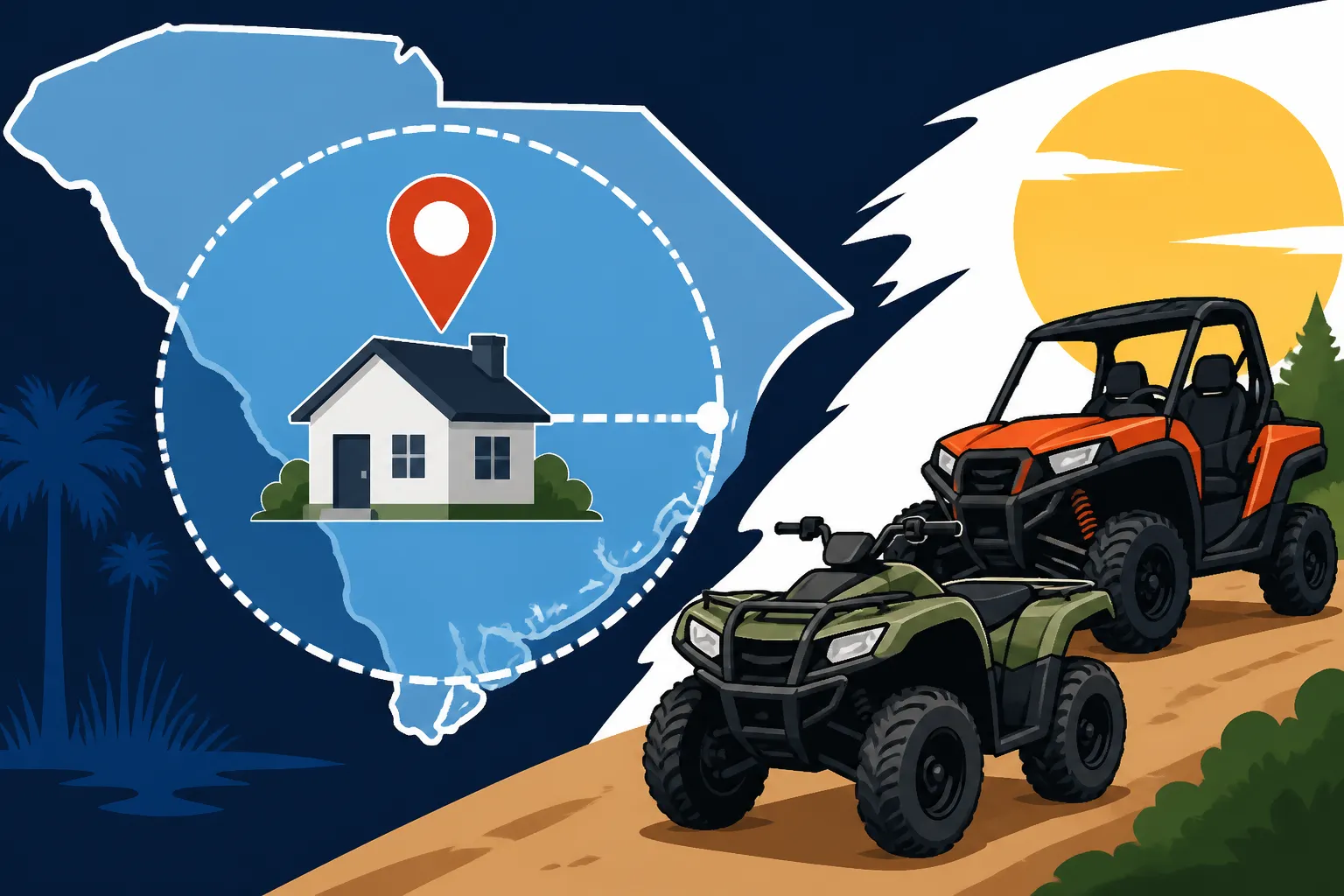
When we talk about the 10-mile rule for golf carts in South Carolina, it's easy to picture a big, neat circle on a map, with your house right in the middle, and thinking you're free to roam anywhere within that circle. However, that's not quite how the law is intended or enforced. The rule states that a permitted golf cart can be operated on secondary roads or streets within a two-mile radius of your home or place of business. This is the core operating zone. What about the "10 miles"? That applies specifically to areas designated by a local ordinance. In some communities, cities and towns have adopted ordinances that expand this operating area to a ten-mile radius from your registered address. So, it's not a universal 10-mile radius across the entire state, but rather an option for local municipalities to expand beyond the default two-mile limit.
This means before you head out, you absolutely need to check with your specific city or county government to see if they have passed an ordinance allowing for the expanded 10-mile range. Assuming it applies everywhere can get you into trouble. Even within that radius, there are limitations: you generally can't cross a primary highway or federal highway, even if it's within your permitted radius, unless at an intersection where you can make a direct crossing without impeding traffic. It’s all about local control and maintaining safety on higher-speed roads.
South Carolina Golf Cart Road Rules and Speed Limits
Beyond the radius, there are strict operational rules for golf carts on South Carolina's public roads. The most important one is the speed limit: golf carts are limited to roads where the posted speed limit is 35 miles per hour or less. This means you won't be taking your cart on any major thoroughfares or state highways. The intention is to keep these slower-moving vehicles on local, lower-traffic roads where they pose less of a risk to themselves and other drivers.
Another crucial rule is that golf carts can only be operated during daylight hours. This isn't just a suggestion; it's law. No cruising after sunset or before sunrise, even if you've got head and tail lights on your cart. The state wants to ensure maximum visibility for other drivers to prevent accidents. Additionally, permitted golf carts must be equipped with certain basic safety features to be street-legal, like working brakes, lights (even if for daylight use only), a horn, and a rearview mirror. These aren't just for convenience; they're for safety and legal compliance. Ignoring these basic requirements, even within your permitted radius, can result in a citation.
Getting and Renewing Your South Carolina Golf Cart Permit
Getting your golf cart permit in South Carolina is a fairly straightforward process, but it requires attention to detail. You'll need to visit the Department of Motor Vehicles (DMV) with specific documentation, including proof of ownership, proof of residency, and your driver's license. The permit itself is tied to the golf cart and your registered address, not to you as an individual driver. The application process involves filling out a form, providing vehicle identification information for your cart, and paying the required fee. It's a small investment for the convenience of legal road use. You can find more details on [South Carolina Golf Cart Permit Fees].
Once you have your permit, it's important to keep track of its expiration. Golf cart permits in South Carolina need to be renewed every five years. The DMV will issue a decal that you'll need to display on your golf cart, usually on the back, making it visible to law enforcement. This decal indicates that your permit is current and valid. If your decal expires, your cart is no longer street-legal, even if you’re within your permitted radius. If you move, even just across town, you’ll need to update your address with the DMV and likely get a new permit and decal. Keeping your information current ensures there are no hiccups during a routine stop. Don't forget to display your [South Carolina Golf Cart Decals Every Five Years] prominently.
The New Era of Street-Legal UTVs in South Carolina
For years, UTV owners in South Carolina faced a real dilemma. These versatile machines are perfect for recreation, property maintenance, and even light utility work, but taking them on public roads was a legal grey area, largely prohibited. Many longed for the ability to drive their side-by-sides from their property to a nearby trail, gas station, or even a friend's house without having to load them onto a trailer. Thankfully, a new law in South Carolina has opened the door for street-legal UTVs, offering a structured pathway for these vehicles to operate on certain public roads.
Distinguishing Street-Legal UTVs from Golf Carts and ATVs
It's absolutely crucial to understand that a "street-legal UTV" is a completely different animal than a golf cart or even a traditional ATV. A golf cart is designed for low-speed, short-distance travel, typically with minimal safety features beyond basic lights and brakes. ATVs, or "quads," are purpose-built for off-road performance and agility, often lacking the structural safety and equipment required for road use. Street-legal UTVs, on the other hand, bridge this gap. They are generally larger, more powerful, and come equipped with many of the safety features found on conventional automobiles.
The new law specifically defines what constitutes a street-legal UTV, setting it apart from its off-road siblings. These vehicles are not just off-road machines with a few extra lights bolted on. They are subject to specific manufacturing and equipment standards that make them suitable for shared road use. This distinction is vital for both owners and law enforcement, as confusing one for the other can lead to serious legal consequences. When considering a UTV for road use, think of it as a separate class of vehicle with its own set of rules and requirements, distinct from the casual nature of a golf cart or the purely recreational focus of an ATV.
South Carolina Street UTV Requirements Explained
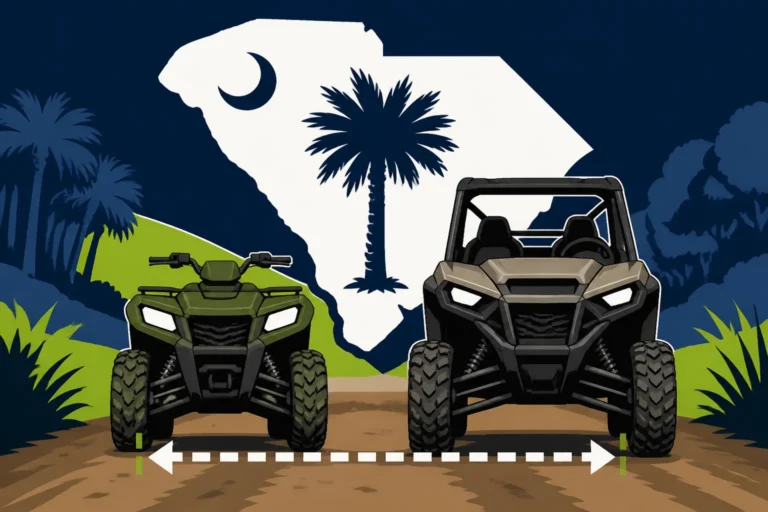
To be considered street-legal in South Carolina, a UTV must meet a comprehensive list of equipment requirements, transforming it from a purely off-road machine into a road-worthy vehicle. This isn't a suggestion; it's the law, and these items are critical for both safety and compliance. The requirements generally include: a steering wheel (not handlebars like an ATV), seat belts for all occupants, working headlights, tail lights, brake lights, turn signals, a horn, a rearview mirror (and potentially side mirrors), a windshield, and a valid license plate. Additionally, the UTV must meet certain physical specifications, such as a maximum width (often around 80 inches) and a maximum dry weight (typically around 4,000 pounds). These specifications ensure that UTVs can safely share the road with other vehicles without being excessively wide or heavy.
For many UTV owners, converting an existing off-road model to meet these requirements might involve aftermarket parts. Companies like SuperATV offer a wide range of accessories, from full windshields and wiper kits to turn signal setups and street-legal conversion kits, that can help owners bring their UTVs up to snuff. It's important to use quality parts and ensure they are installed correctly to meet the legal standards. Remember, simply having the parts isn't enough; they must be fully functional and compliant. The state wants to ensure these vehicles are as safe as possible when operating alongside cars and trucks. For a complete rundown, you'll want to review [South Carolina Street UTV Requirements Explained]. The process also involves specific documentation at the DMV. [South Carolina Street UTV Registration Arrives] after you've ensured your machine is compliant. Getting the [South Carolina Paperwork for a Street UTV] in order is your first step toward legal road use.
Age and Licensing for Street-Legal UTV Operation
Operating a street-legal UTV on public roads in South Carolina isn't like riding a bicycle; it comes with significant responsibilities and requires proper qualifications. Unlike golf carts, which in some circumstances can be driven by younger individuals on private property, operating a street-legal UTV on public roads demands a licensed driver. Specifically, the operator must hold a valid Class D South Carolina driver's license. This means a standard automobile driver's license is sufficient; you don't need a special motorcycle or commercial license for a street-legal UTV.
The minimum age for operating a street-legal UTV on public roads is 17 years old. This aligns with the general age requirement for a full driver's license in South Carolina. Learners' permits or provisional licenses typically do not qualify. Furthermore, there are specific helmet rules for younger riders. While adults operating a street-legal UTV are not always required to wear a helmet, any occupant under the age of 21 must wear an approved safety helmet, similar to motorcycle regulations. This highlights the state's emphasis on safety, especially for less experienced or younger riders and passengers. Understanding these age and licensing requirements is non-negotiable for legal and safe operation. You can learn more about this by checking out [South Carolina Street UTV Age of 17].
Navigating Road Access and Limitations for UTVs
While the new law is a welcome change for UTV enthusiasts, it's not a free pass to drive anywhere and everywhere. The legislation carefully delineates where street-legal UTVs can and cannot operate, as well as the ongoing responsibilities of ownership. These limitations are put in place to integrate UTVs safely into the existing road infrastructure without creating undue hazards. It's vital for every UTV owner to know these boundaries.
Where Street-Legal UTVs Can (and Can't) Go
The ability to drive your street-legal UTV on public roads in South Carolina is specific to certain types of roadways. Generally, these vehicles are permitted on secondary roads where the posted speed limit is 55 miles per hour or less. This means you can cruise on many local roads, rural routes, and some state highways, but you're explicitly prohibited from operating on interstate highways or any roads with a posted speed limit exceeding 55 mph. The logic here is to keep UTVs off high-speed, high-traffic thoroughfares where they could become a danger due to their size, speed capabilities, and differing safety characteristics compared to conventional cars.
It’s also important to remember that while the "10 miles unless a town says otherwise" rule applies specifically to golf carts and their radius of operation, street-legal UTVs, once registered and plated, generally aren't confined by the same strict radius from a registered address. Instead, their access is determined by the road's speed limit. However, local municipalities still have the authority to enact their own ordinances that might further restrict or permit UTV use on specific local roads within their jurisdiction. Always check with local authorities in your area of operation, as a town might have specific streets or areas where UTVs are still prohibited, regardless of the state law.
Required Insurance and Registration for Street UTVs
Just like any other motor vehicle on South Carolina's public roads, street-legal UTVs must be properly insured and registered. This isn't optional; it's a mandatory requirement to legally operate your machine. You'll need to carry at least the state's minimum liability insurance coverage. This protects you in the event you're at fault in an accident, covering damages and injuries to other parties. Without this insurance, your UTV is not considered street-legal, and you could face significant fines, license suspension, or even impoundment of your vehicle.
The registration process involves a visit to the DMV, where you'll present proof of ownership (like a Manufacturer's Certificate of Origin for a new UTV or a properly assigned title for a used one), proof of insurance, and pay the necessary fees. Upon successful registration, your UTV will be issued a South Carolina license plate, which must be prominently displayed on the rear of the vehicle. This plate signifies that your UTV is legally recognized for road use. The registration fee for street-legal UTVs is a biennial (every two years) payment. You can learn more about the specific costs by looking up [South Carolina Street UTV Registration Cost] and following the [South Carolina Street UTV Registration Steps]. Make sure to budget for [South Carolina's Biennial Street UTV Fee] as part of your ownership costs.
Accessories and Modifications for Road Use
Converting an off-road UTV into a street-legal machine, or simply ensuring a factory street-legal model remains compliant, often involves a suite of accessories and modifications. These aren't just about aesthetics or performance; they are about meeting the legal requirements for safe road operation. For instance, if your UTV didn't come with a full windshield from the factory, you'll need to install one, often with a wiper kit for visibility in rain. Turn signals are non-negotiable, and many off-road UTVs require an aftermarket kit to add front and rear blinkers, often with a horn integrated into the system. Rearview and side mirrors are also critical for visibility in traffic.
Companies like SuperATV specialize in these types of upgrades, offering everything from full street-legal conversion kits that include all the necessary lights, mirrors, and horns, to individual components like heavy-duty windshields, DOT-approved tires, and even lift kits that don't compromise road stability. When making modifications, it's paramount to ensure that all added components meet Department of Transportation (DOT) standards where applicable and are installed correctly to function reliably. The goal is not just to "check the box" for compliance, but to genuinely enhance the safety and visibility of your UTV on public roads. Always prioritize modifications that contribute to safety and legal adherence.
Differentiating Other Off-Road Vehicles on Public Roads
Understanding the specific rules for golf carts and street-legal UTVs is a big step, but it's equally important to know how other types of off-road vehicles fit (or don't fit) into South Carolina's public road landscape. The state has distinct classifications for various machines, and confusing them can lead to significant legal trouble. This section aims to clear up the differences and emphasize why certain vehicles are kept off public thoroughfares.
South Carolina Low-Speed Vehicle Rules
Beyond golf carts and the newly recognized street-legal UTVs, South Carolina also has a category for "low-speed vehicles" (LSVs). While they might look similar to a highly modified golf cart or a small UTV, LSVs are a distinct class of vehicle with their own regulations. The key characteristic of an LSV is its top speed: they are designed to travel at speeds greater than 20 miles per hour but not greater than 25 miles per hour. This speed range places them squarely between golf carts and standard automobiles.
Because of their higher speed capabilities compared to golf carts, LSVs are subject to more stringent requirements. They must be equipped with full motor vehicle safety features, including headlamps, tail lamps, stop lamps, turn signal lamps, reflectors, a parking brake, a rearview mirror, a windshield, seat belts, and a vehicle identification number (VIN). They also require a title and full vehicle registration, just like a regular car. LSVs can be operated on roads with a posted speed limit of 35 mph or less, similar to golf carts, but their enhanced safety features allow for this higher speed operation. It's crucial to understand that [A Low-Speed Vehicle Is Not a South Carolina UTV]; they are separate legal categories.
Why ATVs Are Not Street Legal (Generally)
Despite their popularity for recreation, All-Terrain Vehicles (ATVs) are, by and large, not street-legal on public roads in South Carolina. ATVs are designed with a specific purpose: off-road use. Their suspension, tire design, open chassis, and lack of certain safety features make them unsuitable and inherently unsafe for mixing with regular traffic. The state's laws are clear on this distinction. Attempting to ride an ATV on a public road, even a quiet dirt road, can result in significant fines and legal penalties.
There are, however, very narrow exceptions. For instance, ATVs may be operated on public roads for agricultural purposes by farmers or their employees, typically when moving between fields. They might also be allowed to cross a public road directly at an intersection if done safely and without impeding traffic. However, these are specific exemptions, not a general allowance. Owners should never assume their ATV can be used for casual road travel. The risks, both legal and physical, are simply too great. If you're wondering, [Can You Ride an ATV on the Road in South Carolina?] – the answer is almost always no, unless a very specific exemption applies.
Private Property vs. Public Roads: Understanding the Lines
The distinction between private property and public roads is the cornerstone of all these regulations. On your own land or land where you have explicit permission to ride, the rules regarding golf carts, UTVs, and ATVs are much more relaxed, primarily dictated by your own safety practices and landowner agreements. This is where the true spirit of off-roading and casual golf cart use comes alive. However, the moment your wheels touch a public thoroughfare—whether it’s a paved street, a dirt road maintained by the county, or even the shoulder of a state highway—you fall under the jurisdiction of South Carolina's traffic and vehicle laws.
Ignoring these boundaries carries consequences. Operating an unpermitted golf cart, an unregistered street-legal UTV, or an ATV illegally on public roads can lead to citations, fines ranging from $50 to $200, and potentially having your vehicle impounded. Furthermore, in the event of an accident on a public road, an illegally operated vehicle may void your insurance coverage, leaving you personally liable for damages and injuries. Law enforcement officers perform [South Carolina Equipment Checks by Officers] and will not hesitate to enforce these regulations. It’s not about being overly restrictive; it's about public safety. Always respect the legal lines between private and public land, and ensure you have explicit written permission if riding on someone else's property to avoid issues like [South Carolina Trespass Law for Riders].
Here’s a quick overview of how these vehicle types stack up:
| Feature | Golf Cart | Street-Legal UTV | Low-Speed Vehicle (LSV) | ATV (Off-Road) |
|---|---|---|---|---|
| Max Speed (Road Use) | 20 mph (permitted) | Varies by model, up to 55 mph roads allowed | 20-25 mph | Not Permitted (generally) |
| Road Type Permitted | Secondary roads ≤ 35 mph, within radius | Secondary roads ≤ 55 mph | Roads ≤ 35 mph | Private land / specific exemptions only |
| Registration/Plate | Permit & Decal | Title & License Plate | Title & License Plate | Not Registered for Road Use |
| Driver's License | Yes, for public roads | Yes, standard SC Class D | Yes, standard SC Class D | Not for Road Use |
| Minimum Age (Road Use) | 16+ (or 14-15 with permit under supervision) | 17+ | 16+ (or 14-15 with permit under supervision) | Not for Road Use |
| Required Equipment | Brakes, lights, horn, mirror | Head/tail/brake lights, turn signals, horn, mirrors, windshield, seat belts, steering wheel | Full motor vehicle equipment (like a car) | None for road use (off-road focus) |
| Insurance | Not mandatory for permit (recommended) | Mandatory liability insurance | Mandatory liability insurance | Not mandatory for off-road (recommended) |
| Radius Limit | 2-mile (or 10-mile by local ordinance) from registered address | No specific radius limit (road speed limit governs) | No specific radius limit (road speed limit governs) | N/A |
Disclaimer
This article is for general informational purposes only and does not constitute professional advice. Laws, prices and regulations vary by location and change over time. Consult a qualified professional for guidance on your specific situation.