South Carolina Golf Cart Radius and Speed Rules
Oh, the humble golf cart in South Carolina! It seems so simple, right? Just a little electric buggy to zip around. But if you’ve ever tried to figure out where you can actually drive it and how fast, you know the confusion is real. You're not alone in feeling like you need a lawyer to understand a golf cart permit! This guide is here to clear up the most common headaches and untangle the specific radius and speed rules for golf carts in the Palmetto State, helping you ride legally and confidently.
Understanding South Carolina's Definition of a Golf Cart
Before we even talk about speed or where you can drive, it’s crucial to understand what South Carolina officially considers a golf cart. This isn't just semantics; it's the foundation for all the rules that follow. Many folks assume any small, open-air electric vehicle is a golf cart, but the state actually has specific criteria, and if your machine doesn't fit, you could be facing different regulations entirely.
What Sets a Golf Cart Apart: Specs and Intent
In South Carolina, a golf cart is typically defined by its design and original intended purpose: primarily for use on a golf course. This means it's usually a two- or four-person vehicle, electric-powered (though gas models exist), and designed to transport golfers and their equipment. The key distinguishing factor often boils down to its top speed. By state law, a golf cart cannot go faster than 20 miles per hour. If your cart is modified or designed to go faster than that, it might no longer be classified as a golf cart in the eyes of the law, which is where things can get tricky. Think about your average golf course setup: these carts are built for short, leisurely drives, not for keeping up with traffic on a busy road. They're typically open-sided, lack many standard automotive safety features like robust headlights, turn signals, or even windshield wipers, and their suspension is designed for smooth, manicured fairways, not potholes and rough asphalt.
It's really about the spirit of the machine, as much as its physical attributes. Is it something you'd see on the greens at Kiawah or Harbour Town, or is it starting to look more like a miniature car? Modifications, even for safety or aesthetic purposes, can sometimes push a golf cart out of its original classification. For instance, if you've added an aftermarket lift kit or an upgraded motor, you might be improving its performance, but you could also inadvertently be changing its legal status if it pushes the speed limit.
The Difference Between a Golf Cart and a Neighborhood Electric Vehicle
This is where a lot of people get confused, and it’s a crucial distinction. A "Neighborhood Electric Vehicle" (NEV) or a "Low-Speed Vehicle" (LSV) is not a golf cart in South Carolina, and the rules for operating them are significantly different. While both are electric, typically small, and designed for local travel, an LSV is built to meet federal safety standards for low-speed vehicles. This means it comes equipped with things like headlights, taillights, turn signals, stop lights, reflective devices, an exterior mirror on the driver's side and an interior mirror or exterior mirror on the passenger's side, a parking brake, a VIN (Vehicle Identification Number), and safety belts. Crucially, LSVs can generally travel up to 25 mph, exceeding the golf cart's 20 mph limit, and they require a full vehicle title and registration, just like a car.
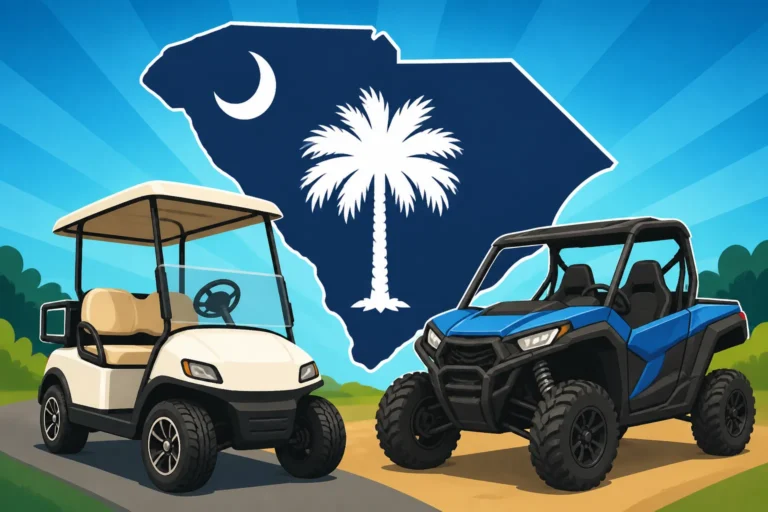
Golf carts, on the other hand, don't meet these federal safety standards for LSVs. They don't typically have VINs in the same way, and their top speed is capped lower. This distinction is vital because an LSV can be registered and driven on roads with speed limits up to 35 mph, offering much more flexibility than a golf cart. If you try to drive your souped-up golf cart like an LSV, thinking it's the same, you could easily find yourself in trouble with law enforcement. It’s like trying to pass off a go-kart as a compact car – they might both have wheels, but they’re regulated very differently. Understanding [A Low-Speed Vehicle Is Not a South Carolina UTV] is key to making sure you're operating the right vehicle in the right way.
Deciphering the "10-Mile Radius Rule"
This is perhaps the most talked-about and often misunderstood aspect of golf cart rules in South Carolina. The "radius rule" dictates where you can actually operate your permitted golf cart on public roads. It's designed to keep these slower-moving vehicles off high-speed, dangerous thoroughfares and limit their use to local, low-traffic areas.
The Core of the Radius Rule: Where it Applies
South Carolina law states that a permitted golf cart may be operated on secondary roads or streets within four miles of the address on the golf cart's registration certificate, or within four miles of the entrance to a gated community, or within four miles of a golf course. However, many local municipalities, especially coastal towns and communities with a lot of golf cart traffic, have adopted ordinances that often expand this to a 10-mile radius. This expansion is why you often hear "10-mile radius," but it’s critical to verify your local city or county's specific ordinances. This isn't a state-mandated 10-mile rule, but rather a common local interpretation. The core idea is that your golf cart use is tied to a specific location – your home, a gated community, or a golf course – and you’re generally limited to a relatively short distance from that point. You can't just take your golf cart on a cross-county adventure!
The purpose behind this is clear: golf carts are slower, less protected, and don't mix well with faster-moving traffic. Limiting their range to local, low-speed roads helps ensure everyone's safety. For instance, if you live in a small beach town like Isle of Palms, your golf cart might be your primary mode of transportation for quick trips to the grocery store or the beach access points. The radius rule allows for this convenience while preventing you from venturing onto higher-speed state highways that are simply too dangerous for a 20 mph vehicle. If you're wondering about specifics for your area, always check with the local police department or town hall. This is one rule where local variations are extremely common and important to know. If you happen to be in an area without a specific local ordinance, the state’s four-mile rule would apply. This flexibility is why you’ll hear different numbers depending on which part of the state you're in.
Exceptions and Local Ordinances: When the Radius Might Change
While the four-mile (or locally adopted ten-mile) radius is the general rule, there are specific situations where a golf cart might be legally operated outside of this, or where the rules are entirely different. For instance, some planned communities or large resorts have private roads where golf cart rules are dictated by the property owner, not state law. On these private roads, you might see golf carts operating more freely, without the same radius restrictions. However, the moment you transition onto a public street, even briefly, state and local laws kick back in. Many municipalities, particularly those with a strong tourist presence, have specific [South Carolina Golf Cart Road Rules] designed to accommodate the popularity of golf carts while maintaining safety. Some towns might allow golf carts on certain primary roads for very short distances, perhaps to cross a busy intersection to reach another secondary road, but these are almost always explicitly designated and signed.
Another key exception involves crossing primary highways. You can cross a highway or street at an intersection if the highway has a posted speed limit of 35 mph or less. This is a very specific allowance and not an invitation to travel along the highway. It’s for crossing only, to connect two permissible secondary roads. Some local ordinances might also specify certain roads or areas where golf carts are prohibited altogether, even within the general radius. This could be due to traffic volume, road design, or safety concerns. For example, a town might prohibit golf carts on a specific bypass road, even if it falls within the nominal radius. It’s imperative to check local signage and ordinances before assuming you can go anywhere within your radius. [South Carolina Cart Rules 4 Miles From Home] is a good article to review for additional context.
Practical Implications for Everyday Use
Understanding the radius rule has significant practical implications for golf cart owners. It fundamentally shapes how you can use your cart. If you live in a residential neighborhood four miles from the beach, your golf cart might be perfect for beach trips. But if you're seven miles away, it’s legally out of bounds for that particular excursion on public roads. This means you can't just hop in your cart and drive to a friend's house across town if it falls outside your designated radius. This limitation often surprises new golf cart owners, especially those moving from states with more lenient rules.
It also affects the feasibility of using your golf cart for routine errands. Can you get to the grocery store? The local park? The community pool? All these questions depend on your address, the location of your destination, and your local municipality's specific ordinances. For many, the golf cart becomes a fantastic "neighborhood car," perfect for short, quick trips where speed isn't a factor and parking is easy. But for anything beyond that defined local zone, you'll need a traditional vehicle. It's about convenience within a carefully defined boundary. This is also where aftermarket accessories from companies like SuperATV can come in handy, not for breaking the rules, but for enhancing safety and convenience within the allowed operating areas. Think brighter LED lights for dusk driving, or a sturdy cargo basket for those grocery runs, ensuring your permitted rides are as safe and efficient as possible.
Navigating Speed Limits and Road Safety
Beyond where you can drive, how fast you can drive your golf cart is equally important. South Carolina law is quite clear on the speed limitations for golf carts on public roads, and adhering to these limits is not just about avoiding a ticket, but about ensuring the safety of yourself, your passengers, and everyone else on the road.
The 35 MPH Threshold: The Hard Limit
The absolute, non-negotiable speed limit for any road a permitted golf cart can operate on in South Carolina is 35 miles per hour. If a road has a posted speed limit higher than 35 mph, a golf cart is not allowed on it. Period. This is a critical distinction that often trips people up. It's not about how fast your golf cart can go; it's about the posted speed limit of the road itself. Even if your cart has been modified and can technically hit 30 mph, if you're on a road with a 45 mph limit, you're breaking the law simply by being there. The reason for this is purely safety. Golf carts are slow, open, and lack the protective features of standard automobiles. Mixing them with faster traffic creates dangerous speed differentials and makes accidents far more likely and severe.
This 35 mph threshold also implicitly limits where you can travel. Most major thoroughfares, state highways, and even many busy county roads will have speed limits above 35 mph. This automatically rules them out for golf cart travel. Even if a secondary road has a 35 mph limit, you should still exercise extreme caution. Remember, your golf cart likely has a top speed of 20 mph. Driving it on a 35 mph road means you'll be significantly slower than other traffic, which requires vigilance and defensive driving. It’s about understanding the design limitations of your vehicle and respecting the inherent dangers of mixing slow-moving vehicles with faster ones.
Driving on Public Roads: Which Ones Are Fair Game?
So, if roads over 35 mph are out, which ones are in? Generally, you’re looking at secondary roads, residential streets, and some designated municipal roads within the legal radius. These are typically roads with lower traffic volumes and posted speed limits of 35 mph or less. Think of the quiet streets in your neighborhood, the roads winding through a planned community, or the access roads leading to a public park. These are the environments where golf carts can safely coexist with other vehicles. You won't find golf carts legally cruising down I-26 or even many state routes like Highway 17.
It's also important to remember that golf cart operation is generally allowed only during daylight hours, unless the cart is equipped with proper headlights and taillights. However, even with lights, many local ordinances restrict golf cart use to specific times or only during daylight. Always check your local rules. The idea is to keep golf carts in areas where their slower speed and limited visibility pose the least risk. This often means staying off main arteries and sticking to routes where local traffic is the norm and drivers are more accustomed to seeing golf carts. You'll often see specific signage in communities that welcome golf carts, indicating shared lanes or preferred routes. These signs are your best friend in navigating where it's safe and legal to ride.
Safe Operating Practices Beyond the Rules
While adhering to the letter of the law is crucial, responsible golf cart operation goes beyond simply following the rules. Because golf carts lack many standard safety features found in cars, riders need to be extra vigilant. This means defensive driving, always assuming other drivers don't see you, and maintaining a safe following distance. Use hand signals if your cart lacks turn signals, or consider adding aftermarket ones from a reputable supplier like SuperATV to enhance your visibility. Always use seatbelts if your golf cart has them, and ensure all passengers, especially children, are seated properly and keeping their hands and feet inside the vehicle.
Never overload your golf cart with too many passengers or excessive cargo. This can affect its stability, braking, and steering, making it unsafe to operate. Be particularly cautious when turning, on hills, or in inclement weather. Golf carts can be prone to rollovers if driven too aggressively or on uneven terrain. The soft tires and basic suspension aren't designed for high-speed maneuvers or abrupt changes in direction. Rain can make the tires lose traction quickly, and the lack of a full enclosure means you and your passengers are fully exposed to the elements. Children under 16 must be supervised by an adult when operating a golf cart, and generally, only licensed drivers are allowed to operate golf carts on public roads. Even if your local laws allow a younger, unlicensed driver on private property, the moment you hit a public street, a valid driver's license is required. Safety should always be your top priority, even when simply going a short distance.
Getting Your Golf Cart Permitted for Road Use
Before you even think about hitting those secondary roads, your golf cart needs to be properly permitted by the South Carolina Department of Motor Vehicles (SCDMV). This isn't just a suggestion; it's a legal requirement for operating on any public road. Without a valid permit, your golf cart is confined to private property, golf courses, or designated off-road areas.
The Permit Application Process: What You Need to Do
The process for getting a golf cart permit is relatively straightforward, but it requires specific documentation. You'll need to visit your local SCDMV office and bring several key items with you. First, you'll need proof of ownership for your golf cart. This could be a bill of sale, a dealer invoice, or a manufacturer's certificate of origin (MCO) if it's a new cart. Many used golf carts, especially older ones, might not have a formal title like a car, so a clear bill of sale from the previous owner is often sufficient. If you’re ever in a situation where you need [South Carolina Proof of Ownership Without a Title], the SCDMV can usually guide you through the accepted alternatives. You'll also need proof of your South Carolina residency, such as a driver's license or state ID. Finally, and crucially, you'll need proof of financial responsibility – essentially, liability insurance for your golf cart. While golf carts aren't required to have the same level of coverage as cars, liability insurance is mandatory for operation on public roads.
Once you have all your documents, you'll fill out an application form (Form GC-2) and pay the required fee. The fee for a South Carolina golf cart permit is quite affordable, often just a nominal amount. [What a $5 Golf Cart Permit Allows] is a good article to see how little it costs for the peace of mind of legal operation. The permit itself usually takes the form of a small decal that you must prominently display on the front of your golf cart. This decal shows the permit number and the expiration date, making it easy for law enforcement to verify its validity. It’s always a good idea to call ahead to your local SCDMV office to confirm their exact requirements and accepted forms of payment.
Permit Renewal and Display: Keeping Things Current
Your golf cart permit isn't a one-and-done deal; it needs to be renewed periodically. In South Carolina, golf cart permits are valid for five years from the date of issuance. This means you’ll need to go through the renewal process every five years to keep your cart street-legal. The renewal process is typically simpler than the initial application, often requiring updated proof of insurance and payment of the renewal fee. It's easy to forget about this, so mark your calendar! You don't want to be caught riding on an expired permit. [South Carolina Golf Cart Permit Renewal] is something to keep in mind.
The permit decal itself must be displayed on the front of the golf cart. This isn't just a suggestion; it's a legal requirement. The decal should be clearly visible to law enforcement, usually affixed to the front cowl or dashboard. This is how officers quickly verify that your golf cart is permitted for road use. A missing or improperly displayed decal can lead to a citation, even if you technically have a valid permit. Think of it like a license plate for your car – it needs to be visible. If your decal gets damaged or falls off, contact the SCDMV to get a replacement as soon as possible. The goal is easy identification and compliance. [Replacing Your Golf Cart Decal Every Five Years] is part of the routine.
South Carolina Golf Cart Permit Fees
The cost associated with permitting a golf cart in South Carolina is surprisingly low, especially compared to vehicle registration fees. This makes golf cart ownership and legal road use very accessible. The state charges a minimal fee for the initial permit and subsequent renewals.
Here's a quick overview of what to expect regarding fees:
| Item | Fee Type | Frequency | Details |
|---|---|---|---|
| Golf Cart Permit | State Fee | Every 5 Years | A nominal charge, typically just a few dollars, for the permit decal itself. This covers the administrative cost of issuing the permit. |
| Liability Insurance | Provider Fee | Annually/Monthly | Mandatory for road use. The cost varies widely based on the provider, coverage limits, and driver's record, but it's generally much lower than auto insurance for a full-sized vehicle. |
| Local Ordinances (rare) | Local Fee | Varies | Some municipalities might have an additional small fee for local registration or special decals, though this is less common than the state permit. Always check local city/county rules. |
As you can see, the direct state fee for the permit is very low. The primary ongoing cost will be your liability insurance premium, which is necessary to protect yourself and others in case of an accident. When you consider [South Carolina Golf Cart Permit Fees], it’s clear that the state wants to make it easy for residents to comply with the rules for these popular vehicles, rather than creating financial barriers.
Common Confusions: Golf Carts vs. Low-Speed Vehicles (LSVs)
This is one of the biggest sources of confusion for drivers in South Carolina, and it’s a distinction that can land you in legal trouble if you get it wrong. Many people use the terms "golf cart" and "Low-Speed Vehicle" (LSV) interchangeably, but in the eyes of the law, they are very different animals with very different rules.
Key Differences in Features and Regulations
The primary difference, as we touched on earlier, comes down to how these vehicles are manufactured and what safety standards they meet. A golf cart, by definition, is designed for golf courses and cannot exceed 20 mph. It typically lacks many of the safety features required for road vehicles. An LSV, on the other hand, is a vehicle that has been manufactured to comply with the safety standards established in Federal Motor Vehicle Safety Standard 500 (FMVSS 500). This means it must have:
- Headlamps
- Stop lamps
- Turn signal lamps
- Tail lamps
- Reflex reflectors
- A rearview mirror (or two exterior mirrors)
- A parking brake
- A VIN (Vehicle Identification Number)
- Safety belts at each designated seating position
- A windshield
Crucially, an LSV can operate at speeds between 20 mph and 25 mph. Because they meet these higher safety standards and have the capability for slightly higher speeds, LSVs are treated more like miniature cars. They require a title and registration with the SCDMV, just like a standard vehicle, and they get a license plate. This is a far cry from the simple five-year decal required for a golf cart. You can see how [South Carolina Low-Speed Vehicle Plates] are a completely different animal than a golf cart permit.
Why Misclassification Matters
Misclassifying your vehicle can lead to significant legal consequences. If you have a modified golf cart that goes faster than 20 mph and has some of the features of an LSV, but it hasn't gone through the LSV titling and registration process, you could be in a bind. Driving such a vehicle on public roads could result in fines, impoundment, and even more serious charges if an accident occurs. An officer seeing a "golf cart" with a top speed of 28 mph or one operating on a 45 mph road (which an LSV could do, given its 35 mph road limit allowance) will know instantly that something is amiss.
Furthermore, insurance implications are huge. Standard golf cart liability insurance might not cover a vehicle that the state considers an illegally operated LSV. This leaves you vulnerable to massive financial liability if you're involved in a collision. The rules are in place for safety, and trying to skirt them by misrepresenting your vehicle is a risky gamble. When you consider the popularity of customizing these machines, it's easy to accidentally cross the line. Many people want the convenience of an LSV but the lower cost and simpler permitting of a golf cart, leading to modifications that blur the lines. It’s always better to be fully compliant, even if it means going through the more rigorous LSV registration process if your vehicle truly fits that category.
Enhancing Your Golf Cart for Safety and Compliance
While South Carolina has clear rules about golf cart operation, there's always room to enhance your golf cart for improved safety and better compliance within those legal boundaries. This isn't about breaking the speed limit or venturing beyond your radius, but about making your permitted rides as secure and visible as possible.
Essential Safety Features: Lights, Mirrors, Seatbelts
Even if your golf cart meets the basic requirements for a permit, you might want to consider adding or upgrading certain safety features. For instance, while some golf carts come with basic headlights and taillights, many older models might only have very dim lights. Upgrading to brighter LED headlights and taillights can dramatically improve your visibility, especially when driving at dusk or in adverse weather conditions. Remember, operation after dark is usually restricted unless your cart has adequate lighting. Having clearly visible turn signals, even if not strictly required for golf carts (unlike LSVs), is a huge safety advantage, allowing you to clearly communicate your intentions to other drivers.
Mirrors are another critical safety component. While golf carts might only require one rearview mirror, adding side mirrors can eliminate blind spots and make it much safer to change lanes or turn. A horn is also an essential safety feature for alerting pedestrians or other drivers to your presence. If your golf cart doesn't have seatbelts, or if they're old and worn, consider installing or replacing them. While golf carts don't always have the same rollover protection as cars, seatbelts can prevent occupants from being ejected in a sudden stop or low-speed collision. These aren't just "nice-to-haves"; they are fundamental to safe operation on public roads.
Aftermarket Upgrades and Compliance
The aftermarket industry for golf carts is massive, offering everything from lift kits to performance motors. While some of these upgrades can push your cart out of its legal golf cart classification (especially speed-related ones), many enhance safety and functionality within compliance. Companies like SuperATV offer a wide range of accessories that can make your golf cart safer and more convenient without risking its legal status. Think about sturdy cargo boxes or racks for carrying groceries or beach gear, freeing up passenger space and preventing items from falling out. Upgraded tires designed for street use can offer better grip and a smoother ride than standard golf course tires.
Another area for compliance is ensuring all your lights are operational and visible. Regularly check your battery, brakes, and steering. If you're frequently driving on public roads, your golf cart will experience more wear and tear than if it was solely on a golf course. Therefore, regular maintenance becomes even more critical. Keep your windshield clean and free of cracks, and ensure your tires are properly inflated. While a lift kit might look cool, ensure it doesn't compromise the stability of your cart or exceed local regulations regarding height. Always prioritize safety and legal compliance over purely aesthetic modifications. The goal is to make your golf cart a safe, reliable mode of local transportation.
Pre-Ride Checks and Maintenance
Just like with any vehicle, a quick pre-ride check can prevent issues and ensure your golf cart is operating safely. Before each ride, especially if you're heading out onto public roads, take a moment to:
- Check Battery Charge: Ensure you have enough juice for your trip, especially with electric carts.
- Inspect Tires: Look for proper inflation, visible damage, or excessive wear.
- Test Brakes: Make sure they engage smoothly and effectively.
- Verify Lights and Signals: Confirm headlights, taillights, brake lights, and any turn signals are working.
- Check Steering: Ensure there’s no excessive play or unusual noises.
- Secure Cargo: Make sure any items you're carrying are safely stowed and won't shift or fall out.
- Seatbelt Check: If equipped, ensure all seatbelts are functional and used by passengers.
Regular maintenance, such as checking fluid levels (for gas carts), lubricating moving parts, and having the brakes inspected annually, will extend the life of your golf cart and ensure it remains safe for road use. A well-maintained golf cart is a compliant and safe golf cart. Remember, your permit allows you certain privileges, but with those privileges comes the responsibility to operate your vehicle safely and in accordance with all applicable laws and regulations.
Practical Advice and Avoiding Pitfalls
Understanding the rules is one thing, but actually living by them and avoiding common mistakes is another. Golf carts are a fantastic way to get around in many South Carolina communities, but they come with their own set of responsibilities and potential pitfalls.
Common Mistakes South Carolina Golf Cart Owners Make
Many golf cart owners, especially those new to the state or new to golf cart ownership, tend to make similar errors. One of the most frequent is operating outside the designated radius. It's easy to get complacent and just "stretch" the limit a little further, perhaps to a new restaurant or a different grocery store. But law enforcement in communities where golf carts are prevalent is usually very aware of these boundaries. Another common mistake is ignoring the speed limit of the road. Even if your cart can go 20 mph, you cannot be on a road posted above 35 mph. Some owners also fail to renew their permits, operating on an expired decal, or neglect to get the initial permit at all, assuming they're fine as long as they stay off major highways.
Perhaps the most dangerous mistake is treating a golf cart like a full-sized car. They are not designed for high speeds, sudden stops, or protecting occupants in a collision with a larger vehicle. Driving recklessly, allowing too many passengers, or letting underage/unlicensed drivers operate the cart on public roads are all serious infractions that can have dire consequences. Always err on the side of caution. If you're unsure whether a particular road or situation is legal, it’s best to avoid it until you can confirm the rules.
Local Enforcement and Penalties
South Carolina law provides penalties for golf cart violations, and local police departments are often quite vigilant, especially in popular golf cart communities. Fines can range from modest to significant, depending on the nature and severity of the violation. For example, operating a golf cart without a valid permit or outside the allowed radius can lead to a fine and potentially the impoundment of your vehicle. More serious infractions, such as reckless driving or operating under the influence, can carry penalties similar to those for full-sized vehicles, including license suspension or even arrest.
Officers often conduct spot checks, especially during busy seasons or community events where golf cart usage is high. They’ll be looking for the valid permit decal, checking for proper lighting at night, and observing driving behavior. It’s also worth noting that if you're involved in an accident while violating golf cart laws (e.g., no permit, outside radius, speeding), your liability insurance might deny coverage, leaving you personally responsible for damages and injuries. This is why understanding [South Carolina Fines of $50 to $200] is not just about the money, but about the broader legal implications.
Tips for Safe and Enjoyable Golf Carting
To truly enjoy the convenience and fun of golf cart ownership in South Carolina, here are some tips:
- Know Your Local Rules: Always verify the specific ordinances in your city or town regarding radius, speed, and operating hours. These can vary!
- Keep Your Permit Current: Renew your permit every five years and ensure the decal is visible.
- Invest in Safety: Upgrade lights, add mirrors, and ensure seatbelts are present and used.
- Drive Defensively: Assume other drivers don't see you. Be cautious at intersections and when turning.
- No Reckless Driving: Treat your golf cart with respect. No speeding, swerving, or overloading.
- Adult Supervision: Ensure young, unlicensed drivers are appropriately supervised and only operate on private property.
- Carry Your License & Insurance: Always have your driver's license and proof of golf cart insurance with you when operating on public roads.
Golf carts are a fantastic part of the South Carolina lifestyle for many, offering a convenient and enjoyable way to navigate local communities. By understanding and respecting the radius and speed rules, obtaining the proper permit, and driving safely, you can ensure your golf cart remains a source of fun and utility for years to come.
Disclaimer
This article is for general informational purposes only and does not constitute professional advice. Laws, prices and regulations vary by location and change over time. Consult a qualified professional for guidance on your specific situation.