South Carolina Equipment Requirements for ATVs
There's a lot of confusion and even frustration out there when it comes to understanding what kind of equipment you need for your ATV or UTV in South Carolina, especially if you're thinking about taking it on the road. It can feel like the rules are a moving target, leaving many riders unsure of what's truly required versus what's just a good idea. This guide is here to untangle all that, breaking down the essential equipment for both off-road adventures and the exciting new world of street-legal UTVs in the Palmetto State.
South Carolina's Basic ATV Equipment Rules: What You Need Off-Road
Let's start with the basics, shall we? For years, ATVs in South Carolina have been primarily considered off-road vehicles. This means the state hasn't historically imposed a ton of strict equipment requirements for machines used exclusively on trails, private land, or for utility work. However, there are still some fundamental components that are either legally mandated for certain situations or are just plain common sense for safe operation, no matter where you ride. Ignoring these can lead to unsafe conditions or, in some cases, trouble with authorities.
Essential Components for Safe Off-Road Operation
Even if you're never planning to touch a public road with your ATV, there are a few things your machine absolutely needs to have to ensure you and those around you stay safe. These aren't just suggestions; they're foundational elements for any off-road vehicle.
When you're out on the trails or working on your land, reliable brakes are your first line of defense. South Carolina law, like most places, expects your ATV to have a functional braking system. This means both front and rear brakes, capable of bringing your machine to a safe and controlled stop. We’re not talking about F1 racing brakes here, but they need to be well-maintained, free of leaks, and respond predictably. Imagine cresting a blind hill on a muddy trail and suddenly needing to stop short; faulty brakes turn a fun ride into a dangerous situation in a heartbeat. Always check your brake fluid levels and pad wear before you head out.
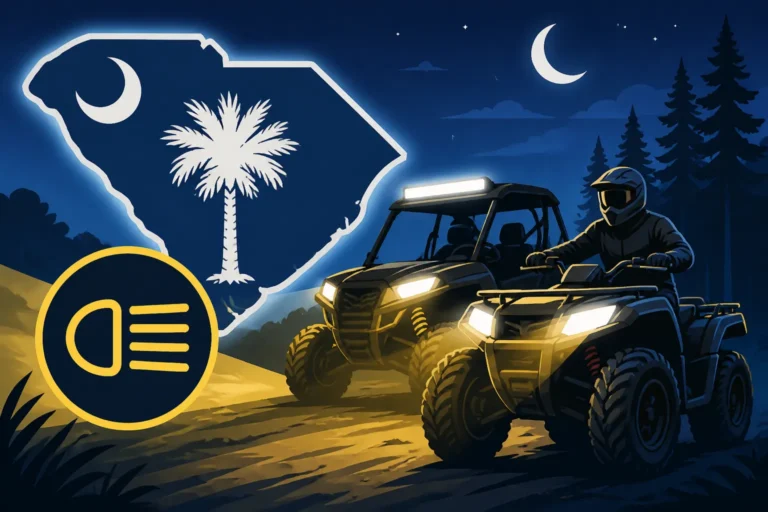
Next up, let's talk about lights. While you might think "off-road means daylight," that's not always the case. Whether you're catching the sunrise on a hunting trip, finishing up farm chores as dusk sets in, or just got a little lost and are heading back to camp after sunset, functional headlights and taillights are crucial. While not always legally mandated for daytime off-road use, South Carolina law does require headlights to be on during specific hours if you find yourself near any public area, even if you’re technically off-road but visible. It's always a good practice to ensure your lights are working before every ride. Remember, visibility isn't just about you seeing where you're going; it's about others seeing you. [South Carolina Headlight Hours After Sunset]
And finally, a component that's often overlooked until it causes a problem: the spark arrester. This is absolutely critical, especially if you ever plan on riding on public lands, like our beautiful National Forests. A spark arrester is a device fitted to the exhaust system of your ATV that prevents incandescent particles from escaping, which could otherwise ignite dry grass, leaves, or other flammable materials. It's a key piece of equipment in preventing wildfires, and it's a legal requirement for riding in many areas. Trying to ride without one on public land isn't just illegal, it's irresponsible and puts our precious natural resources at risk. [South Carolina Spark Arrester Requirements]
Manufacturer-Mandated Safety Labels and Features
Beyond the basic operational components, there are also safety features and informational labels that come standard on your ATV from the factory. These aren't just stickers; they're vital information and safety mechanisms designed for your protection.
Those brightly colored age restriction warning labels aren't just for show; they're there for a very serious reason. They communicate the manufacturer's recommendations for safe operation based on rider age and machine size, often tied to federal guidelines and ATV Safety Institute standards. In South Carolina, these warnings are taken seriously, especially when it comes to youth riders. Removing them isn't just defacing your machine; it's considered unlawful and can be problematic if you're ever involved in an incident. These labels are part of the overall safety ecosystem designed to protect riders, especially our younger ones, by emphasizing the importance of matching rider size and experience to the machine. [Removing the Age Warning Label Is Unlawful]
Other manufacturer-installed safety features include things like secure handholds and footrests. If your ATV is designed to carry a passenger, these features are essential to ensure the passenger can maintain balance and stability, especially over rough terrain. For the rider, sturdy footwells or footpegs provide the necessary control and leverage. These aren't usually things you think about until they're missing or damaged, highlighting their fundamental role in safe operation.
And let's not forget the kill switch. This simple, often handlebar-mounted button, allows for an immediate engine shutdown in an emergency. It's a crucial safety feature, especially if you lose control or need to stop the engine quickly. Always make sure your kill switch is easily accessible and functioning correctly before you hit the trail. It's a small detail that can make a big difference when seconds count.
Navigating the New Era: South Carolina's Street-Legal UTVs
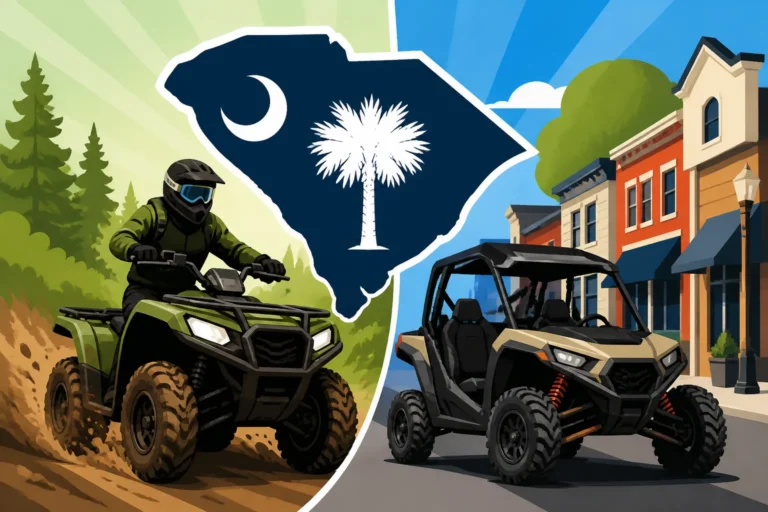
For the longest time, the idea of driving your ATV or UTV down a public road in South Carolina was mostly a pipe dream, confined to very specific, limited circumstances like crossing a road or traveling short distances for agricultural purposes. But times, they are a-changin', and for UTV owners, in particular, a new chapter has begun. This change has brought both excitement and a whole new set of rules regarding equipment.
The Recent Shift: Act 164 and Its Impact
Before recently, if you tried to take your off-road machine on a paved South Carolina road, you were likely facing a ticket, unless you were operating under a very specific and narrow exemption. The notion of a true "street-legal" UTV simply didn't exist in the way we're now seeing it. This made it tough for many riders who just wanted to connect trails, run a quick errand, or simply enjoy their machine in a different context. The frustration was real for many enthusiasts and utility users alike.
That all changed with the passing of Act 164. This landmark legislation, which came into effect, created a pathway for UTVs to be registered and operated on certain public roads within the state. This wasn't just a minor tweak; it was a significant redefinition of how these powerful machines could be used. Suddenly, the possibility of cruising down a secondary road in your side-by-side became a reality, opening up a whole new world for riders who previously felt restricted. It's a testament to the growing popularity and utility of UTVs across the state. [South Carolina Act 164 and Street UTVs]
It's absolutely crucial to understand the distinction between ATVs and UTVs under this new law. While the general term "ATV" often gets thrown around loosely to include all sorts of off-road vehicles, Act 164 specifically addresses utility terrain vehicles (UTVs), often referred to as side-by-sides. Traditional, single-rider all-terrain vehicles (quads) are generally not eligible for street-legal registration under this new framework. UTVs, with their car-like seating, steering wheels, and often more robust frames, are the focus. This distinction is key to avoiding disappointment and ensuring you're looking at the right set of rules for your machine.
So, why does this change matter so much? For one, it provides a legitimate, legal way for UTV owners to expand their riding horizons. No longer are you strictly confined to private land or dedicated off-road parks. It offers convenience, allowing riders to access gas stations, small town stores, or connect to different trail systems without needing to trailer their machine. For many, it's about making their UTV a more versatile and integrated part of their lifestyle, whether that's for recreational purposes, commuting to a deer stand, or simply getting around a large property that abuts public roads. It's about freedom and flexibility for a significant segment of the riding community.
Key Criteria for Street-Legal Status
Getting your UTV street-legal isn't just about throwing on a license plate. It requires meeting specific criteria, much of which revolves around equipping your machine properly. But beyond the gear, there are fundamental identifiers for the machine itself.
First, your UTV must adhere to certain machine specifications. South Carolina's law defines what constitutes a street-legal UTV in terms of its physical characteristics. This usually includes maximum width, weight, and potentially engine displacement or top speed. For instance, the law generally specifies that a street-legal UTV must be no wider than 80 inches, weigh no more than 4,000 pounds, and have a capacity of 4,000 pounds or less. It also requires the vehicle to be designed to travel at speeds greater than 35 miles per hour. These specifications are designed to ensure that these vehicles can safely share the road with other traffic. It’s not just about what you add to your UTV; it’s about the UTV’s inherent design. [South Carolina Street UTV Machine Specs]
Equally important, and directly tied to the equipment, is the process of registration and titling. Getting your UTV street-legal means it moves beyond being just an off-road machine in the eyes of the DMV. You'll need to apply for a street-legal UTV registration, which involves proving your machine meets all the equipment requirements and typically showing proof of insurance. This also means your UTV will be issued a distinctive rear license plate. While [South Carolina Titles Are Optional] for ATVs, they become much more pertinent for UTVs when seeking street-legal status, especially for proving ownership and complying with registration requirements. The registration process is what officially grants you the privilege of driving on approved public roads. [South Carolina Street-Legal UTV Registration Arrives]
The Non-Negotiables: Equipment for South Carolina Street-Legal UTVs
Alright, this is where the rubber meets the road—literally. If you're serious about getting your UTV legally on South Carolina's public roads, you absolutely must ensure it's outfitted with a very specific list of equipment. This isn't optional; it's what makes your machine compliant and safe for sharing the road with cars, trucks, and motorcycles. Think of it as transforming your off-road beast into a road-ready cruiser.
Lighting and Signaling Systems
Visibility and communication are paramount on public roads, and your UTV needs to be equipped to handle both. This means a complete and functional set of lights and signals, just like any other motor vehicle.
Your UTV needs proper headlights and taillights that meet Department of Transportation (DOT) standards. This isn't just about having a light; it's about having lights that are bright enough, properly aimed, and clearly visible from specific distances. Your headlights must illuminate the road ahead, and your taillights need to clearly mark your presence from the rear. And just like any other vehicle, these lights must be on during designated hours, usually from a half-hour after sunset to a half-hour before sunrise, and during periods of low visibility like rain or fog. [South Carolina Headlight Hours After Sunset]
Crucially for road safety, you must have functional brake lights. These lights, typically brighter than your standard taillights, illuminate when you apply the brakes, signaling to drivers behind you that you're slowing down or stopping. This is a non-negotiable safety feature that prevents rear-end collisions and ensures predictability in traffic.
Another critical safety component for communicating your intentions to other drivers are turn signals. Your UTV must be equipped with amber or red turn signals, both front and rear, that clearly indicate when you're turning left or right. Many off-road UTVs don't come standard with these, so this is a common aftermarket upgrade. Thankfully, companies like SuperATV offer fantastic, easy-to-install turn signal kits that are designed to meet street-legal requirements, helping you outfit your machine without a huge hassle. They understand what you need to make that conversion smooth.
Finally, your street-legal UTV will need reflectors. While your lights do most of the work, passive reflectors on the rear and sides of your vehicle provide an extra layer of visibility, especially if your lights were to fail. These are typically small, inexpensive additions that significantly enhance your machine's presence on the road after dark.
Safety and Control Mechanisms
Beyond lighting, there's a suite of other safety and control features that are mandatory to make your UTV street-legal in South Carolina. These are about protecting you and your passengers, and ensuring you have proper command of the vehicle.
You’ll need mirrors – specifically, at least one rearview mirror and at least one exterior rearview mirror (side mirror). Many UTVs come with a rearview mirror, but adding side mirrors is often a necessary upgrade for street legality. These allow you to monitor traffic around you, making lane changes and turns much safer. For a clear view of approaching vehicles, two side mirrors are generally recommended and often explicitly required by law.
An audible horn is also mandatory. This isn't for blasting impatiently at traffic, but rather a crucial warning device to alert pedestrians, cyclists, or other drivers to your presence in a potentially hazardous situation. It needs to be clear and audible from a certain distance, typically 200 feet.
A windshield is a must-have. This protects you and your passengers from road debris, insects, and the elements. It typically needs to be made of safety glass or an equivalent transparent material that won't shatter into dangerous shards upon impact. And if your UTV has a windshield, it generally follows that you'll also need functioning wipers to maintain visibility during rain or when the windshield gets dirty.
Perhaps one of the most important safety features is seat belts. Your street-legal UTV must be equipped with seat belts for all designated seating positions, and all occupants must use them while the vehicle is in operation on public roads. These belts need to be securely fastened and in good working order, designed to hold occupants safely in their seats in the event of a sudden stop or collision. [South Carolina Street UTV Belt Requirements]
The brakes on a street-legal UTV need to be more robust than basic off-road brakes. They must be adequate to safely stop the vehicle under all operating conditions and typically involve a hydraulic system, often with dual-circuit functionality. This means the braking system is designed for the demands of road use, providing consistent and reliable stopping power at higher speeds.
And finally, the presence of a steering wheel is a key differentiator, confirming that your machine is indeed a UTV and not a traditional ATV (which uses handlebars). This car-like control mechanism is fundamental to the definition of a street-legal UTV in South Carolina.
Tires, Fenders, and Exhaust
The equipment list for street-legal UTVs also extends to what's underneath and around your machine, ensuring it's suitable for interacting with public infrastructure and other vehicles.
Your tires are critical. While those aggressive off-road knobbies are fantastic for mud and rocks, they're typically not approved for highway use. Street-legal UTVs require road-legal tires that are DOT-approved. These tires are designed for durability, traction, and stability on paved surfaces, and they'll have "DOT" clearly stamped on the sidewall. Choosing the right tires isn't just a legal requirement; it's about safety and performance on the road. SuperATV, for instance, offers a range of DOT-approved tires that give you good grip on the pavement while still allowing for some off-road capability when you hit the trails.
To protect other drivers from debris thrown by your tires, fenders or mudflaps are also a mandatory addition. These prevent rocks, dirt, and water from being flung up by your tires, which can obscure the vision of vehicles behind you or even cause damage. Ensure they are wide enough to cover the full width of your tires.
Lastly, your exhaust system must be in good working order and not excessively loud. While some riders love a roaring exhaust off-road, public road use has noise regulations. Your exhaust needs to be free of leaks and maintain a reasonable sound level, which usually means it should have a functional muffler. This helps maintain peace and quiet in residential areas and reduces auditory distraction for other drivers.
| Equipment Item | Off-Road ATV (SC, generally) | Street-Legal UTV (SC) | Notes |
|---|---|---|---|
| Headlights | Required after dark | Mandatory, always | Must meet DOT standards for UTVs; on during specific hours |
| Taillights | Required after dark | Mandatory, always | Must meet DOT standards for UTVs |
| Brake Lights | Often integrated into taillight | Mandatory | Distinct and brighter than taillights |
| Turn Signals | Not required | Mandatory | Front and rear, amber or red, clearly visible |
| Mirrors | Not required | Mandatory (side & rearview) | At least one rearview and one side mirror |
| Horn | Not required | Mandatory | Audible from 200 feet, for warning purposes |
| Windshield | Optional | Mandatory | Safety glass or equivalent, for debris protection |
| Wipers | Optional | Mandatory (if windshield) | Must function to clear rain/debris and maintain visibility |
| Seat Belts | Optional (some UTVs have) | Mandatory | For all occupants in designated seating positions |
| Brakes | Functional | Road-ready, adequate for speed | Often hydraulic, designed for consistent stopping on pavement |
| Tires | Off-road specific | DOT-approved | Must be suitable for highway use, stamped "DOT" |
| Fenders/Mudflaps | Optional | Mandatory | To prevent throwing debris onto other vehicles |
| Spark Arrester | Mandatory on public lands | Not explicitly required for road use (but wise) | Important for fire prevention, especially off-road |
| VIN/Serial Number | Mandatory | Mandatory | For identification, titling, and registration purposes |
Rider Safety Gear: Beyond the Machine's Equipment
While outfitting your ATV or UTV with the correct equipment is vital, it's equally, if not more, important to ensure you, the rider, and any passengers, are properly geared up for safety. South Carolina has specific laws concerning rider safety gear, especially for younger riders, and ignoring these can have serious consequences, both legally and physically. Safety starts with what you wear.
Mandatory Helmets and Eye Protection
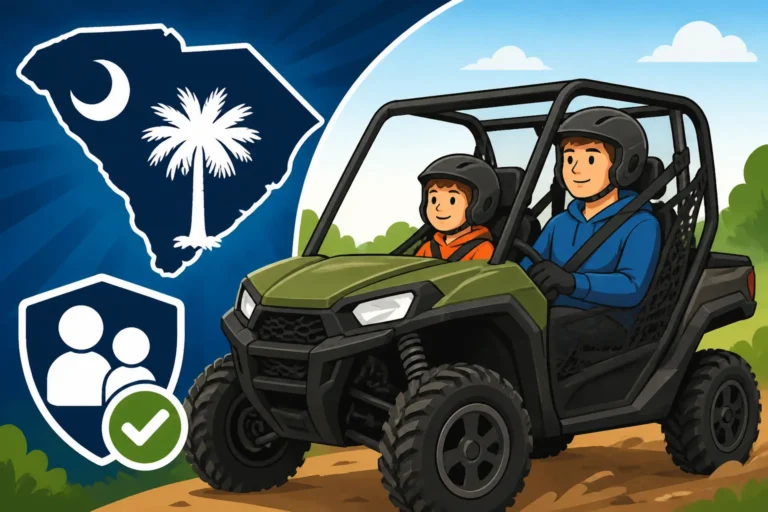
This is one area where South Carolina is very clear, particularly for the younger generation of riders. Helmet laws for minors are strict and non-negotiable. If you have a rider under the age of 16 on an ATV or UTV, they must wear a helmet that meets federal safety standards (like DOT certification). This isn't just a suggestion; it's a legal requirement designed to protect our most vulnerable riders from head injuries in the event of a crash. As a parent or guardian, ensuring your child wears a properly fitted, certified helmet every single time they ride is your responsibility. [South Carolina Helmet Rules for Young Riders] [Helmets Under 16 Must Meet the Federal Standard]
Paired with a helmet, or even required in situations where a helmet might not be legally mandated for adults, is eye protection. This can include safety goggles, a face shield on a helmet, or shatter-resistant glasses. Whether you're kicking up dust on a trail, dealing with low-hanging branches, or facing unexpected debris on a paved road, protecting your eyes is paramount. A sudden impact to the eye can cause you to lose control of your machine, leading to a much more serious accident. For young riders, eye protection is often explicitly required by law. Don't underestimate the importance of clear vision and protected eyes. [South Carolina Eye Protection for Young Riders]
Additional Recommended Safety Gear
Beyond the legal mandates, there's a whole host of other gear that experienced riders swear by to enhance safety and comfort. While not required by law, these items can turn a potentially bad day into a minor inconvenience.
Wearing gloves and long clothing might seem counterintuitive on a hot South Carolina day, but it offers significant protection. Gloves protect your hands from blisters, abrasions, and impacts, and can improve your grip. Long-sleeved shirts and long pants, preferably made of durable material, act as a barrier against scrapes, cuts, sunburn, and even insect bites. They provide crucial protection in a rollover or slide, minimizing skin exposure to rough terrain.
Good, sturdy boots that cover your ankles are also highly recommended. They protect your feet from impacts, provide ankle support against twists and sprains, and offer better grip on footpegs or footwells. Flip-flops or sneakers simply don't cut it when you're operating a powerful machine over varied terrain.
Finally, always carry a first aid kit. Even a minor spill can result in cuts or scrapes that need immediate attention. A well-stocked kit can help you manage injuries until you can get proper medical care, or simply patch up minor issues to continue your ride. Don't forget essentials like bandages, antiseptic wipes, pain relievers, and any personal medications. Being prepared for the unexpected is a hallmark of a responsible rider.
Special Considerations: Exemptions and Specific Use Cases
The world of ATVs and UTVs in South Carolina isn't a one-size-fits-all scenario when it comes to equipment. There are specific situations and types of vehicles that fall under different rules or exemptions, adding another layer of complexity to the equipment requirements. Understanding these nuances can save you a lot of grief and ensure you're compliant for your particular use.
Farm, Ranch, and Hunting Exemptions
One of the most common exemptions for ATVs and UTVs relates to their use in agricultural or land management contexts. Many equipment laws simply don't apply when you're operating your machine exclusively on private land for specific purposes, such as farming, ranching, or hunting. The state recognizes these machines as essential tools for these activities, and the regulatory burden is significantly lighter. For example, if you're using your ATV solely to haul feed on your farm, you might not be subject to the same lighting or signaling requirements as a street-legal UTV. [South Carolina Farm and Ranch Exemptions] [South Carolina Hunting and Trapping Exemptions]
However, even with these exemptions, there are still rules to follow. If your farming or hunting activities require you to perform a limited road crossing, say from one field to another across a public road, there will be rules about how you do this safely and legally. Typically, these crossings must be done at a right angle, with caution, and you're not allowed to travel down the road for any significant distance. It's about minimizing the interaction with regular traffic while still allowing for necessary operational movements.
Equipment for Golf Carts vs. Low-Speed Vehicles
It's easy to lump all small, open-air vehicles into one category, but South Carolina law makes clear distinctions, especially between golf carts, low-speed vehicles (LSVs), and the newly defined street-legal UTVs. Each has its own set of rules and, consequently, its own equipment requirements.
When it comes to golf cart permits vs. LSV plates, you're looking at two entirely different legal frameworks. Golf carts, with their $5 biennial permit, are generally restricted to roads with a speed limit of 35 mph or less and often have a limited radius of operation (usually 4 miles from your home or business). Their equipment requirements are minimal, typically just basic lights, brakes, and a rearview mirror. Low-speed vehicles (LSVs), on the other hand, are built to higher standards. They are designed for speeds between 20-25 mph and have much more stringent equipment requirements, including headlights, taillights, brake lights, turn signals, mirrors, a windshield, seat belts, and a VIN. They are titled and registered much like a car. [South Carolina Golf Cart Permits Compared] [South Carolina Low-Speed Vehicle Plates]
Crucially, it’s important to understand the difference when distinguishing LSVs from street UTVs. While both are designed for limited road use, a street-legal UTV typically boasts a more powerful engine, higher top speeds (over 35 mph), and is built for more rugged terrain and utility. An LSV is essentially a beefed-up golf cart, whereas a street-legal UTV is an off-road vehicle adapted for road use. The equipment requirements reflect these differences in capability and intended use. Don't confuse the two, as their operating privileges and necessary equipment are not interchangeable. [A Low-Speed Vehicle Is Not a South Carolina UTV]
Keeping Your Machine Compliant: Inspections and Maintenance
Having the right equipment is only half the battle; the other half is ensuring that equipment is always in good working order. Regular maintenance and pre-ride inspections aren't just about prolonging the life of your ATV or UTV; they're critical for safety and for staying compliant with South Carolina's equipment laws. A non-functional brake light or a worn-out tire can turn a routine ride into a costly ticket or, worse, a dangerous situation.
Pre-Ride Checks and Regular Maintenance
Every time you get ready to head out, whether it’s for a quick spin around the property or a full day on the trails, a quick visual inspection is a smart habit. Take a few minutes to walk around your machine. Check that all your lights (headlights, taillights, brake lights, and turn signals if street-legal) are working properly. Glance at your tires – are they properly inflated? Do they show any obvious signs of damage or excessive wear? Give your brakes a quick test; do they feel firm and responsive? These simple checks can catch small problems before they become big, expensive, or dangerous ones.
Beyond pre-ride checks, consistent fluid checks are essential for any motor vehicle. Regularly inspect your engine oil, brake fluid, coolant (if applicable), and differential fluids. Proper fluid levels ensure all systems are lubricated and operating efficiently, preventing premature wear and potential breakdowns. Just like you wouldn't drive your car without checking its oil, your ATV or UTV deserves the same attention.
Finally, always pay attention to the integrity of critical components. Check for any loose bolts, especially on suspension components, wheels, and steering. Inspect your UTV’s drive belts and primary clutches – wear here can lead to loss of power or even complete immobilization. Companies like SuperATV offer heavy-duty replacement belts and other components that can stand up to the rigors of both trail and road use, helping you maintain your machine’s reliability. Regularly greasing zerks, inspecting cables, and looking for cracked hoses or wiring issues are all part of a comprehensive maintenance routine that ensures everything is safe and compliant. [South Carolina Street UTV Belt Requirements]
What to Expect During a Stop or Inspection
If you're riding on public roads with your street-legal UTV, or even sometimes off-road near public access points, you might encounter law enforcement. It’s important to know what officers look for regarding required equipment. They'll be checking to ensure your machine has all the mandated items: functional lights, turn signals, mirrors, horn, windshield, seat belts, and DOT-approved tires. They're not trying to ruin your day; they're ensuring everyone on the road is operating a safe and legally compliant vehicle. A quick visual check on your part before each ride can make these encounters smooth and quick. [South Carolina Equipment Checks by Officers]
It's also crucial to have proof of compliance readily available. If your UTV is street-legal, this means carrying your registration certificate, proof of insurance, and your driver's license. For off-road machines, while registration isn't required for ATVs, having proof of ownership (like a title or bill of sale) can be helpful if questions arise. If you're on public lands requiring a spark arrester, you should be confident your machine has one installed. Being able to quickly provide the necessary documentation demonstrates responsibility and can significantly expedite any interaction with law enforcement. [South Carolina Insurance Proof at Registration]
Navigating Aftermarket Upgrades and Modifications
Many ATV and UTV owners love to customize and upgrade their machines. Whether it's for performance, aesthetics, or to add functionality, the aftermarket is a thriving industry. However, when it comes to South Carolina's equipment requirements, especially for street-legal UTVs, not all upgrades are created equal. It's vital to ensure any modifications you make don't inadvertently make your machine non-compliant.
Ensuring Upgrades Meet Legal Standards
If you're upgrading your street-legal UTV, a huge consideration is DOT compliance. Department of Transportation (DOT) approval is often required for critical components like tires, windshields, and lighting systems. This isn't just a label; it means these parts have met rigorous safety and performance standards for road use. For example, installing non-DOT tires on a street-legal UTV would immediately render it illegal for public road use, even if everything else is perfect. Always look for that "DOT" stamp on tires, and ensure any replacement windshields are made from approved safety glass or equivalent material. Companies like SuperATV are well aware of these requirements and often clearly label their products that meet DOT standards, making it easier for you to choose compliant parts.
Equally important is avoiding illegal modifications. While a lift kit and massive tires might look cool for off-road dominating, if they push your UTV beyond the maximum width or height limits for a street-legal vehicle, you could run into problems. Similarly, excessively loud aftermarket exhaust systems, while popular, can lead to noise violations on public roads. Even removing manufacturer-installed safety features, like those age warning labels, is unlawful. It's easy to get carried away with modifications, but always pause and consider the legal implications for street use.
Choosing the Right Aftermarket Parts
When diving into the world of aftermarket parts, always gravitate towards reputable suppliers. A trustworthy brand will not only offer quality parts but will also be transparent about whether their products meet specific legal standards, like DOT compliance. Cheap, no-name parts might save you a few bucks upfront, but they often lack the durability, safety, and regulatory compliance needed for reliable, legal operation. Investing in quality parts from established companies ensures you’re getting products that perform as advertised and won’t land you in hot water.
Finally, think about installation considerations. While many riders are perfectly capable of tackling DIY upgrades, for critical safety components like steering, brakes, and lighting, professional installation might be a wise investment. Incorrectly installed parts can fail, leading to dangerous situations. If you're not confident in your mechanical skills, especially when modifying components essential for street legality, take your machine to a qualified technician. This ensures the upgrades are installed correctly, safely, and in a way that maintains compliance with South Carolina's road-use laws.
Disclaimer
This article is for general informational purposes only and does not constitute professional advice. Laws, prices and regulations vary by location and change over time. Consult a qualified professional for guidance on your specific situation.