Hauling a Machine to a National Forest Trail
The call of South Carolina's National Forest trails for an ATV or UTV ride is strong, but before you hit the road with your machine in tow, it's vital to understand the ins and outs of safe transport and forest regulations. This guide will walk you through everything you need to know, from preparing your machine and trailer to navigating the specific rules of the Palmetto State's beautiful public lands.
Planning Your Haul to a South Carolina National Forest Trail
Getting your ATV or UTV ready for a trail day at one of South Carolina's National Forests isn't just about loading it up and going. There's a fair bit of planning involved to ensure both your safety and compliance with forest rules. Skipping these steps can lead to unnecessary headaches, or worse, fines and trailside breakdowns.
Understanding Forest Pass Requirements
First things first, using an Off-Highway Vehicle (OHV) on designated trails within South Carolina's National Forests requires a special pass. This isn't just a suggestion; it's a mandatory requirement to help maintain the trails you love to ride. The United States Forest Service manages these passes, and they come in a couple of forms: day passes and season passes.
A day pass is perfect if you're just planning a single outing, perhaps a spontaneous Saturday ride or if you're visiting from out of state. It covers you for one day of riding. If you're a regular rider, hitting the trails every few weekends, a season pass is almost always the more economical choice. It grants you access for an entire year from its purchase date, letting you explore places like Enoree or Parsons Mountain whenever the mood strikes.
It's crucial to know that [South Carolina National Forest OHV Passes] are sold exclusively online through Recreation.gov. You won't find cash tubes at the trailheads anymore, so make sure to purchase your pass ahead of time. Once you've completed your purchase, you'll need to print it out. For annual passes, this printout must be clearly displayed on the dashboard of your tow vehicle while you're parked at the trailhead. For day passes, they are typically tied to your vehicle's license plate number, so ensure that information is accurate when you purchase. Rangers do conduct fee compliance checks, and they will be looking for proper documentation. Having your pass clearly visible helps everyone out, ensuring a smooth start to your adventure. You can find more details on [South Carolina Pass Display Rules] to avoid any confusion.
Pre-Trip Machine Inspection and Maintenance
Before your machine ever touches the trailer, it needs a thorough going-over. Imagine getting all the way to a remote trailhead, only to discover a flat tire or a dead battery. It’s a huge bummer and completely avoidable with a little foresight. A comprehensive pre-trip inspection isn't just about convenience; it's about safety, both for you and for other trail users.
Start with your tires. Check the pressure to ensure they're at the manufacturer's recommended PSI, and look for any signs of excessive wear, punctures, or dry rot. A properly inflated tire not only offers better handling but also reduces the risk of a blowout on the trail. Next, give your brakes a good test. Do they feel firm? Is there enough pad material? Losing braking power on a steep descent or sudden turn can be incredibly dangerous. Don't forget your lights – headlights, taillights, and brake lights – especially if there's any chance you'll be riding late or in low-light conditions. These are also often checked by rangers.
One non-negotiable item for riding in any national forest is a functional [South Carolina Spark Arrester Requirements]. These devices prevent hot carbon particles from exiting your exhaust and potentially starting a wildfire, which is a massive concern in forested areas. Ensure yours is in good working order and legally compliant. Beyond these specifics, check your fluid levels (oil, coolant, brake fluid), battery terminals, and general condition of your machine. Tighten any loose bolts and listen for unusual noises during a quick test ride around your property. A little preventative maintenance at home can save you from a major headache far from civilization.
Essential Gear for Your Forest Adventure
Beyond the machine itself, packing the right gear is paramount for a safe and enjoyable experience on South Carolina's National Forest trails. The weather can change quickly, trails can be challenging, and unexpected situations can always arise.
Always start with personal safety gear. Helmets are a must, and while not all riders over a certain age are legally required to wear them, it's just plain smart. Eye protection is also critical to shield you from dust, branches, and debris. Carry a well-stocked first-aid kit that includes essentials for cuts, scrapes, insect bites, and any personal medications. Knowing basic first aid can make a huge difference in an emergency.
Recovery gear is another essential. Even the most experienced riders can get stuck in mud, sand, or precarious situations. A reliable winch, recovery straps, and a small shovel can be lifesavers. If you're riding with a group, ensure at least one person has adequate recovery equipment. For navigation, don't rely solely on your phone. Many remote areas in national forests have [Cell Dead Zones in a Carolina Forest]. Invest in a dedicated GPS unit or, at the very least, carry a detailed paper map of the trail system. Knowing where you are and how to get back is fundamental.
Finally, think about sustenance and comfort. Pack plenty of water and high-energy snacks. Dehydration can quickly set in, especially during warmer months. Dress in layers to adapt to temperature changes, and always have rain gear, even if the forecast looks clear. Bug spray is almost always a necessity in South Carolina's forests, especially during spring and summer. A small tool kit with basic wrenches, screwdrivers, and tire repair supplies can help with minor trailside fixes.
Safe Trailering Practices in South Carolina
Hauling your ATV or UTV to the trailhead is a significant part of the adventure, and doing it safely is non-negotiable. An improperly secured machine or an overloaded trailer isn't just risky; it's a hazard to you and everyone else on the road.
Choosing the Right Trailer and Tow Vehicle
The foundation of safe hauling begins with selecting the correct equipment. Your trailer needs to be appropriately sized and rated for the weight of your ATV or UTV, plus any additional gear you're bringing. Check the Gross Vehicle Weight Rating (GVWR) of your machine and compare it to the trailer's capacity. Exceeding a trailer's weight limit can lead to sway, tire blowouts, and structural failure. Open trailers are popular for ATVs and UTVs due to their lighter weight and ease of loading, but enclosed trailers offer better protection from the elements and security for your machines and gear.
Equally important is your tow vehicle. It must have the capacity to safely pull the loaded trailer. Consult your vehicle's owner's manual for its maximum towing capacity and tongue weight limits. The tongue weight (the downward force the trailer hitch exerts on your tow vehicle's hitch) is particularly important for stability; too little or too much can cause dangerous sway. Always ensure your hitch is rated for the combined weight you're pulling. For longer hauls, consider if your vehicle has adequate cooling capacity and braking power. While [South Carolina Trailer Plates for Hauling Your Quad] are standard, making sure your entire setup is road-legal is your responsibility.
Securing Your ATV/UTV for Transport
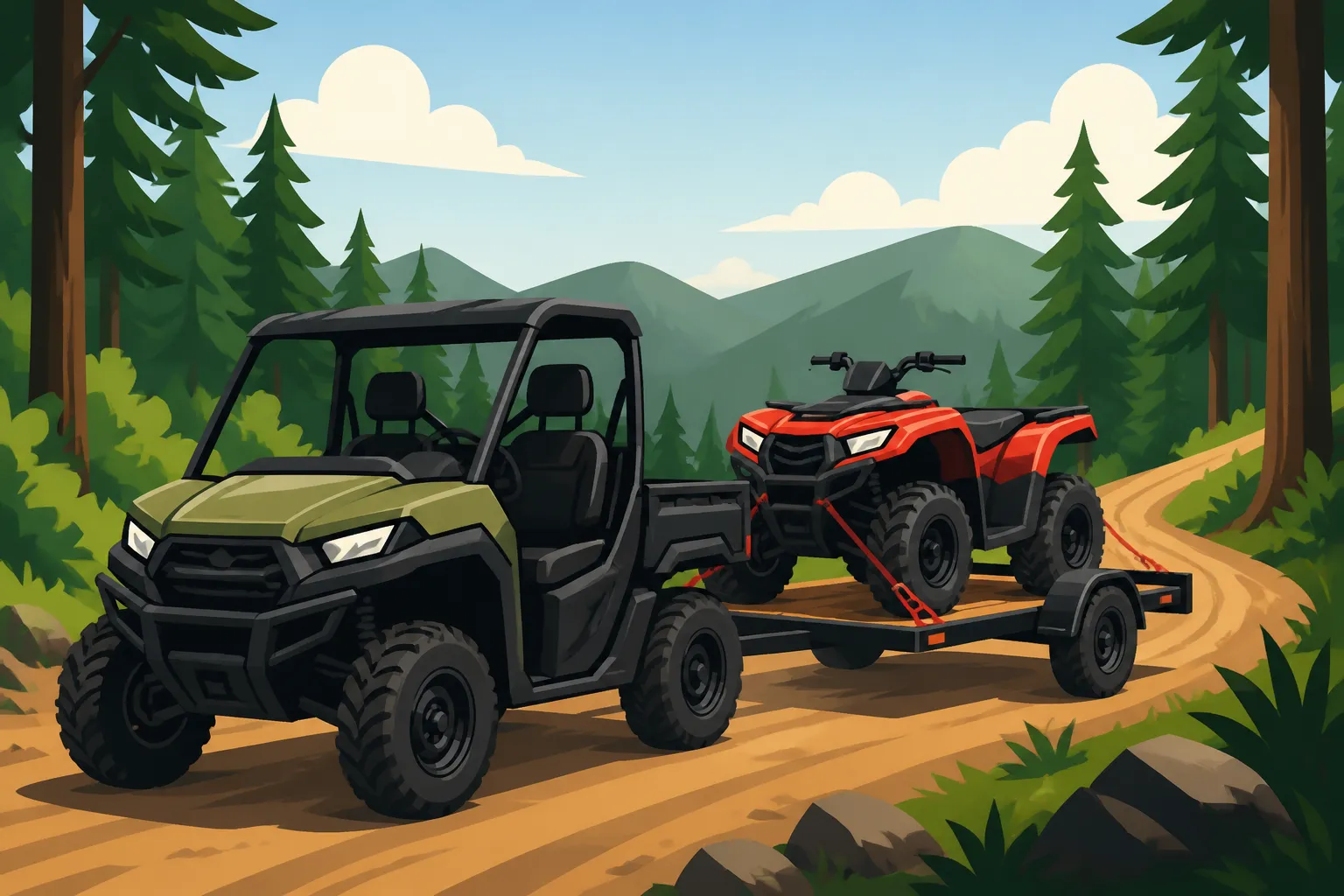
This is where many people make critical mistakes. Your ATV or UTV needs to be absolutely rock-solid on the trailer. Simply throwing a couple of straps over it isn't enough. You need at least four robust tie-down points, one at each corner of the machine. Use high-quality ratchet straps that are rated for the weight you're securing. Cheap straps can stretch, fray, or break, leading to your machine shifting or even coming off the trailer.
When securing, compress the machine's suspension slightly. This helps prevent the machine from bouncing and working the straps loose during transport. Avoid tying down to flimsy plastic bodywork or handlebars that could bend. Instead, use sturdy frame points, A-arms, or dedicated tie-down points on the machine. Double-check all straps before you leave, and pull over after the first 10-15 miles to check them again. They often loosen slightly as the machine settles. LawDepot can be a great resource if you're drafting a bill of sale after a recent purchase, which is helpful to have with you, or even a temporary permission form if someone else is transporting your machine to ensure all legalities are covered. This kind of diligent preparation ensures your machine arrives at the trailhead exactly as you loaded it.
Navigating South Carolina Roads with a Trailer
Driving with a trailer changes everything. Your vehicle will handle differently, your braking distances will increase, and you'll need to be much more aware of your surroundings. Before even pulling out of your driveway, do a full walk-around of your setup. Check that all trailer lights (running lights, brake lights, turn signals) are working correctly and that your safety chains are properly crossed and connected. Make sure the trailer tires are properly inflated and visually inspect their condition.
On the road, slow down. Hauling a heavy load requires more time to react and stop. Take wider turns than usual to avoid clipping curbs or other vehicles, as your trailer will track inside your tow vehicle's path. Anticipate traffic and road conditions, and allow extra space between your vehicle and others. Be mindful of crosswinds, which can cause significant sway, particularly with open trailers carrying tall machines.
When parking at rest stops or gas stations, look for areas with plenty of space to maneuver. Backing up with a trailer takes practice, so if you're new to it, find an empty lot to practice before your trip. Arriving at the trailhead, be aware of the specific layout. Some forest staging areas might have tighter turns or limited space for large truck and trailer combinations. Plan your approach, so you can safely unload without blocking other vehicles or creating a hazard.
| Pass Type | Coverage | Purchase Method | Display Requirement |
|---|---|---|---|
| Day Pass | One calendar day of riding | Online (Recreation.gov) | Tied to tow vehicle license plate |
| Season Pass | One year from purchase date | Online (Recreation.gov) | Printed and displayed on dashboard |
On-Site Preparation and Forest Regulations
You’ve successfully hauled your machine to the beautiful South Carolina National Forest, but the work isn't over yet. Knowing what to do once you arrive and understanding the specific rules of the forest are just as important as the journey itself.
Arriving at the Trailhead and Staging
When you pull into a National Forest trailhead like Enoree or Parsons Mountain, take a moment to assess the staging area. Look for designated parking spots that can accommodate your truck and trailer, and try to park in a way that makes unloading easy and doesn't impede other users. These areas can sometimes get busy, especially on a sunny Saturday, so patience is key.
Before you start unloading, it's always a good idea to check for any last-minute trail alerts or conditions. Some trails, especially those in clay-rich areas, might be subject to [South Carolina Wet Weather Trail Closures] after heavy rain to prevent damage. Look for posted signs or use resources like the [South Carolina Trail Hotline Worth Calling] to get the most up-to-date information. Unloading your ATV or UTV safely is crucial. Take your time, ensure the trailer is level and stable, and if you’re by yourself, make sure you have a clear path and plenty of room to maneuver the machine off the trailer. Once unloaded, give your machine a quick final check before you hit the dirt.
Understanding South Carolina National Forest Rules
Riding in a National Forest comes with a set of specific rules designed to protect the environment and ensure everyone's safety. Familiarize yourself with these before you start your ride. One of the most common rules, particularly in the Sumter National Forest, is the [South Carolina's 50-Inch Trail Width Limit]. This means that many trails are designed only for ATVs and narrower side-by-sides. If your UTV is wider than 50 inches, you might find yourself limited to specific, wider trails or private parks like Gulches ORV Park.
Most trails have specific hours of operation, though some [South Carolina Trails Open Around the Clock], check local signage. Always stay on marked trails; venturing off-trail damages sensitive ecosystems and is illegal. When crossing water features, always use a designated ford or crossing point. [South Carolina Rules for Crossing a Creek] explicitly state you should ride a marked ford instead of the streambed to protect water quality. Remember that spark arresters are not just for your pre-trip inspection but are required during actual riding. Rangers may perform checks, especially during dry conditions.
During hunting season, particularly in the fall, [South Carolina Blaze Orange in Hunting Season] requirements may apply to riders in certain areas. It's always best practice to wear bright colors anyway for visibility. Always respect trail closures, whether temporary for maintenance or due to wet weather. These rules are in place for a reason – to preserve the trails and ensure everyone has a safe and enjoyable experience.
Documentation and Communication
While you’re out on the trails, it’s always a good idea to carry important documents. While an off-road ATV doesn't require registration or a license plate in South Carolina, having proof of ownership on hand can be very helpful. A bill of sale or your title ([South Carolina Titles Are Optional] for ATVs, but a good idea) can verify the machine is yours, especially if there's ever a question. If you’re riding a street-legal UTV, you'll need to carry proof of insurance and your driver’s license. If you're riding with a minor who is under 16, they need to carry their [South Carolina Safety Certificate Requirements] if they completed an approved course. It’s always best to be prepared for what a South Carolina Deputy Can Ask to See.
In remote areas of the National Forest, cell service can be spotty or non-existent. This is why a communication plan is critical. Inform someone of your route and estimated return time. If you have a satellite messenger or a two-way radio, bring it along. A paper map of the trail system, even if you have a GPS, can be a lifesaver in areas with no signal. For any unique situations, like a minor riding a machine they don't own, or if you're hauling a machine for a friend, a formal permission letter or power of attorney document could be useful. Services like LawDepot offer templates for such legal forms, which can provide clarity and protection if questions arise from authorities or in an emergency. Preparing these simple documents can prevent a lot of potential misunderstandings and ensure your trip goes smoothly.
Disclaimer
This article is for general informational purposes only and does not constitute professional advice. Laws, prices and regulations vary by location and change over time. Consult a qualified professional for guidance on your specific situation.