South Carolina Trailer Plates for Hauling Your Quad
So, you’ve got your quad, you’ve scouted out some amazing trails, and now it's time to hit the road. But before you hitch up your trailer and start dreaming of mud and open throttle, there’s a crucial piece of the puzzle many folks overlook: making sure your trailer itself is street-legal. Nothing zaps the fun out of a weekend trip faster than a roadside stop that could have been avoided. This guide will walk you through everything you need to know about getting and maintaining South Carolina trailer plates for hauling your ATV or UTV, ensuring your journey is as smooth as your ride.
Why Your ATV Trailer Needs a South Carolina Plate
It’s easy to think of your trailer as just a tool, a means to an end for getting your beloved quad from point A to point B. But in the eyes of the law, it’s a vehicle just like any other, and it comes with its own set of rules and requirements in South Carolina. Ignoring these can lead to frustrating delays, fines, and even a forced detour that spoils your whole weekend.
The Law and Your Haul in the Palmetto State
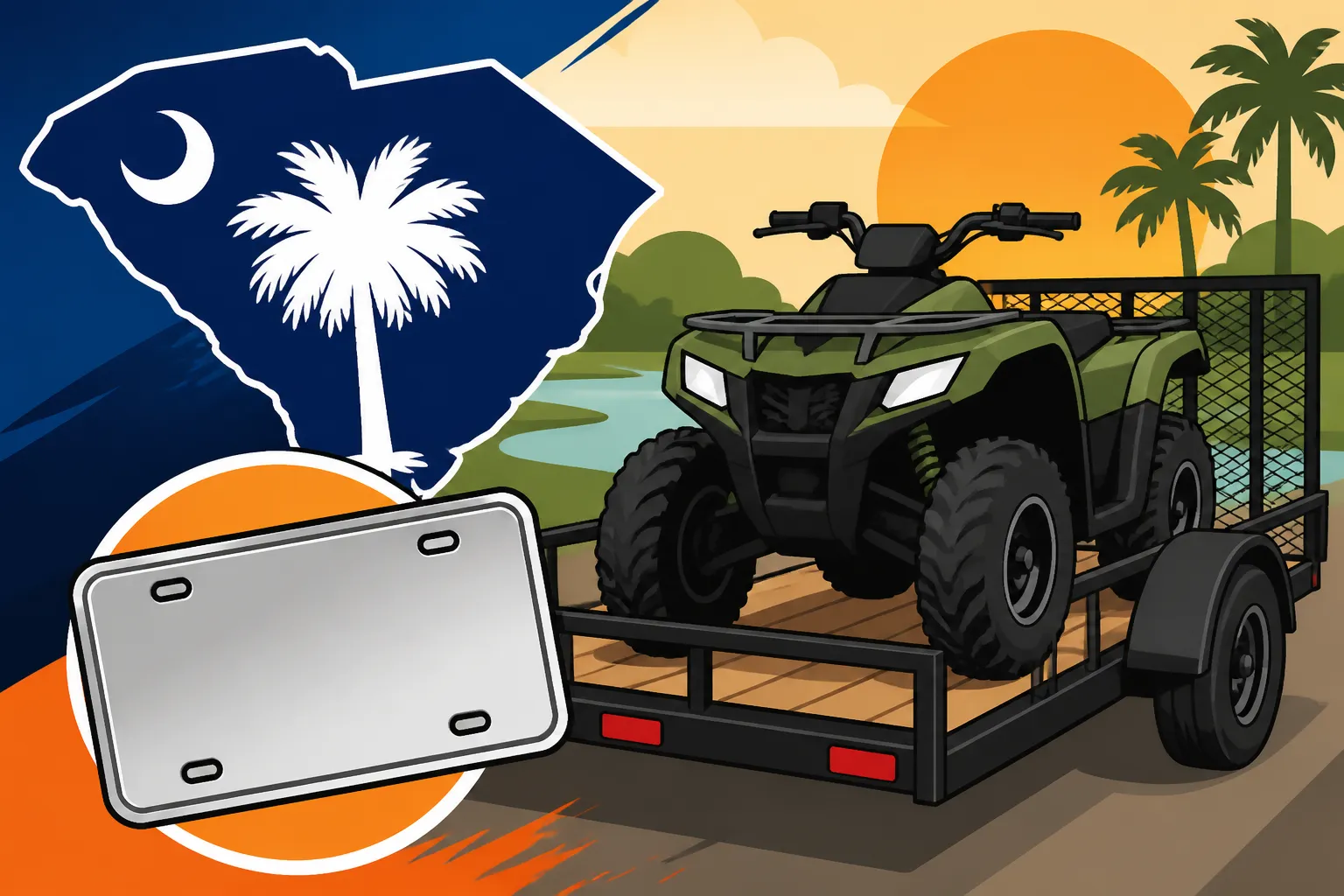
In South Carolina, virtually all trailers that operate on public roads need to be properly titled and registered. This isn't just a suggestion; it’s a legal mandate designed for safety and accountability. Whether you’re pulling a small utility trailer for a single youth quad or a massive enclosed rig for multiple side-by-sides, if it hits a public highway, it needs a plate. This applies to everyone, from weekend warriors hauling their machines to Parsons Mountain OHV Trail to professionals transporting equipment for work. Understanding the letter of the law here can save you a world of trouble and keep your adventures on track.
The specific type of trailer might influence certain nuances, but the core requirement remains: if it has wheels and you're pulling it down I-26 or a quiet back road in the Lowcountry, it needs to be legitimate. This also ties into how ownership is established, especially if you ever need to prove the trailer is yours in a dispute or after an incident. Just like with your ATV or UTV, proof of ownership is paramount, and a title and registration are the gold standard.
Safety First, Always
A properly plated trailer isn't just about avoiding a ticket; it's fundamentally about safety for everyone on the road. The license plate serves as a unique identifier for your trailer, which is absolutely critical in the event of an accident, theft, or even if someone simply needs to report erratic driving. Law enforcement relies on these plates to track vehicles and ensure compliance, making our roads safer for all users, whether they're pulling a trailer or not.
Beyond identification, the process of registering a trailer often involves ensuring it meets basic safety standards, such as functioning lights and secure hitching mechanisms. While South Carolina doesn't typically require a safety inspection for trailers (unlike some other states), the act of getting it plated nudges owners to ensure their equipment is roadworthy. When you're hauling a heavy quad, any failure of the trailer's systems can have serious consequences, so ensuring everything is up to snuff before you leave your driveway is non-negotiable.
Peace of Mind on the Road
Let's be honest: nobody wants to spend their precious weekend worrying about whether their paperwork is in order. The whole point of getting out on your ATV or UTV is to escape the everyday stresses. Having a properly plated trailer gives you that peace of mind. You can focus on the open road, the upcoming trails, and the excitement of your destination, rather than glancing nervously in your rearview mirror every time you see a patrol car.
This confidence extends to situations beyond law enforcement, too. If you’re ever involved in a minor fender bender, or even if your trailer somehow becomes detached (heaven forbid!), having it legally registered simplifies everything from insurance claims to recovery. It shows you’re a responsible owner and helps expedite any necessary processes. Think of it as investing in a stress-free journey, which, for any avid rider, is priceless.
How to Get a South Carolina Trailer Plate
Getting your trailer plated in South Carolina isn't overly complicated, but like any DMV process, it requires attention to detail and the right paperwork. Being prepared before you head to the office can save you multiple trips and a lot of frustration. It’s all about having your ducks in a row.
Gathering Your Paperwork
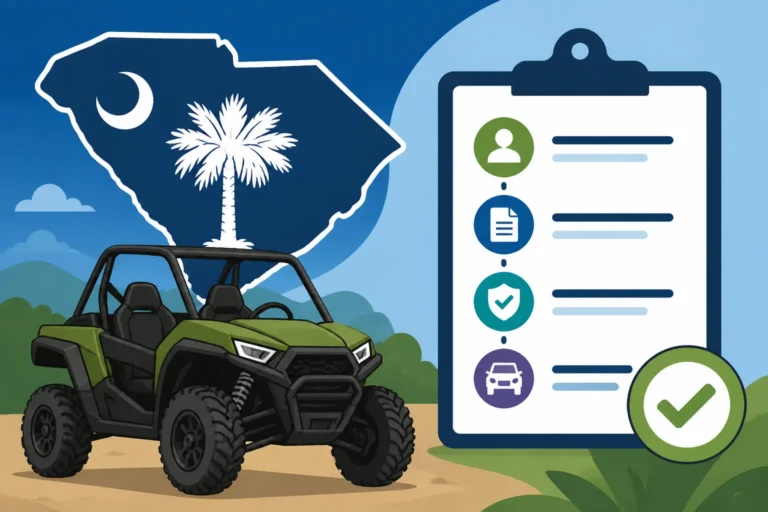
The first and arguably most important step is to collect all the necessary documents. This list typically includes:
- Proof of Ownership: This is usually the manufacturer's statement of origin (MCO) for a new trailer or a properly assigned title from the previous owner for a used trailer. If you bought it privately, a robust bill of sale is crucial, clearly stating the trailer's make, model, VIN (Vehicle Identification Number), year, and the names/signatures of both buyer and seller. Services like LawDepot can provide templates for these forms, ensuring they include all the necessary legal jargon. For homemade trailers, things get a bit more involved; you'll need receipts for materials and potentially a certified weight slip and an affidavit of construction. [South Carolina Proof of Ownership Without a Title] can shed more light on alternative ways to establish ownership if a traditional title isn't available.
- Your Photo ID: A valid South Carolina driver's license or identification card is a must.
- Proof of South Carolina Residency: If your address isn't current on your ID, you might need additional documents like a utility bill or rental agreement. [South Carolina Title and Proof of Address] offers more details on accepted proofs.
- Completed Application Form: The DMV will have a specific form for titling and registering trailers. You can often find these forms online to print and fill out beforehand, which speeds up your visit. One form, typically Form 400, handles title, registration, or both. [South Carolina Form 400 Explained] is a good resource for understanding this specific document.
Make sure all names and details match across all your documents. A small discrepancy can lead to a big headache at the counter.
Visiting the DMV
Once your paperwork is meticulously gathered, it’s time for the main event: a visit to your local South Carolina Department of Motor Vehicles (DMV) office. It's often helpful to plan your visit during off-peak hours if possible, though sometimes the lines are just part of the experience. When you arrive, you’ll present your documents, fill out any remaining sections of the application form, and typically submit them for review.
A DMV clerk will verify your information, possibly ask a few questions, and then guide you through the process. Be prepared for a bit of a wait, but if you have everything in order, the actual transaction should be relatively smooth. This is where having a clear, accurate bill of sale from a private seller, perhaps drafted using a reliable template, truly pays off. If your trailer doesn't have a VIN, or if it's a homemade unit, they may need to assign one or conduct an inspection, so be prepared for those possibilities. [South Carolina Title Applications at the DMV] details more about what to expect during your visit.
Understanding the Fees Involved
Titling and registering a trailer in South Carolina involves several fees, though they are generally modest. There's usually a fee for the title itself, and then a separate fee for the registration or license plate. These are typically flat fees, not based on the value of the trailer, which keeps costs predictable. It’s always a good idea to check the SCDMV website for the most current fee schedule, as these can change periodically.
You'll also need to consider payment methods; most DMV offices accept cash, checks, and major credit cards, but it's wise to confirm beforehand. While the total cost might not break the bank, it's an essential part of your budget when acquiring or building a trailer. Think of it as a small investment in legal compliance and peace of mind on the road. The good news is that these costs are usually a one-time title fee and an annual or biennial registration renewal, similar to how you’d register a car.
What to Consider for Your ATV Trailer
Choosing the right trailer for your ATV or UTV is almost as important as picking the machine itself. There's a wide world of options out there, each with its own advantages and considerations, especially when thinking about hauling through South Carolina's diverse landscapes, from coastal plains to the Upstate mountains.
Open vs. Enclosed Trailers: Making the Right Choice
When it comes to hauling your quad, you generally have two main choices: an open trailer or an enclosed trailer. Each has its pros and cons, and the best choice for you often depends on your specific needs, budget, and how you plan to use it.
Open Trailers: These are typically simpler, lighter, and more affordable. They can be utility trailers with ramps or specialized ATV/UTV trailers with side-loading capabilities.
- Pros: Lower initial cost, easier to maneuver, lighter weight (can be pulled by smaller vehicles), and often simpler maintenance. They're great for quick trips to local trails like those at Carolina Adventure World or for hauling firewood.
- Cons: Your ATV is exposed to the elements (rain, road grime, sun fade) and potential theft. You also don't have extra storage space for gear or tools unless you add a toolbox. Security is a bigger concern, as your machine is openly visible.
Enclosed Trailers: These trailers offer a secure, weather-protected space for your ATV, often with additional storage.
- Pros: Superior protection from weather and road debris, enhanced security against theft, and ample space for all your riding gear, tools, and even spare fuel cans. They often have built-in tie-downs and interior lighting.
- Cons: Significantly higher initial cost, heavier (requiring a more capable tow vehicle), can be harder to maneuver and park, and fuel efficiency while towing will be lower. They also require more storage space when not in use.
Weight Ratings and Axles: Matching Trailer to Machine
Understanding your trailer's weight ratings and axle configuration is absolutely crucial for safe towing. Every trailer has a Gross Vehicle Weight Rating (GVWR), which is the maximum loaded weight the trailer is designed to carry, including its own weight (curb weight) and the weight of your cargo (your ATV, gear, etc.). You must never exceed this rating. Overloading a trailer can lead to catastrophic tire blowouts, axle failure, and loss of control, especially when navigating South Carolina's highways.
- Single Axle vs. Tandem Axle:
- Single-axle trailers are lighter, less expensive, and easier to maintain. They're suitable for lighter loads, typically one smaller ATV or a light side-by-side. However, a single tire failure can leave you stranded.
- Tandem-axle trailers offer increased carrying capacity, better stability, and a safety net if one tire fails. They distribute weight more evenly, reducing tongue weight on your tow vehicle and providing a smoother ride for heavier loads, like multiple ATVs or larger UTVs for rock crawling. They are ideal for longer hauls or for larger, heavier machines.
Always know the weight of your ATV and all your gear, and choose a trailer with a GVWR that comfortably exceeds that total. It’s always better to have a bit of extra capacity than to be pushing the limits.
Maintenance for a Road-Ready Trailer
Just like your ATV, your trailer needs regular maintenance to stay safe and reliable. Neglecting your trailer can lead to breakdowns, accidents, and expensive repairs down the road.
- Tires: Inspect tire pressure before every trip, especially when dealing with South Carolina's fluctuating temperatures. Check for wear, cracks, and proper tread depth. Don't forget the spare!
- Lights: All lights—running lights, brake lights, and turn signals—must be fully functional. Check them before every trip. Blown bulbs or faulty wiring are common causes for roadside stops.
- Bearings: Wheel bearings need to be greased regularly to prevent overheating and failure. This is often an overlooked item, but a seized wheel bearing can cause a wheel to come off, which is incredibly dangerous.
- Brakes: If your trailer has brakes (often required for heavier trailers), ensure they are in good working order. Test them periodically and have them serviced as needed.
- Hitch and Coupler: Ensure the hitch is securely attached to your tow vehicle and the coupler is properly locked onto the ball. Always use safety chains, crisscrossed under the coupler, as a backup.
- Tie-Downs: Secure your ATV or UTV with appropriate tie-downs to prevent shifting during transit. Too many riders underestimate the forces involved in braking or cornering.
A well-maintained trailer is a safe trailer, and it ensures you get your machine to the trail and back without any unwelcome surprises.
| Feature | Open Trailer | Enclosed Trailer |
|---|---|---|
| Initial Cost | Lower | Higher |
| Protection | Minimal (exposed to elements/theft) | Excellent (weather, theft) |
| Storage | Limited (add-ons possible) | Ample (gear, tools, fuel) |
| Weight | Lighter, easier to tow | Heavier, requires more capable tow vehicle |
| Maneuverability | Easier | More challenging |
| Fuel Economy | Better | Worse (more drag) |
| Security | Lower (visible machine) | Higher (locked, out of sight) |
| Maintenance | Simpler (fewer systems) | More complex (doors, vents, interior lights) |
| Ideal Use | Short hauls, local trips, single light machine | Long hauls, multiple machines, valuable gear, storage |
Common Pitfalls and How to Avoid Them
Even with the best intentions, it's easy to stumble into common traps when dealing with trailer plates and registration in South Carolina. Knowing these pitfalls ahead of time can help you steer clear and keep your ATV adventures running smoothly.
Missing Paperwork Snafus
Picture this: you've taken time off work, loaded up the quad, and you're finally at the DMV, ready to get that plate. Then, the clerk tells you that one crucial piece of paper is missing – perhaps an original MCO that never made it to you, or a bill of sale that lacks a VIN. Suddenly, your efficient visit turns into a mad dash to track down documents, or worse, another trip back to the DMV. This is a common frustration many South Carolinians face.
To avoid this, create a checklist of every single document required and double-check it before you leave home. If you're buying a used trailer, specifically ask the seller for the title or MCO. If they don't have one, ask for a detailed bill of sale, and consider using a reputable template from a service like LawDepot to ensure all legal information is included. For trailers that lack traditional ownership documents, the process can be more complex, sometimes involving a bonded title. Remember, a missing signature, an incorrect date, or a transposed VIN can all stall your application. [A Missing Signature Can Stall Your Title] highlights how easily these minor errors can become major roadblocks.
Out-of-State Purchase Headaches
Buying a used trailer from a seller in North Carolina or Georgia can seem like a great deal, especially with the close proximity. However, bringing an out-of-state trailer into South Carolina for plating can sometimes present unique challenges. Different states have different titling and registration laws. What was perfectly legal in Georgia might not directly translate in the Palmetto State. For instance, some states don't title utility trailers below a certain weight, which can create a gap in your ownership trail when you try to plate it in SC.
When purchasing a trailer from out of state, always ask for the title, even if their state didn't require one. If no title exists, make sure the bill of sale is incredibly thorough and includes everything South Carolina would require for proof of ownership. You might need to bring additional affidavits or even have the trailer inspected by the DMV to verify the VIN or assign one if it's missing. It’s always best to check with the SCDMV beforehand about their specific requirements for out-of-state trailer transfers. [South Carolina Has Nothing to Reciprocate] and [South Carolina Title Compared to Georgia] offer valuable context on how South Carolina interacts with other states' titling processes.
DIY Trailer Issues
Building your own trailer can be a rewarding project, often saving money and allowing for custom configurations perfectly suited to your ATV or UTV. However, these homemade trailers introduce a whole new set of considerations when it comes to getting that all-important license plate. Unlike manufactured trailers that come with an MCO and a pre-assigned VIN, your DIY creation starts from scratch.
To legally plate a homemade trailer in South Carolina, you’ll typically need to:
- Document Everything: Keep meticulous records of all parts purchased, including receipts for the axle, frame materials, lights, and hitch. This proves you legally acquired the components.
- Affidavit of Construction: You’ll need to complete an affidavit detailing how and when the trailer was built, often sworn under oath.
- Weight Certificate: A certified weight slip from a public scale showing the trailer's empty weight (curb weight) is usually required.
- VIN Assignment: The DMV will need to assign a VIN to your trailer, which may involve a physical inspection by a law enforcement officer or DMV official to ensure it meets basic safety standards and to affix the new VIN plate.
Failing to follow these steps can make it incredibly difficult, if not impossible, to get a legal plate, leaving your custom-built hauler stuck in the driveway. While it's more work, ensuring your homemade trailer is street-legal is paramount for safe and lawful transport of your quad.
Disclaimer
This article is for general informational purposes only and does not constitute professional advice. Laws, prices and regulations vary by location and change over time. Consult a qualified professional for guidance on your specific situation.