Transferring a Quad Left in an Estate
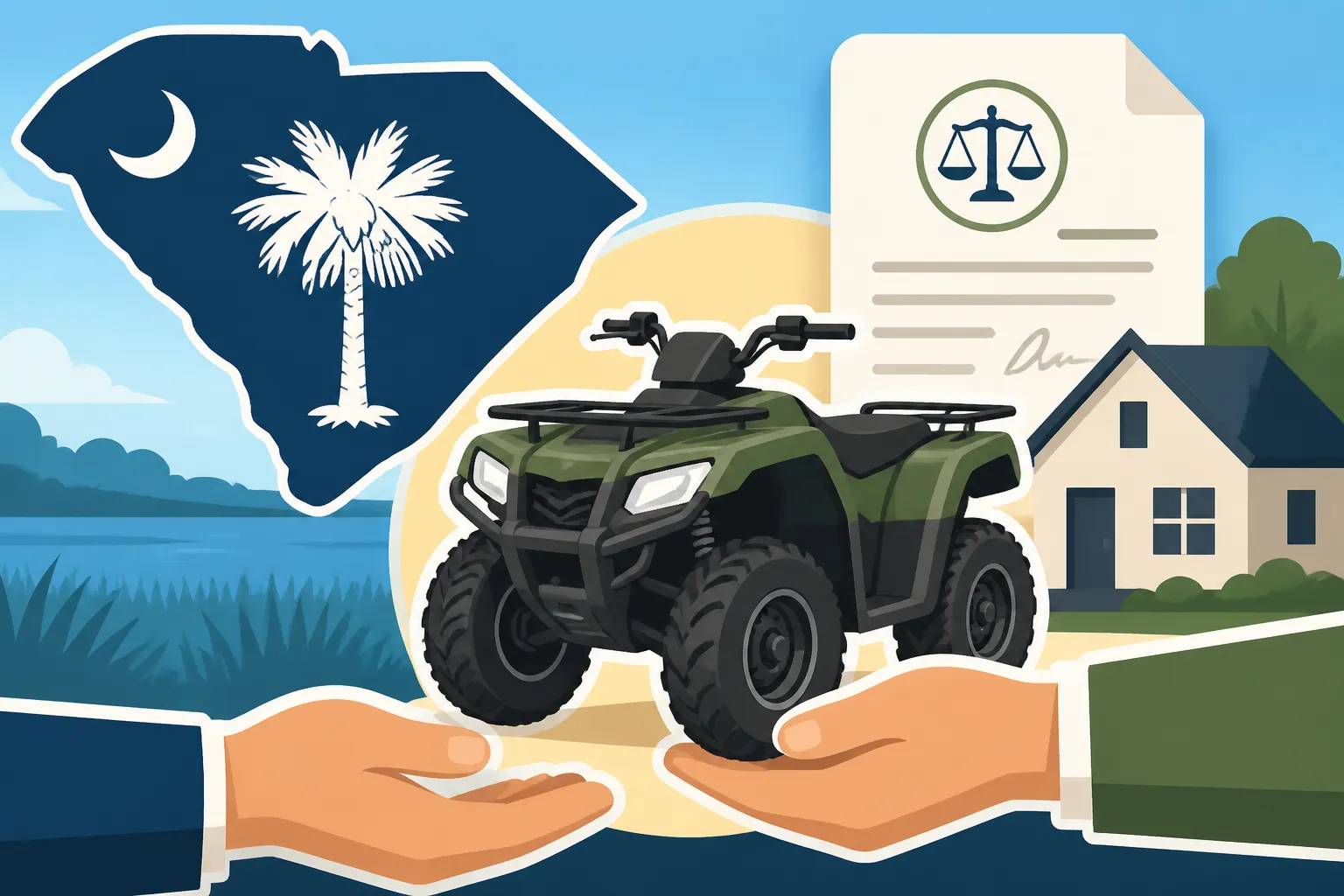
It's incredibly tough when you're grieving a loved one, and suddenly you're faced with a mountain of paperwork and official processes, especially when it comes to something like an ATV or UTV they left behind. Figuring out how to legally transfer ownership of a quad or side-by-side that's part of an estate in South Carolina can feel like an overwhelming task. This guide is here to walk you through the often confusing, but entirely manageable, process, helping you understand each step and what you’ll need to do to get that machine into the right hands.
Understanding the Basics of Estate Transfers in South Carolina for ATVs
Before you even think about visiting the Department of Motor Vehicles (DMV), it’s crucial to understand the legal framework surrounding inherited property in South Carolina, particularly when it comes to vehicles like ATVs and UTVs. This isn't just about finding the keys; it's about establishing legal authority.
Probate vs. Non-Probate Assets
When someone passes away, their assets are generally categorized as either "probate" or "non-probate." Probate is the legal process where a will is proven valid (if one exists), debts are paid, and assets are distributed to heirs under the supervision of the probate court. Non-probate assets, like life insurance policies with named beneficiaries or jointly-owned property with rights of survivorship, bypass this court process.
Most ATVs and UTVs, unless they were specifically set up in a trust or jointly owned in a very particular way, usually fall into the probate category. This means the machine's ownership can't simply be transferred by handing over the keys. The estate needs to be legally settled first. South Carolina does have provisions for "small estates," where if the total value of the personal property is below a certain threshold, you might be able to use a simplified affidavit process instead of full probate. This can save a lot of time and expense, so it’s worth looking into if the ATV is the primary asset or if the overall estate is relatively small. You might find resources on legal form websites like LawDepot that can help you understand the specific requirements for a small estate affidavit in South Carolina, or even provide templates to get you started.
Identifying the Legal Representative
Every estate needs a legal representative—someone authorized to act on behalf of the deceased. If your loved one had a last will and testament, it typically names an "executor." This person is responsible for carrying out the instructions in the will, which includes managing assets like the ATV. If there was no will, the probate court will appoint an "administrator." Both executors and administrators receive official documents from the court, often called "Letters of Testamentary" (for an executor) or "Letters of Administration" (for an administrator).
These "Letters" are your golden ticket. They prove to institutions like the DMV that you have the legal authority to transfer the ATV. Without these official court documents, the DMV won't be able to process the transfer, no matter how clear it is that you're the rightful heir. It’s essential to secure these letters as one of your very first steps, as they are the foundational piece of paperwork for everything that follows. This role carries significant responsibility, as you are legally bound to manage the estate’s assets correctly and in accordance with South Carolina law.
The Paperwork Trail: What You Need to Gather
Once you've identified the legal representative and understand the basic process, the next step is to gather all the necessary paperwork. This is often where people get bogged down, but having a clear checklist can make a huge difference.
Essential Documents from the Estate
You'll need more than just the ATV's existing title. The DMV needs to confirm that the person requesting the transfer truly has the legal right to do so, and that means proving they are the legal representative of the estate.
First and foremost, you'll need the certified death certificate of the deceased owner. This is non-negotiable proof that the previous owner has passed away. You typically get certified copies from the county vital records office. Next, those crucial Letters of Testamentary or Letters of Administration from the probate court are essential. These documents, bearing the court's seal, explicitly state who has the authority to act for the estate. If there was a will, you should also have access to it, though the Letters are usually what the DMV will specifically ask to see as proof of authority. If the estate qualifies for a small estate affidavit, then that officially filed document will serve as your proof of authority instead of full Letters. Remember, these aren't just for your records; they are critical for any official transfer of assets.
The ATV's Original Documentation
Now, let's talk about the machine itself. The primary document you’ll ideally have is the original South Carolina ATV title, if one was ever issued. South Carolina has historically had [South Carolina Titles Are Optional] for off-road ATVs, which means many owners never bothered to get one. This can complicate things, but it's not insurmountable.
If there is an existing title, it needs to be properly endorsed by the executor or administrator in their official capacity. They will sign in the seller's portion, indicating their title (executor/administrator) and referencing the estate. If the ATV was recently purchased new by the deceased and never titled, you might have the Manufacturer's Certificate of Origin (MCO). This is the factory-issued document for new machines, and it functions similarly to a title for the first owner. Make sure the MCO is assigned to the estate or shows the deceased as the original owner. If you don't have a title or an MCO, then you'll need to explore options for [South Carolina Proof of Ownership Without a Title]. This usually involves sworn affidavits attesting to ownership and how the machine came into the deceased's possession. You can often find forms or templates for these kinds of affidavits through legal resource platforms like LawDepot, which can be invaluable when trying to navigate missing paperwork.
| Document Category | Specific Document | Purpose |
|---|---|---|
| Estate Authority | Certified Death Certificate | Proof of deceased owner's passing |
| Letters of Testamentary/Administration | Proof of legal authority for executor/administrator | |
| Small Estate Affidavit (if applicable) | Simplified proof of authority for qualifying small estates | |
| ATV Ownership | Original South Carolina ATV Title | Primary proof of prior ownership (if titled) |
| Manufacturer's Certificate of Origin (MCO) | For new machines never titled by the deceased | |
| Bill of Sale / Affidavit of Ownership (if no title) | Supplemental proof if original title/MCO is missing or never existed | |
| DMV Forms | South Carolina Title Application (Form 400) | To apply for a new title in the heir's name |
| Personal ID | Executor/Administrator's Photo ID | To verify identity at the DMV |
Navigating the DMV: Steps to Title and Register
With your paperwork in hand, it's time to face the South Carolina DMV. This is where all your preparatory work pays off. Being organized and knowing exactly what to expect can significantly streamline the process.
Completing the Title Application
The main form you'll be working with at the DMV is [South Carolina Form 400 Explained], which serves as the application for title, registration, or both. For an inherited ATV, you'll be primarily focused on transferring the title. The legal representative of the estate will need to fill out this form carefully. In the sections typically reserved for the "seller," the executor or administrator will sign their name, indicate their legal capacity (e.g., "Jane Doe, Executor of the Estate of John Doe"), and provide the necessary estate information. In the "buyer" section, you'll put the name of the person who is inheriting the ATV.
It's crucial to correctly tick the box for "Title Only" unless you also plan to immediately register the machine for street-legal use (which is a separate process for UTVs and often not applicable to standard ATVs). Remember, [South Carolina Does Not Register Off-Road ATVs] for trail use, so a title is generally your only concern for an off-road machine, unless you're talking about a [South Carolina Street-Legal UTV Registration Arrives]. The details of who is designated as the new owner must precisely match the individual’s legal name and address as it will appear on the new title. Accuracy here avoids delays.
Fees and Payment
There are specific fees associated with titling a vehicle in South Carolina. For an ATV, the base title fee is quite modest. You can typically expect to pay a nominal fee for the new title certificate. This is sometimes covered in detail under articles like [What a South Carolina ATV Title Costs]. While the state does not tax ATVs as property, there might be other small administrative fees depending on your specific situation.
It's always a good idea to check the current fee schedule on the South Carolina DMV website or call ahead to your local office. While the base title fee remains constant, other minor charges can sometimes apply. Payment methods usually include cash, check, or credit/debit card, but policies can vary by location. Having the exact amount in cash can sometimes speed things up, especially in smaller offices. If you're in a hurry to get the title in hand, there might be an option for an [South Carolina Expedite Fee of $20] that allows for faster processing, letting you potentially walk out with the title that same day.
Bringing It All to the DMV
When you head to the DMV, prepare for your visit as if you were moving house with all your important papers. Make sure you bring all the original documents we've discussed: the certified death certificate, the Letters of Testamentary or Administration (or the small estate affidavit), the original ATV title or MCO (if you have them), and your completed South Carolina Form 400. The executor or administrator must be present, along with their valid photo identification. If the new owner is a different person, they may also need to be present or provide additional documentation, depending on the DMV's requirements.
It’s often helpful to call your local [South Carolina Title Applications at the DMV] office beforehand to confirm their specific requirements and perhaps even make an appointment if available. This can save you a lot of waiting time. Be patient, be polite, and have everything organized in a folder. The clerks are there to help, but they can only work with the complete and correct documentation. Knowing [What to Bring to a South Carolina DMV Counter] is half the battle.
Special Scenarios and Common Pitfalls
Estate transfers can get tricky, and there are a few common scenarios and pitfalls that often surprise people. Being aware of these can help you avoid unnecessary delays and frustrations.
No Title? No Problem (Sometimes)
One of the most common issues with ATVs in South Carolina is the absence of an existing title. Since [South Carolina Titles Are Optional] for off-road machines, many owners never obtained one. If your loved one passed away without a title for their ATV, don't despair immediately. It's often still possible to transfer ownership.
The DMV will typically require alternative proof of ownership. This usually means providing a bill of sale, if one exists, from when the deceased purchased the machine, or a sworn affidavit of ownership. An affidavit is a legal document where you (or someone knowledgeable about the ATV's history) attest under oath to how the deceased came to own the machine, including details like the purchase date, seller, and purchase price. Sometimes, a vehicle verification form completed by law enforcement might also be required to confirm the Vehicle Identification Number (VIN). [South Carolina Proof of Ownership Without a Title] is a topic many people research, and it’s a process designed to help in these situations. Websites like LawDepot can provide templates for affidavits of ownership or general bill of sale forms that can be adapted for your situation, helping you create a legitimate document to present to the DMV. The key is to demonstrate a clear chain of ownership, even without a formal title document.
Multiple Heirs or Disputes
What happens if the will names multiple heirs, or if there's no will and multiple family members are entitled to the estate? Or worse, what if there's a disagreement about who should get the ATV? These situations can quickly turn complicated.
If multiple heirs are involved and they all agree on who should receive the ATV, they might all need to sign a notarized document confirming this agreement, or the executor/administrator might sign off on the transfer to the agreed-upon heir. If there's a dispute, however, the ATV can become entangled in legal proceedings, and you may need to seek advice from an estate attorney. The probate court might need to issue specific orders regarding the distribution of the ATV. Trying to navigate this without legal counsel can lead to further conflict and significant delays, so it’s always best to get professional advice early in such situations. Similarly, if the intent is to sell the machine and split the proceeds, LawDepot could offer simple agreement forms to document the sale and distribution among heirs, ensuring everyone is on the same page. [South Carolina Title With Two Owners] is a possibility if multiple people genuinely wish to co-own the machine, but this should be decided clearly and documented properly.
Out-of-State Executors or New Owners
Perhaps the executor of the estate lives in North Carolina, or the person inheriting the ATV lives in Georgia. Can an out-of-state individual act as the executor or become the new owner of a South Carolina-based ATV? Generally, yes, but there might be extra steps or considerations.
An out-of-state executor, if properly appointed by a South Carolina probate court (or if the will allows for it and has been probated in South Carolina), holds the same authority as an in-state executor. They would still need to follow South Carolina's DMV procedures for title transfer. As for an out-of-state resident inheriting the ATV, they can absolutely get a South Carolina title in their name. However, depending on their home state's laws, they might eventually need to title and potentially register the machine in their own state. It's important to understand that South Carolina's optional titling laws might differ significantly from those of neighboring states. For example, [South Carolina Has Nothing to Reciprocate] when it comes to ATV registrations because off-road machines aren't registered here. Always advise the new out-of-state owner to check their local DMV's requirements once they have the South Carolina title in hand.
Disclaimer
This article is for general informational purposes only and does not constitute professional advice. Laws, prices and regulations vary by location and change over time. Consult a qualified professional for guidance on your specific situation.