South Carolina Has No Off-Road ATV Registration
One of the most frequent headaches I hear from new off-road enthusiasts moving to South Carolina, or even long-time residents just getting into the sport, is the confusion surrounding ATV registration. You spend hours researching, calling the DMV, and asking around, only to get conflicting information or feel like you're missing something crucial. It's frustrating when you just want to hit the trails legally, and this guide is here to clear up that very specific point: what to do (or not do) about registering your off-road ATV in the Palmetto State.
The Truth About Off-Road ATV Registration in South Carolina
Let's cut right to the chase because this is where a lot of riders get tangled up: South Carolina does not require off-road ATVs to be registered with the Department of Motor Vehicles (DMV). I know, it sounds almost too simple, especially when many other states have a full-blown registration process, complete with stickers, plates, and annual fees for off-highway vehicles. But here in South Carolina, for your typical trail-riding quad or side-by-side that isn't street legal, that bureaucratic step simply doesn't exist.
Dispelling the Common Misconception
It's completely natural to assume that if you own a vehicle, especially one with an engine, you need to register it. Most of us are conditioned to think this way because of cars, trucks, motorcycles, and even boats. When you buy a new car, the dealer handles the registration. When you buy a used one, you head to the DMV to transfer the title and register it in your name. So, when you bring home a shiny new ATV, your mind automatically goes to the same process. You might even ask a friend who rides in a different state, and they'll tell you about their OHV registration, further fueling the confusion. This expectation sets many riders up for a bewildering experience when they try to find the "ATV registration form" at the DMV, only to be met with blank stares or told, "We don't do that."
The key here is the "off-road" distinction. These machines are designed and intended for private property, designated trails, and non-public lands. They aren't meant to share the road with cars, and as such, the state doesn't track them in the same way it tracks road-going vehicles. This distinction is paramount to understanding why the registration requirement, which usually ties a vehicle to a specific owner for public road use and taxation, just isn't there for off-road quads.
What the Law Actually Says (and Doesn't Say)
When you dig into the South Carolina Code of Laws, specifically Chapter 26 of Title 50, which is known as Chandler's Law and covers ATVs, you'll find extensive rules about operation, age restrictions, safety equipment, and even where you can ride. What you won't find is a section mandating registration for your off-road ATV. The law focuses on safe operation and environmental protection, not on state tracking of every single off-road machine.
This absence of a specific registration requirement can be a relief for riders who prefer less government oversight, but it can also lead to a false sense of security regarding ownership. Just because you don't have to register it doesn't mean you don't need other forms of documentation, which we'll get into shortly. It's about understanding the specific legal framework that governs these vehicles, which is quite different from that of a car or even a street-legal UTV. For example, you can learn more about specific rules in [South Carolina Code Section 50-26-50].
Why This System Can Be Confusing for New Riders
Imagine you've just moved to South Carolina from a state like, say, North Carolina or Georgia, where off-road vehicle registration is a thing. You're used to getting a sticker, carrying proof of registration, and maybe even paying an annual fee. Then you arrive here, buy an ATV, and suddenly all those familiar steps are gone. It's disorienting!
Furthermore, the lines can sometimes blur with other types of vehicles. You might hear about "street-legal UTV registration" and wonder if it applies to your side-by-side. It doesn't, unless you've gone through the specific process to make your UTV street legal. Or you might confuse it with [South Carolina Golf Cart Permit Fees] and assume there's a similar permit for your quad. There isn't. The lack of a registration requirement for off-road ATVs is a specific carve-out, not a universal rule for all recreational vehicles. Understanding these distinctions is key to avoiding unnecessary trips to the DMV or, worse, running afoul of the law by misunderstanding what is required.
What South Carolina Does Require for Your Off-Road ATV
While registration for off-road ATVs is not on the list, that doesn't mean it's a completely unregulated free-for-all. South Carolina has a few other pieces of the puzzle that riders absolutely need to be aware of to ensure they are operating legally and protecting their investment. These requirements center more around proof of ownership and specific operational guidelines rather than an annual state tracking system.
Titling Your ATV: An Optional Yet Smart Move
This is where many people get confused because it sounds like registration. In South Carolina, titling an off-road ATV is optional. Yes, you read that right: optional. This is a unique aspect of South Carolina law that often catches people by surprise. You don't have to get a title for your off-road quad, dirt bike, or side-by-side if it's strictly an off-road machine. However, just because it's optional doesn't mean it's a bad idea. In fact, for most riders, it's a very smart move.
A title is the legal document that proves who owns the machine. While not required for off-road use, having a title can prevent a lot of headaches down the road. If your ATV is ever stolen, a title makes it much easier to prove ownership to law enforcement and your insurance company. If you decide to sell your machine, particularly to someone out of state or to a buyer who wants extra assurance, having a title provides clear proof of legal ownership. Many lenders also won't finance a machine without a title, as it's their collateral. The cost to title an ATV is typically quite low, usually a flat fee, so it’s a small investment for significant peace of mind. You can find out more about the process in [How to Title an ATV in South Carolina] or [What a South Carolina ATV Title Costs].
The process itself is straightforward. You typically fill out [South Carolina Form 400 Explained], provide proof of purchase (like a bill of sale), and pay the fee. If you're buying a new machine, you'll need the Manufacturer's Certificate of Origin (MCO). For a used machine, an assigned title from the previous owner is ideal.
The Good News About Property Taxes
Here’s another piece of good news for off-road ATV owners in South Carolina: your off-road ATV is exempt from county property taxes. This isn't a new development; it's been the case since 2011. This exemption significantly reduces the annual cost of ownership compared to many other types of vehicles. When you buy a car or a street-legal UTV, you'll get a property tax bill from your county every year. For an off-road ATV, you simply won't.
This exemption applies specifically to off-road ATVs and dirt bikes. It doesn't extend to street-legal UTVs, which do get taxed as personal property. The rationale behind the ATV exemption is largely tied to their use on private land or designated trails, distinguishing them from vehicles that use public roads and benefit more directly from local infrastructure funded by property taxes. So, while you might budget for the initial purchase price, maintenance, and maybe an optional title fee, you can cross annual property taxes off your list. This policy is explained further in [South Carolina Exempts ATVs From Property Tax].
Essential Paperwork for Ownership and Sales
Even without registration, having proper paperwork is critical. Think of it as your ATV's "identity."
- Bill of Sale: This is perhaps the single most important document, especially for private sales. A well-drafted bill of sale, like one you can easily create using a service like LawDepot, proves who sold the machine, who bought it, the date of the sale, and the price. It should include the ATV's Vehicle Identification Number (VIN) or serial number. This document is essential for proving ownership, whether you decide to title the machine or not, and for navigating any disputes. [Buying From a Private Seller in South Carolina] should always involve a solid bill of sale.
- Manufacturer's Certificate of Origin (MCO/MSO): If you bought your ATV new from a dealer, you received an MCO. This is the "birth certificate" for your machine. It proves it's new and has never been titled before. Keep this document safe! If you ever decide to title your ATV or sell it, the MCO is usually required.
- Previous Title (if applicable): If you buy a used ATV that has been previously titled in South Carolina (even though it's optional) or in another state, make sure you get the original title, properly signed over to you by the seller. This is your clearest proof of a legal transfer of ownership.
- Other Supporting Documents: Keep copies of any advertisements, communications with the seller, or receipts for accessories. While not primary proof of ownership, they can support your claim if questions arise.
Having these documents on hand is not just good practice; it's essential for proving [South Carolina Proof of Ownership Without a Title] and preventing potential issues down the road. They are your primary defense against theft and your best friend when it comes time to sell.
Navigating the Nuances: ATVs, Street UTVs, and Golf Carts
The world of off-road and recreational vehicles can get pretty muddy, especially when you start trying to figure out which rules apply to which machine. It’s easy to lump all small, four-wheeled vehicles together, but in South Carolina, the law sees distinct differences. Understanding these categories is crucial to avoid unintended legal trouble, because what applies to your quad certainly doesn't apply to your buddy's street-legal side-by-side or your neighbor's golf cart.
Off-Road ATVs: The "No Registration" Zone
As we've firmly established, your traditional off-road ATV – whether it's a sport quad, a utility quad, or a side-by-side that's exclusively used off-road – does not require registration with the South Carolina DMV. This category includes machines primarily designed for trails, private land, farms, or hunting leases. You won't get a license plate or a registration sticker for these.
However, "no registration" does not mean "no rules." Far from it! These machines are still subject to significant operational laws under Chandler's Law. This includes age restrictions for riders, requirements for safety courses for young riders, helmet laws (especially for minors), and prohibitions against riding on public roads unless specific exemptions apply (like crossing a paved road to get from one section of private property to another, and even then, under strict conditions). You also need to be mindful of private property rights; you can't just ride anywhere you please. The onus is on the rider to know where they can legally operate their machine. You might also be interested in [South Carolina Rules for Riding a Farm Road] or [South Carolina Hunting and Trapping Exemptions] which offer some clarity on specific use cases.
Street-Legal UTVs: A Different Set of Rules
This is where the confusion often begins. If you own a UTV (Utility Terrain Vehicle, often called a side-by-side) that has been specifically converted or manufactured to be street-legal, it enters a completely different regulatory category. As of a relatively recent change in South Carolina law, these machines can be registered and licensed for road use. This means they do require registration, a license plate, and insurance, just like a car.
To qualify as street-legal, UTVs must meet a specific set of equipment requirements (headlights, taillights, turn signals, seatbelts, windshield, mirrors, etc.) and adhere to certain size and weight limits. Once they meet these criteria, they can go through the DMV registration process. This is a big deal for many riders who want the flexibility to drive their UTV on secondary roads. If you have a street-legal UTV, you absolutely need to understand [South Carolina Street-Legal UTV Registration Arrives] and [South Carolina Street UTV Insurance Rules], because the "no registration" rule for off-road ATVs does not apply to these road-worthy machines. They will also be subject to an annual fee and property taxes.
Golf Carts: Their Own Unique Permit System
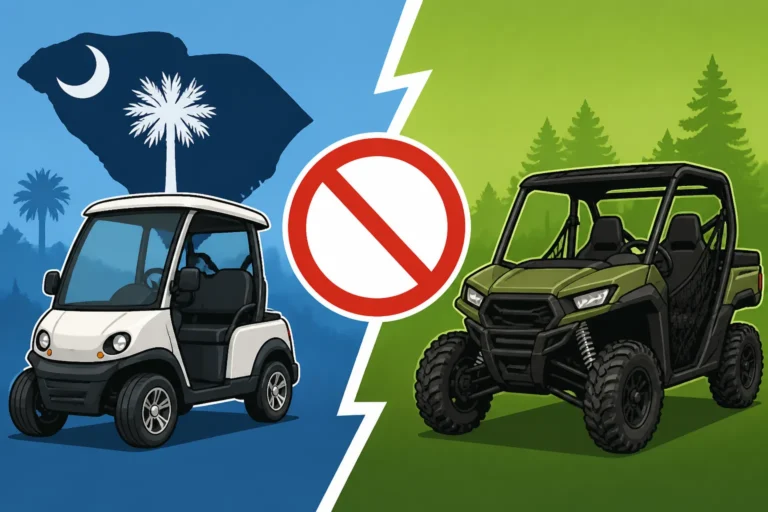
Golf carts represent yet another distinct category with their own set of rules in South Carolina. They are not ATVs, nor are they typically considered street-legal UTVs (though there can be some overlap with Low-Speed Vehicles, which are different still). Golf carts are generally restricted to roads with speed limits of 35 mph or less, and typically within a certain radius of your home or the golf course. They also require a special permit from the DMV, not a registration.
The permit process for a golf cart involves applying at the DMV, paying a nominal fee, and displaying a decal on the cart. This permit must be renewed periodically. [South Carolina Golf Cart Permit Rules] are very specific, covering where you can drive, when you can drive (daylight hours only for the most part), and what documents you need to carry. It's a completely separate system from both off-road ATVs and street-legal UTVs, designed for their specific low-speed, limited-use nature. So, if you're asking about "ATV registration," make sure you're not actually thinking of a golf cart permit!
Here's a quick comparison to help keep these distinctions clear:
| Vehicle Type | DMV Registration Required? | DMV Title Required? | License Plate Issued? | Annual Property Tax? | Typical Road Use Allowed? |
|---|---|---|---|---|---|
| Off-Road ATV | No | Optional | No | No | Generally No (private land/trails only) |
| Street-Legal UTV | Yes | Yes | Yes | Yes | Yes (secondary roads, specific limits) |
| Golf Cart | No (Permit Required) | No | No (Decal Issued) | Yes | Yes (low-speed roads, radius limits) |
Protecting Your Investment: Proof of Ownership and Beyond
Even though your off-road ATV doesn't need to be registered, and a title is technically optional, proactively securing proof of ownership is one of the smartest things you can do as a rider. It's not just about adhering to regulations; it's about safeguarding your significant investment and preventing potential headaches down the line. In the absence of mandatory registration, strong proof of ownership becomes even more critical.
Why a Title Matters Even When It's Optional
Let's revisit the optional title. While you can certainly own and operate an off-road ATV in South Carolina without ever getting a title, choosing to get one offers numerous benefits that often outweigh the small effort and cost involved.
- Theft Recovery: This is perhaps the biggest reason. If your ATV is stolen, having a title provides clear, undisputed proof to law enforcement that the machine belongs to you. Without it, recovering your machine can become a much more difficult and protracted process, relying solely on a bill of sale or other less formal documents. Police departments and insurance companies often prefer, if not require, a state-issued title for proof of ownership in theft cases.
- Easier Sales and Transfers: When it comes time to sell your ATV, especially to a buyer who wants to title it in South Carolina or take it to another state where titles are mandatory, having a clean title in your name makes the transaction smooth and gives the buyer confidence. Buyers are often wary of untitled machines, as they can sometimes indicate a stolen machine or one with a murky ownership history. A LawDepot bill of sale combined with a title creates an ironclad paper trail. You can learn more about this in [Why a Buyer Wants a Title in Hand].
- Financing and Insurance: As mentioned, most financial institutions will not provide a loan for an ATV that cannot be titled, as they need the title as collateral. Similarly, some insurance companies might offer better rates or be more willing to insure a titled machine, seeing it as a lower risk due to documented ownership. This could be a factor in [Does an Off-Road Quad Need Insurance in South Carolina?].
- Legal Clarity: In any dispute over ownership, a state-issued title is usually the ultimate authority. It eliminates ambiguity and provides a clear legal record. Submitting your application through [South Carolina Title Applications at the DMV] is typically straightforward.
Essential Documents for Buying or Selling an ATV
Whether you're the buyer or the seller, having the right paperwork is non-negotiable, especially in a state where registration is absent for off-road machines.
- For Buyers:
- Bill of Sale: Always insist on a detailed bill of sale signed by the seller. This document should include the full names and addresses of both parties, the date of sale, the purchase price, and a complete description of the ATV, including its make, model, year, and VIN/serial number. A generic template from a service like LawDepot is perfect for this. This is your primary proof of purchase.
- Previous Title or MCO: If the ATV has a title, make sure it's properly signed over to you. If it's a new machine, get the MCO. This provides a clear chain of ownership.
- Receipts/Service Records: Any maintenance records or receipts for aftermarket parts can indicate a well-cared-for machine and add value.
- Lien Release (if applicable): If the seller had a loan on the ATV, ensure you receive a lien release from their lender proving the loan has been paid off. Otherwise, you might inherit their debt!
- For Sellers:
- Clear Title or MCO: Have your title or MCO ready and ensure it's free of any liens.
- Bill of Sale: Prepare a comprehensive bill of sale for the buyer. Keep a signed copy for your records. This protects you in case the buyer ever claims issues after the sale.
- Maintenance Records: Providing these shows transparency and can help justify your asking price.
- Photograph the VIN: Before the sale, photograph the VIN or serial number on the machine, and keep it with your copy of the bill of sale. This helps in case of any future disputes or if the buyer claims the VIN doesn't match.
For private sales, especially when dealing with [Selling a Machine Without a Title in South Carolina], always be extra vigilant and ensure your bill of sale is robust.
Best Practices for Keeping Your ATV Legally Sound
Beyond paperwork, there are practical steps you can take to maintain the legal integrity and safety of your off-road ATV.
- Know Your VIN: Memorize or keep a record of your ATV's VIN. This unique identifier is crucial for any official inquiry. You can often find it stamped on the frame.
- Keep Records Organized: Create a folder (digital and/or physical) dedicated to your ATV. Keep all bills of sale, titles, MCOs, service records, and insurance documents there. If you ever need to access them quickly, you'll be glad they're not scattered.
- Understand Chandler's Law: Familiarize yourself with the state's ATV operation laws. Knowing rules regarding age, helmets, passengers, and where you can ride will prevent fines and ensure safety. A good starting point is [South Carolina Code Title 50 Chapter 26].
- Consider Insurance: While not required for off-road ATVs, carrying liability and comprehensive insurance is always a wise decision. Accidents happen, and insurance can protect you from financial ruin if you're at fault or if your machine is damaged or stolen.
- Stay Informed: Laws can change. While off-road ATV registration isn't required now, always keep an eye on legislative updates. What's true today might be different five years from now, especially with the evolving landscape of recreational vehicle use.
By understanding that while off-road ATV registration isn't required in South Carolina, a strong emphasis on proper documentation and safe operation is, you can enjoy your machine with confidence and peace of mind.
Disclaimer
This article is for general informational purposes only and does not constitute professional advice. Laws, prices and regulations vary by location and change over time. Consult a qualified professional for guidance on your specific situation.