Bring a Driver’s License to a Fee Check
A fee check at a South Carolina OHV trailhead is easier when you can show who you are and match your pass to the right rider or vehicle. Bring your driver’s license, but don’t treat it as a substitute for a pass. Knowing what to keep handy—and what a ranger may ask—can prevent a simple stop from becoming a confusing delay.
Why bring a driver’s license to a fee check
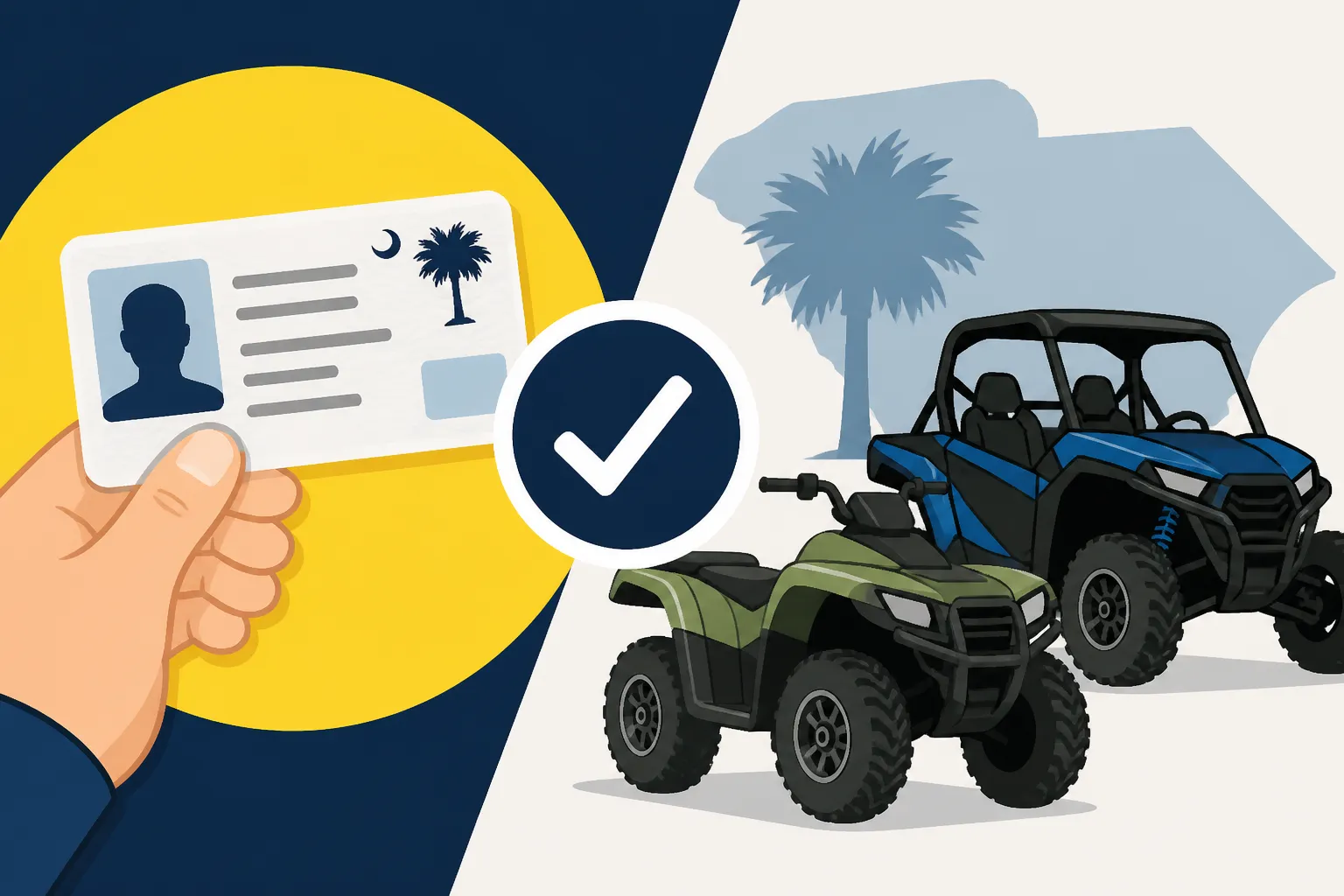
A driver’s license helps an officer or fee-compliance staff member confirm the identity of the person presenting a pass. That can matter because forest passes may be assigned to an individual, tied to a vehicle, or subject to display instructions. A quick identity check helps staff determine whether the pass is being used as intended.
The license is not the pass itself. It does not authorize OHV trail access, prove that a required fee has been paid, or make an invalid pass valid. Think of it as supporting information: the pass shows that you have the required access document, while your identification helps establish who is using it.
A driver’s license also does not establish that a machine is yours. If questions arise about the machine or how it was brought to the trail, you may need other information. The pass, the tow vehicle’s plate details, and any relevant ownership or rental paperwork serve different purposes. See [South Carolina Proof of Ownership on the Trail] for the separate question of what may help show ownership.
South Carolina’s national forest OHV pass requirements apply to designated riding areas, not every place where someone might operate a machine. A state forest pass is separate from a driver’s license, vehicle registration, and a private riding park’s admission rules. For an overview of the forest-pass system, see South Carolina National Forest OHV Passes.
The practical reason to keep your license accessible is simple: if staff ask to see it, you won’t have to search through a packed vehicle or leave the check point to find it. Keep it somewhere secure but easy to reach, such as a wallet or closed console—not loose on a seat where it can fall out.
The pass and the license answer different questions
| Item | What it helps establish | What it does not replace |
|---|---|---|
| Driver’s license or other accepted ID | The identity of the person presenting it | A required forest pass |
| Forest pass | That the applicable pass requirement has been met, subject to its terms | A driver’s license or proof of ownership |
| Tow vehicle plate information | The vehicle associated with a pass when vehicle details matter | The rider’s identity |
| Bill of sale, title, or rental paperwork | Information about ownership or possession when relevant | A forest pass or trail permission |
The key is to bring the items that match your situation. A rider using an individual season pass should be ready to show that pass and identify themselves. A rider using a pass associated with a tow vehicle should also make sure the vehicle details are correct and visible as required.
What to have ready before you reach the trailhead
Check the pass instructions before leaving home. Rules can differ between pass types, and buying a pass is only one part of being prepared. The pass may have instructions about which person it covers, what vehicle information is required, how it must be displayed, and which riding area or dates it applies to.
The basic preparation is:
- Confirm which pass you need. Check the official purchase and recreation information for the area you plan to ride. How to Buy a South Carolina Forest Pass explains the purchase process, while South Carolina’s Day and Season Forest Passes can help you compare the general pass categories.
- Check the pass details. Confirm the dates, rider information, and any vehicle information entered during purchase. Correct mistakes before you arrive, if possible.
- Save or print the pass as instructed. If the pass instructions call for a printed copy or a display in the tow vehicle, follow those directions. Do not assume that a phone screenshot alone will meet the requirement.
- Bring your driver’s license. Keep it available for an identity check. If you do not drive or do not have a driver’s license, check with the official pass provider or forest office about acceptable identification before the trip.
- Know which vehicle the pass relates to. For a pass tied to the tow vehicle, check that the plate information matches the vehicle you brought and that the display requirements are met.
- Keep the purchase confirmation accessible. It can help resolve a question about a purchase, but it may not replace the pass or its required display.
A pass purchase confirmation and the pass itself are not always interchangeable. A confirmation can help demonstrate that you completed a transaction, but the pass instructions control what you must show at the trailhead. If your pass has a printable version, save it before you lose cell service. A paper copy is useful when a phone battery dies, the screen is difficult to read outdoors, or connectivity is poor.
Also check that the date and location fit your plan. A pass for one day is not automatically a season pass, and a pass for one rider should not be assumed to cover everyone in a group. Pass categories and display rules are summarized in South Carolina Passes Are Non-Transferable and South Carolina Day Passes Tied to a Plate.
Keep identification secure and easy to reach
Do not leave your license on a dashboard or hand it over casually if no one has asked to see it. Take it out when needed, keep it in your possession, and put it away after the check. If you carry a phone with digital pass records, protect that too: use a case, keep it charged, and avoid leaving it exposed to mud, rain, or heat.
A printed pass can be easier to present than a phone, but printing does not change who the pass covers or what vehicle it is linked to. Follow the stated display instructions rather than improvising a new format.
What to expect during a fee-compliance check
A check may be a brief look at the pass and the associated vehicle information. Staff may also ask questions to resolve a mismatch, confirm that the pass is being used by the correct person, or clarify which riding area you are visiting. Not every stop will follow the same script, so bring the documents and information that apply to your pass.
A smooth check often follows this sequence:
- Stop where directed. Slow down, follow signs or staff instructions, and keep the machine and tow vehicle in a safe position.
- Present the pass as instructed. Show the printed pass or the approved digital record, and point out its display location if it is already posted in the tow vehicle.
- Show your driver’s license if requested. Make it easy to read, and answer basic questions about the pass without reaching around abruptly or rummaging through equipment.
- Confirm the relevant vehicle details. If the pass depends on the tow vehicle, provide the correct vehicle or plate information and let staff compare it with the pass.
- Resolve any discrepancy calmly. If a name, date, plate, or display detail does not match, explain what happened and show the purchase confirmation or other relevant information.
- Follow the direction given. If the issue cannot be resolved at the trailhead, ask what official office or process can clarify it before continuing to ride.
The most useful approach is to keep your documents organized before you enter a busy staging area. Put the pass and license in predictable places. If you are riding with a group, make sure each person knows which pass is theirs and who is carrying the supporting records. A driver should not have to empty a glove box while other riders wait in the road.
The check is also a chance to catch a problem before it becomes a larger one. If you discover that the pass is for the wrong date, is associated with another tow vehicle, or belongs to someone who is not riding, do not assume the issue will be ignored. Ask the appropriate staff how to correct it. A confirmation receipt may help explain what you bought, but staff can tell you whether it satisfies the requirement.
If your phone or printed pass is unavailable
If your phone has no battery or the pass is missing, tell staff plainly. A saved purchase confirmation, email, or account record may help them locate the transaction, but do not assume they can accept it in place of the required pass. The answer may depend on the pass terms and the staff member’s ability to verify it.
Before you travel, reduce the chance of this problem by saving the pass offline, printing it when appropriate, and carrying the purchase record separately. If a printed copy is required, do not rely only on a phone. If the pass is digital, avoid relying on a single device that may be damaged during the ride.
Common situations that can cause confusion
The pass belongs to another rider
A friend or family member may have bought a pass, but that does not automatically mean it can be shared. Some pass types are assigned to the named rider and cannot be transferred. Check the terms before arranging a group ride. The title South Carolina Passes Are Non-Transferable addresses why one person’s pass may not work for someone else.
If the rider named on the pass is not present, do not assume that another person can use it just because they are in the same group or vehicle. Ask the official provider about the options for a replacement or correction rather than altering the pass yourself.
You changed tow vehicles after buying a pass
A pass associated with a tow vehicle can create a problem if you switch trucks, borrow a vehicle, or arrive in a rental. The machine being ridden and the tow vehicle are not necessarily treated as the same thing for pass purposes. Check the pass conditions and update the vehicle information through the appropriate channel if the rules allow it.
Before departure, compare the plate information on the pass with the actual tow vehicle. South Carolina Annual Passes Displayed in a Tow Vehicle explains the display issue, and South Carolina Day Passes Tied to a Plate covers why a day pass may depend on vehicle details. Do not assume that a pass automatically follows you to a different truck.
You are riding with children or someone without a driver’s license
A driver’s license is useful identification for an adult who has one, but it is not a riding permit or a pass. A young rider may need to meet separate age, supervision, and safety requirements, and a pass may have its own individual terms. Check the requirements for the child and the specific riding area rather than assuming an adult’s identification or pass covers the whole family.
If a rider does not have a driver’s license, ask the official pass provider or forest office what alternative identification they accept for a fee check. Do not assume that a school card, a photo of a parent’s license, or another document will be accepted. The best time to ask is before leaving, when you can still obtain or correct what is needed.
You rented the machine or are visiting from another state
Renting an ATV or UTV does not necessarily include a forest pass. Confirm with the rental provider what is included, what documents you must carry, and whether the pass is associated with the rider or the tow vehicle. Do not confuse rental paperwork with proof that forest access fees have been paid. For a related situation, see [South Carolina Pass for a Rented Machine].
Out-of-state visitors should make the same checks as local riders. A driver’s license from another state can identify you, but it does not replace a South Carolina forest pass or grant access to a trail that is closed. Verify the pass and riding-area requirements before hauling the machine.
The name, plate, or dates do not match
A small error can create a real question at the trailhead. If your pass shows an old plate, has a misspelled name, or appears to cover different dates from your planned ride, do not wait until a check to find out whether it is acceptable. Review the purchase record and use the official process to ask about correction.
Bring any transaction record that may help staff understand the issue. Be clear about what changed and when. Avoid writing on the pass, changing its dates, or making your own copy that looks like an official document. If you cannot confirm that the pass is valid, contact the provider or forest office before riding.
A short checklist before you leave
A few minutes of preparation can save time at the gate and reduce the chance of arriving with a pass that does not fit your plan.
- Confirm the riding area is open and that your machine is allowed there.
- Verify which pass applies to your planned ride.
- Check that the pass covers the right person, date, and vehicle details.
- Follow the instructions for printing or displaying the pass.
- Bring your driver’s license or ask ahead about acceptable ID alternatives.
- Save the purchase confirmation separately from the pass.
- Keep the documents protected from water, mud, and damage.
- Make sure each rider understands whether their pass is individual or shared.
- Check current official instructions if the pass was purchased for a different tow vehicle or rider.
A license check is usually one part of confirming that a pass is being used correctly, not a test of whether you know every trail rule. Stay courteous, provide the requested information, and ask a direct question if something does not match. For a broader look at what can happen at a stop, see South Carolina License Checks at a Fee Compliance Stop.
The most important distinction is easy to remember: your driver’s license identifies you; your forest pass addresses the fee requirement. Carry both when they apply, keep them consistent with the pass instructions, and check official requirements before setting out.
Frequently Asked Questions
Is a driver’s license the same as a South Carolina forest pass?
No. A license identifies you. It does not substitute for a required OHV forest pass or authorize access to a trail.
Does every rider need to show a driver’s license?
Not necessarily. A fee check may involve identification, but a person without a driver’s license should ask the official provider what alternative ID is acceptable. Pass requirements are separate from licensing requirements.
Can I use a family member’s pass?
Do not assume so. Passes may be assigned to a rider or tied to vehicle information, and some are non-transferable. Check the terms for the pass you purchased.
What if my pass information does not match my tow vehicle?
Check the pass instructions and contact the official provider about correcting the information. A receipt may help explain the purchase, but it may not replace the pass or its display requirements.
Disclaimer
This article is for general informational purposes only and does not constitute professional advice. Laws, prices and regulations vary by location and change over time. Consult a qualified professional for guidance on your specific situation.