Why Titling Costs So Little Compared to Registering
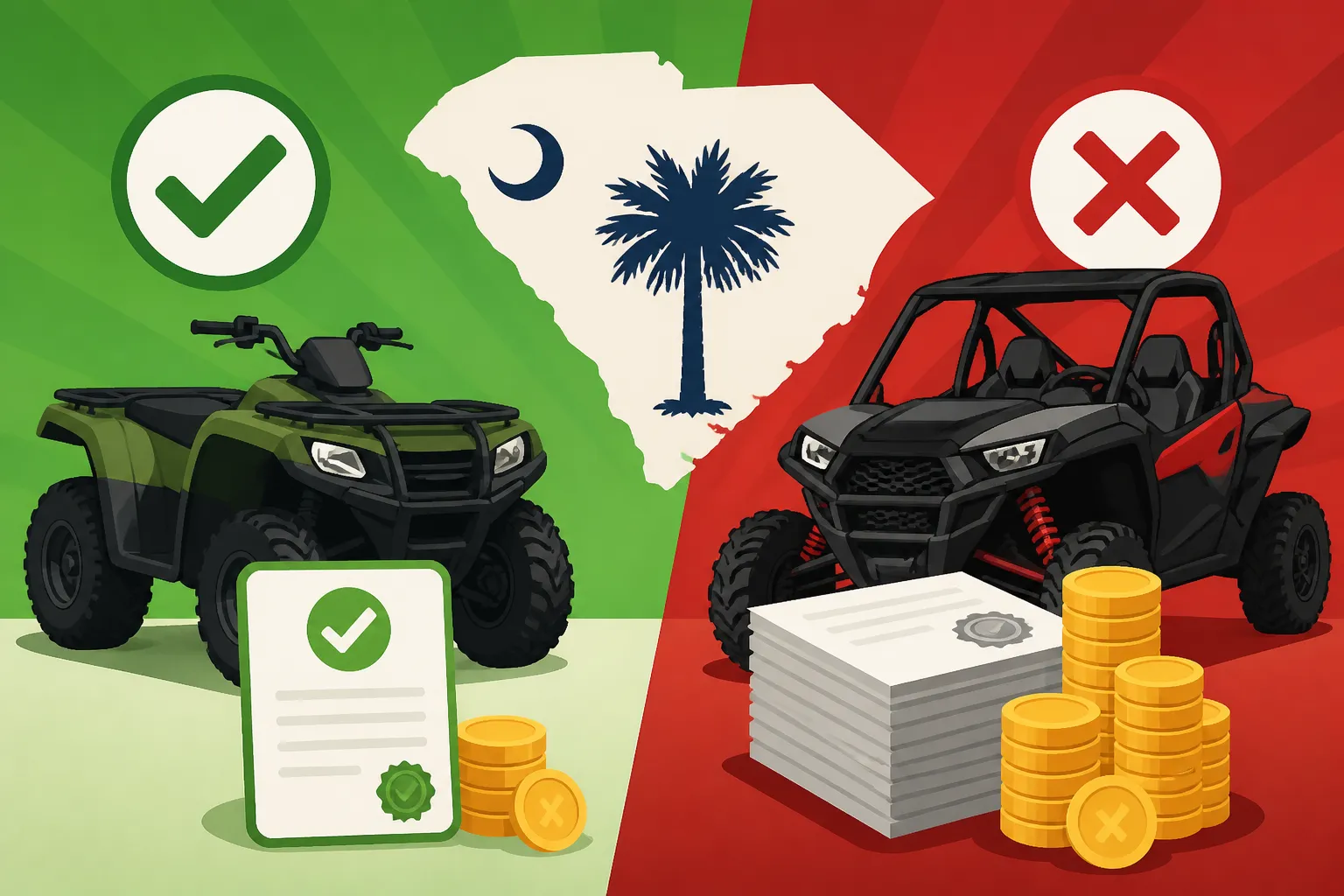
It's a common head-scratcher for anyone diving into the world of ATVs and UTVs here in the Palmetto State: why does getting a title for your beloved machine often feel like such a minor transaction, while registration, if it applies, hits your wallet a little harder and keeps coming back around? This guide is going to clear up that confusion, explaining the fundamental differences in purpose and process that make titling a relatively inexpensive, often one-time affair, while registration for street-legal machines involves more significant and recurring fees.
The Core Difference in Purpose: Ownership vs. Road Access
When you're dealing with official state paperwork for your ATV or UTV, it’s easy to lump all the fees together in your head. But the truth is, the state charges you differently for a title than for registration because these two documents serve entirely distinct purposes. Think of it like buying a house versus paying your utility bills – one is about proving you own the property, the other is about paying for the ongoing services that let you use it.
What a Title Really Does for Your Machine
At its heart, a title is the legal document that proves you are the rightful owner of your all-terrain vehicle or utility terrain vehicle. It's essentially the birth certificate or deed for your machine, establishing a clear chain of ownership from the manufacturer or previous owner to you. In South Carolina, while ATVs don't always require a title for off-road use, it's a mighty powerful document to have. It tracks the machine's legal history, including any liens from lenders, ensuring that when you buy or sell, everyone knows who truly owns it.
Imagine you've just bought a used side-by-side from a private seller in the Upstate. Without a title, how do you truly know that machine belongs to them, or that there aren't any outstanding financial claims against it? The title provides that vital proof. It's a one-time documentation of legal ownership, so the fee associated with it primarily covers the administrative cost of processing that initial paperwork, verifying the details, and issuing that physical document. It's about data entry and document creation, not ongoing services. It protects you from inadvertently purchasing a stolen machine and proves your right to sell it later. This official record means security for your investment, safeguarding against disputes down the line.
What Registration Signifies for the State
Registration, on the other hand, is the state's way of granting permission for your UTV to operate on public roads and ensuring that it complies with specific laws and regulations designed for public safety. It’s not just a piece of paper; it’s an active license to use state infrastructure. Because of this, registration involves ongoing oversight, enforcement, and maintenance of the very roads your machine will be using.
When you register a street-legal UTV, you're not just paying for a sticker; you're contributing to the system that inspects vehicles, maintains roads, and ensures public safety. This is why registration is typically a recurring fee, usually every year or two. It covers the costs associated with issuing and tracking license plates, providing law enforcement with a database to verify legal road use, and funding broader state programs related to transportation and vehicle safety. For example, [South Carolina Street-Legal UTV Registration Arrives] as a new option for many of us, and that means new fees that reflect this new privilege. Unlike the one-time proof of ownership that a title offers, registration is about the continuous privilege of road use and the administrative effort required to manage that privilege across thousands of vehicles.
Breaking Down the Fees – What Each Dollar Pays For
Understanding what your money is actually paying for helps clarify why there’s such a disparity in costs. It’s not just arbitrary; it reflects the nature of the service the state is providing.
The Minimal Cost of Titling a South Carolina Machine
Titling your ATV or UTV in South Carolina is a surprisingly affordable process, usually involving a modest, one-time fee. When you look at [What a South Carolina ATV Title Costs], you'll notice it's a relatively small figure compared to many other vehicle-related expenses. This fee primarily covers the administrative effort of establishing your ownership record.
Think about it: the state isn't regularly inspecting your off-road quad just because it has a title. It's simply recording your name as the rightful owner and noting if there's a lien from a bank. The fee covers the paper, the printing of the official document, and the data entry into the state's vehicle information system. It’s a transaction that happens once, at the point of sale or when you first decide to get the title. If you go to the DMV with all your paperwork in order, the clerk verifies your identity, checks the VIN, processes your [South Carolina Title Applications at the DMV], and prints out a document. There isn't an ongoing infrastructure cost attached to this process, like road maintenance or patrol. It’s a clean, singular exchange for a permanent record of ownership, which is why the cost is so minimal.
Why Registration Fees Are Higher and Recurring
Now, let's talk about registration. When you register a street-legal UTV in South Carolina, the fees are generally higher and, crucially, recurring. This isn't just about a piece of paper; it's about paying for the privilege of using public roads and contributing to the systems that make that possible. The [South Carolina Street UTV Registration Cost] reflects the ongoing administrative burden and the services supported by these fees.
Your registration fee contributes to a whole host of public services. It helps fund the South Carolina Department of Transportation (SCDOT) for road maintenance, signage, and construction. It supports law enforcement efforts to patrol roads, enforce traffic laws, and respond to accidents. There's also the cost of manufacturing and issuing those physical license plates and decals, maintaining the vehicle registration database, and handling renewals. Because these services are ongoing and essential for safe public road use, the state charges a recurring fee, often biennially as seen with [South Carolina's Biennial Street UTV Fee]. Every time you renew, you’re essentially paying for another period of access to these public services and infrastructure. It’s an investment in the system that allows you to drive your UTV legally on designated roads, making it a more comprehensive and, therefore, more expensive undertaking than simply proving ownership.
The Tangible Benefits (and Costs) of Each Document
Both titles and registrations offer distinct advantages, but they also come with their own sets of responsibilities and costs. Understanding these can help you decide what’s best for your machine and riding style.
The Peace of Mind a Title Offers (Even When Optional)
Even though titling an off-road ATV or UTV is often optional in South Carolina, choosing to get one brings significant peace of mind. For one, it makes selling your machine a whole lot easier and safer for both you and the buyer. When a potential buyer asks to see the title, you can provide definitive proof of ownership, which makes them feel more secure in their purchase. This often means you can command a better price too, because serious buyers often won't even consider an untitled machine. Many potential buyers, especially those coming from states where titling is mandatory, will flat-out refuse to buy a quad without a title. [Why a Buyer Wants a Title in Hand] is a real concern in today's market, and having that title smooths the entire process.
Moreover, if you ever plan to finance your machine, nearly all lenders, whether it’s a big bank or a local credit union, will require a title. They need to be able to record their lien on the title to protect their investment. Without it, you might find that [Lenders That Will Not Finance an Untitled Quad] are plentiful. Even for insurance, while not strictly required for off-road machines, having a title can simplify claims processes and prove your insurable interest. While LawDepot can help you create a robust bill of sale for private transactions, a state-issued title is the ultimate proof of ownership. This document, while inexpensive to obtain, provides a layer of legal protection and financial flexibility that can be invaluable over the lifespan of your machine. It’s a fundamental safeguard, especially important if you ever find yourself in a situation like [Selling a Machine Without a Title in South Carolina].
The Privileges and Responsibilities of Registration
For street-legal UTVs, registration isn't optional; it's a gateway to new riding opportunities but also comes with significant responsibilities. The primary privilege is the legal ability to operate your UTV on designated public roads. This freedom opens up new routes for hunting, exploring, or simply getting around your local community, especially with [South Carolina Street UTV Rules From November 2026] making it possible. However, this privilege comes with a set of mandatory requirements.
First and foremost, you must carry proof of registration, and your UTV must display a physical license plate – [The Rear Plate a Street-Legal UTV Must Carry] – visible to law enforcement. Along with registration, you'll need to meet specific insurance requirements. [South Carolina Insurance Proof at Registration] is a non-negotiable step to get your plate. These ongoing costs and compliance checks ensure that registered vehicles are safe for public roads and that accident victims are covered. Failure to maintain current registration or insurance can lead to hefty fines and even impoundment of your machine. So, while registration provides exciting new avenues for riding, it demands consistent adherence to state regulations and recurring financial commitments to uphold your legal road status.
Practical Considerations for South Carolina Riders
Navigating the paperwork for your ATV or UTV in South Carolina can feel like a maze, especially with the different rules for off-road versus street-legal machines. Knowing when a title is beneficial and when registration is mandatory is key.
Navigating Optional Titling for Off-Road Machines
For most traditional off-road ATVs and side-by-sides in South Carolina that will never touch a public road, titling is actually optional. This means you don't have to get one just to ride on private land or designated off-road trails. You might initially think, "Great, one less thing to pay for!" But while [South Carolina Titles Are Optional], it doesn't mean it's not a good idea. Many riders still choose to title their machines for the very reasons we discussed earlier: establishing clear proof of ownership, making future sales easier, and providing necessary documentation for financing or insurance.
Let's say you're considering buying a new trail quad. The dealer will likely handle the titling process automatically, and it’s a smooth, low-cost addition to your purchase. If you’re buying used from a private party and the machine doesn't have a title (which is common for older, strictly off-road models), you still have options. You can use a comprehensive bill of sale, perhaps one created using a service like LawDepot, to establish ownership. However, remember that having that official state title makes a world of difference if the machine is ever stolen or if you need to prove ownership in a legal dispute. Even if it's technically [A South Carolina Title You Do Not Have to Get], the small investment can save you significant headaches down the road.
Mandatory Registration for Street-Legal UTVs
This is where the game changes entirely. Thanks to recent legislation, street-legal UTVs in South Carolina now have a clear path to registration, but it's a non-negotiable requirement for road use. The passage of [South Carolina Act 164 and Street UTVs] has opened up secondary roads, but only for properly registered and equipped machines. If you intend to drive your UTV on public streets, even just a short distance from your house to a neighbor’s, it must be registered with the DMV.
This means more than just filling out a form. Your UTV needs to meet specific equipment requirements (think turn signals, brake lights, mirrors, seatbelts), and you'll need to present proof of liability insurance. After the initial registration, you'll be responsible for renewing it every two years and paying the associated biennial fee. This mandatory aspect reflects the state's responsibility to ensure the safety of all vehicles on public roads. It's a privilege that comes with ongoing compliance and costs, significantly different from the optional, one-time titling process for off-road machines. So, if you're dreaming of cruising your UTV down a country road, prepare for the mandatory registration, insurance, and the recurring fees that come with it.
Disclaimer
This article is for general informational purposes only and does not constitute professional advice. Laws, prices and regulations vary by location and change over time. Consult a qualified professional for guidance on your specific situation.