The Rear Plate a Street-Legal UTV Must Carry
For years, UTV owners in South Carolina have longed for the freedom to take their machines beyond private land and off-road trails, encountering frustrating legal roadblocks at every turn. That barrier has finally lifted for many, but navigating the new world of street-legal UTVs comes with its own set of responsibilities. This comprehensive guide will illuminate exactly what's required for your street-legal UTV, with a keen focus on the all-important rear license plate you'll need to display to ride legally on public roads.
Understanding South Carolina's Street-Legal UTV Laws
The landscape for UTV enthusiasts in South Carolina has dramatically changed, bringing with it both excitement and a need for clear understanding. No longer are all UTVs relegated strictly to off-road environments; a new category of "street-legal" machines can now share certain public roads, provided they meet specific criteria and, crucially, display a rear license plate. This shift represents a significant victory for many riders who’ve always wished for more versatility from their side-by-sides.
The Legislative Shift: Why Plates Are Now a Reality
The journey to street-legal UTVs has been a long one, marked by tireless advocacy from rider communities and a growing recognition by state lawmakers of the machines' recreational and utilitarian potential. Historically, UTVs were lumped in with ATVs under off-road vehicle classifications, meaning they were generally prohibited from public roads. This created a real headache for owners who lived just a few miles from a trailhead or needed to cross a road to access their property. You know the drill – loading up the trailer just for a short hop, or risking a ticket.
The recent legislative change, often referred to as [An Act Signed in May 2026], created a distinct legal classification for UTVs that allows them to be registered for on-road use. This wasn't a minor tweak; it was a fundamental redefinition that finally acknowledged UTVs as something separate from traditional ATVs, with different safety features and operational capabilities. This act paved the way for the South Carolina Department of Motor Vehicles (DMV) to begin issuing specific registration and titling for these machines, culminating in the requirement for a physical license plate.
This new framework brings South Carolina more in line with other states that have successfully integrated UTVs into their road networks. It's about providing options and easing the burden on owners, allowing them to fully enjoy their machines without constant concern over legality when transitioning between trailheads or moving through rural areas. This isn't a free-for-all, however; the new rules come with specific stipulations to ensure safety and order on the roads.
Defining a Street-Legal UTV in the Palmetto State
Before you even think about applying for that rear plate, it’s critical to understand what exactly qualifies as a "street-legal UTV" under South Carolina law. This isn't just any side-by-side you picked up for the trails; it needs to meet a specific set of equipment and dimensional requirements to be eligible for on-road registration. Ignoring these definitions could lead to a denied application or, worse, a citation if you hit the pavement in a non-compliant machine.
For instance, the law specifies limits on width, weight, and engine size. Your UTV must generally be no more than 80 inches wide and weigh no more than 4,000 pounds. While many popular models naturally fall within these parameters, it's always wise to double-check your machine's specifications against the latest DMV guidelines. Beyond size, a street-legal UTV must also have certain safety features that are standard on other road-going vehicles.
These mandatory safety features include headlamps, tail lamps, stop lamps, turn signals, a horn, a rearview mirror, and seatbelts for all designated seating positions. Your machine also needs a working braking system and a windshield. Essentially, the state wants to ensure that if you're going to share the road with cars and trucks, your UTV has the fundamental equipment to operate safely and communicate its intentions to other drivers. This is all part of [South Carolina Street UTV Requirements Explained], a crucial document to review before starting the registration process.
The Specifics of the Rear Plate Requirement
The visible symbol of your UTV's newfound road legality is that distinctive rear plate. It’s more than just a piece of metal; it’s proof that your machine has gone through the proper channels, met the state’s requirements, and is authorized for use on designated public roads. Understanding how to obtain this plate and what it represents is key to a smooth transition to street-legal riding.
Where the Plate Comes From: Your DMV Application
Obtaining your rear plate starts at the South Carolina Department of Motor Vehicles. This isn’t an automatic process that happens when you buy a new UTV, even if the dealer tells you it's "street-ready." You, as the owner, are responsible for initiating the registration process. This involves submitting specific paperwork and demonstrating that your UTV meets all the criteria. Think of it like registering a car; it's a dedicated process that requires attention to detail.
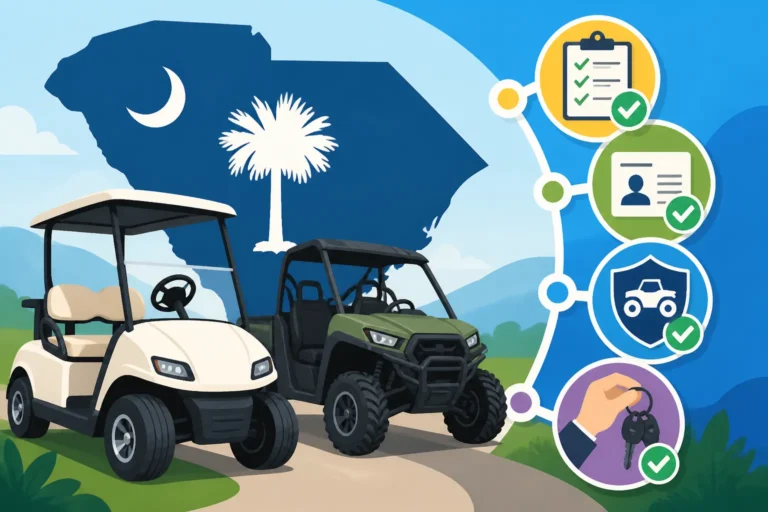
You'll need a title for your UTV, proof of ownership (like a bill of sale or Manufacturer's Certificate of Origin for new machines), and proof of identity. Additionally, you’ll need to provide documentation that verifies your machine meets the street-legal equipment requirements. Sometimes, this might involve an inspection, or simply signing an affidavit attesting to the presence of all required safety features. The DMV wants to ensure that every box is ticked before they issue that plate. You can find detailed steps in [South Carolina Street UTV Registration Steps].
Once your application is approved and fees are paid, the DMV will issue your unique license plate. This plate is specifically for your street-legal UTV and will identify it as such to law enforcement. It's a clear signal to everyone on the road that your UTV isn't just a trail machine; it's a legitimate, registered vehicle. If you're buying a used UTV and converting it to street-legal status, make sure you get a proper bill of sale. Resources like LawDepot can provide templates for a legally sound bill of sale, ensuring you have the necessary documentation for the DMV.
What the Rear Plate Looks Like and Signifies
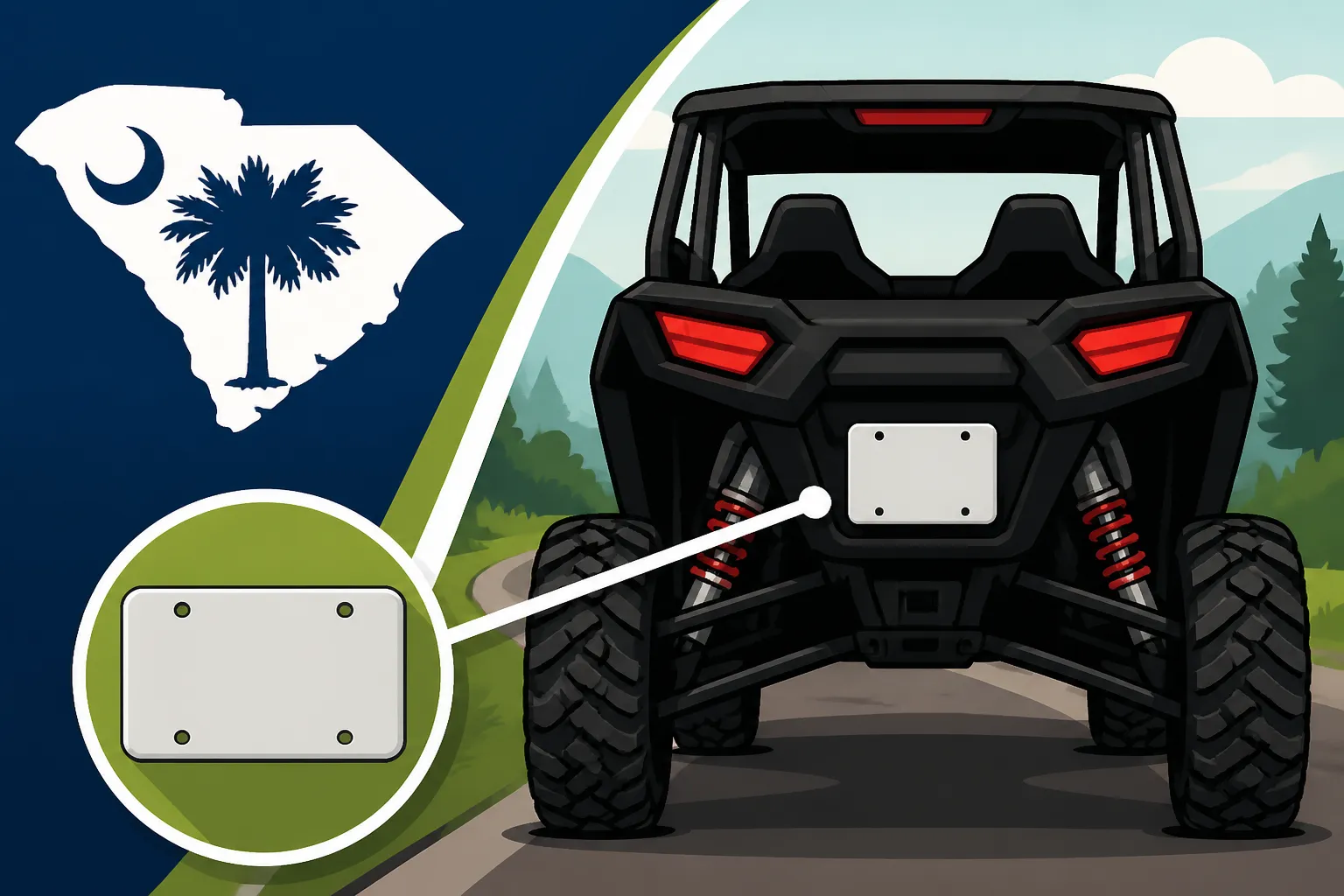
The rear plate for your street-legal UTV in South Carolina is designed to be easily recognizable as a standard motor vehicle plate, although it may have a specific identifier or design for this new vehicle class. It will feature the state name, a unique combination of letters and numbers assigned to your UTV, and potentially an expiration sticker. This isn't some temporary tag or a small sticker; it's a full-sized license plate, just like those on cars and trucks. [South Carolina Rear Plates for Street UTVs] clarifies this distinction.
The primary significance of this plate is legal authorization. It signifies that your UTV has been properly registered and that you've paid the necessary [South Carolina's Biennial Street UTV Fee]. Without it, even if your UTV is technically equipped for road use, you are operating an unregistered vehicle on public roads, which can lead to fines and penalties. It’s your official permission slip to join the flow of traffic on approved roads.
Beyond legal compliance, the plate also brings a measure of legitimacy to the UTV community. It shows that UTVs are being taken seriously as a mode of transport and recreation, and that owners are willing to adhere to established road rules. This helps in fostering a more positive public perception of UTVs and their riders, moving away from the stereotype of purely off-road, unregulated use. It means you can drive to the local store, visit a neighbor a few miles down the road, or access another section of trail without breaking the law.
Proper Display and Maintenance of Your Plate
Getting the plate is only half the battle; correctly displaying and maintaining it ensures you remain compliant with South Carolina law. An improperly mounted, obscured, or damaged plate can be just as problematic as not having one at all, potentially leading to unnecessary stops or citations from law enforcement.
Mounting Your Plate for Maximum Visibility and Compliance
South Carolina law, like most states, is very specific about how a license plate must be displayed. For your street-legal UTV, the plate must be securely fastened to the rear of the vehicle, clearly visible from the back. This means no mounting it inside the cab, under a fender where mud can obscure it, or in any location where it's not immediately obvious to someone following behind you or a law enforcement officer.
Often, UTVs don't come from the factory with a dedicated license plate bracket. You'll likely need to purchase an aftermarket bracket or fabricate one yourself to ensure it's mounted correctly. It should be illuminated at night, meaning you'll need a working license plate light that comes on with your headlights. This is a critical detail that many UTV owners overlook, but it’s a standard requirement for all road-going vehicles. Failing to illuminate your plate at night is an easy way to attract unwanted attention from a deputy.
Consider the vibrations and jostling your UTV experiences, especially if you occasionally take it off-road even after making it street-legal. Use sturdy hardware and lock washers to prevent the plate from rattling loose or falling off. A lost plate is a major inconvenience and can temporarily suspend your ability to legally use your UTV on roads. Investing a little time in a robust mounting solution upfront will save you headaches down the line.
Keeping Your Plate Clean and Legible on Carolina Roads
South Carolina’s diverse terrain, from sandy beaches to muddy trails, means your UTV is likely to encounter dust, dirt, and mud. While trail riding is part of the fun, it’s imperative that your rear license plate remains clean and legible at all times when operating on public roads. An obscured plate, even accidentally, can still result in a stop and a potential ticket.
Make it a habit to check your plate before heading out on any public road. After a day of tearing up the trails, your UTV, and especially its rear, might be caked in mud. A quick spray with a hose or a wipe-down with a rag can prevent issues. This isn't just about avoiding a ticket; it's also about ensuring other drivers can clearly see your registration, promoting overall road safety. Imagine trying to identify a hit-and-run vehicle if the plate is unreadable.
Beyond mud and dirt, consider the elements. Rust and corrosion can degrade the plate over time, making it hard to read. While this might take years, especially with modern plates, it's something to keep in mind, particularly if your UTV is frequently exposed to salty air near the coast or harsh weather. If your plate ever becomes unreadable due to damage or wear, you'll need to apply for a replacement at the DMV, following procedures similar to initial registration. Maintaining your plate's integrity is a small but important part of responsible UTV ownership.
Beyond the Plate: Other Registration Essentials
While the rear plate is the most visible sign of your UTV’s street-legal status, it's merely one component of a larger compliance package. To truly operate legally and responsibly on South Carolina roads, you’ll need to ensure you meet other critical requirements, particularly concerning insurance and understanding the ongoing costs.
Proof of Insurance: A Non-Negotiable Requirement
Just like any other motor vehicle operating on South Carolina’s public roads, your street-legal UTV must carry valid liability insurance. This isn't optional; it's a mandatory requirement to protect yourself and others in the event of an accident. The state mandates minimum coverage amounts, typically known as 25/50/25, which cover bodily injury and property damage. Without this insurance, your UTV cannot be registered for street use, and you certainly shouldn't be driving it on any public thoroughfare.
When you go to register your UTV at the DMV, they will require proof of this insurance. This usually comes in the form of an insurance card or a declaration page from your insurer. Make sure your policy specifically covers your UTV for on-road use, as some off-road policies might have limitations. It's a good idea to discuss this directly with your insurance agent to ensure you have the correct coverage for its street-legal status. [South Carolina Insurance Proof at Registration] is a crucial step in this process.
Carrying proof of insurance with you while riding your UTV on the road is also essential. If you are stopped by law enforcement, they will ask for this documentation, just as they would if you were driving a car. Failure to provide proof of insurance can lead to fines, suspension of your driving privileges, and even impoundment of your vehicle. This is one area where there’s no room for shortcuts; ensure you’re adequately covered.
Fees and Renewals: Budgeting for Your Street UTV
Getting your UTV registered for street use involves more than just a one-time fee; it includes ongoing costs you need to factor into your budget. The initial registration and titling fees are relatively modest, but you'll also have a recurring fee to keep your street-legal status current. These fees contribute to the state’s infrastructure and administrative costs, similar to car registrations.
For street-legal UTVs, South Carolina requires a [Renewing a Street UTV Plate for $10] fee, which is typically paid biennially. This means you’ll renew your registration and pay this fee every two years. It's easy to forget about these recurring costs, especially if you're new to the world of registered vehicles. The DMV usually sends out renewal notices, but it's ultimately your responsibility to ensure your registration doesn't lapse.
Beyond the registration fees, don't forget the cost of your insurance policy, which is a significant annual expense. The premium can vary widely based on your UTV's value, your driving record, and the coverage limits you choose. Also, consider the cost of potential inspections or any modifications needed to meet initial street-legal requirements. While the overall costs are generally lower than a full-size vehicle, they are important to acknowledge when planning your UTV adventures. Here’s a quick overview of some costs:
| Item | Frequency | Description |
|---|---|---|
| Initial Title Fee | One-time | Required to get your UTV titled in South Carolina |
| Initial Registration Fee | One-time | For the first street-legal UTV plate and associated paperwork |
| Biennial Registration Fee | Every 2 years | To renew your street-legal UTV registration and plate |
| Insurance Premium | Annually | Mandatory liability coverage for on-road use |
| Replacement Plate Fee | As needed | If your plate is lost, stolen, or damaged beyond legibility |
Common Questions and Misconceptions About Street UTV Plates
The transition to street-legal UTVs is still relatively new in South Carolina, leading to a natural swirl of questions and occasional misunderstandings among riders. It’s important to address these directly to ensure everyone can enjoy their machines legally and without confusion.
Can I Use an Out-of-State Plate?
This is a very common question, especially for those who travel frequently or have recently moved to South Carolina. If you are a permanent resident of South Carolina, your street-legal UTV must be registered in South Carolina and display a South Carolina-issued plate. You cannot indefinitely use a plate from another state once you establish residency here. The same rules apply as for any other motor vehicle you own.
However, if you are a visitor to South Carolina and your UTV is legally registered as street-legal in your home state, you can generally ride it here under the principle of reciprocity. This means South Carolina honors the registration from your state, assuming your home state's laws are comparable and your vehicle meets their requirements. Always carry your out-of-state registration and proof of insurance, as well as your driver's license. If you're staying for an extended period, it's always wise to check the latest DMV guidelines or contact them directly, as rules can sometimes have time limits for out-of-state vehicles.
The key distinction lies in residency. If South Carolina is your primary home, your UTV needs a South Carolina plate. If you’re just visiting, and your UTV is legally plated elsewhere, you're usually good to go for typical visitor durations. Just make sure your home state's street-legal UTV definition aligns with what South Carolina expects for road use.
What Happens If My Plate is Lost or Stolen?
Losing your license plate or having it stolen is a frustrating experience, but it's crucial to handle it promptly and correctly. First and foremost, if your plate is stolen, you should immediately report it to local law enforcement. This creates a police report, which is important for your records and helps prevent fraudulent use of your plate number.
After reporting it, your next step is to apply for a replacement plate at the South Carolina DMV. You'll typically need to fill out an application form, pay a replacement fee, and possibly provide a copy of your police report if the plate was stolen. Operating your street-legal UTV on public roads without a plate, even if it's lost or stolen, is still against the law. You’ll need to secure a temporary tag or wait for your new plate to arrive before using it on public thoroughfares again.
It's a good idea to keep copies of all your UTV documentation – title, registration, and insurance – in a safe place, separate from your UTV itself. This makes it easier to replace items like a lost or stolen plate. For critical documents like bills of sale or proof of ownership, a service like LawDepot can help you generate and safely store legal forms, ensuring you always have access to accurate records when dealing with the DMV. Timely action will get you back on the road with minimal disruption.
Road Rules and Responsibilities for Plated UTVs
Having a license plate doesn’t grant you unrestricted access to all public roads. South Carolina has specific rules dictating where and how street-legal UTVs can operate. Understanding these limitations and your responsibilities is paramount to safe and legal riding, and to maintaining the privilege of street-legal status for the entire UTV community.
Where You Can and Cannot Ride Your Plated UTV
While your street-legal UTV now sports a shiny rear plate, it’s vital to know that you can’t simply drive it anywhere a car can go. South Carolina law generally restricts street-legal UTVs to roads with a posted speed limit of 55 mph or less. This means interstates and major highways are typically off-limits. This restriction is in place for safety, as UTVs are not designed for high-speed highway travel and may struggle to keep up with faster traffic, creating dangerous situations.
The law also allows local municipalities to impose additional restrictions or designate specific routes for UTVs. This means that while state law permits UTVs on certain roads, a city or county ordinance might further limit their use within their jurisdiction. Always be aware of local signage and check local ordinances if you plan to ride your UTV through a specific town. For example, some beach towns might have specific rules for golf carts and UTVs near coastal areas.
On the flip side, having a plate means you can now legally use your UTV on many secondary roads, county roads, and rural routes. This is a huge benefit for accessing trails, commuting short distances, or simply enjoying a scenic drive through the countryside. It opens up a whole new world of exploration that was previously off-limits. Just remember to always observe posted speed limits, traffic laws, and specific [South Carolina Street UTV Road Speed Limits].
Operating Your Street-Legal UTV Responsibly
With the privilege of street-legal status comes the responsibility to operate your UTV just as you would any other vehicle on the road. This means adhering to all traffic laws, including stop signs, traffic lights, and right-of-way rules. It also means operating your UTV safely and courteously, sharing the road with other motorists, cyclists, and pedestrians.
One critical aspect of responsible operation involves driver licensing. The driver of a street-legal UTV on public roads must possess a valid South Carolina driver’s license. A beginner’s permit is generally not sufficient. Furthermore, for riders under 21, [South Carolina Street UTV Helmet Rules Under 21] may apply, emphasizing the state's commitment to safety, especially for younger drivers. This means if you're 17, for example, and driving your plated UTV, you must have a full license and adhere to any helmet rules that may apply based on your age.
Beyond the legalities, consider the practical aspects. UTVs handle differently than cars, especially at road speeds. Be mindful of their center of gravity, braking distances, and cornering capabilities. Avoid distractions, never operate your UTV under the influence of alcohol or drugs, and ensure all passengers are properly restrained with seatbelts. Your actions reflect on the entire UTV community, and responsible riding helps ensure these new privileges aren't jeopardized.
Enhancing Your Street-Legal UTV Experience
Making your UTV street-legal opens up a world of possibilities, but maximizing that experience means thinking beyond just the plate. It involves ensuring your machine is truly ready for road duty, understanding additional accessories, and connecting with the broader riding community.
Essential Accessories and Upgrades for Road Use
While your UTV might technically meet the minimum requirements for street legality, certain accessories and upgrades can significantly enhance both safety and convenience on public roads. One often-overlooked item is proper mirrors. Beyond the single rearview mirror typically required, side mirrors can dramatically improve visibility, allowing you to see traffic to your sides and blind spots.
Tires are another critical consideration. Many aggressive off-road tires are not ideal for pavement, wearing quickly and potentially compromising handling. Investing in a set of tires designed for mixed-use or street-specific performance can improve ride quality, extend tire life, and enhance safety on asphalt. Think about your typical riding environment; if you're spending more time on pavement, a less aggressive tread pattern might be a smart choice.
Consider a full windshield to protect against road debris and weather, even if your UTV originally came with only a half windshield or none at all. Wipers are another feature common on street-legal conversions that greatly improve visibility in rain. Additionally, for nighttime driving, consider auxiliary lighting for improved visibility of the road ahead, as factory headlights on some UTVs might be adequate for trails but less so for poorly lit roads.
Community and Resources for South Carolina Street UTV Owners
Becoming a street-legal UTV owner means joining a growing community of riders who share your passion for adventure and versatility. Connecting with local UTV clubs or online forums can be an invaluable resource. These communities often share local riding spots, discuss effective modifications, and provide advice on navigating specific local regulations.
Many clubs organize group rides that include both street and trail sections, giving you the perfect opportunity to utilize your newly plated machine. You can learn about lesser-known secondary roads that connect to popular trailheads, or discover local events where UTVs are welcomed. These groups are also excellent for staying up-to-date on any future legislative changes or new riding opportunities that might arise in South Carolina.
Beyond fellow riders, don't forget to leverage official resources. The South Carolina DMV website is your primary source for the most current laws, forms, and fees related to UTV registration. For legal questions regarding sales or ownership transfers, especially for used machines, online legal document services like LawDepot can provide helpful forms such as bills of sale, powers of attorney, or even agreements for co-ownership, ensuring all your UTV transactions are legally sound and properly documented for the DMV.
Disclaimer
This article is for general informational purposes only and does not constitute professional advice. Laws, prices and regulations vary by location and change over time. Consult a qualified professional for guidance on your specific situation.