Questions Worth Asking a Dealer Before You Sign
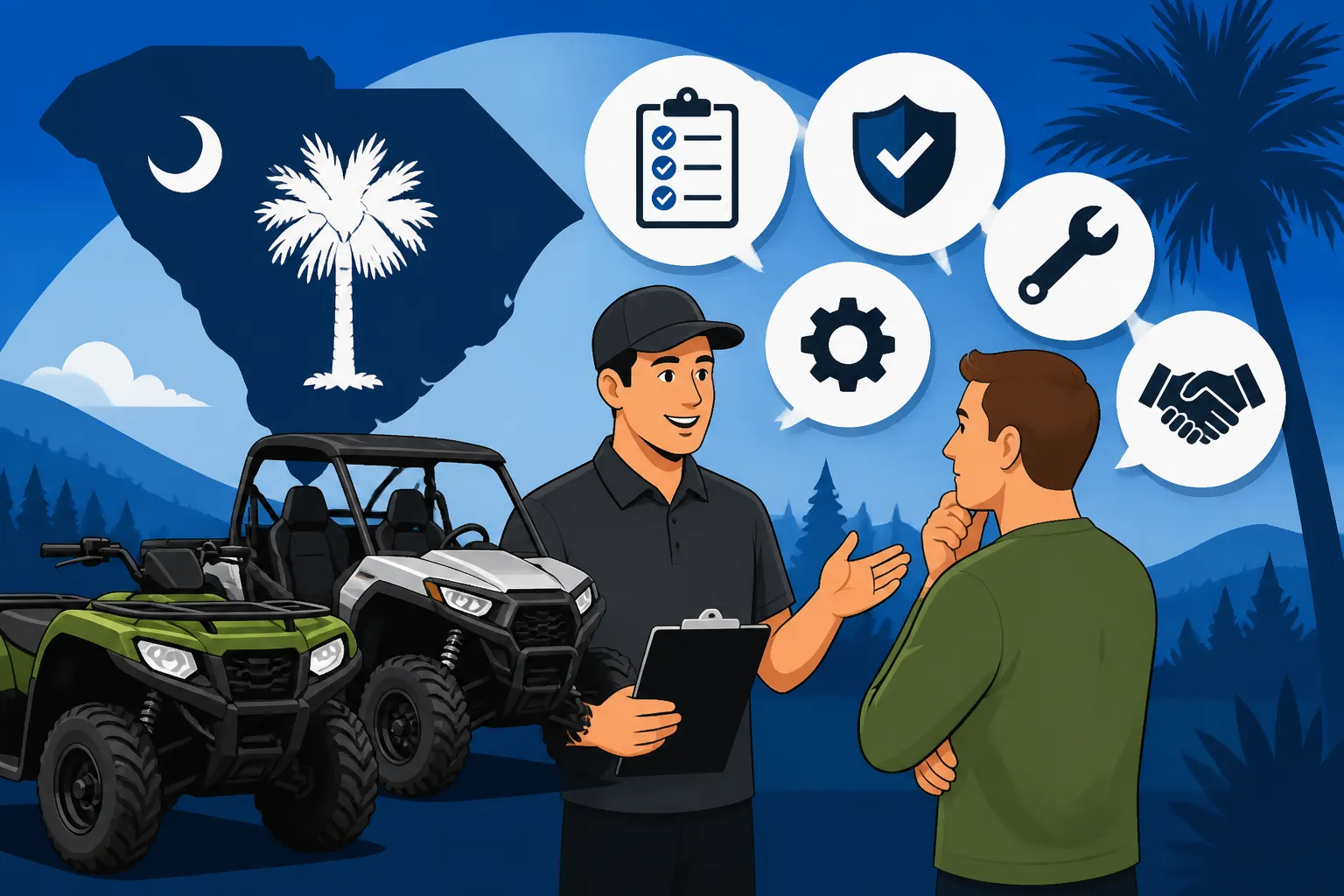
Walking into an ATV or UTV dealership in South Carolina can feel like stepping into a whirlwind. The shiny new machines beckon, the financing offers are flashing, and there's often a friendly, yet firm, salesperson ready to guide you. It's easy to get swept up in the excitement and sign on the dotted line without fully understanding every single detail. That's why being prepared with a list of smart questions is your best defense against buyer's remorse, and this guide is here to equip you with exactly what you need to ask before you commit.
Beyond the Sticker Price: Understanding All the Costs
That attractive price tag on the ATV or UTV is rarely the final amount you'll pay. Dealerships often have a host of additional fees that can add hundreds, if not thousands, to your total. It's not about being suspicious, it's about being informed. Knowing what to ask for upfront ensures there are no unpleasant surprises when you see the final purchase agreement.
Freight and Setup Fees
Many dealers will add "freight" or "shipping" charges, which cover the cost of getting the machine from the manufacturer to their lot. Then there are "setup" or "assembly" fees, which account for uncrating the machine, attaching wheels, handlebars, or any other necessary components, and performing a pre-delivery inspection. These aren't always itemized clearly, and they can vary significantly from one dealer to another.
A common scenario might be that you fall in love with a new side-by-side that's advertised at a great price, only to find that an additional $800 for freight and $400 for setup are suddenly added to the bill. Don't assume these are fixed costs. While dealers do incur these expenses, it never hurts to ask for a breakdown or if there's any flexibility. Sometimes, especially with end-of-model-year sales or during slower seasons, a dealer might be more willing to negotiate on these charges to close a deal. Always ask for a full itemized list of every single fee beyond the advertised price.
Dealer Documentary Fees
Ah, the "doc fee." This one is notorious across all vehicle sales, and ATVs and UTVs are no exception. The dealer documentary fee is supposedly for the cost of processing paperwork related to the sale, such as preparing the bill of sale, filing title applications, and other administrative tasks. The frustrating part is that these fees are often non-negotiable and can be quite substantial.
In South Carolina, while doc fees exist, their amounts can vary widely. There isn't a strict statewide cap on how much a dealer can charge, though some states do have limits. It's crucial to ask directly, "What is your dealer documentary fee, and what exactly does it cover?" While you might not be able to get it removed, knowing the amount allows you to factor it into your overall budget. Don't let it be a shock at the financing table. This is also a good time to ask about [South Carolina Dealer Fees to Expect] so you can compare.
Sales Tax and Other State Fees
Beyond the dealer's own charges, you'll need to account for South Carolina's sales tax and other state-mandated fees. This is where it gets a little interesting for powersports vehicles in our beautiful state. South Carolina has a maximum sales tax cap on vehicles, which includes ATVs, UTVs, dirt bikes, and even golf carts. This means you won't pay the full 5% sales tax on the entire purchase price if the machine costs over a certain amount. Instead, the sales tax is capped.
You'll definitely want to ask your dealer to explain how this [South Carolina's Max Tax Cap on ATVs] applies to your specific purchase. For example, if you're buying a high-end side-by-side, this cap can save you a significant amount compared to paying 5% on the full price. Additionally, there's usually a small fee for the title application itself, often around $15, which the dealer will likely collect and submit on your behalf. Don't forget to inquire about any other potential state fees, especially if you're registering a street-legal UTV, which will have its own set of costs.
Unpacking the Paperwork: Titles, Registrations, and More
The pile of documents you'll sign at a dealership can be daunting. It's more than just an invoice; it includes critical legal documents that establish your ownership and, if applicable, allow you to legally operate your machine. Taking the time to understand each piece of paperwork is vital.
Titling and Registration Assistance
For new machines, the dealer typically handles the initial titling process with the South Carolina Department of Motor Vehicles (SCDMV). This is a huge convenience, as navigating the DMV can be a hassle. However, it's important to clarify what exactly they will do and what your responsibilities will be. Ask, "Will you handle the full titling process for my new ATV/UTV, or are there steps I need to complete myself?"
For example, for an off-road ATV in South Carolina, titling is optional. However, it's a very good idea to get one for proof of ownership and to protect your investment. You'll want to know if the dealer will file for that optional title or if you'll need to visit the SCDMV yourself. If you're purchasing a street-legal UTV, registration becomes mandatory, and the dealer's role in securing your license plate is even more critical. Confirm their timeline for submitting paperwork – you don't want to wait weeks just to get on the trails or the roads. [South Carolina Title Applications at the DMV] can take time, so understanding the dealer's process is key.
Manufacturer's Certificate of Origin (MCO)
The Manufacturer's Certificate of Origin, or MCO (sometimes called an MSO for Manufacturer's Statement of Origin), is like the birth certificate for your new ATV or UTV. It's the document that proves the machine came from the factory and establishes the first owner in the chain of title. When you buy a new machine, the MCO is assigned to you by the dealer, and it's absolutely essential for obtaining a title in your name.
You should always ask to see the MCO and confirm that it will be properly assigned to you as part of the sale. Without a correctly assigned MCO, you won't be able to get a title, which can cause major headaches down the road, especially if you ever decide to sell the machine or need to prove ownership for insurance purposes. Make sure you understand the process for receiving it, whether it's mailed to you directly from the dealer or submitted with your title application to the DMV. [South Carolina Requires an MCO for a New Machine] and it's something you simply cannot overlook.
Bill of Sale and Other Purchase Agreements
The bill of sale is your official receipt and a legal document detailing the transaction. It should clearly list the buyer, the seller (the dealership), the machine's make, model, VIN, purchase price, and any trade-in value or additional fees. Don't just glance at it; read it carefully before you sign.
Ask the dealer to walk you through the entire purchase agreement. Verify that all prices, fees, and the total amount match what you discussed. If you're trading in an old machine, ensure its value is accurately reflected. This document is your proof of purchase and can be invaluable if any disputes arise later. For those who like to be extra prepared, understanding the structure of legal documents can be empowering. While the dealer provides their own contracts, reviewing templates from a service like LawDepot for a general bill of sale or purchase agreement can give you a better sense of what to look for and what terms should be covered.
Protecting Your Investment: Warranty, Service, and Insurance
An ATV or UTV is a significant investment, and like any vehicle, it requires ongoing care and protection. Don't assume everything is covered or that service will be readily available. Asking about these aspects upfront can save you considerable stress and expense later on.
Warranty Coverage and Extended Options
Every new ATV or UTV comes with a manufacturer's warranty, but the duration and what it covers can vary. It's crucial to understand the standard warranty: How long does it last (e.g., 6 months, 1 year)? What components are covered (e.g., engine, transmission, electrical)? What voids the warranty (e.g., unauthorized modifications, lack of maintenance)?
Beyond the standard warranty, dealers often offer extended service plans or warranties. These can provide coverage for a longer period or include more components, but they come at an additional cost. Ask for a clear explanation of both the manufacturer's warranty and any extended options. "What exactly does the manufacturer's warranty cover, and for how long? Can you provide me with details on your extended warranty options, including price and exclusions?" Sometimes these extended plans are a good idea, especially if you plan to keep the machine for many years or put it through heavy use, but make sure you fully understand what you're buying.
Service Department Capabilities
It's one thing to buy a machine; it's another to have it properly maintained and repaired. The dealership's service department will likely be your go-to for routine maintenance, warranty work, and repairs. Before you commit, inquire about their service capabilities.
Ask: "Do you have a dedicated service department for ATVs and UTVs? What are your typical lead times for scheduling service appointments? Do you stock common parts for this brand and model, or will I face long waits for ordering?" You might also ask about their technicians' certifications and experience with the specific brand you're buying. Some dealerships might specialize in certain brands or types of machines. Knowing their capacity can be critical, especially during peak riding seasons when service bays can get backed up. A dealer with a reliable service department can be a huge asset, ensuring your machine stays in top condition and minimizing your downtime.
Insurance Requirements and Recommendations
While off-road ATVs in South Carolina don't typically require liability insurance, it's a different story for street-legal UTVs. If you're buying a UTV that you intend to register for road use, liability insurance will be mandatory. Even for off-road machines, insurance is a smart move. Your homeowner's policy might offer limited coverage, but dedicated ATV/UTV insurance provides much more comprehensive protection against theft, damage, and liability if you're involved in an accident.
Ask your dealer: "What are the insurance requirements for this machine, particularly if I plan to make it street-legal? Do you have any recommendations for insurance providers or typical coverage costs for similar machines?" They won't sell you the insurance directly, but they often have valuable insights into what riders typically carry and what local providers offer. Understanding [South Carolina ATV Insurance Costs] and what options are available can help you budget correctly and ensure you're adequately protected before your first ride. For a street-legal UTV, definitely ask [What Insurance South Carolina's New UTV Law Requires].
After the Sale: Dealer Support and Return Policies
The relationship with your dealer shouldn't end when you drive off the lot. Post-purchase support, clarity on return policies, and understanding future trade-in options can all contribute to a positive ownership experience.
Return and Exchange Policies
What happens if you get your new ATV or UTV home and realize it's not quite what you expected, or if a significant issue arises almost immediately? It's an uncomfortable question, but an important one to ask before you sign. While most vehicle sales are final, some dealerships might have very specific, short-term return or exchange policies, especially if a mechanical defect is discovered quickly.
Ask directly: "What is your return or exchange policy for a new ATV or UTV? Are there specific conditions or timeframes under which I could return the machine?" It's important to be realistic; don't expect a full refund because of buyer's remorse weeks later. However, understanding their stance on major defects or immediate mechanical failures is crucial. This can be one of those areas where having a clear understanding of the terms in the purchase agreement, perhaps with the help of reviewing general legal document frameworks from services like LawDepot, can make you more confident in what you're agreeing to.
Dealer Support and Training
Beyond just repairs, some dealerships offer valuable post-sale support or resources. This might include information on local riding clubs, safety training courses, or even informal clinics on basic maintenance. Especially if you're a new rider or upgrading to a more powerful machine, these resources can be incredibly helpful.
Inquire: "Do you offer any rider training courses or can you recommend local resources for ATV/UTV safety education? What kind of support can I expect from the dealership after the sale, beyond just warranty work?" Sometimes, a dealership will provide a complementary first service check-up after a certain number of hours or miles, which is a great opportunity to ensure everything is running smoothly. Building a good relationship with your dealer can lead to helpful advice and insights throughout your ownership. [South Carolina Safety Certificates at 15 and Under] are a requirement for young riders, and your dealer might have information on where to find these courses.
Trade-In Valuations and Future Purchases
Even if you're head-over-heels for your new machine, at some point, you might consider upgrading or changing models. Understanding how the dealership handles trade-ins and if they offer any loyalty incentives for repeat customers can be a good long-term perspective to have.
While you're not locking anything in, asking, "How do you typically assess trade-in values for used ATVs and UTVs? Do you offer any special programs or incentives for customers who return to purchase another machine in the future?" can give you an idea of their approach. Some dealerships might offer slightly better trade-in values if you're buying another machine from them, or provide discounts on accessories for loyal customers. It’s about building a relationship, and this question signals that you’re looking for more than just a one-time transaction. A dealer who values repeat business is often a dealer who will treat you well over the years.
Here's a handy table to keep some of these key questions in mind:
| Category | Key Questions to Ask | Why It Matters |
|---|---|---|
| Pricing & Fees | What is the 'out-the-door' price, itemizing all fees (freight, setup, doc)? | Avoids hidden costs and budget surprises. |
| How is South Carolina's sales tax cap applied to this purchase? | Ensures you're not overpaying on state taxes. | |
| Paperwork & Ownership | Will the dealership handle all titling and registration paperwork, and what's the timeline? | Clarifies responsibilities and ensures legal ownership. |
| Will the Manufacturer's Certificate of Origin (MCO) be properly assigned to me? | Essential for obtaining your title; proof of the machine's origin. | |
| Protection & Service | What are the exact terms of the manufacturer's warranty, and what extended options exist? | Understands coverage, duration, and potential extra costs for protection. |
| Describe your service department's capabilities, lead times, and parts availability. | Ensures you have reliable support for maintenance and repairs. | |
| What are the insurance requirements, especially for street-legal UTVs? | Guarantees legal compliance and personal protection. | |
| Post-Purchase & Future | What is your return or exchange policy if an immediate issue arises? | Clarifies options in case of unforeseen problems shortly after purchase. |
| Do you offer any post-sale support, training, or information on local riding? | Provides valuable resources for new riders or those new to the area. | |
| How do you handle trade-ins, and are there incentives for repeat customers? | Sets expectations for future upgrades and builds a long-term relationship. |
Asking these questions demonstrates that you're an informed buyer, and it gives the dealership a clear understanding that you're serious about your purchase. Don't be afraid to take your time, get clear answers, and ensure you're comfortable with every detail before you sign.
Disclaimer
This article is for general informational purposes only and does not constitute professional advice. Laws, prices and regulations vary by location and change over time. Consult a qualified professional for guidance on your specific situation.